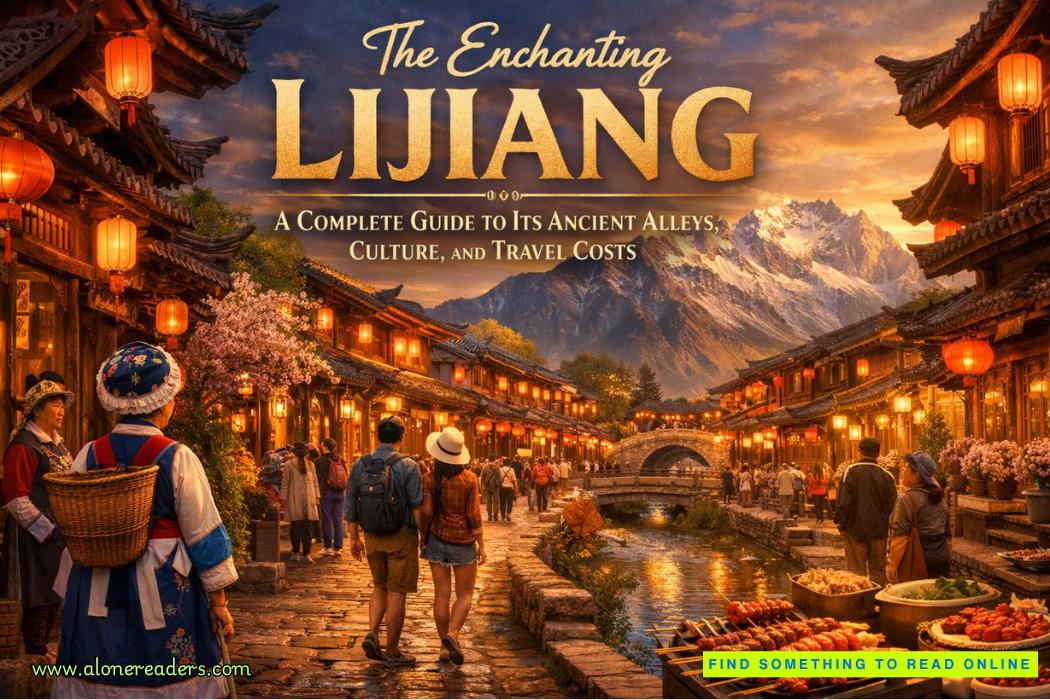
Lijiang, located in China’s Yunnan province, represents a rare intersection of preserved antiquity and living culture. Unlike modern tourist cities shaped by rapid development, Lijiang retains a layered historical identity, shaped by centuries of trade, ethnic diversity, and geographic isolation. Its Ancient Town, a UNESCO World Heritage Site, is not merely a relic but a functioning urban organism where traditional Naxi culture continues to coexist with contemporary tourism.
This is not a place defined solely by visual beauty, although its canals, wooden architecture, and mountain backdrops are undeniably striking. Instead, Lijiang offers a spatial experience—an intricate network of alleys, waterways, and courtyards that demands exploration rather than passive observation. Understanding Lijiang requires moving through it, observing how its cultural systems, economic structures, and daily life interact within a preserved historical framework.
Lijiang Ancient Town (Dayan Old Town) is the core attraction. Its layout is non-linear, with no central axis or grid system. Instead, it evolved organically around water channels fed by the Black Dragon Pool. This results in a maze-like structure where navigation is intuitive rather than systematic.
Key Characteristics:
Mu Palace serves as a cultural anchor within the town, representing the former ruling Mu family’s administrative center. Its architecture reflects a blend of Han Chinese and local Naxi influences.
Black Dragon Pool Park, just north of the town, provides one of the most iconic views—clear reflections of Jade Dragon Snow Mountain, especially during early morning.
Lijiang’s uniqueness is inseparable from the Naxi ethnic group, whose cultural systems differ significantly from mainstream Han traditions.
Dongba Script, one of the world’s last surviving pictographic writing systems, is still used in ceremonial contexts. This alone positions Lijiang as a rare linguistic and anthropological site.
Music and Rituals:
Daily Life Integration:
Unlike staged cultural displays seen in many tourist locations, Lijiang integrates tradition into everyday activities—tea preparation, local crafts, and even architectural maintenance follow inherited methods.
While the Ancient Town is the focal point, the surrounding geography significantly enhances Lijiang’s appeal.
Jade Dragon Snow Mountain (Yulong Snow Mountain):
Blue Moon Valley:
Rural Villages:
Nearby villages offer a quieter, less commercialized experience of Naxi life, including farming practices and traditional housing.
By Air:
By Train:
Estimated Transport Costs:
Lijiang offers a wide spectrum of accommodations, primarily concentrated within or near the Ancient Town.
Budget Inns:
Mid-Range Boutique Hotels:
Luxury Hotels:
Many accommodations are built in traditional Naxi style, offering courtyards, wooden interiors, and personalized hospitality.
Lijiang’s culinary landscape reflects Yunnan’s diversity, with a focus on fresh ingredients and regional flavors.
Signature Dishes:
Street Food:
Restaurant Dining:
Tea culture is also significant, with many tea houses offering Pu-erh tea sourced from Yunnan.
Budget Traveler:
Mid-Range Traveler:
Luxury Traveler:
Altitude Awareness:
Navigation Challenges:
Tourist Crowds:
Cultural Sensitivity:
Commercialization Awareness:
Weather Considerations:
Lijiang is not simply a destination—it is a spatial and cultural system shaped by geography, trade, and ethnic identity. Its Ancient Town functions as both a preserved artifact and a living environment, where historical continuity is visible in everyday interactions. The surrounding natural landscape reinforces this experience, providing scale and contrast to the dense urban fabric.
For travelers, Lijiang offers multiple layers of engagement: architectural exploration, cultural observation, culinary experimentation, and natural immersion. However, its increasing popularity introduces complexity—balancing authenticity with commercialization requires deliberate navigation.
Approached with awareness and patience, Lijiang reveals itself not as a static postcard image, but as a dynamic environment where history, culture, and modern tourism intersect in a uniquely coherent form.



 Unique Australian Wildlife and Where to Find Them: A Complete Travel Guide
 Island Hopping in the Philippines: Ultimate Travel Guide to Paradise Adventures
 Hong Kong Skyline: Best Spots for Stunning Panoramic Views
 San Diego: The Ultimate Family Vacation Destination (Beaches, Wildlife, and Budget-Smart Fun)
 Unveiling the Mysteries of the Kazan Kremlin: A Complete Travel Guide to Russia’s Historic Gem
 The Lake District: A Haven for Nature Lovers and Poets – Complete Travel Guide