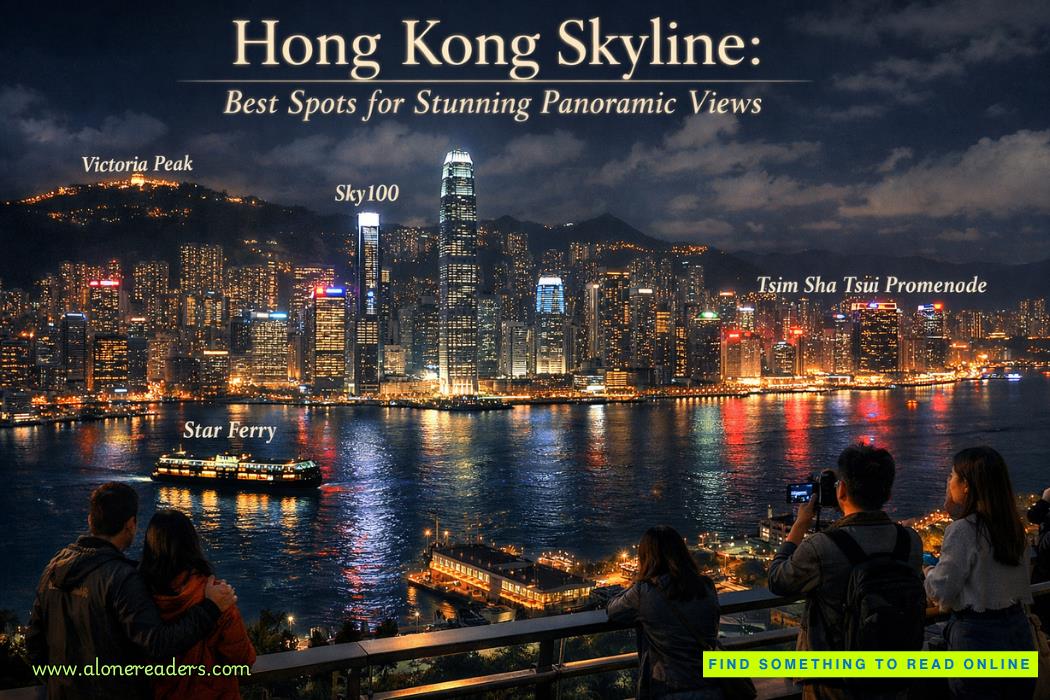
Hong Kong’s skyline is not merely a collection of skyscrapers—it is a highly engineered urban phenomenon shaped by geography, economics, and architectural ambition. Rising from a narrow strip of land between steep mountains and Victoria Harbour, the city has evolved vertically rather than horizontally. The result is one of the most recognizable and visually dense skylines in the world, where glass towers reflect neon lights and water surfaces simultaneously. This interplay between natural terrain and human design creates vantage points that are not just scenic but structurally unique. Understanding where and how to observe this skyline is essential for anyone seeking to experience Hong Kong beyond surface-level tourism.
Overview and Beauty
Victoria Peak provides the highest accessible vantage point over Hong Kong Island, offering a near-orthographic view of the skyline. From here, the dense vertical grid of Central and Wan Chai appears compressed, while Victoria Harbour acts as a reflective axis separating Hong Kong Island from Kowloon. The view is particularly striking at dusk when the transition from daylight to artificial illumination reveals the city’s layered lighting system.
How to Get There
Attractions
Accommodation Nearby
Food Options
Best Time to Visit
Late afternoon into night for full lighting transition.
Overview and Beauty
Located on the Kowloon side, Tsim Sha Tsui offers a horizontal perspective across Victoria Harbour. Unlike Victoria Peak’s aerial compression, this viewpoint emphasizes scale and spacing between buildings. The skyline appears as a continuous illuminated wall, with reflections doubling the visual density.
How to Get There
Attractions
Accommodation Nearby
Food Options
Best Time to Visit
Nighttime, especially during Symphony of Lights.
Overview and Beauty
Sky100, located on the 100th floor of the International Commerce Centre, provides an enclosed, climate-controlled viewing environment. This vantage point offers a 360-degree perspective, allowing simultaneous observation of Hong Kong Island, Kowloon, and distant outlying islands.
How to Get There
MTR to Kowloon Station: $1–$2 USD
Entry Cost
Ticket: ~$20–$25 USD
Attractions
Accommodation Nearby
Food Options
Best Time to Visit
Sunset for dynamic lighting changes.
Overview and Beauty
Viewing the skyline from the water introduces motion and shifting angles. The skyline transitions continuously, revealing depth and layering not visible from static viewpoints.
How to Get There
Attractions
Accommodation Nearby
Stay in Central or Tsim Sha Tsui for easy ferry access.
Food Options
Typical Expenses
Hong Kong’s skyline is best understood as a system of perspectives rather than a single viewpoint. Each location—whether elevated, horizontal, enclosed, or mobile—reveals a different structural and visual characteristic of the city. Victoria Peak offers macro-level compression, Tsim Sha Tsui emphasizes lateral scale, Sky100 delivers controlled panoramic observation, and harbour cruises introduce kinetic depth. Experiencing multiple vantage points is essential to fully grasp the complexity and aesthetic precision of Hong Kong’s urban design.



 Unique Australian Wildlife and Where to Find Them: A Complete Travel Guide
 Island Hopping in the Philippines: Ultimate Travel Guide to Paradise Adventures
 The Enchanting Lijiang: A Complete Guide to Its Ancient Alleys, Culture, and Travel Costs
 San Diego: The Ultimate Family Vacation Destination (Beaches, Wildlife, and Budget-Smart Fun)
 Unveiling the Mysteries of the Kazan Kremlin: A Complete Travel Guide to Russia’s Historic Gem
 The Lake District: A Haven for Nature Lovers and Poets – Complete Travel Guide










