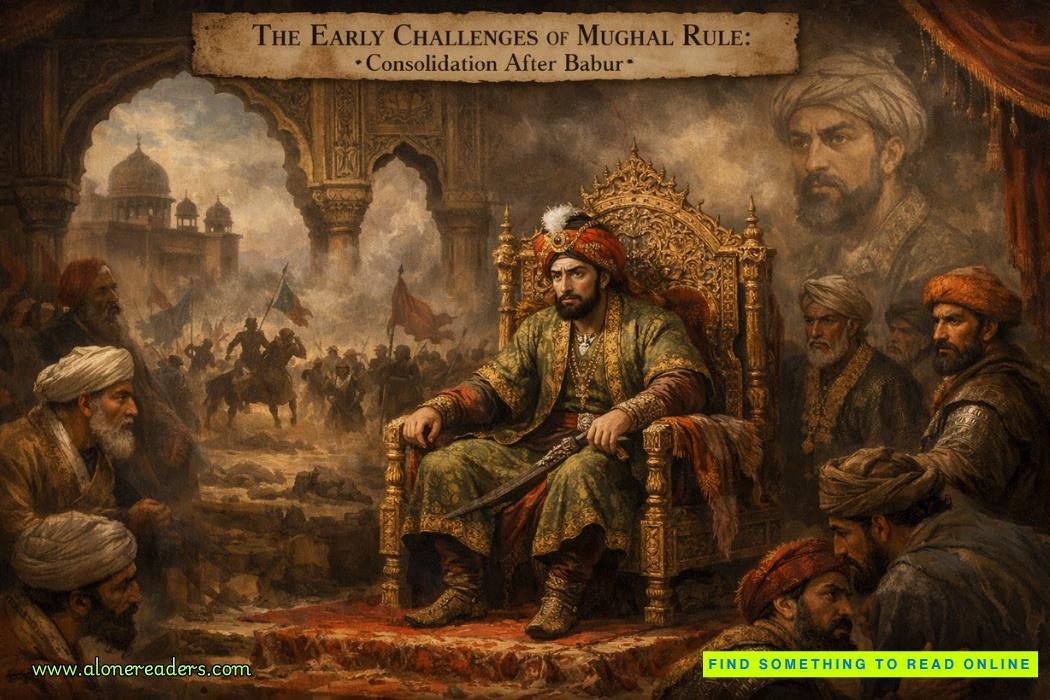
The death of Zahir-ud-din Muhammad Babur in 1530 left behind more than an infant empire—it left behind a fragile dream. The Mughal Empire that Babur had carved out after his daring victory at Panipat in 1526 and Khanwa in 1527 was still raw, stitched together by conquest rather than administration. His successor, Nasir-ud-din Muhammad Humayun, inherited a throne balanced on a sword’s edge. His inheritance was vast, but its foundation was thin, resting precariously over the remnants of the Delhi Sultanate, Afghan holdouts, and the turbulent Rajput principalities.
From the very outset, Humayun’s rule faced storms on every front—geographic, political, and personal. The territorial expanse Babur had left was a mosaic of loyalties rather than a united state. The Mughals had yet to develop any bureaucratic structure, no consistent taxation system, and no local administrative harmony. Babur had ruled more as a conqueror than as an organizer; his battles had brought prestige and plunder but not permanence. The delicate task of transforming conquest into governance fell to a young ruler untested in the arts of patience and diplomacy.
Humayun’s first concern was the division of the empire. Following Turko-Mongol custom, Babur’s territories were divided among his sons and relatives—a fatal political compromise that sowed seeds of future strife. Kamran received Kabul and Lahore, Askari governed Multan, and Hindal supervised Alwar and Mewat. This distribution seemed fair in appearance, yet in practice, it fractured authority. Humayun, the emperor, found his sovereignty contested not by foreign invaders at first, but by his own brothers, each commanding independent armies, fortresses, and revenues. Thus, the very bloodline that had built the Mughal dream threatened to dismember it from within.
Externally, the landscape of North India had not yet accepted Mughal supremacy. The Afghans, still loyal to the memory of the Lodi dynasty, simmered with resentment in Bihar and Bengal. Their leaders, men like Sher Khan Suri (later Sher Shah Suri), waited patiently for the cracks in Mughal governance to widen. The Rajputs of Rajasthan had suffered humiliating defeats at Khanwa, but their pride had not been extinguished. They lingered as autonomous powers, always ready to challenge imperial arrogance. Humayun thus stood at the center of a battlefield that was political as much as military, surrounded by alliances that demanded constant attention and suspicion.
The initial years after Babur’s death were marked by precarious balancing acts. Humayun sought to consolidate the empire through diplomacy and display rather than bloodshed. He marched to suppress Afghan revolts in Jaunpur and Bihar while maintaining gestures of courtesy toward rebellious Rajput chiefs, believing that leniency could breed loyalty. Yet this idealism often eroded discipline among his generals. Many officers longed for the riches of raids rather than the tedious labor of administration. Humayun’s temperament—gentle, poetic, and impulsive—did not always command the fear or admiration that his father had inspired.
Adding to the challenge was the economic strain of constant warfare. Babur’s campaigns had exhausted the imperial treasury. Coin shortages and unstable tax collection crippled the regime’s ability to sustain large armies. Peasants, uncertain about who truly governed them, often withheld tribute or shifted allegiance to local chieftains. The path between an empire and anarchy was alarmingly thin.
Despite these difficulties, Humayun attempted several administrative reforms. He reorganized provinces (subas), promoted uniform coinage, and sought to stabilize revenue through coordination with local zamindars. However, his efforts were undermined by the absence of a trained bureaucracy and by infighting within the nobility. The nobles themselves, mostly Turani and Irani adventurers who had followed Babur into India, were more accustomed to quick spoils than to stable governance. Their loyalty lay not in the abstract idea of the Mughal state but in the fortunes of whichever prince could grant them immediate favor.
One of Humayun’s earliest tests came from the eastern provinces. The Afghans, displaced but not defeated after Panipat, rallied under the leadership of Sher Khan Suri. Sher Khan, originally a lesser noble in Bihar, displayed exceptional foresight. Unlike the Mughals, whose power rested on foreign recruits and temporary allies, Sher Khan built a local base. He nurtured administrative efficiency and secured the loyalty of Afghan tribes through careful patronage. As Humayun was preoccupied with internal disputes, Sher Khan quietly absorbed Bengal, commanding rich resources and battle-hardened forces.
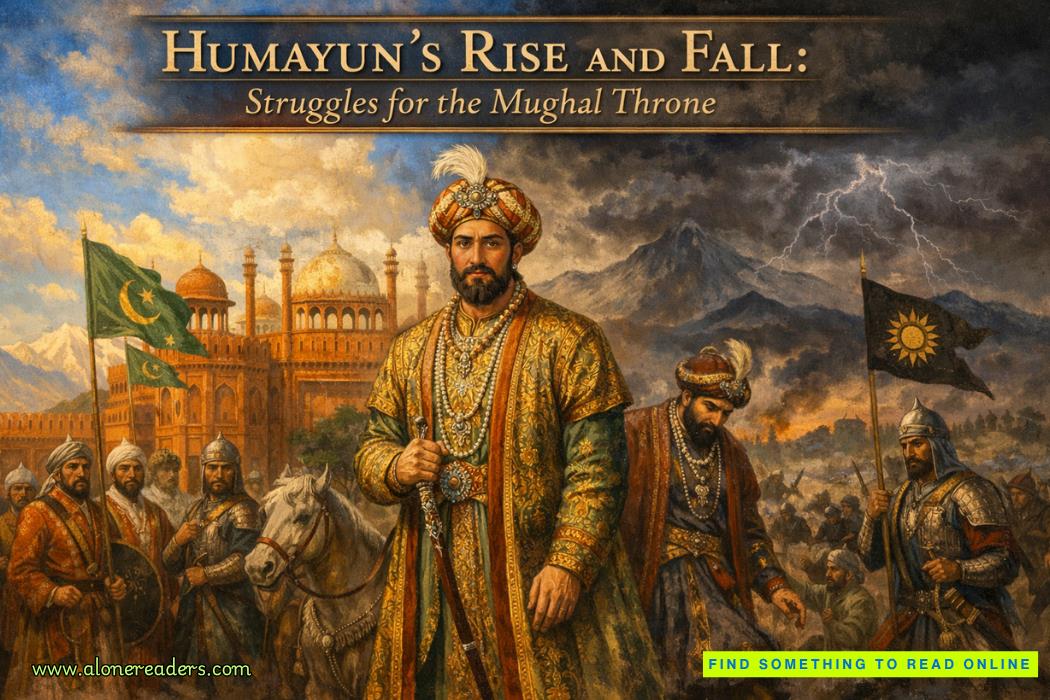
When the two finally clashed, the imbalance became evident. The Battle of Chausa in 1539 and the Battle of Kannauj in 1540 sealed Humayun’s fate. The Mughals were routed, their imperial dream seemingly shattered. Humayun fled westward, a fugitive emperor. What had begun as a campaign to suppress rebellion culminated in an exile that lasted fifteen years.
Yet, to understand the challenges of early Mughal consolidation, one must look beyond Humayun’s defeats. His failures revealed systemic weaknesses left unresolved by Babur. Babur had forged an empire through charisma and military genius but had left scant institutional continuity. He had not established a centralized administrative apparatus nor a lasting integration of diverse groups into governance. Thus, when the founder passed, his creation lacked self-sustaining organs.
The departures of empire builders often expose the fragility of conquest. Babur’s death was a moment when the Mughals needed a bureaucratic machine, not another warrior. Humayun’s attempt to inherit both mantle and mission illustrates the broader tension between dynastic legitimacy and practical control. His rule was never merely about survival against enemies—it was about defining what Mughal rule meant. Would it be a military occupation of India by Central Asian nobles, or would it root itself in Indian soil as a legitimate dynasty of the land?
In this light, Humayun’s efforts, despite their apparent failures, mark the first attempt at indigenization of Mughal authority. His fascination with astrology, art, and Persian culture influenced court rituals, palace design, and political imagery that helped distinguish the Mughals from their Afghan predecessors. Even while exiled, Humayun carried the idea of empire—an intellectual and cultural construct that later allowed Akbar to rebuild what had been lost.
The relationships with his brothers further illuminate the early struggles of consolidation. Kamran’s defection not only weakened the dynasty militarily but also shattered fraternal cohesion. Rebellion by kin became a recurring motif in Mughal politics—a reflection of how personal ambition could fracture imperial unity. This tension reveals that the early Mughals were still tribal princes in transition rather than fully modern monarchs. The concept of sovereignty as an indivisible, centralized power had yet to take root—a notion that later emperors like Akbar and Jahangir would explicitly construct.
If Babur represented the romantic conqueror, Humayun was the wandering dreamer, caught between heritage and destiny. His oscillations between warfare and contemplation mirrored the empire’s own instability. When he finally regained the throne in 1555, aided by Persian support, his return symbolized more than restoration—it was the survival of the Mughal idea against overwhelming odds. Although he died soon after in 1556, slipping on the stairs of his library, his brief second reign re-established continuity that allowed Akbar to inherit not ruins but resurrection.
The early challenges of Mughal rule, therefore, were not isolated accidents of history but structural consequences of imperial youth. Babur’s military genius created the stage; Humayun’s tribulations forced evolution. The empire’s later sophistication—in administration, art, taxation, and diplomacy—emerged as a direct response to this age of fragility.
In retrospect, every empire’s beginning hides the seeds of its endurance. The Mughals endured precisely because they confronted fragility before strength. The lessons learned from Humayun’s early defeats inspired Akbar’s far-sighted emphasis on consolidation, centralized administration, and tolerance. In this chain of continuity, the failures of the son became the foundation of the father’s vision reborn through the grandson.
The Mughal Empire’s story, then, is not a simple arc of victory but a profound meditation on survival. After Babur’s passing, consolidation demanded not just weapons but wisdom—an understanding that empire is more than conquest; it is the art of continuity. Humayun’s struggles against rebellion, division, and exile became the crucible from which a more mature, more deliberate Mughal state would emerge. His reign, often dismissed as unsuccessful, in truth marks the struggle for permanence, the transformation of a dynasty of warriors into rulers of civilization.



 The Hundred Days Offensive: How the Allies Defeated Germany in World War I
 The Second Battle of the Marne: The Turning Point of World War I in 1918
 The Spring Offensive of 1918: Germany's Final Gamble to Win World War I
 The Treaty of Brest-Litovsk: How Russia Left World War I
 The Russian Revolution and World War I: How War Brought Down the Tsar
 The Zimmermann Telegram Explained: Germany's Secret Offer to Mexico in World War I