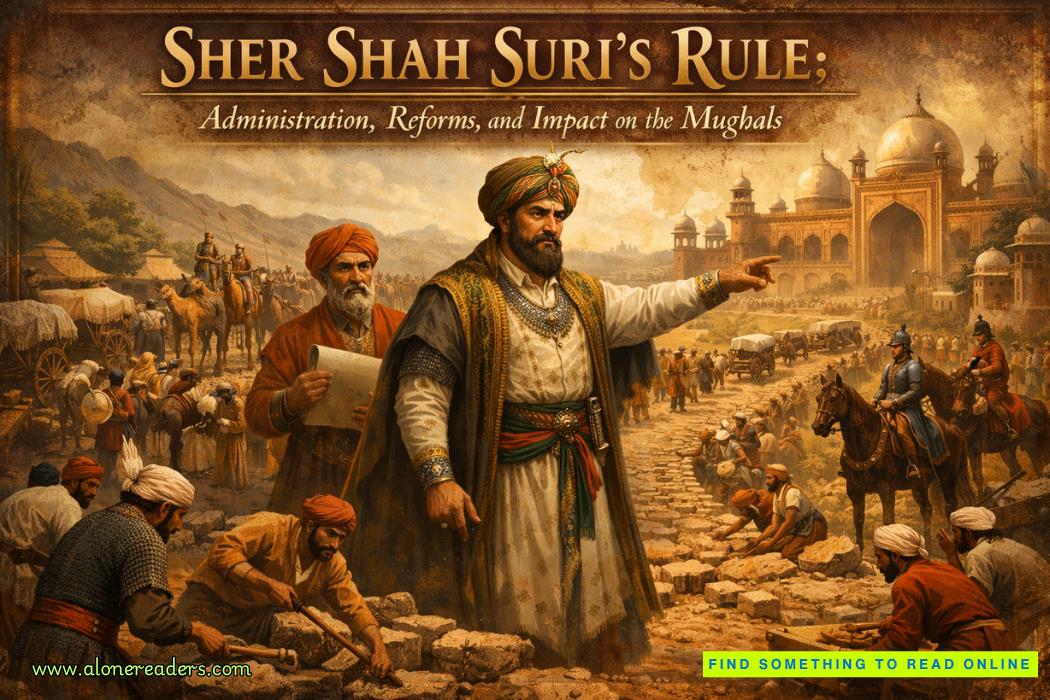
The rise of Sher Shah Suri marks a turning point in the history of the Indian subcontinent. Though his reign lasted barely five years—from 1540 to 1545 CE—his administrative reforms, economic policies, and vision of governance left such a deep impression that even the mighty Mughal Emperor Akbar later adopted many of his ideas. Sher Shah Suri, or Farid Khan, came from an Afghan background and rose through merit, military skill, and an extraordinary sense of discipline. His rule established the foundation of a centralized and efficient empire, demonstrating how even a brief period of strong leadership can permanently change the course of imperial history.
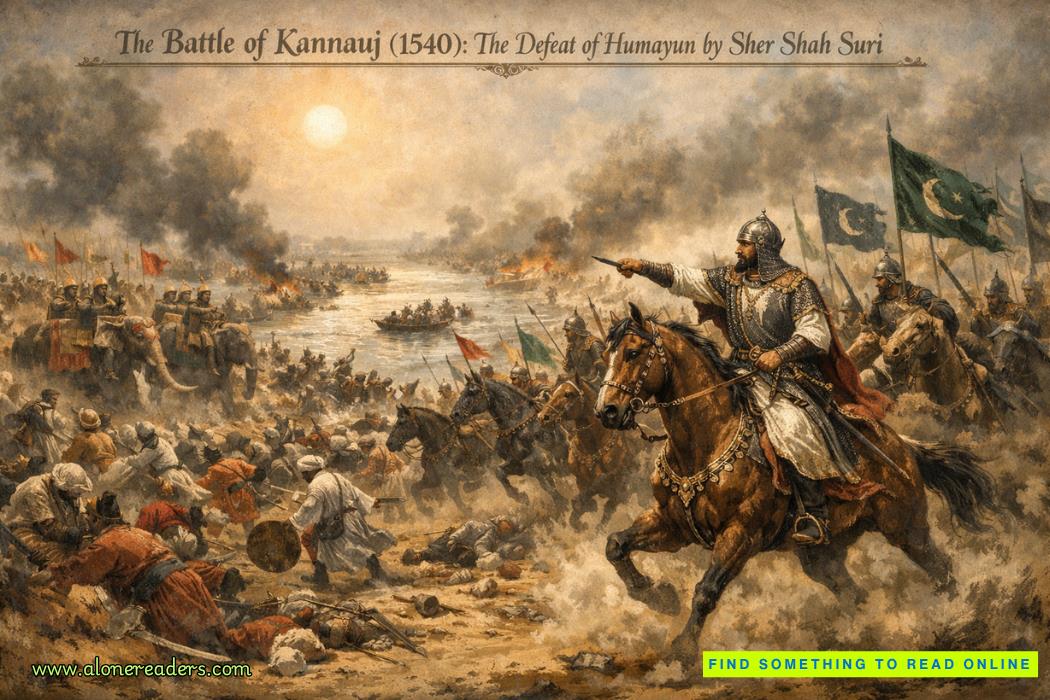
Sher Shah’s ascent began during the waning years of the Delhi Sultanate and the early turbulence of Mughal expansion in India. Born in Sasaram, Bihar, Farid Khan was initially employed under Afghan nobles but soon demonstrated exceptional administrative and military abilities that brought him into prominence. After defeating Humayun, the second Mughal emperor, at Chausa (1539) and Kannauj (1540), Sher Shah established his rule over northern India. Yet what makes his reign remarkable was not merely conquest, but the manner in which he revitalized governance and redefined the concept of a just, efficient, and people-centered administration.
His approach to governance was rooted in practical wisdom rather than ideology. Sher Shah understood that a successful empire cannot rely solely on military might but must stand upon a solid foundation of law, order, fiscal stability, and administrative justice. His reforms aimed to create a strong link between the ruler and the subjects while minimizing corruption and inefficiency among officials.
His most significant administrative achievement was the introduction of a centralized bureaucracy that combined the rigor of the old Delhi Sultanate with innovations better suited to India’s socio-economic landscape. Each province, or Sarkar, was subdivided into Parganas and Villages, representing a hierarchical but coherent structure of governance. At the top of each Sarkar stood the Shiqdar, responsible for law and order, and the Munsif, responsible for revenue and justice. This administrative model ensured that accountability flowed both upward toward the center and downward toward the people, a balance that remained effective long after his death.
One of Sher Shah’s hallmark achievements was his revenue reform, which became the template for later Mughal policies. Recognizing agriculture as the empire’s economic backbone, he undertook a meticulous survey of agricultural lands. He ordered measurement of cultivable lands (using the Gaj-i-Shah or standardized system of measurement) and categorized soil fertility to determine fair taxation. Taxes were assessed not arbitrarily but on empirical data, mostly at one-third of the produce, payable either in kind or in cash. This transparency eliminated exploitation by middlemen, stabilized peasant life, and ensured a steady income for the state. The Mughal emperor Akbar would later refine this system into his own Dahsala system, but the core principles—measurement, classification, and fairness—were Sher Shah’s legacy.
Another major reform was his currency standardization. Before Sher Shah, India’s monetary system was chaotic, filled with local coins of varying purity and value. To restore order and economic confidence, he introduced a new silver coin called the Rupiya, weighing 178 grains—essentially the prototype of the modern rupee. His economic logic was simple yet revolutionary: a unified, trustworthy currency would facilitate trade and enhance imperial unity. The Rupiya’s stability encouraged merchants and traders to move across the empire with confidence, boosting commerce and enriching cities such as Delhi, Agra, and Lahore.
In public administration, Sher Shah displayed remarkable foresight by prioritizing infrastructure development, knowing that a strong communication network was vital for both governance and commerce. His greatest contribution in this regard was the construction and renovation of the Grand Trunk Road (Sadak-e-Azam). This ancient route connecting Bengal to the northwestern frontier was expanded and fortified under his supervision. He built sarais (rest houses) at regular intervals of 2 kos (approximately 4 miles) along the road, each equipped with wells, trees, and lodging for travelers of all backgrounds. Every sarai had separate quarters for Hindus and Muslims, signifying his ideals of inclusivity and religious tolerance.
The entire network not only enhanced trade but also allowed rapid communication and movement of imperial troops, reinforcing central authority across a vast and diverse territory. The road became a symbol of connectivity—an artery through which the empire’s cultural, military, and commercial lifeblood flowed. What is often overlooked is that Sher Shah’s road infrastructure was as much a tool of administration as a work of engineering brilliance—it allowed him to monitor distant provinces swiftly and deploy troops in case of rebellion or external threat.
Sher Shah’s approach to justice reflected both stern discipline and pragmatic humanity. He maintained a strict moral code among officials, punishing corruption severely while rewarding merit. His personal involvement in cases of injustice is well-documented in historical records. By appointing competent and impartial judges, he ensured that law transcended social or religious divisions. His reign became synonymous with a sense of public security—travelers could move across the empire with bags of gold without fear of theft. This reputation for justice and security earned him immense respect even among conquered populations and later inspired Mughal emperors like Akbar to emulate his principles.
One of the most fascinating aspects of Sher Shah’s rule was his military efficiency and organizational discipline. His army was not merely a tool of conquest but an institution of professional meritocracy. He maintained detailed records of soldiers, regularly inspected their horses, and issued identity papers to prevent fraud. Each soldier received a fixed salary, reducing dependence on looting or unofficial allowances. This bureaucratic approach to military management foreshadowed the Mughal mansabdari system, which Akbar would later formalize.
Beyond administration and military reforms, Sher Shah Suri demonstrated extraordinary skill in urban planning and trade policy. He recognized that an empire’s wealth depends upon its cities and merchants. He fortified old towns, built new ones, and developed marketplaces that stimulated commerce. The city of Sasaram, where his tomb stands, became an architectural marvel blending Afghan and Indo-Islamic styles. His tomb itself—a majestic sandstone structure surrounded by a vast tank—reflects his lasting vision: power grounded in order, simplicity, and dignity.
Sher Shah also established a system of intelligence and surveillance that allowed him to govern vast territories efficiently. He maintained horse-mounted couriers and a network of postal runners stationed along the Grand Trunk Road. This ensured that information from even the remotest part of the empire reached the court swiftly, allowing timely action against disorder or corruption. He combined the role of administrative diligence with strategic statecraft—balancing central control with local autonomy to prevent rebellion.
One must also acknowledge his religious policy, which stood out for its tolerance and inclusivity despite his firm Islamic faith. While supporting traditional Islamic scholars, he did not impose his faith upon non-Muslims. His emphasis was on public order, justice, and good governance rather than religious zeal. Hindus occupied important positions in his administration, and the law protected their lives and property. It was this spirit of balanced coexistence that later influenced Akbar’s policy of Sulh-i-Kul (universal tolerance).
Sher Shah’s economic reforms extended far beyond taxation. He worked to restore agricultural expansion by reducing the burden of illegal levies and ensuring protection for peasants. Villagers were encouraged to return to their lands after years of warfare, bringing abandoned fields back into cultivation. By ensuring that state demand was stable and moderate, Sher Shah cultivated loyalty among the peasantry and prevented famine. In this sense, his rule can be viewed as an early form of agrarian welfare governance, rare for his time.
Another important dimension of Sher Shah’s rule was his emphasis on documentation and record-keeping. The bureaucracy under him maintained detailed files of taxation, land assessments, and appointments. This administrative record-keeping strengthened the empire’s institutional memory, making its governance less dependent on the personal whims of rulers. When the Mughals reconquered India after his death, they inherited a functioning system that only required refinement, not reinvention.
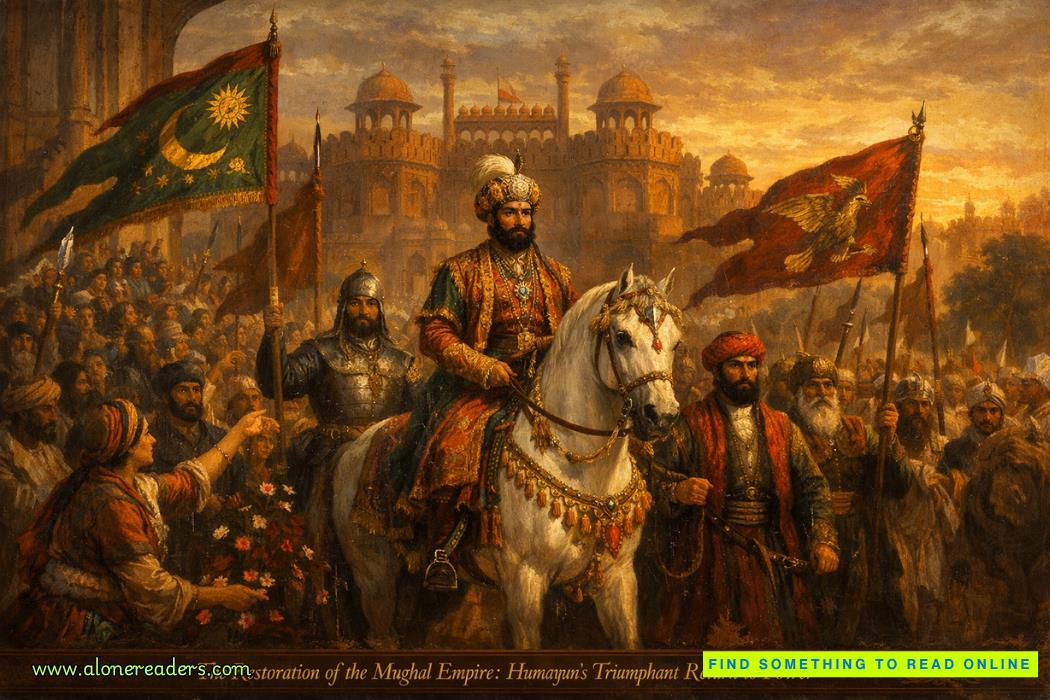
Sher Shah’s sudden death in 1545 at Kalinjar Fort was a severe blow to the Sur Empire. His successors lacked his charisma, discipline, and administrative genius. Eventually, Humayun returned from exile to reclaim the Mughal throne. Yet, though the Suri dynasty faded swiftly, the spirit of Sher Shah’s governance lived on through the Mughal Empire, particularly under Akbar, Jahangir, and Shah Jahan.
His legacy can be measured not by the duration of his reign but by its enduring impact. The Mughals, often credited for their administrative sophistication, inherited and institutionalized many of Sher Shah’s reforms: the revenue system based on land measurement, the uniform currency, the structured road and postal communication, and the emphasis on efficient civil governance. Akbar’s empire became more successful largely because it built upon Sher Shah’s administrative scaffolding.
Sher Shah Suri thus occupies a remarkable place in Indian history: though an Afghan usurper who briefly displaced the Mughals, his governance model paradoxically became the heart of Mughal stability in subsequent decades. His legacy transcended dynastic rivalry and became an enduring contribution to the art of Indian statecraft.
In the final reckoning, Sher Shah Suri’s rule stands as an example of what visionary leadership can achieve in just a few years. His keen sense of justice, administrative clarity, and devotion to public welfare demonstrated that empire-building need not be rooted solely in conquest but in organization, compassion, and accountability. The Mughals may have restored their throne after him, but they ruled on the principles laid down by Sher Shah Suri, whose brief reign remains one of the most extraordinary chapters in the story of imperial India.



 The Hundred Days Offensive: How the Allies Defeated Germany in World War I
 The Second Battle of the Marne: The Turning Point of World War I in 1918
 The Spring Offensive of 1918: Germany's Final Gamble to Win World War I
 The Treaty of Brest-Litovsk: How Russia Left World War I
 The Russian Revolution and World War I: How War Brought Down the Tsar
 The Zimmermann Telegram Explained: Germany's Secret Offer to Mexico in World War I