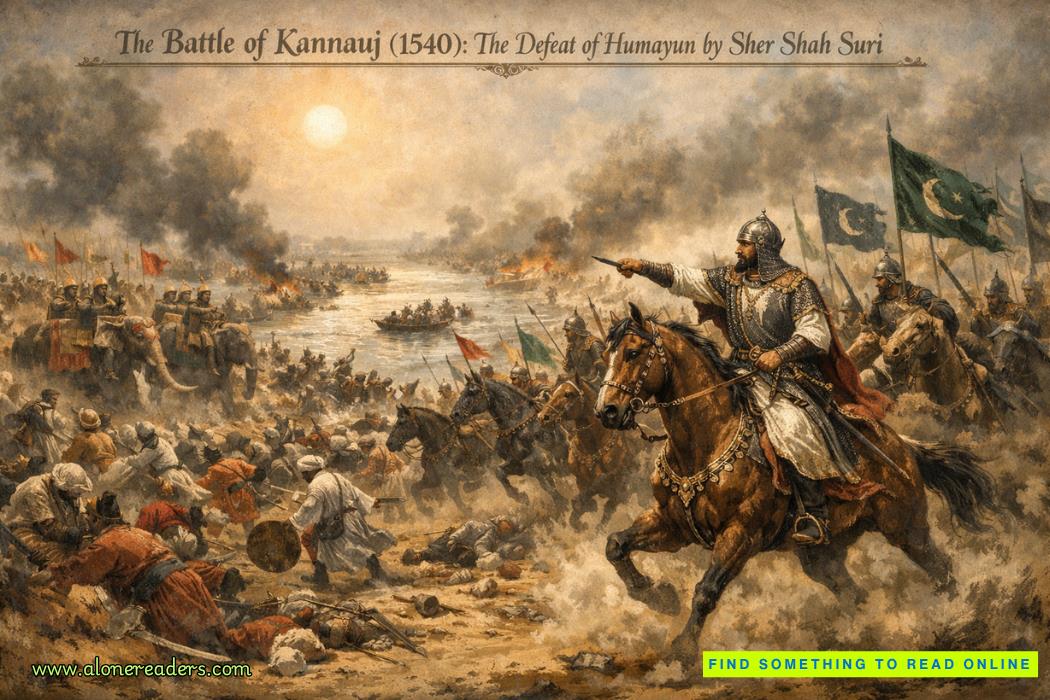
The Battle of Kannauj, fought in May 1540, stands as a turning point in the history of the Indian subcontinent. It was not merely a military contest but a decisive confrontation between two contrasting visions of leadership — the hesitant idealism of Emperor Humayun and the pragmatic genius of Sher Shah Suri, founder of the short-lived but brilliantly effective Suri Empire. The outcome of this battle did not only determine the fate of an emperor; it redefined the trajectory of the Mughal Empire itself.
Humayun’s reign had begun with enormous promise. Inheriting the vast dominions of his father, Babur, in 1530, he stood at the head of a young dynasty that had only just laid its roots in the turbulent soil of northern India. Yet, from the very beginning, Humayun’s rule was overshadowed by internal divisions, regional rebellions, and a profound lack of administrative cohesion. When he finally faced the insurgent Afghan noble Sher Khan — later Sher Shah Suri — the emperor found himself matched not only in courage but far outstripped in discipline and foresight.
By 1540, the two leaders had already met once before at Chausa in 1539, where Sher Shah had inflicted a humiliating defeat on Humayun. But the emperor, undeterred and driven by pride, regrouped his forces for one final confrontation at Kannauj, located strategically near the Ganges River. This decisive encounter would expose every weakness in the Mughal command structure and demonstrate the remarkable tactical adaptability of Sher Shah’s Afghan army.
The geography of the battlefield itself played a critical role. Kannauj, historically known as Kanyakubja, was a vital strategic point controlling the routes between northern Hindustan and Bengal. Humayun had established his camp near the river, perhaps overconfident that the terrain favored his artillery and heavy cavalry. Yet his preparations betrayed his uncertainty. His army, though large — possibly over 50,000 strong — suffered from low morale, poor coordination, and the absence of several key nobles who had deserted or turned passive due to court intrigues.
Sher Shah, in contrast, commanded a smaller but far more cohesive force. His men were battle-hardened, disciplined, and motivated by loyalty rather than entitlement. The Afghan ruler had emerged from years of guerrilla warfare against local chiefs and Mughal contingents; he understood both the psychology of warfare and the terrain of northern India far better than his imperial opponent. His army was divided into efficient units of cavalry, archers, and artillery, each commanded by officers who owed their promotion to merit rather than lineage — a principle rarely practiced in Humayun’s court.
As dawn broke on the day of the battle, the air over the plains of Kannauj shimmered in the fierce May heat. The armies arrayed themselves across the dusty expanse. Humayun’s forces deployed cannons and matchlockmen in the front, intending to unleash devastating volleys against the advancing Afghans. However, this strategy faltered almost immediately. The early gunpowder weapons were cumbersome, prone to misfires, and required precise timing. Meanwhile, Sher Shah’s cavalry, nimble and relentless, exploited every opening, attacking from the flanks and driving wedges between Mughal units.
What set Sher Shah apart was his strategic patience. He avoided a full frontal assault until he had completely unbalanced Humayun’s formation. His mounted archers unleashed rapid, coordinated volleys, disorienting Mughal soldiers and forcing their cavalry into retreat. The sound of war drums and the cries of Afghan commanders surged across the battlefield, while clouds of dust obscured the imperial lines. Within hours, the once-proud Mughal ranks were collapsing under pressure, unable to distinguish command orders amidst panic and confusion.
Humayun, desperate to restore order, personally entered the fray. He fought valiantly, but his leadership on the field could not compensate for the systemic disarray that plagued his army. His artillery became clogged in marshy ground near the riverbank, and when Sher Shah’s cavalry made a decisive push toward the Mughal center, chaos turned to rout. The emperor, realizing the battle was lost, fled across the Ganges with a few loyal attendants, narrowly escaping capture. His defeat at Kannauj was total — Humayun’s empire had disintegrated in a single day.
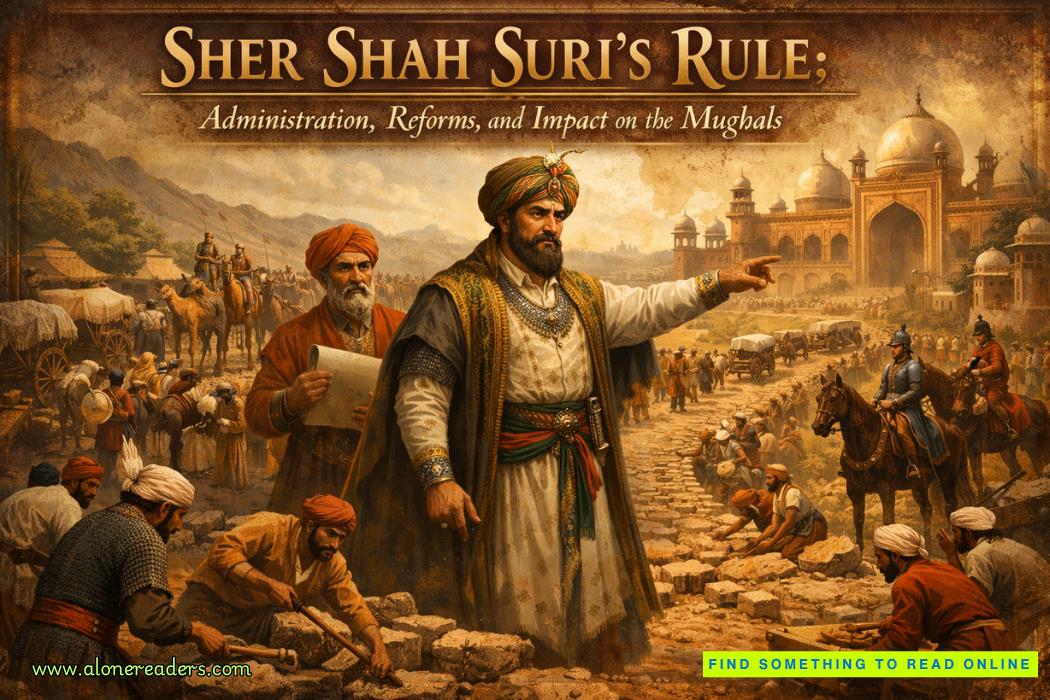
The consequences of this disaster were immense. With Humayun’s flight, the fledgling Mughal Empire collapsed, paving the way for Sher Shah Suri to consolidate power over nearly all of northern India. The victory at Kannauj crowned his long journey from an ambitious Afghan jagirdar to sovereign emperor. Sher Shah’s subsequent reign, though short-lived, profoundly influenced Indian governance. His administrative reforms, including land revenue assessment, postal roads, and the standardization of currency, became models later adopted by the restored Mughal administration under Akbar.
In essence, Sher Shah’s triumph at Kannauj was not merely a battlefield victory but an assertion of superior statecraft. His civil policies reflected a sharp mind capable of transforming military conquest into enduring governance. Unlike Humayun, who had inherited an empire and struggled to maintain it, Sher Shah built his realm from the ground up — disciplined, efficient, and remarkably centralized for its time. The Afghan ruler introduced a clear land revenue system known as zabt, which balanced royal authority with local accountability. This administrative vision ensured prosperity, reduced corruption, and left a legacy that endured long after his dynasty faded.
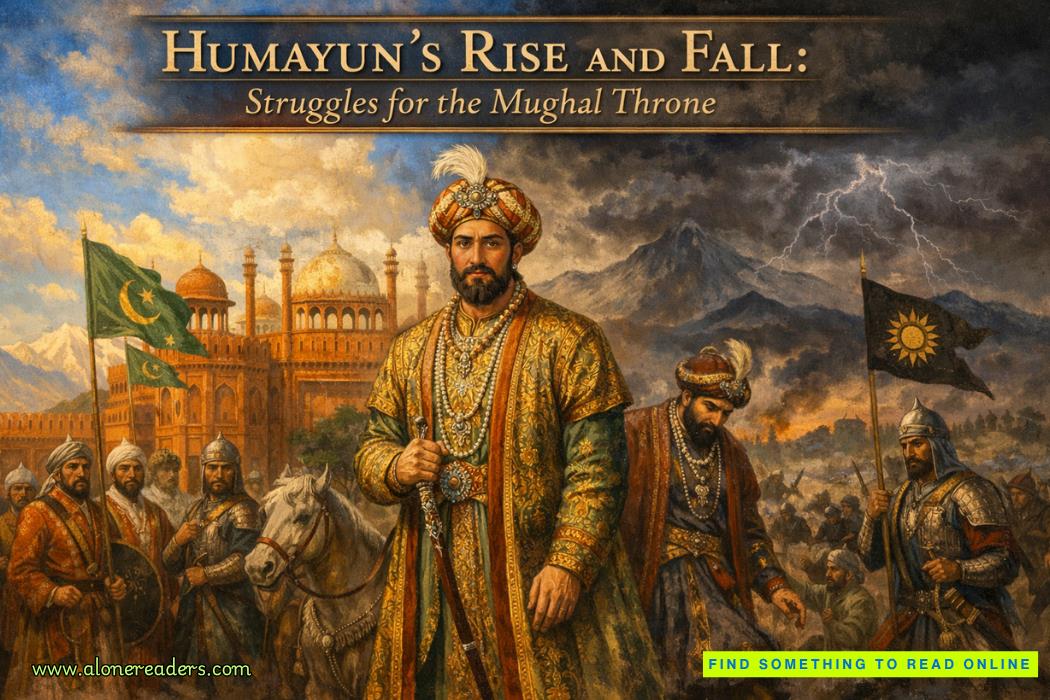
Meanwhile, Humayun’s defeat thrust him into years of exile. Wandering through Sindh, Rajasthan, and ultimately Persia, the humbled emperor clung to fragments of imperial loyalty. His journey through foreign lands reshaped him, instilling a resilience that would later allow him to reclaim the throne in 1555, though his restoration lasted only six months before his untimely death. Historians often interpret this arc — defeat, exile, and restoration — as symbolic of Mughal perseverance, but it was Kannauj that first exposed the empire’s fragile foundations.
When one examines the contrasting personalities of the two rivals, deeper lessons emerge. Humayun embodied the idealistic, almost poetic temperament often ill-suited to the brutal realities of sixteenth-century politics. He valued astrology, symbolism, and royal ceremony, yet frequently failed to read the subtler currents of power. Sher Shah, by contrast, was a commander of austere discipline and pragmatic vision. He understood his soldiers, valued merit, and never allowed sentiment to cloud judgment. The Battle of Kannauj thus symbolizes not only a shift of dynastic power but a collision of leadership philosophies — one grounded in inherited prestige, the other in earned authority.
The memory of Kannauj also carried symbolic weight in Mughal historiography. When Akbar, Humayun’s son, later reclaimed the subcontinent, he consciously avoided the flaws that had doomed his father. He integrated Sher Shah’s reforms into Mughal governance, turning military defeat into administrative heritage. The Grand Trunk Road, improved during Sher Shah’s reign and stretching from Bengal to the northwestern frontiers, became a lifeline of empire and commerce under Mughal rule. In this sense, Sher Shah’s victory lived on even within the empire he had once displaced.
From a broader perspective, the events of 1540 reveal a timeless truth about leadership: power gained without structure is as vulnerable as ambition without discipline. Humayun’s empire, still precarious after Babur’s conquest, collapsed not because of lack of courage but because of disunity, mismanagement, and overconfidence. Sher Shah’s success, in contrast, demonstrates the enduring value of preparation, intelligence gathering, and situational awareness — principles that define enduring leadership in every age.
In the cultural consciousness of South Asia, the Battle of Kannauj stands alongside other epochal confrontations such as Panipat and Talikota — battles that determined dynastic fates and reconfigured regional identities. It reminds historians and readers alike that the roots of empire often lie in moments of crisis when vision and strategy outweigh mere inheritance. Sher Shah Suri’s rise from obscurity to imperial power, culminating at Kannauj, remains one of the most remarkable narratives in medieval Indian history — a tale of how a single man, through clarity of purpose and mastery of tactics, reshaped the map of a continent.
For Humayun, Kannauj remained both a scar and a teacher. His endurance in exile, his later restoration through Persian support, and his cautious governance upon return all trace their origins to the lessons learned in that searing summer of 1540. It is perhaps fitting that the Mughals, when they returned to glory under Akbar, built upon the very administrative system designed by the man who had once overthrown them.
Thus, the Battle of Kannauj was far more than a moment of conquest. It was a testament to vision, resilience, and the evolution of empire in India. The dust that rose from the plain that day carried not just the echoes of clashing armies but the seeds of modern Indian administration, military strategy, and imperial philosophy. In its aftermath, two legacies intertwined — that of Sher Shah’s innovation and Humayun’s redemption — each defining the other through contrast, and both shaping the destiny of the Mughal world.



 The Hundred Days Offensive: How the Allies Defeated Germany in World War I
 The Second Battle of the Marne: The Turning Point of World War I in 1918
 The Spring Offensive of 1918: Germany's Final Gamble to Win World War I
 The Treaty of Brest-Litovsk: How Russia Left World War I
 The Russian Revolution and World War I: How War Brought Down the Tsar
 The Zimmermann Telegram Explained: Germany's Secret Offer to Mexico in World War I