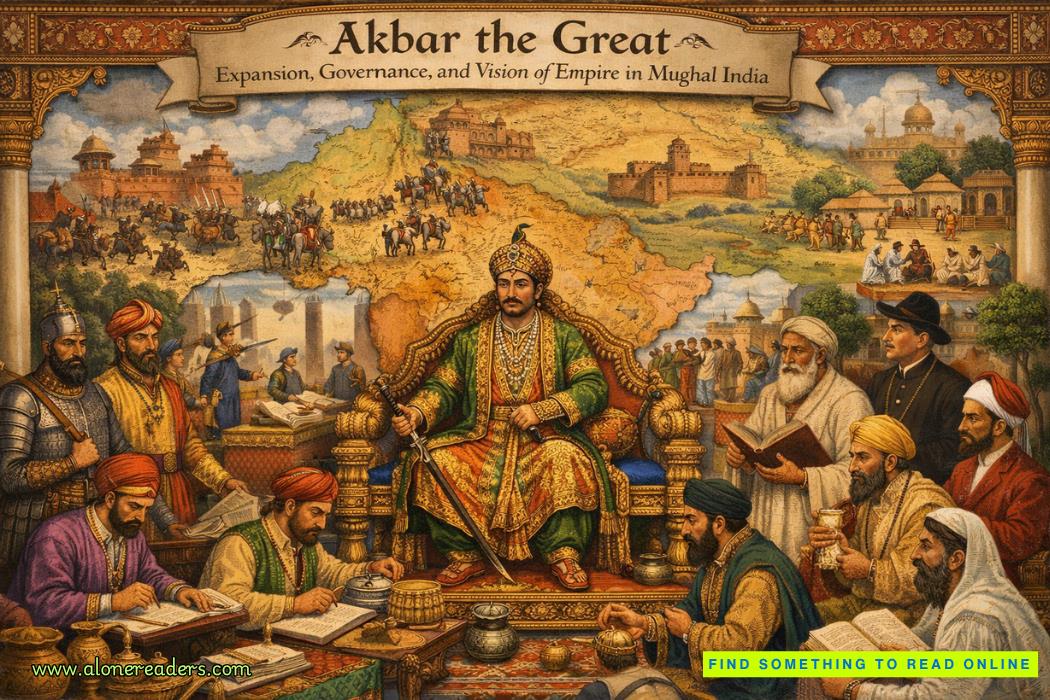
Akbar the Great stands as one of the most transformative rulers in the history of the Indian subcontinent, not merely for the vast territories he conquered but for the remarkable vision with which he governed them. Ascending the Mughal throne in 1556 at a young age, Akbar inherited a fragile empire that had only recently been re-established by his father Humayun. What he left behind by the time of his death in 1605 was an expansive, stable, and culturally vibrant empire that set enduring standards for governance, administration, and imperial ideology. His reign marked a shift from conquest-driven rulership to a deeply integrated model of empire-building, where military strength, administrative innovation, and ideological inclusivity worked together to create a lasting political structure.
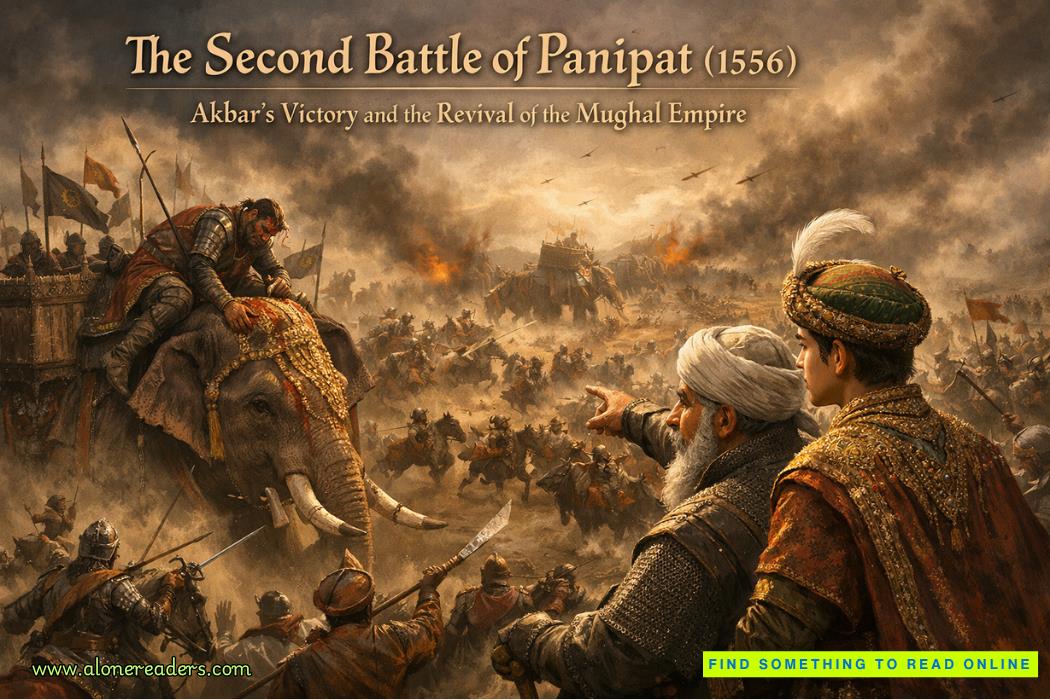
The early years of Akbar’s rule were defined by consolidation and survival. Under the regency of Bairam Khan, Akbar secured his position by defeating Hemu at the Second Battle of Panipat in 1556, a decisive moment that restored Mughal authority in northern India. However, once he assumed full control, Akbar moved beyond mere consolidation and began an ambitious campaign of territorial expansion. His military strategy was not based solely on brute force; instead, it combined calculated diplomacy, strategic alliances, and selective warfare. This approach allowed him to incorporate diverse regions such as Malwa, Gujarat, Bengal, and parts of the Deccan into the Mughal fold.
One of Akbar’s most notable achievements in expansion was his policy toward Rajput states. Rather than pursuing a policy of total subjugation, he adopted a conciliatory approach, forming alliances through diplomacy and marriage. Rajput rulers were integrated into the Mughal administrative and military system, often retaining significant autonomy while pledging loyalty to the emperor. This policy not only reduced resistance but also strengthened the empire by incorporating some of the finest warrior clans into its ranks. The inclusion of Rajputs into the imperial elite exemplified Akbar’s broader vision of governance based on cooperation rather than coercion.
Military expansion under Akbar was supported by a highly organized and efficient army. He introduced systematic branding of horses and maintained detailed records of soldiers, ensuring accountability and discipline. His campaigns in Gujarat demonstrated his ability to respond swiftly to rebellion, covering vast distances in record time to reassert control. Similarly, his conquest of Bengal extended Mughal authority to the eastern frontiers, securing valuable economic resources and trade routes. Each conquest was followed by careful administrative integration, preventing the newly acquired territories from becoming sources of instability.
However, what truly distinguished Akbar was not just his ability to expand the empire, but his innovative approach to governance. Recognizing the challenges of ruling a vast and diverse population, he developed a centralized administrative system that balanced authority with flexibility. The empire was divided into provinces known as subahs, each governed by appointed officials responsible for revenue collection, law enforcement, and military command. This structure ensured uniformity while allowing local adaptations to regional conditions.
Central to Akbar’s administrative system was the mansabdari system, a unique framework that organized officials based on rank and responsibility. Each mansabdar was assigned a numerical rank that determined their position in the hierarchy and the number of troops they were required to maintain. This system created a direct link between the emperor and his officials, reducing the risk of regional power bases challenging central authority. It also allowed for merit-based advancement, enabling individuals from diverse backgrounds to rise within the imperial structure.
Revenue administration under Akbar reached unprecedented levels of sophistication. Under the guidance of his finance minister, Raja Todar Mal, the empire implemented a standardized system of land revenue assessment known as the zabt system. Land was carefully measured, and taxes were fixed based on average crop yields and prices. This system provided stability for both the state and the peasantry, ensuring predictable revenue while protecting farmers from arbitrary taxation. The emphasis on accurate record-keeping and fair assessment reflected Akbar’s commitment to economic sustainability.
Akbar’s governance extended beyond administration into the realm of justice and social policy. He positioned himself as a just and accessible ruler, often holding open courts where subjects could present grievances directly. His judicial policies emphasized fairness over rigid adherence to religious law, allowing for a more inclusive legal system that accommodated the diverse beliefs of his subjects. This approach reinforced his image as a ruler who prioritized the welfare of his people over sectarian interests.
Perhaps the most defining aspect of Akbar’s reign was his vision of empire, which went beyond territorial control and administrative efficiency. He sought to create a unified political and cultural entity that could transcend religious and ethnic divisions. This vision was embodied in his policy of Sulh-i-Kul, or “universal peace,” which advocated tolerance and mutual respect among different communities. By abolishing discriminatory taxes such as the jizya on non-Muslims, Akbar signaled a shift toward a more inclusive state ideology.
Akbar’s court became a center of intellectual and cultural exchange, attracting scholars, artists, and thinkers from across the world. He established the Ibadat Khana, or House of Worship, where representatives of various religions engaged in discussions and debates. These interactions influenced Akbar’s thinking and led to the development of his own spiritual philosophy, often referred to as Din-i Ilahi. While not widely adopted, this initiative reflected his desire to explore common ground among different belief systems and promote harmony within his empire.
Cultural patronage under Akbar flourished as he supported the translation of important texts into Persian, making knowledge accessible to a broader audience. Works from Sanskrit, such as the Mahabharata and Ramayana, were translated and illustrated, fostering a synthesis of cultural traditions. Mughal art and architecture also reached new heights during his reign, with structures like Fatehpur Sikri showcasing a blend of Persian, Indian, and Central Asian influences. These developments were not merely aesthetic; they symbolized the integration of diverse cultural identities within a single imperial framework.
Akbar’s economic policies further strengthened the empire by promoting trade and commerce. He improved infrastructure, including roads and caravanserais, facilitating movement across vast distances. By standardizing currency and encouraging market regulation, he created a stable economic environment that supported both domestic and international trade. The prosperity generated during his reign contributed to the overall stability of the empire and reinforced the effectiveness of his governance.
Despite his many achievements, Akbar’s reign was not without challenges. Rebellions in regions like Bengal and the Deccan tested his authority, requiring constant vigilance and adaptation. However, his ability to respond to these challenges with a combination of military action and administrative reform demonstrated his resilience as a ruler. He understood that maintaining an empire required not just conquest but continuous engagement with its complexities.
Akbar’s legacy lies in his ability to redefine the concept of kingship in the Mughal context. He transformed the emperor from a mere conqueror into a visionary architect of a pluralistic state. His policies laid the foundation for the stability and prosperity that characterized the Mughal Empire in subsequent generations. By integrating diverse communities, standardizing administration, and promoting cultural exchange, he created a model of governance that remains relevant in discussions of statecraft and leadership.
What makes Akbar particularly significant is the way he balanced power with empathy. His reign demonstrates that effective leadership is not solely about authority but about understanding and accommodating the needs of a diverse population. His emphasis on dialogue, inclusion, and fairness offers valuable insights into the challenges of governing complex societies.
In examining Akbar’s expansion, governance, and vision, it becomes clear that his success was not accidental but the result of deliberate and thoughtful policies. He recognized that an empire built on fear would be fragile, whereas one built on trust and cooperation could endure. This understanding guided his actions and shaped the institutions he created.
The story of Akbar the Great is not just a chapter in the history of the Mughal Empire; it is a testament to the possibilities of enlightened leadership. His reign illustrates how power can be used not only to dominate but to unite, not only to control but to inspire. Through his achievements, Akbar set a standard for rulers that transcends time and geography, making him one of the most remarkable figures in world history.



 The Hundred Days Offensive: How the Allies Defeated Germany in World War I
 The Second Battle of the Marne: The Turning Point of World War I in 1918
 The Spring Offensive of 1918: Germany's Final Gamble to Win World War I
 The Treaty of Brest-Litovsk: How Russia Left World War I
 The Russian Revolution and World War I: How War Brought Down the Tsar
 The Zimmermann Telegram Explained: Germany's Secret Offer to Mexico in World War I










