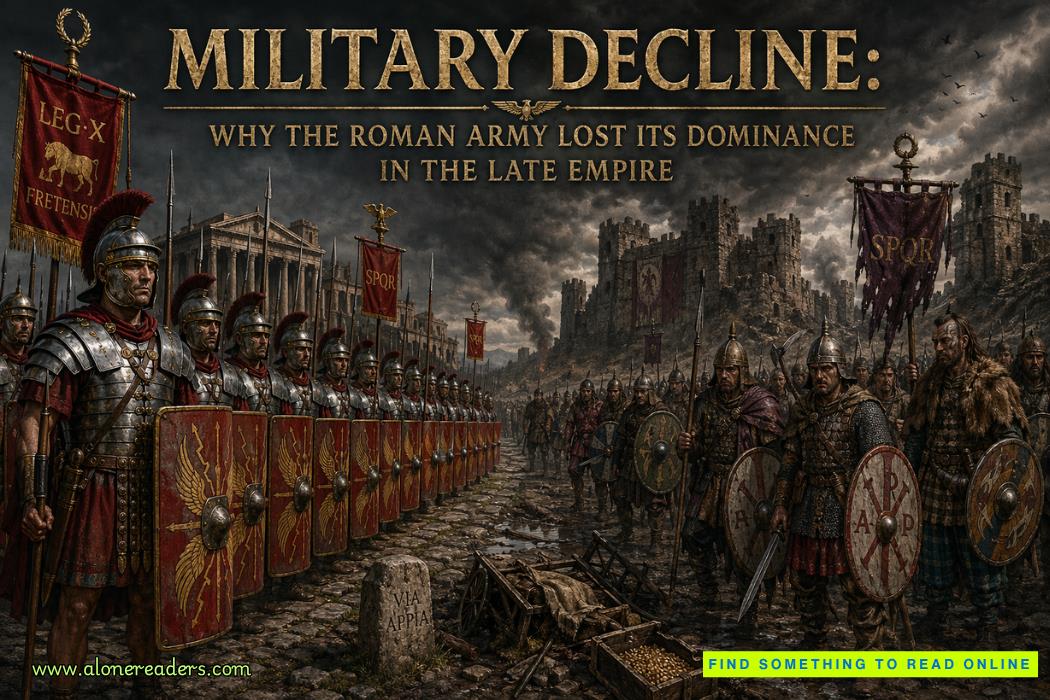
The story of Rome’s fall is often told through political intrigue, economic collapse, and barbarian invasions, but at the center of it all stood the institution that had once made Rome unstoppable: the Roman army. For centuries, it was the most disciplined, innovative, and feared military force in the ancient world. Yet by the fifth century, that same army had lost its edge, becoming fragmented, unreliable, and increasingly ineffective. Understanding why the Roman army lost its dominance reveals not a single catastrophic failure, but a gradual unraveling shaped by internal decay, external pressures, and systemic transformation.
At its height during the early Empire, the Roman army functioned as a professional, standardized, and highly disciplined force. Soldiers were rigorously trained, well-equipped, and bound by strict codes of conduct. Command structures were clear, logistics were efficient, and loyalty was directed firmly toward the state. The legions operated with precision, capable of building fortifications overnight, executing complex maneuvers, and adapting to diverse terrains. This system gave Rome not only military superiority but also psychological dominance over its enemies.
However, by the third century, cracks began to appear. One of the most critical issues was the erosion of discipline and cohesion. As Rome expanded, maintaining the same level of control and training across distant provinces became increasingly difficult. Soldiers were often recruited hastily, sometimes with minimal training, especially during times of crisis. The once-unbreakable chain of command weakened, and unit cohesion—so vital to Roman success—began to deteriorate. Without the shared identity and rigorous discipline of earlier legions, the army lost its operational effectiveness.
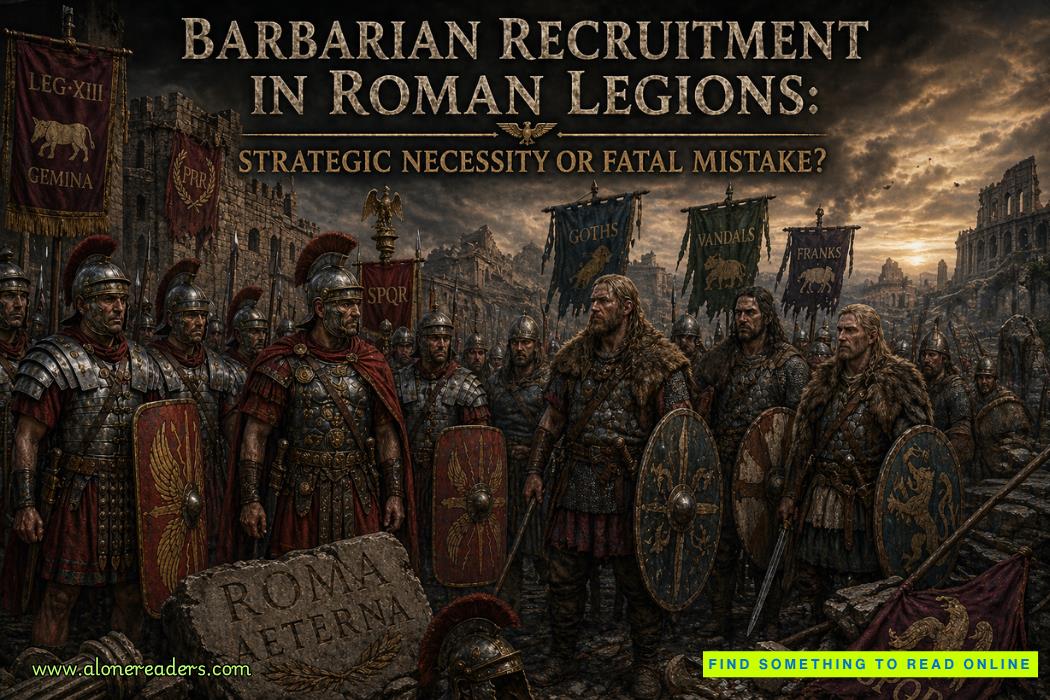
Another major factor was the growing reliance on barbarian troops. As Rome struggled to recruit enough native soldiers, it increasingly turned to foreign warriors, known as foederati. These groups were often allowed to settle within Roman territory in exchange for military service. While they provided short-term manpower, they introduced long-term instability. Many of these soldiers maintained their own leaders, customs, and loyalties. In some cases, they were more loyal to their tribal chiefs than to the Roman state. This shift fundamentally altered the nature of the army, transforming it from a unified force into a patchwork of semi-independent contingents.
Economic decline also played a crucial role in weakening the Roman military. Maintaining a large standing army required enormous resources, and by the late Empire, the state was struggling to meet these demands. Inflation, heavy taxation, and declining agricultural productivity strained the economy. As a result, soldiers were often poorly paid, inadequately supplied, and demoralized. Equipment quality declined, fortifications fell into disrepair, and logistical systems became unreliable. An army that once prided itself on efficiency and preparedness now faced shortages and inefficiencies at every level.
Closely connected to economic troubles was the issue of political instability. The third and fourth centuries saw constant changes in leadership, with emperors often gaining power through military backing and losing it just as quickly. This created a dangerous cycle in which the army became deeply involved in politics. Soldiers were no longer just defenders of the state—they became kingmakers. Loyalty shifted away from the empire and toward individual generals, leading to internal conflicts and civil wars. These struggles drained valuable resources, weakened border defenses, and further reduced the army’s overall effectiveness.
Changes in military strategy also played a role in Rome’s decline. In earlier times, Rome followed an aggressive and expansionist approach, securing its borders through forward defense. However, as pressures increased, the empire shifted to a more defensive strategy. Fortifications were reinforced, and mobile field armies were formed to respond to invasions. While this strategy had some benefits, it also meant that Rome was no longer controlling the course of warfare. Instead, it was reacting to threats, often too late or with insufficient strength.
The division of the empire into Eastern and Western halves had major military consequences as well. The Eastern Roman Empire, supported by wealthier regions and a stronger economy, was better able to sustain a powerful military. In contrast, the Western Empire struggled with ongoing shortages of manpower and resources. This imbalance left the West more exposed to invasions and less capable of mounting effective defenses. Over time, the Western army became increasingly reliant on outside forces, which weakened its independence and unity.
Technological and tactical stagnation also contributed in a less obvious but important way. While Rome had once led the world in military innovation, it gradually lost this advantage. Enemies such as the Goths, Vandals, and Huns adapted and improved, developing new tactics and exploiting Roman weaknesses. Meanwhile, the Roman army, held back by tradition and slow-moving bureaucracy, found it difficult to keep up. As a result, it was no longer superior in strategy or execution.
Perhaps most importantly, there was a decline in the sense of Roman identity and purpose within the army. In earlier centuries, soldiers were driven not only by pay but also by a strong sense of duty, honor, and pride in belonging to a great civilization. By the later Empire, this shared identity had weakened. With more non-Roman recruits and increasing fragmentation of authority, the army lost its unifying spirit. Without this common purpose, maintaining morale, discipline, and loyalty became much more difficult.
The impact of these changes became clear through a series of military failures. The Battle of Adrianople in 378 AD, where Roman forces suffered a decisive defeat against the Goths, marked a critical turning point. It revealed the army’s vulnerabilities and showed that it was no longer unbeatable. Later invasions by various groups further exposed its weakness. By the time Rome was sacked in 410 AD and again in 455 AD, the once-powerful army could no longer defend the core of the empire.
It is important to understand that the decline of the Roman army was not caused by a single factor, but by a combination of interconnected problems. Institutional decay, economic difficulties, political fragmentation, and cultural changes all contributed to its weakening. Each problem reinforced the others, creating a cycle that was increasingly difficult to break.
Despite this decline, the legacy of the Roman army remains significant. Its organization, training systems, and strategic thinking influenced military traditions for centuries. Even in its final phase, the army showed signs of adaptation and resilience in the face of immense challenges.
In the end, the loss of military dominance was both a cause and a result of Rome’s fall. As the army weakened, the empire’s ability to maintain stability, defend its borders, and project power declined. At the same time, the empire’s broader collapse further undermined the army, creating a cycle that ultimately led to the fall of the Western Roman Empire in 476 AD.
The decline of the Roman army is not just a story of lost battles or shrinking territory. It reflects the slow breakdown of a system that once stood for discipline, unity, and strength. It serves as a lasting reminder that even the most powerful institutions can fail when their core principles are neglected, highlighting the importance of cohesion, adaptability, and resilience.



 The Hundred Days Offensive: How the Allies Defeated Germany in World War I
 The Second Battle of the Marne: The Turning Point of World War I in 1918
 The Spring Offensive of 1918: Germany's Final Gamble to Win World War I
 The Treaty of Brest-Litovsk: How Russia Left World War I
 The Russian Revolution and World War I: How War Brought Down the Tsar
 The Zimmermann Telegram Explained: Germany's Secret Offer to Mexico in World War I










