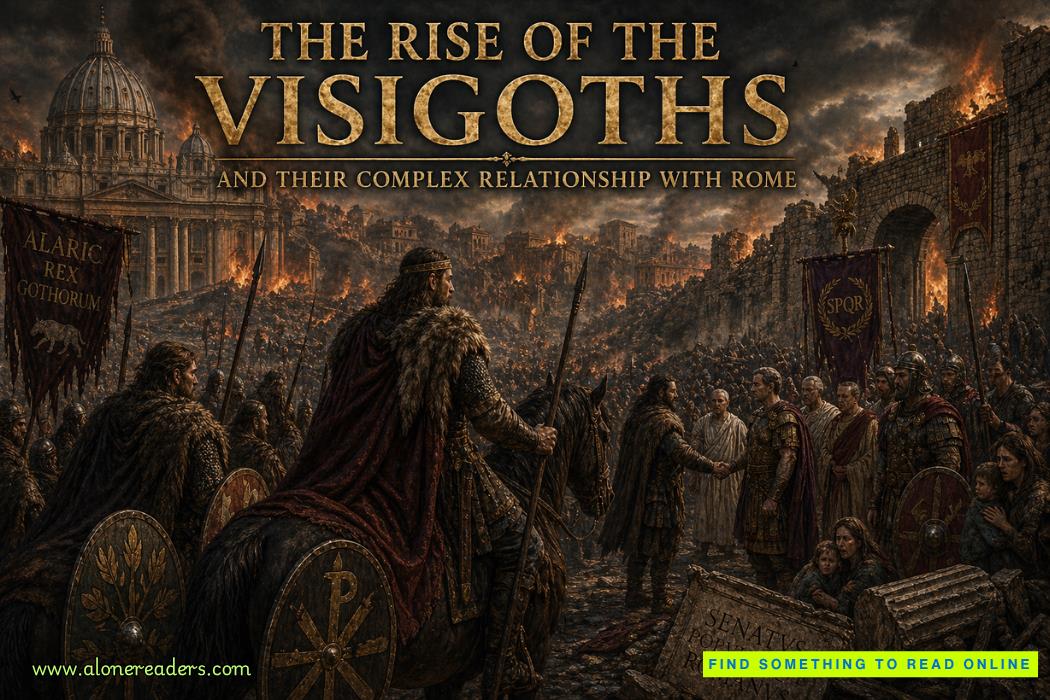
The story of the Visigoths is not simply one of invasion and destruction, but rather a complex and evolving relationship with the Roman Empire, shaped by migration, diplomacy, betrayal, and survival. Emerging from the broader Gothic peoples who originated near the Baltic region, the Visigoths gradually moved southward over centuries, eventually settling along the borders of the Roman world. Their rise cannot be understood without recognizing how deeply intertwined their fate became with that of Rome itself.
The term Visigoth itself was not originally used by the people we now call by that name. It was later applied to distinguish them from the Ostrogoths, meaning roughly “western Goths.” By the third and fourth centuries, these groups had already begun interacting with Rome, sometimes as enemies, sometimes as trading partners, and increasingly as foederati, or allied peoples settled within Roman territory in exchange for military service. This dual identity—as both outsiders and participants in the Roman system—defined their trajectory.
A turning point came in the late fourth century when the Huns, a nomadic and highly mobile group from Central Asia, began pushing westward. Their sudden and violent arrival destabilized the existing balance of power across Eastern Europe. The Visigoths, fearing annihilation, sought refuge within the Roman Empire. In 376 AD, they crossed the Danube River with the permission of Emperor Valens, marking a critical moment of migration that would reshape Roman history. However, what began as a controlled settlement quickly spiraled into crisis.
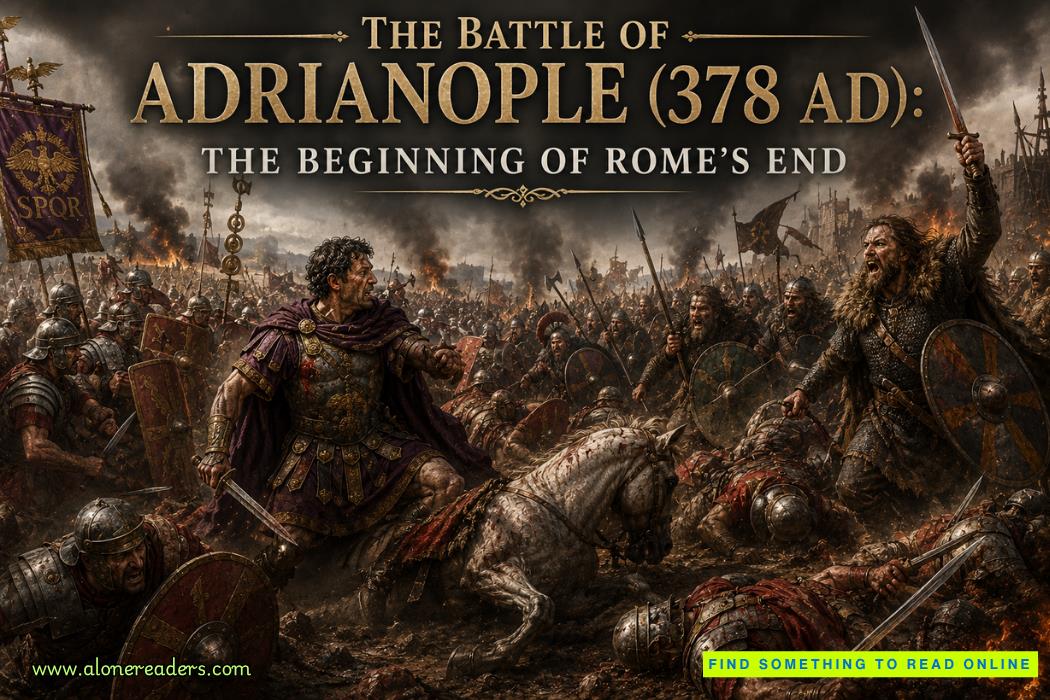
Roman officials were unprepared to manage such a large influx of refugees and often exploited the Visigoths through corruption and neglect. Food shortages, mistreatment, and broken promises fueled resentment among the Gothic population. This tension erupted into open rebellion, culminating in the Battle of Adrianople in 378 AD. In this devastating confrontation, the Visigoths defeated the Roman army and killed Emperor Valens himself—a shocking event that exposed the vulnerability of Roman military power. Adrianople was not just a battle; it was a signal that Rome could no longer dominate its borders as it once had.
In the aftermath, the Roman Empire adopted a more accommodating strategy. The Visigoths were allowed to settle within imperial territory as semi-autonomous allies. While this arrangement provided temporary stability, it also created a precedent in which large groups of non-Roman peoples could maintain their own leadership structures while residing inside the empire. Over time, this blurred the distinction between Roman and barbarian, weakening the centralized authority that had once defined Rome.
The rise of the Visigoths as a major political force is closely associated with their most famous leader, Alaric I. Originally a commander within the Roman military system, Alaric understood both Roman strengths and weaknesses. His ambitions went beyond mere survival; he sought recognition, land, and status for his people within the Roman world. When these demands were repeatedly denied or delayed, conflict became inevitable.
Alaric’s campaigns against Rome were not random acts of destruction but calculated efforts to force negotiation. He led his forces across the Balkans and into Italy, exploiting divisions within the Roman leadership. At this time, the Western Roman Empire was already weakened by internal political struggles, economic decline, and military overstretch. Alaric’s repeated invasions exposed these weaknesses further, as Roman authorities struggled to mount a coordinated defense.
The most iconic event associated with the Visigoths is the Sack of Rome in 410 AD. For the first time in nearly 800 years, the city of Rome fell to a foreign enemy. The psychological impact of this event was enormous, even though the physical destruction was relatively limited compared to later sacks. Alaric’s forces plundered the city for three days, targeting wealth but sparing many religious sites. This restraint reflected both practical considerations and the growing influence of Christianity among the Visigoths.
The sack symbolized more than a military defeat; it marked a profound shift in how Rome was perceived. Once seen as the eternal and invincible center of the world, Rome now appeared vulnerable and diminished. The Visigoths had not just entered the empire—they had struck at its heart.
Despite this dramatic episode, the relationship between the Visigoths and Rome did not end in outright hostility. After Alaric’s death shortly after the sack, his successors continued to negotiate with Roman authorities. Eventually, the Visigoths were settled in southern Gaul (modern-day France) and later expanded into Hispania (modern-day Spain). There, they established a kingdom that would endure for centuries, blending Roman administrative practices with Gothic traditions.
This phase highlights an important aspect of the Visigothic story: their transformation from migratory warriors into rulers of a settled kingdom. They adopted many elements of Roman culture, including law, language, and religion. Initially adherents of Arian Christianity, which differed from the Nicene orthodoxy of Rome, the Visigoths later converted to Catholic Christianity, further integrating into the cultural fabric of their territories.
The Visigothic Kingdom became one of the most stable successor states to emerge from the collapse of the Western Roman Empire. Its rulers codified laws that applied to both Goths and Romans, demonstrating an effort to unify diverse populations under a single system. This legal tradition, often associated with the Liber Iudiciorum, reflects the enduring influence of Roman governance even as political power shifted to new hands.
At the same time, the rise of the Visigoths illustrates the broader transformation of the Roman world during late antiquity. The empire did not simply fall overnight; it evolved, fragmented, and adapted. Groups like the Visigoths were not merely destroyers but also participants in this transformation. They filled the power vacuum left by declining Roman authority, preserving some structures while reshaping others.
The relationship between the Visigoths and Rome can therefore be understood as a dynamic interplay of conflict and cooperation. On one hand, battles like Adrianople and the Sack of Rome highlight the destructive potential of this interaction. On the other hand, the integration of the Visigoths into Roman territory and their eventual role as rulers demonstrates a more complex process of cultural and political exchange.
Economic factors also played a significant role in shaping this relationship. The Roman Empire’s ability to sustain its military and administrative systems depended on a steady flow of resources. As borders became harder to defend and tax revenues declined, Rome increasingly relied on federate groups like the Visigoths for military support. This dependency created a delicate balance, as these groups gained leverage within the empire while remaining only partially integrated.
Religious change further complicated matters. As Christianity spread throughout the Roman world, it also reached the Gothic peoples. However, differences in doctrine sometimes reinforced divisions between Romans and Visigoths. Over time, these differences diminished, especially as the Visigoths aligned more closely with the dominant forms of Christianity within their territories.
The fall of the Western Roman Empire in 476 AD did not mark the end of the Visigoths’ story but rather confirmed their position as one of the key inheritors of Roman legacy in the West. By this time, the structures of imperial rule had already been significantly weakened, and power had shifted to regional kingdoms. The Visigoths were among those who stepped into this new political landscape, carrying forward elements of Roman civilization even as they forged their own identity.
What makes the Visigoths particularly significant is the way they embody the transition from antiquity to the medieval world. Their rise reflects the pressures that reshaped Europe during this period: migration, cultural exchange, and the gradual erosion of centralized authority. Their relationship with Rome, marked by both cooperation and confrontation, reveals how interconnected these processes were.
In examining the rise of the Visigoths, it becomes clear that history is rarely defined by simple narratives of conquest or collapse. Instead, it is shaped by layers of interaction, adaptation, and transformation. The Visigoths were not merely invaders who hastened Rome’s fall; they were also partners, settlers, and eventually rulers who helped shape the post-Roman world.
Their legacy is reflected in the preservation of Roman law, the expansion of Christianity, and the emergence of early medieval kingdoms. Even major events linked to them, such as the Sack of Rome, take on greater significance when understood within the wider context of their relationship with the empire. These were not isolated events, but part of a broader transformation that reshaped Europe’s political and cultural landscape.
Ultimately, the story of the Visigoths invites us to reconsider the idea of Rome’s “fall.” Instead of a sudden collapse, it was a gradual transition in which groups like the Visigoths played a vital role. They were both shaped by the Roman world and instrumental in transforming it, connecting two distinct historical eras.



 The Hundred Days Offensive: How the Allies Defeated Germany in World War I
 The Second Battle of the Marne: The Turning Point of World War I in 1918
 The Spring Offensive of 1918: Germany's Final Gamble to Win World War I
 The Treaty of Brest-Litovsk: How Russia Left World War I
 The Russian Revolution and World War I: How War Brought Down the Tsar
 The Zimmermann Telegram Explained: Germany's Secret Offer to Mexico in World War I