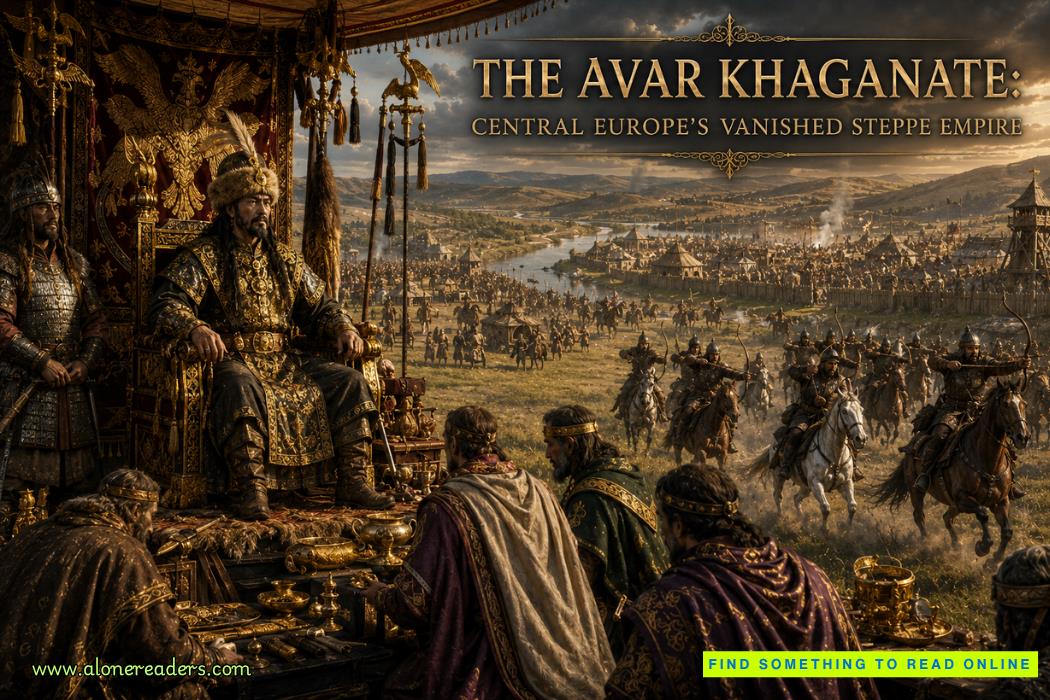
The history of Europe during the early Middle Ages is often dominated by narratives centered on the Byzantine Empire, the Franks, or the rise of the Islamic Caliphates. Yet between these better-known powers existed a formidable empire that ruled the heart of Central Europe for more than two centuries: the Avar Khaganate. Emerging suddenly from the Eurasian steppe during the sixth century, the Avars established one of the most powerful and feared nomadic states in European history. Their cavalry armies terrorized the Balkans, extorted tribute from Constantinople, dominated Slavic tribes across Eastern Europe, and controlled the strategically vital Pannonian Basin for generations. Despite their immense influence, the Avars eventually disappeared so completely that they became one of Europe’s most forgotten civilizations.
The origins of the Avars remain deeply mysterious and continue to provoke scholarly debate. Contemporary Byzantine writers portrayed them as a nomadic people arriving from the distant East, possibly fleeing larger steppe powers in Central Asia. Many historians associate them with remnants of the Rouran Khaganate, a powerful confederation destroyed by the Göktürks in Mongolia during the mid-sixth century. Whether the European Avars were genuine Rouran descendants or a coalition that adopted the prestigious Avar name remains uncertain. This ambiguity reflects one of the defining characteristics of steppe empires: they were often multiethnic political confederations rather than unified ethnic nations in the modern sense.
The arrival of the Avars in Europe around the 550s dramatically altered the balance of power across the continent. They entered a region already weakened by decades of warfare between the Byzantine Empire and various Germanic peoples. The Lombards occupied parts of Central Europe, Slavic tribes were expanding across the Balkans, and Byzantine resources were stretched thin after Justinian’s ambitious reconquests in Italy and North Africa. Into this unstable geopolitical environment rode the Avars, bringing with them the highly mobile military traditions of the Eurasian steppe.
The Avars quickly established themselves as masters of diplomacy and coercion. Byzantine emperors initially attempted to manage them through subsidies and treaties, a strategy commonly used against steppe peoples. But the Avars understood the enormous leverage their military mobility provided. Their cavalry forces could strike rapidly across vast distances, devastate agricultural regions, and retreat before slower armies could respond. This allowed them to pressure neighboring states into paying tribute while simultaneously expanding their authority over surrounding tribes.
The center of Avar power became the Pannonian Basin, a geographically crucial region encompassing much of modern Hungary and surrounding territories. The basin’s open plains were ideal for steppe-style mounted warfare, providing pastureland for enormous horse herds and enabling rapid military movement. From this strategic core, the Avars constructed a sprawling khaganate that stretched across parts of Central and Eastern Europe. Their influence extended over Slavic populations, remnants of Germanic communities, and numerous frontier regions bordering Byzantium.
The political structure of the Avar Khaganate reflected broader nomadic imperial traditions. At the top stood the Khagan, a semi-sacred ruler whose authority combined military leadership with spiritual legitimacy. Beneath him existed layers of aristocratic elites, tribal leaders, and military commanders. The empire functioned less as a centralized bureaucratic state and more as a dynamic network of alliances, tribute systems, and military obligations. Loyalty was maintained through rewards, warfare, redistribution of wealth, and fear.
One of the most significant aspects of Avar history was their relationship with the Slavs. During the sixth and seventh centuries, Slavic groups spread extensively throughout Eastern and Southeastern Europe. The Avars played a major role in shaping this migration process. In many regions, Slavic tribes became subordinate allies or tributaries of the khaganate. Avar military campaigns frequently incorporated large numbers of Slavic infantry, particularly during Balkan raids against Byzantine territories.
This relationship was complex rather than purely oppressive. Some Slavic groups suffered exploitation and domination under Avar rule, while others benefited from Avar military protection and access to trade networks. Over time, cultural interactions between Avars and Slavs became increasingly intertwined. Archaeological evidence suggests extensive blending of customs, technologies, and settlement patterns. In many areas, the distinction between Avar elites and Slavic populations gradually blurred.
The military strength of the Avars represented the core foundation of their empire. Their armies embodied the terrifying efficiency of steppe warfare. Avar cavalrymen excelled in mounted archery, rapid maneuvering, and coordinated raids. They employed composite bows capable of powerful long-range attacks while maintaining mobility on horseback. These tactics often overwhelmed sedentary armies accustomed to slower, more rigid forms of warfare.
The Avars also contributed significantly to the spread of military technologies in Europe. One of the most famous examples is the stirrup, though historians debate the extent of Avar involvement in its diffusion. Regardless, the Avars were associated with advanced cavalry techniques that transformed medieval warfare. Their methods influenced neighboring powers, including the Byzantines and later European cavalry traditions.
The wealth accumulated by the Avar elite became legendary. Byzantine emperors paid enormous quantities of gold and luxury goods to secure peace treaties or prevent devastating invasions. Archaeological discoveries across Hungary and neighboring regions reveal extraordinary treasures buried in elite Avar graves: gold belt fittings, ornate horse equipment, weapons, jewelry, and imported Byzantine objects. These grave goods demonstrate both the immense prosperity of the ruling class and the khaganate’s integration into long-distance trade networks.
The relationship between the Avars and the Byzantine Empire oscillated constantly between diplomacy and warfare. Byzantine rulers often viewed the Avars as both a dangerous threat and a useful buffer against other nomadic groups. Yet the Avars repeatedly launched devastating campaigns into the Balkans, ravaging cities and depopulating large areas. Entire provinces suffered economic collapse under repeated raids.
One of the most dramatic episodes in Avar history occurred during the Siege of Constantinople in 626. In alliance with the Sassanian Persians, the Avars attempted to destroy the Byzantine capital itself. Their forces assembled enormous armies composed of Avar cavalry, Slavic auxiliaries, and allied contingents. The siege represented one of the greatest existential crises faced by Byzantium during the seventh century.
Despite the scale of the assault, Constantinople survived. The city’s massive defensive walls, naval superiority, and effective coordination prevented the Avars and Persians from fully uniting their forces. The failure of the siege marked a critical turning point. Although the Avars remained powerful afterward, their aura of invincibility suffered significant damage. Byzantium gradually recovered strength, while new geopolitical rivals emerged across Europe.
Internally, the Avar Khaganate faced persistent structural vulnerabilities. Like many steppe empires, its cohesion depended heavily on successful military expansion and the continuous flow of wealth to elite factions. When campaigns became less profitable or tribute payments declined, political instability intensified. Rival factions within the aristocracy competed for influence, and subordinate groups became increasingly difficult to control.
The khaganate also experienced demographic and cultural transformation over time. Early Avar elites likely possessed stronger Central Asian cultural characteristics, but generations of settlement in Central Europe produced increasing regional integration. Archaeological evidence reveals evolving burial customs, settlement patterns, and material culture reflecting interactions with Slavic, Germanic, and Byzantine populations. The Avar state gradually became less purely nomadic and more territorially rooted.
Religion within the Avar Khaganate remains partially obscure due to limited written records. The Avars likely practiced forms of steppe shamanistic traditions, ancestor worship, and ritual practices centered around sacred authority and warfare. Elite burials often included horses and elaborate grave offerings, suggesting strong beliefs concerning status and the afterlife. Over time, however, Christian influence from Byzantium and neighboring European kingdoms likely affected portions of the population.
The economy of the khaganate depended on a combination of tribute extraction, pastoralism, agriculture, trade, and raiding. The Pannonian Basin’s fertile lands enabled food production on a scale unusual for many nomadic empires. This agricultural base supported permanent settlements and population growth while sustaining military campaigns. Trade routes connected the khaganate to Byzantium, the Frankish realms, and Eastern Europe, facilitating exchanges of luxury goods, weapons, and slaves.
The decline of the Avar Khaganate accelerated during the late eighth century with the rise of the Carolingian Empire under Charlemagne. The Franks represented a fundamentally different type of political power: a territorially organized Christian monarchy with growing administrative sophistication and military capacity. Charlemagne viewed the Avars both as a military threat and as a source of immense wealth.
Beginning in the 790s, Frankish campaigns launched repeated invasions into Avar territory. These wars proved catastrophic for the khaganate. Frankish forces penetrated deep into the Pannonian Basin and captured the famous Avar ring fortifications, including the legendary “Ring of the Avars,” which supposedly contained enormous accumulated treasures. Contemporary accounts described vast quantities of gold and valuables seized during these campaigns.
The Frankish invasions coincided with internal civil conflict among Avar elites, further weakening resistance. Simultaneously, subordinate Slavic groups increasingly asserted independence. The khaganate fragmented under combined external and internal pressures. By the early ninth century, the Avar political structure had effectively collapsed.
Yet the disappearance of the Avars was not the result of simple annihilation. Instead, they underwent a process common in steppe history: absorption into surrounding populations. Some Avars were incorporated into Frankish-controlled territories, others merged with Slavic communities, and still others may have integrated into later nomadic migrations. Over time, the distinct Avar identity faded from historical records.
Their disappearance created an unusual historical paradox. Although the Avars dominated Central Europe for centuries and profoundly influenced the region’s demographic and political development, they left behind relatively few written records of their own. Most surviving descriptions come from Byzantine, Frankish, or other external observers, often hostile or incomplete. As a result, modern understanding of the Avars relies heavily on archaeology.
Archaeological research over the past century has transformed perceptions of the Avar world. Thousands of graves discovered across Hungary and neighboring countries reveal a highly sophisticated society with complex social hierarchies. Elite burials display astonishing craftsmanship in metalwork, horse equipment, and weaponry. Commoner graves reveal patterns of daily life, settlement, and cultural blending. These discoveries demonstrate that the khaganate was far more than a temporary raiding confederation; it was a durable and adaptive imperial system.
The Avars also played a major role in reshaping the ethnic and political landscape of Eastern Europe. Their dominance accelerated Slavic migrations into the Balkans, weakened Byzantine authority in Southeastern Europe, and altered regional power dynamics for generations. In many respects, the medieval map of Central and Eastern Europe cannot be fully understood without acknowledging the influence of the Avar period.
Modern historians increasingly view the Avar Khaganate as part of the broader continuum of Eurasian steppe empires that connected Europe and Asia across centuries. Like the Huns, Göktürks, Mongols, and other nomadic powers, the Avars demonstrated the extraordinary military and political effectiveness of mobile cavalry societies. They challenged sedentary empires, controlled trade routes, facilitated cultural exchange, and reshaped entire regions through migration and warfare.
At the same time, the Avars reveal the fragility inherent within many steppe imperial systems. Their power depended heavily on military dominance, charismatic leadership, and access to external wealth. Once these mechanisms weakened, the empire rapidly fragmented. Unlike bureaucratic states capable of institutional continuity, nomadic confederations often relied on personal loyalty networks that could dissolve quickly under pressure.
Nevertheless, the legacy of the Avars survived indirectly within European history. Their military innovations influenced medieval warfare. Their political dominance altered the trajectories of Slavic expansion. Their conflicts with Byzantium affected the survival of the Eastern Roman Empire during critical centuries. Their interactions with the Franks contributed to the transformation of Central Europe before the emergence of medieval Christian kingdoms.
The story of the Avar Khaganate ultimately illustrates how entire civilizations can vanish not because they lacked importance, but because history often privileges societies that leave extensive written records or produce direct cultural descendants. The Avars once commanded armies feared from the Danube to Constantinople. They controlled immense wealth, ruled vast territories, and shaped the destiny of Europe during a formative era. Yet today they remain largely absent from popular historical memory.
Their disappearance serves as a reminder that the history of Europe was never shaped solely by settled kingdoms and stone cities. It was also forged by mobile empires of the steppe, whose horsemen carried power, culture, and destruction across continents. The Avar Khaganate stood among the greatest of these forgotten powers: an empire that dominated Central Europe for centuries before dissolving into the shadows of history, leaving behind only buried gold, silent graves, and the echoes of a vanished world.





 The Hundred Days Offensive: How the Allies Defeated Germany in World War I
 The Second Battle of the Marne: The Turning Point of World War I in 1918
 The Spring Offensive of 1918: Germany's Final Gamble to Win World War I
 The Treaty of Brest-Litovsk: How Russia Left World War I
 The Russian Revolution and World War I: How War Brought Down the Tsar
 The Zimmermann Telegram Explained: Germany's Secret Offer to Mexico in World War I