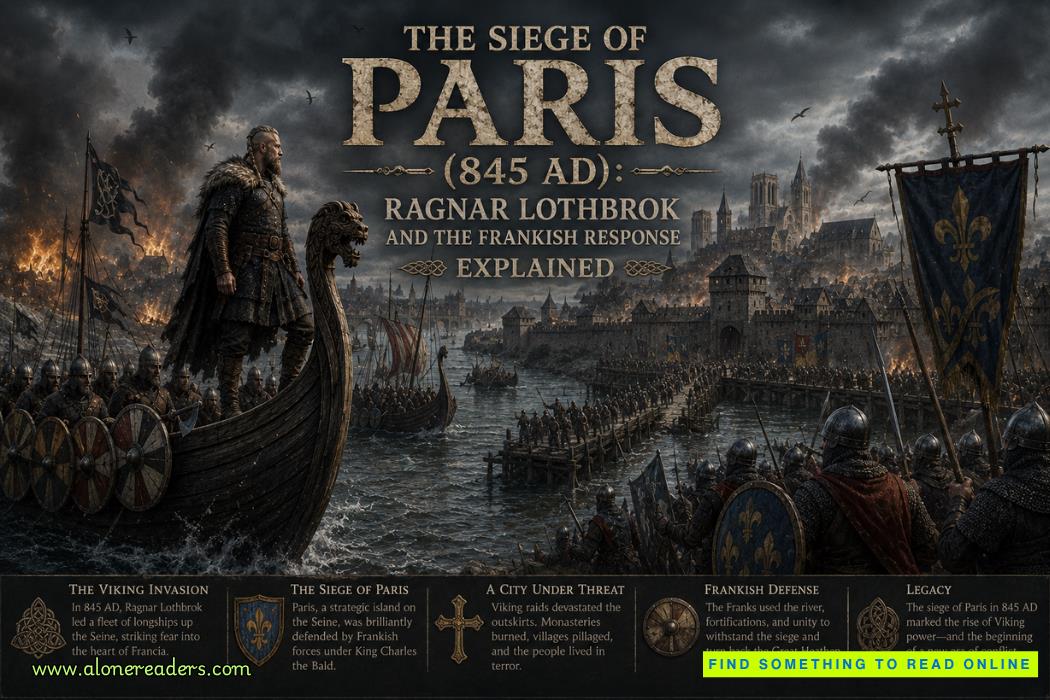
The Siege of Paris in 845 AD stands as one of the most dramatic and consequential episodes of the Viking Age, marking a turning point in the relationship between Scandinavian raiders and the Carolingian world. At the center of this event is the semi-legendary figure Ragnar Lothbrok, whose name has since been woven into both historical chronicles and Norse sagas. Whether fully historical or partly mythologized, the leader associated with this raid orchestrated a bold and calculated assault on one of the most important cities in Western Europe. The Frankish response, shaped by political fragmentation and military limitations, revealed both the vulnerabilities and adaptability of the Carolingian Empire under King Charles the Bald.
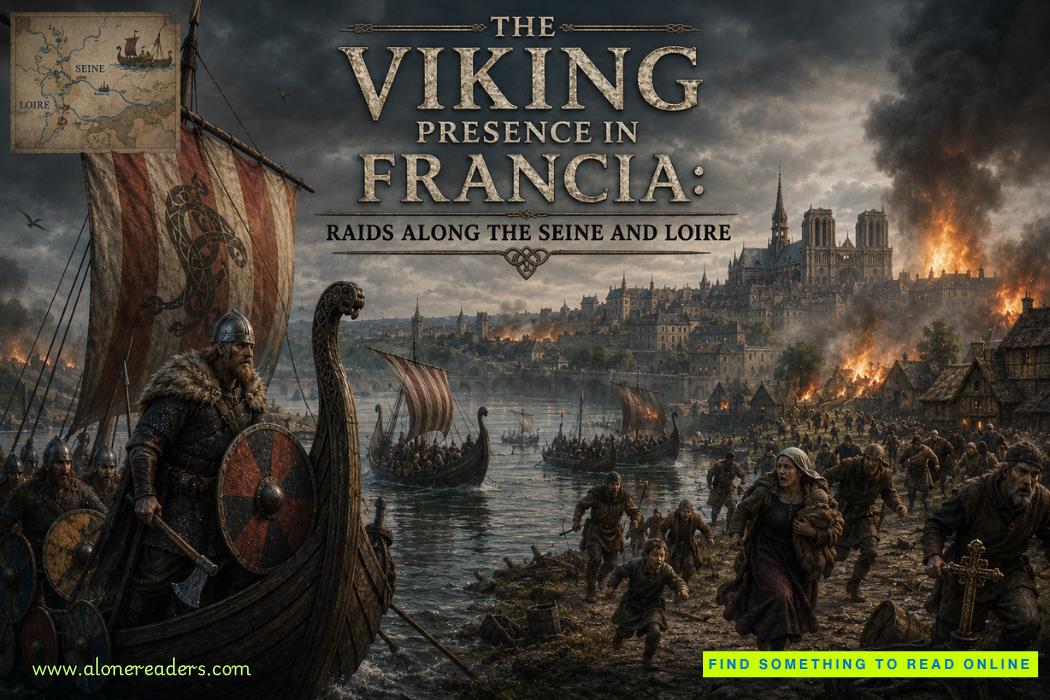
By the mid-ninth century, the Viking expansion had intensified across Europe. Scandinavian warriors, traders, and explorers had begun to exploit the extensive river systems of the Frankish territories, particularly the Seine and Loire rivers, which acted as natural highways into the interior. These waterways allowed Viking fleets to strike deep into regions that were otherwise difficult to access. Paris, situated strategically on the Seine, became an attractive target not only because of its wealth but also because of its symbolic importance within the Frankish realm.
The Viking force that approached Paris in 845 AD was not a mere raiding party but a substantial fleet, reportedly consisting of over one hundred longships and several thousand warriors. The scale of the expedition suggests careful planning and coordination, rather than opportunistic plundering. As they advanced up the Seine, the Vikings encountered limited resistance. Frankish defenses along the river were fragmented and often ineffective, reflecting a broader issue within the empire: the decentralization of military authority. Local lords were responsible for defense, but coordination between them was inconsistent, leaving critical points exposed.
When the Vikings reached Paris in late March, the city presented both an opportunity and a challenge. At this time, Paris was primarily concentrated on the Île de la Cité, a fortified island that offered natural defensive advantages. However, its fortifications were not designed to withstand a prolonged and organized siege by a determined enemy force. The Frankish king, Charles the Bald, attempted to mount a defense by dividing his forces on either side of the Seine, hoping to block the Viking advance. This decision proved disastrous. The Vikings quickly exploited the division, defeating one contingent of the Frankish army and demonstrating their tactical flexibility and battlefield experience.
One of the most striking aspects of the siege was the psychological warfare employed by the Vikings. According to contemporary accounts, after defeating part of the Frankish army, the Vikings executed captured soldiers and displayed their bodies in a gruesome manner to intimidate the defenders. This act was not merely cruelty for its own sake; it was a calculated strategy designed to weaken morale and compel surrender. The Franks, already shaken by military defeat, now faced an enemy that combined brutal efficiency with psychological terror.
Ragnar Lothbrok, as described in later sources, is portrayed as a charismatic and cunning leader who understood both warfare and negotiation. Whether or not he personally led the siege, the Viking leadership clearly recognized that capturing Paris outright might be less advantageous than forcing the Franks into a position of submission. Rather than attempting to annihilate the city, the Vikings focused on demonstrating their power and extracting wealth. This approach reflects a broader Viking strategy during this period: raids were often designed to secure tribute rather than permanent occupation.
As the siege intensified, Charles the Bald faced a difficult decision. The Frankish forces were unable to dislodge the Vikings, and the threat of further destruction loomed large. In a move that would become characteristic of later Carolingian policy, the king chose to negotiate. He agreed to pay a substantial ransom—reportedly 7,000 pounds of silver and gold—to persuade the Vikings to withdraw. This payment, known as Danegeld, marked one of the earliest recorded instances of a European ruler buying off Viking attackers.
The decision to pay Danegeld has been debated extensively by historians. On one hand, it can be seen as a pragmatic response to an immediate crisis. Paris was spared from complete destruction, and the Vikings withdrew without establishing a permanent foothold. On the other hand, the payment set a dangerous precedent. By demonstrating that the Franks were willing to pay for peace, it effectively incentivized future raids. Vikings across Scandinavia would have learned that the Frankish kingdoms were both wealthy and vulnerable, making them prime targets for repeated attacks.
The aftermath of the siege exposed deep structural weaknesses within the Carolingian Empire. The fragmentation of authority, combined with the lack of a unified military response, made it difficult to defend against fast-moving and adaptable Viking forces. In response, the Franks began to implement changes that would shape the future of medieval warfare and governance. Fortifications along rivers were strengthened, local lords were granted greater responsibility for defense, and the concept of fortified bridges began to emerge as a means of controlling key points along waterways.
At the same time, the siege contributed to the evolving image of the Vikings in European consciousness. They were no longer seen merely as distant raiders but as a persistent and formidable threat capable of striking at the heart of Christian kingdoms. The figure of Ragnar Lothbrok, whether historical or legendary, became a symbol of this new reality. His association with the siege of Paris elevated his status in both Norse and European traditions, blending fact and myth into a narrative that would endure for centuries.
It is important to recognize that the Siege of Paris in 845 was not an isolated event but part of a broader pattern of interaction between the Vikings and the Carolingian world. These interactions were not limited to violence; they also included trade, cultural exchange, and eventual integration. Over time, Viking leaders would settle in Frankish territories, most notably in the region that would become Normandy. This transformation from raiders to rulers underscores the complexity of the Viking Age, challenging simplistic notions of Vikings as purely destructive forces.
The siege also highlights the importance of geography in shaping historical events. The Seine River, which facilitated trade and communication, also became a conduit for invasion. Control of such waterways was crucial, and the inability of the Franks to secure them effectively played a significant role in their vulnerability. The Vikings, with their advanced shipbuilding technology and navigational skills, were uniquely positioned to exploit these geographical features. Their longships, capable of both oceanic and riverine travel, gave them a strategic advantage that few contemporary forces could match.
In examining the Frankish response, it becomes clear that the Carolingian rulers were operating within significant constraints. The empire, once unified under Charlemagne, had been divided among his heirs, leading to internal conflicts and weakened central authority. Charles the Bald, ruling the western portion, faced not only external threats from the Vikings but also internal challenges from rival nobles and factions. These competing pressures limited his ability to mount a coordinated and sustained defense.
Despite these challenges, the Frankish response was not entirely ineffective. The decision to pay Danegeld, while controversial, preserved the city and bought time for the kingdom to adapt. In the years following the siege, there was a gradual shift toward more organized and localized defense systems. Castles and fortified towns began to proliferate, and the role of mounted warriors, or knights, became increasingly important. These developments would lay the groundwork for the feudal system that characterized much of medieval Europe.
The legacy of the Siege of Paris in 845 extends beyond its immediate impact. It serves as a case study in the dynamics of power, adaptation, and survival during a period of intense transformation. The Vikings demonstrated their ability to project power across vast distances, while the Franks revealed both their vulnerabilities and their capacity for resilience. The encounter between these two worlds was not merely a clash of arms but a moment of profound historical significance that shaped the trajectory of European development.
In many ways, the story of Ragnar Lothbrok and the siege encapsulates the essence of the Viking Age: bold exploration, strategic ingenuity, and the relentless pursuit of opportunity. It also reflects the challenges faced by established powers in responding to new and unconventional threats. The lessons of 845 would resonate for generations, influencing military strategies, political decisions, and cultural perceptions across Europe.
Ultimately, the Siege of Paris was not just about the capture of a city or the payment of a ransom. It was a defining moment that revealed the shifting balance of power in early medieval Europe. The Vikings, once peripheral actors, had forced their way into the center of European affairs, while the Franks were compelled to rethink their approach to defense and governance. The echoes of this event can be traced through subsequent centuries, as both sides continued to adapt and evolve in response to each other.
The enduring fascination with this episode is a testament to its dramatic and symbolic power. Whether viewed through the lens of history or legend, the image of Viking longships ascending the Seine and confronting the defenses of Paris remains one of the most iconic scenes of the early Middle Ages. It is a story of confrontation and compromise, of destruction and survival, and of the complex interplay between two very different worlds brought together by the currents of history.



 The Hundred Days Offensive: How the Allies Defeated Germany in World War I
 The Second Battle of the Marne: The Turning Point of World War I in 1918
 The Spring Offensive of 1918: Germany's Final Gamble to Win World War I
 The Treaty of Brest-Litovsk: How Russia Left World War I
 The Russian Revolution and World War I: How War Brought Down the Tsar
 The Zimmermann Telegram Explained: Germany's Secret Offer to Mexico in World War I