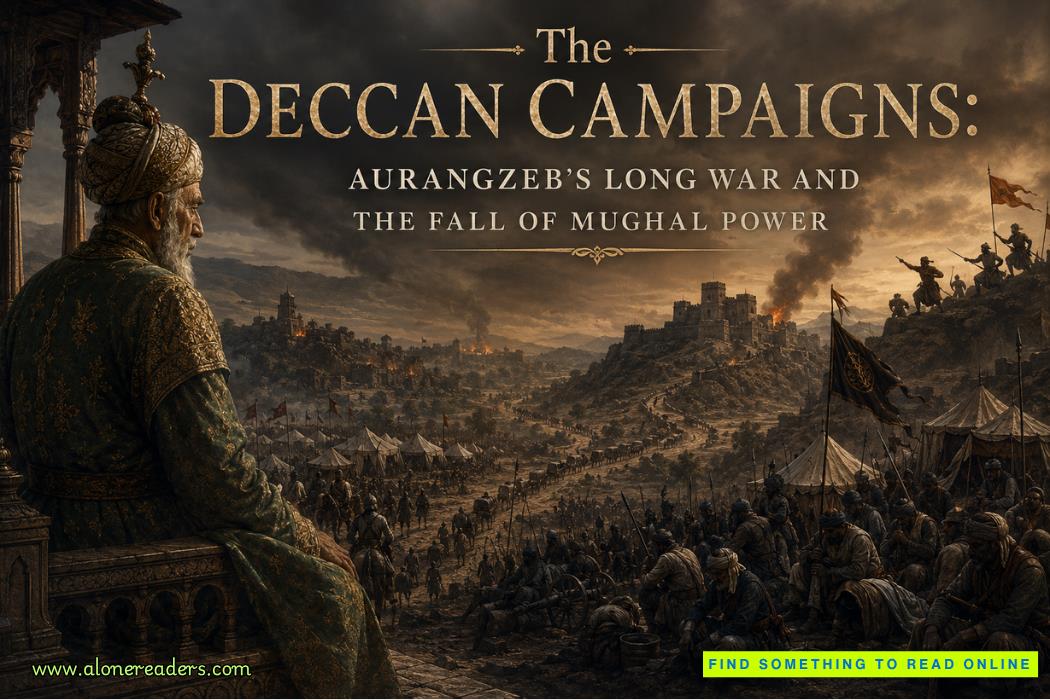
Aurangzeb’s Deccan campaigns stand as one of the most prolonged and consequential military undertakings in early modern South Asian history. What began as a strategic effort to consolidate Mughal authority over the southern sultanates gradually transformed into a decades-long war of attrition that drained imperial resources, destabilized governance, and reshaped the political landscape of the subcontinent. The Deccan was not merely a geographic frontier; it was a region of complex alliances, resilient local powers, and difficult terrain that challenged even the most formidable empires. Aurangzeb’s decision to personally lead this campaign marked a turning point in Mughal history, one that would ultimately expose the limits of imperial expansion.
The origins of the Deccan campaigns can be traced to the longstanding Mughal ambition to dominate the southern kingdoms of Bijapur and Golconda. These sultanates had maintained a degree of independence despite Mughal pressure, serving as both political rivals and economic prizes due to their wealth, trade networks, and strategic locations. Aurangzeb, who had prior experience governing the Deccan as a prince, viewed their annexation as essential for securing Mughal supremacy across the subcontinent. His earlier campaigns in the region had already demonstrated his familiarity with its challenges, yet they also revealed the resilience of local resistance.
By the time Aurangzeb ascended the throne in 1658, the Deccan question remained unresolved. Initially, his attention was divided between consolidating power in the north and managing internal rebellions. However, by the 1680s, he shifted his focus decisively toward the south, launching a full-scale campaign that would consume the remainder of his reign. This decision was influenced not only by the desire to conquer Bijapur and Golconda but also by the growing threat of the Marathas, a rising power under the leadership of Shivaji and later his successors.
The conquest of Bijapur in 1686 and Golconda in 1687 represented significant military achievements. These victories expanded Mughal territory and brought immense wealth into the imperial treasury, particularly from Golconda’s diamond mines. Yet these successes proved to be deceptively costly. The annexation of these sultanates eliminated buffer states that had previously contained Maratha expansion, effectively bringing the Mughals into direct and continuous conflict with a highly mobile and adaptive enemy.
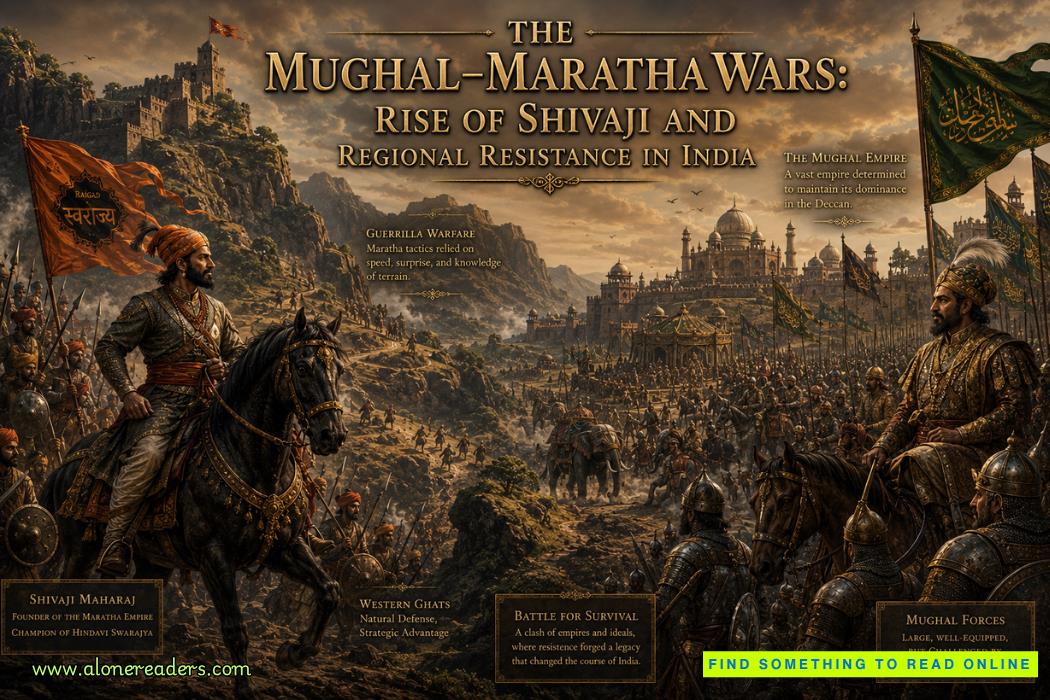
The Marathas, under Shivaji and later leaders such as Sambhaji and Rajaram, developed a style of warfare that was uniquely suited to the Deccan’s rugged terrain. Their use of guerrilla tactics, rapid cavalry movements, and intimate knowledge of the landscape allowed them to strike Mughal forces unpredictably and retreat before a decisive response could be mounted. Unlike traditional set-piece battles, this form of warfare prolonged the conflict and eroded Mughal military effectiveness. Aurangzeb, accustomed to conventional warfare and siege operations, found it difficult to adapt to this elusive enemy.
Aurangzeb’s strategy relied heavily on capturing and holding forts, which were central to control in the Deccan. The region was dotted with hill forts that served as defensive strongholds for the Marathas. The Mughal army spent years besieging these forts, often at great cost in manpower and resources. Even when a fort was captured, it was frequently recaptured by the Marathas shortly thereafter. This cycle of conquest and loss created a perpetual state of warfare that exhausted both sides but disproportionately affected the Mughals due to the scale of their operations.
The logistical challenges of the Deccan campaigns were immense. Supplying a large imperial army in a distant and hostile region required a complex network of transportation and provisioning. The long supply lines stretched from the northern heartlands of the empire to the southern frontiers, making them vulnerable to disruption. Maratha forces often targeted these supply lines, further complicating Mughal efforts to sustain their campaign. The financial burden of maintaining such a vast military presence over decades placed severe strain on the imperial treasury.
Aurangzeb’s prolonged absence from the northern centers of power also had significant administrative consequences. By relocating the imperial court to the Deccan, he effectively shifted the focus of governance away from the empire’s traditional core regions. This absence weakened central control and allowed regional governors and nobles to exercise greater autonomy. Over time, this contributed to the fragmentation of authority within the empire, as local elites began to prioritize their own interests over those of the central administration.
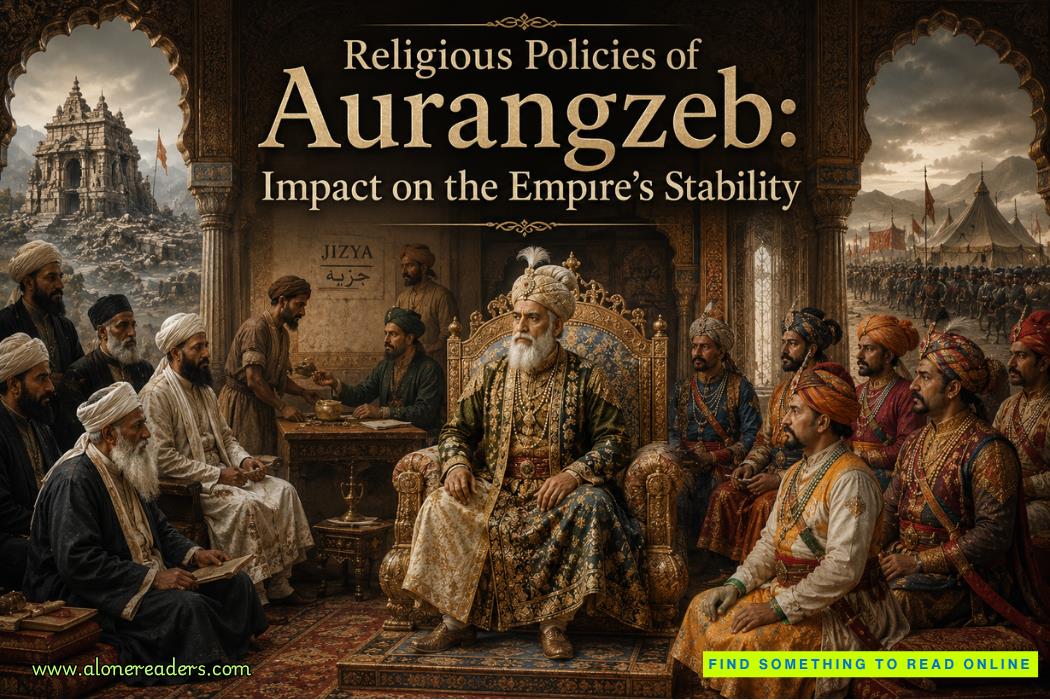
Religious policy also played a role in shaping the dynamics of the Deccan campaigns. Aurangzeb’s reign is often associated with a more orthodox interpretation of Islam, which influenced his approach to governance and relations with non-Muslim subjects. In the Deccan, where the population was diverse and included significant Hindu communities, these policies sometimes exacerbated tensions. While the extent of their impact is debated, it is clear that the combination of military pressure and perceived religious rigidity complicated efforts to secure lasting loyalty in the region.
The human cost of the Deccan campaigns was immense. Decades of warfare led to widespread devastation, including the destruction of agricultural lands, displacement of populations, and disruption of trade. The constant movement of armies and the repeated sieges of towns and forts created an environment of instability and insecurity. For many inhabitants of the Deccan, the war was not a distant political struggle but a daily reality that affected their livelihoods and survival.
As the war dragged on, Aurangzeb himself grew older and increasingly isolated. He spent the final decades of his life in the Deccan, personally overseeing military operations and administrative decisions. His dedication to the campaign reflected both his determination and his inability to bring the conflict to a decisive conclusion. In his later years, he is said to have expressed a sense of regret and exhaustion, recognizing the immense toll that the war had taken on his empire.
The consequences of the Deccan campaigns became fully apparent after Aurangzeb’s death in 1707. The Mughal Empire, though still vast, was significantly weakened. The prolonged war had depleted its financial resources, overstretched its military, and undermined its administrative cohesion. In the absence of strong central leadership, succession struggles further destabilized the empire, leading to a period of political fragmentation.
Meanwhile, the Marathas emerged from the conflict as a formidable power. Although they had suffered losses during the war, their decentralized structure and adaptive strategies allowed them to survive and eventually expand their influence. In the decades following Aurangzeb’s death, the Marathas would extend their reach across much of the subcontinent, effectively filling the power vacuum left by the declining Mughal authority.
The Deccan campaigns also had broader implications for the subcontinent’s political landscape. The weakening of the Mughal Empire created opportunities for regional powers such as the Nizam of Hyderabad, the Nawabs of Bengal and Awadh, and various other states to assert their independence. This fragmentation of authority set the stage for new forms of political competition and realignment, which would later be exploited by European trading companies seeking to expand their influence in India.
In assessing Aurangzeb’s Deccan campaigns, it is important to recognize both their ambition and their limitations. On one hand, they demonstrated the capacity of the Mughal state to mobilize vast resources and sustain a prolonged military effort. On the other hand, they revealed the inherent challenges of governing a diverse and expansive empire. The Deccan war highlighted the difficulties of integrating distant regions, managing local resistance, and maintaining administrative cohesion over long periods of conflict.
One of the most significant lessons of the Deccan campaigns is the concept of imperial overstretch. Aurangzeb’s determination to extend Mughal authority to its furthest limits ultimately undermined the stability of the empire. By committing so many resources to a single, protracted conflict, he left other regions vulnerable and weakened the overall structure of governance. This imbalance contributed to the gradual erosion of imperial power.
The Deccan campaigns also underscore the importance of adaptability in warfare. The Mughal military, which had been highly effective in earlier periods, struggled to adjust to the unconventional tactics of the Marathas. This mismatch between strategy and environment prolonged the conflict and reduced the effectiveness of Mughal operations. In contrast, the Marathas’ flexibility and local knowledge allowed them to sustain resistance and eventually gain the upper hand.
Aurangzeb’s legacy remains a subject of debate among historians. Some view him as a determined and capable ruler who sought to uphold the principles of his empire, while others criticize his policies and decisions for contributing to its decline. The Deccan campaigns are central to this debate, as they encapsulate both his strengths and his weaknesses. They reflect his commitment to expansion and control, as well as the unintended consequences of those ambitions.
Ultimately, the Deccan campaigns represent a turning point in the history of the Mughal Empire. They marked the transition from a period of expansion and consolidation to one of decline and fragmentation. The war’s long duration, high cost, and inconclusive outcome highlight the challenges of sustaining imperial power in the face of determined resistance and changing political realities.
The story of Aurangzeb’s Deccan campaigns is not merely one of battles and conquests; it is a narrative of endurance, ambition, and transformation. It illustrates how the pursuit of dominance can lead to unforeseen consequences, reshaping the course of history in profound ways. Through this lens, the Deccan war can be understood as both the culmination of Mughal imperial ambition and the beginning of its unraveling, a slow-burning conflict whose effects would echo across the subcontinent for generations.



 The Hundred Days Offensive: How the Allies Defeated Germany in World War I
 The Second Battle of the Marne: The Turning Point of World War I in 1918
 The Spring Offensive of 1918: Germany's Final Gamble to Win World War I
 The Treaty of Brest-Litovsk: How Russia Left World War I
 The Russian Revolution and World War I: How War Brought Down the Tsar
 The Zimmermann Telegram Explained: Germany's Secret Offer to Mexico in World War I