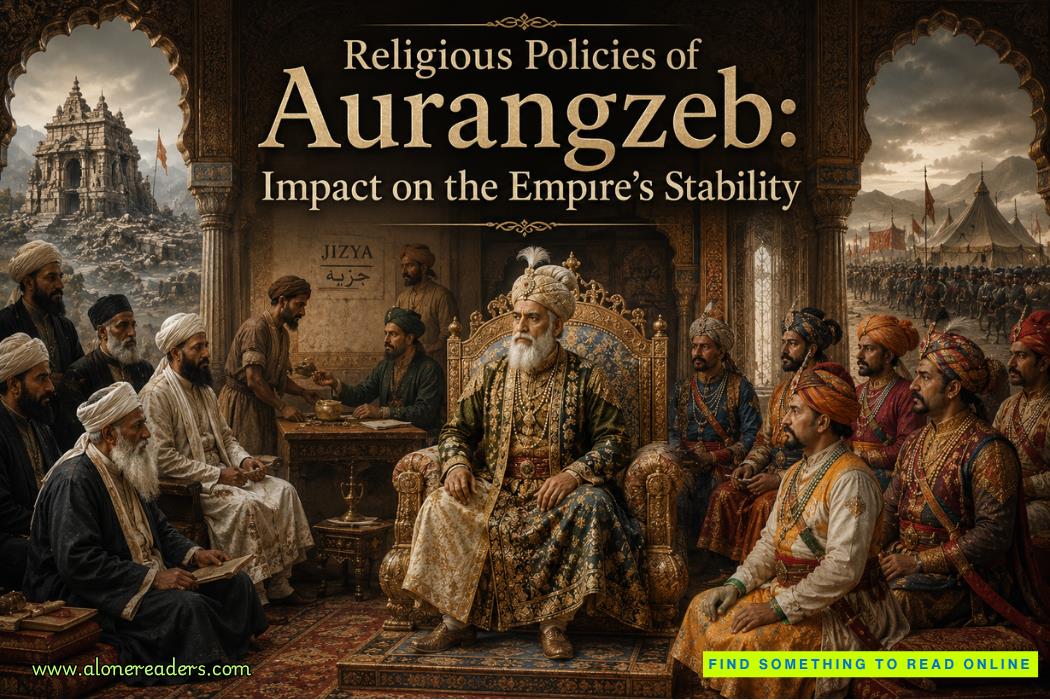
The reign of Aurangzeb Alamgir (1658–1707) stands as one of the most consequential and contested chapters in the history of the Mughal Empire, and few aspects of his rule have been more scrutinized than his religious policies and their impact on the stability of the empire. On the surface, Aurangzeb appears as the archetypal “orthodox” ruler who sought to reshape the Mughal state into a more rigorously Islamic polity, aligning governance with Sharia and re‑establishing the political primacy of Islam in a land of immense religious diversity. However, beneath this official project lies a more intricate story: one in which ideology, politics, and imperial overreach intertwined to gradually erode the very cohesion that had held the empire together under his predecessors. The religious policies of Aurangzeb were not merely abstract decrees; they were concrete instruments that reshaped taxation, military alliances, and local loyalties, and in so doing they played a central role in the long papering of imperial stability toward the end of the Mughal age.
At the heart of Aurangzeb’s religious stance was a deliberate reversal of Akbar’s policy of religious accommodation. Akbar had cultivated a court culture in which Hindu nobles, Jain scholars, Christian missionaries, and Sufi mystics all found space, and he had abandoned the jizya tax on non‑Muslims as part of a broader vision of sulh‑i kul (universal peace). This policy had helped bind Rajput kingdoms, Maratha intermediaries, and regional Hindu elites into the Mughal framework, even if unevenly. Aurangzeb, in contrast, saw this accommodation as a source of religious compromise and political vulnerability. His own Sunni orthodoxy, shaped by Naqshbandi Sufi influences and the advice of conservative ulema, led him to pursue a state that more visibly reflected Islamic norms, from the prohibition of music in court to the reinforcement of Muslim legal institutions. Yet this shift was also political: by emphasizing religious distinction, Aurangzeb hoped to consolidate the loyalty of the Muslim elite and sanctify imperial authority in an era of growing internal and regional competition.
One of the most symbolically charged steps taken by Aurangzeb was the reimposition of the jizya tax in 1679, a poll tax levied on non‑Muslim adult males that had been abolished by Akbar over a century earlier. The reintroduction of jizya was not merely a fiscal measure; it was a public declaration that the emperor regarded his non‑Muslim subjects as dhimmis (protected but subordinate) rather than equal partners in the imperial project. For many Hindu peasants, merchants, and even members of the urban elite, this tax became a daily marker of difference and inferior status. The collection machinery of jizya often meant intrusive supervision, arbitrary assessments, and pressure on local officials to meet revenue targets, which in turn provoked resentment and, at times, open protest. Some contemporary accounts suggest that even certain Mughal nobles and urban elites criticized the move, fearing that it would alienate powerful Hindu communities whose cooperation had underpinned earlier Mughal success. When religious symbolism is fused with economic pressure, the state risks transforming quiet loyalty into simmering grievance.
Equally significant—and far more visible—was Aurangzeb’s policy of selective temple destruction and desecration. Mughal rulers before him had occasionally targeted religious sites*, but Aurangzeb elevated such actions into a more systematic pattern, especially against temples associated with political resistance or regional powers that challenged imperial authority. The Keshavadev Temple in Mathura, the Vishwanath Temple in Varanasi, and numerous shrines in the Deccan and western India were either destroyed or converted into mosques, often following military campaigns or local uprisings. These acts carried a symbolic weight far beyond their immediate material cost: they signaled that the emperor felt personally empowered to redefine the sacred geography of his realm. For many Hindu communities, the violation of a temple was not only a spiritual wound but also a political statement that their gods and therefore their honor were subordinate to Mughal will. In regions where temple networks were tied to local leadership, patronage, and revenue, such destruction could break the social contract that had linked local elites to the imperial center.
At the same time, Aurangzeb’s attempt to redefine religious legitimacy also affected the Muslim community itself. While he projected himself as a defender of orthodoxy, his policies often sharpened sectarian fault lines rather than healing them. His hostility toward the Shia rulers of Bijapur and Golconda in the Deccan was framed in part as a struggle against heretical regimes, and after their conquest he imposed Sunni institutions and ulama into regions that had long nurtured Shia and hybrid religious practices. Yet, by dismantling these regional states, Aurangzeb also removed buffer powers that could have checked the rising strength of the Marathas. In other words, his religious zeal in the Deccan inadvertently created a power vacuum that would later be filled by a militant Maratha force that had little incentive to treat the Mughals as legitimate overlords. Religion, in this context, became a tool of imperial centralization that simultaneously weakened the empire’s periphery.
The impact of Aurangzeb’s religious policies on the Rajput elites is another crucial dimension of the empire’s eroding stability. For much of the sixteenth and early seventeenth century, the Rajputana states had been integrated into the Mughal system through matrimonial alliances, military service, and revenue arrangements. Akbar, Jahangir, and even Shah Jahan had allowed Rajput rulers a degree of autonomy in exchange for loyalty and military support. Aurangzeb, however, saw Rajput religious practices, Hindu deities, and regional autonomy as sources of potential disloyalty. After the death of Raja Jaswant Singh of Marwar, Aurangzeb sought to annex Jodhpur and impose direct control, which triggered a Rajput rebellion. Though the conflict was eventually contained, the trust between the Mughal crown and many Rajput houses never fully recovered. When the emperor later campaigned exhaustively in the Deccan, he could no longer rely on the Rajputs as a stable military backbone, and this lack of dependable allies placed additional strain on the already overextended Mughal army.
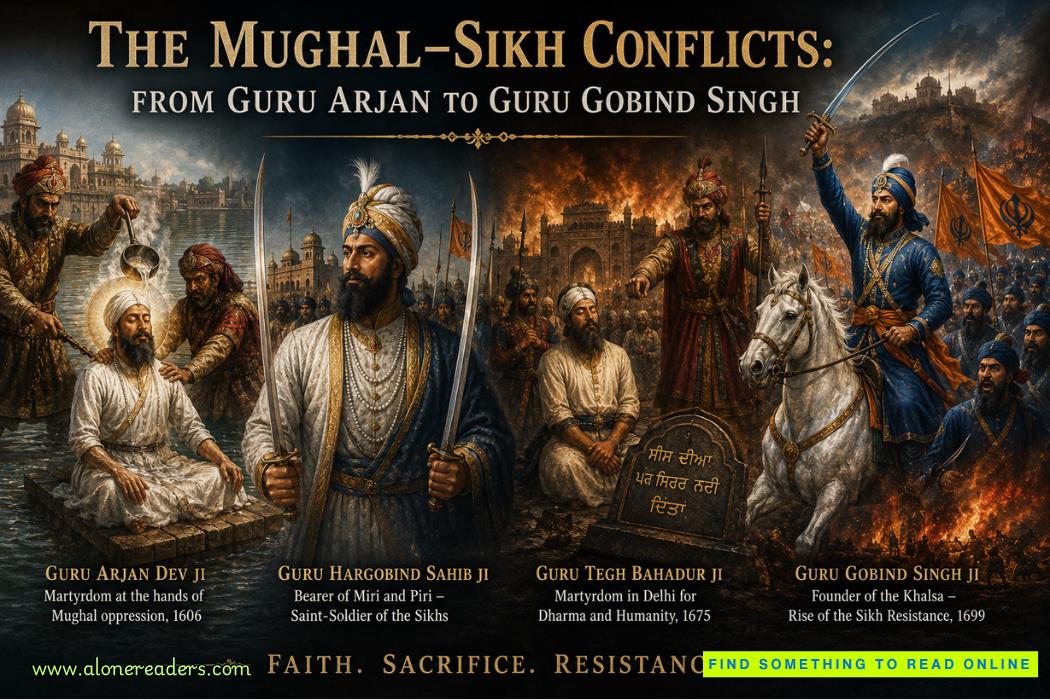
A similar pattern of religious‑political alienation emerged with the Sikhs. The execution of Guru Tegh Bahadur in 1675, ostensibly for refusing to convert to Islam, was a pivotal moment that transformed the Sikh community from a largely devotional movement into a militant religious‑political force. Under his successor, Guru Gobind Singh, the Sikhs institutionalized the Khalsa brotherhood, combining religious discipline with military training and a sharp sense of grievance against Mughal authority. Aurangzeb may have seen this act as necessary to assert the supremacy of Islamic law, but in practice it forged a powerful adversary that would grow into a major regional power in the eighteenth century. The emotional and ideological dimension of such religious confrontations matters as much as the immediate outcome: once a community internalizes the belief that the emperor is its oppressor rather than protector, loyalty becomes contingent and fragile.
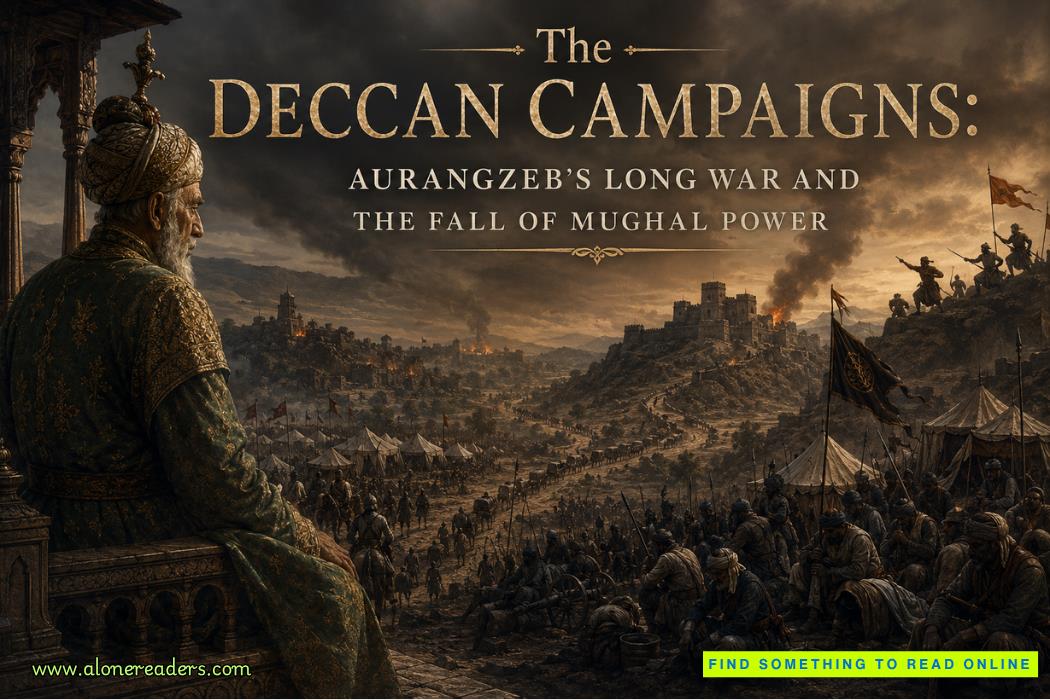
In the Deccan and the south, the interaction between Aurangzeb’s religious posture and his military ambitions proved particularly destabilizing. The Deccan campaigns, which consumed much of the second half of his reign, were framed as struggles against both Shia sultanates and the Maratha challenge, but they were also sustained by the idea that Aurangzeb was waging a kind of holy war to consolidate a Sunni Islamic order across the peninsula. The conquest of Bijapur in 1686 and Golconda in 1687 temporarily expanded the empire’s reach, yet the cost was staggering: enormous expenditure, stretched supply lines, and the permanent relocation of the imperial court to the Deccan. This, in turn, weakened Mughal capacity to respond quickly to unrest in the north and center. Moreover, the religious rhetoric surrounding these campaigns often blurred the line between political necessity and sectarian animus, which made it harder for local elites to see Mughal dominance as neutral or legitimate. Over time, the Deccan became a theater of chronic instability rather than a secure imperial core.
Another underapprecadratic yet significant effect of Aurangzeb’s religious policies was on the administrative culture of the empire. By favoring orthodox Muslim clerics in legal and advisory roles and by signaling that Islamic orthodoxy was politically advantageous, he encouraged a self‑selecting bureaucracy that prized religious conformity. This did not mean that all Hindu officials were dismissed overnight, but the symbolic ceiling for non‑Muslims rose, and many Hindu zamindars, revenue officials, and local leaders began to view their relationship with the state as transactional rather than loyal. In some regions, Hindu elites responded by withdrawing into local patronage networks or collaborating with rising regional powers such as the Marathas, the Sikhs, or emerging successor states. The centralization of religious authority thus coincided with the decentralization of political loyalty, a paradox that accelerated as Aurangzeb’s health and mobility declined.
When viewed through the lens of imperial stability, Aurangzeb’s religious policies can be understood as a double‑edged sword. In the short term, they helped him mobilize conservative Muslim support, justify harsh measures against rebellious groups, and project a vision of the empire as a divinely sanctioned Islamic order. But in the long term, they fragmented his base of support, inflamed religious and regional identities, and converted potential allies into reluctant or openly hostile actors. The temples destroyed, the jizya reimposed, the Rajput trust broken, the Sikh community radicalized, and the Deccan wars prolonged all contributed to a cumulative erosion of Mughal cohesion rather than a stable consolidation. By the time Aurangzeb died in 1707, the empire was still vast in territory, but its internal bonds had frayed, and the succession crisis among his sons exposed the weakness of a system that had become overstretched, ideologically rigid, and politically brittle.
In the broader narrative of the Mughal Empire, the religious policies of Aurangzeb emerge not as an isolated set of choices but as a crucial accelerator of decline. They did not, in themselves, cause the empire’s collapse—economic strain, administrative overreach, and external European pressures all played major roles—but they deepened the fractures and weakened the glue that had kept a multiconfessional society tied to the imperial center. The next generations of Mughal rulers would inherit an empire that was larger on the map but smaller in spirit, where local identities mattered more than imperial loyalty and where the memory of religious controversies lingered far longer than Aurangzeb’s victories. In the end, Aurangzeb’s attempt to make the Mughal state more religiously coherent may have made it less politically stable, a sober lesson in the complex relationship between faith, power, and imperial endurance.



 The Hundred Days Offensive: How the Allies Defeated Germany in World War I
 The Second Battle of the Marne: The Turning Point of World War I in 1918
 The Spring Offensive of 1918: Germany's Final Gamble to Win World War I
 The Treaty of Brest-Litovsk: How Russia Left World War I
 The Russian Revolution and World War I: How War Brought Down the Tsar
 The Zimmermann Telegram Explained: Germany's Secret Offer to Mexico in World War I