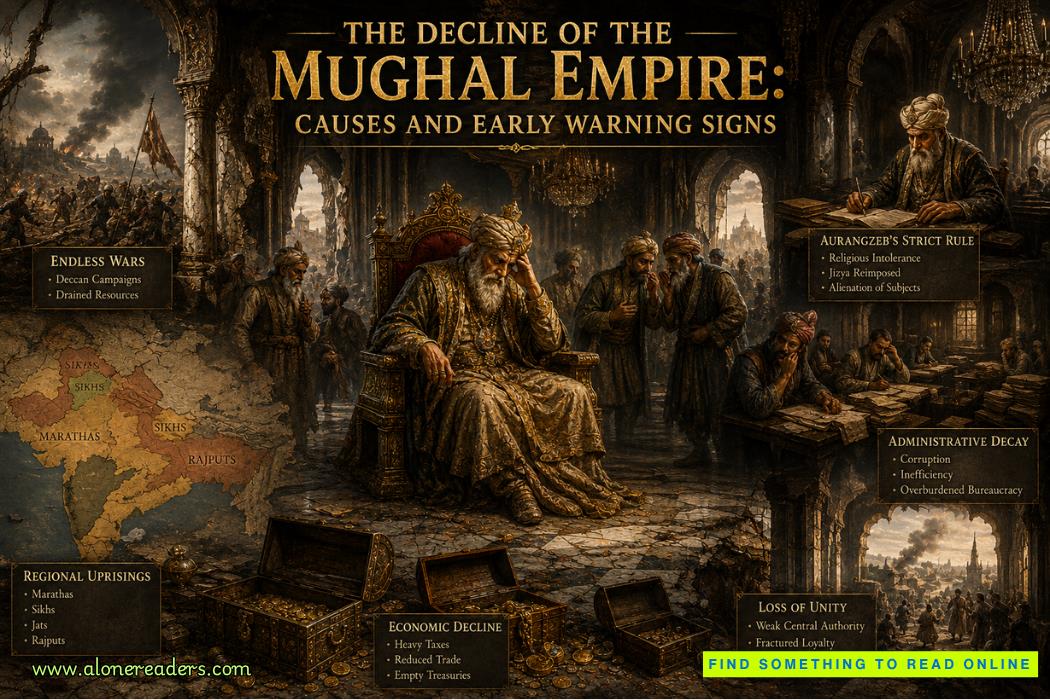
The Mughal Empire, once one of the most powerful and culturally vibrant empires in the world, did not collapse suddenly but instead slowly unraveled under the weight of internal weaknesses and external pressures. At its height under rulers like Akbar, Jahangir, and Shah Jahan, the empire represented administrative brilliance, military strength, and cultural harmony. However, beneath this grandeur lay structural issues that would later accelerate its decline. Understanding the causes and early signs of this decline offers a revealing look into how even the mightiest empires can falter.
One of the most significant turning points came during the reign of Aurangzeb, whose policies marked a stark departure from the inclusive approach of his predecessors. Unlike Akbar, who promoted religious tolerance and administrative cooperation across communities, Aurangzeb pursued a more orthodox and rigid policy. His reimposition of the jizya tax on non-Muslims and destruction of certain temples alienated large segments of the population, particularly the Hindus who had previously played key roles in governance and military service. This shift not only weakened internal unity but also sowed the seeds of resistance across different regions.
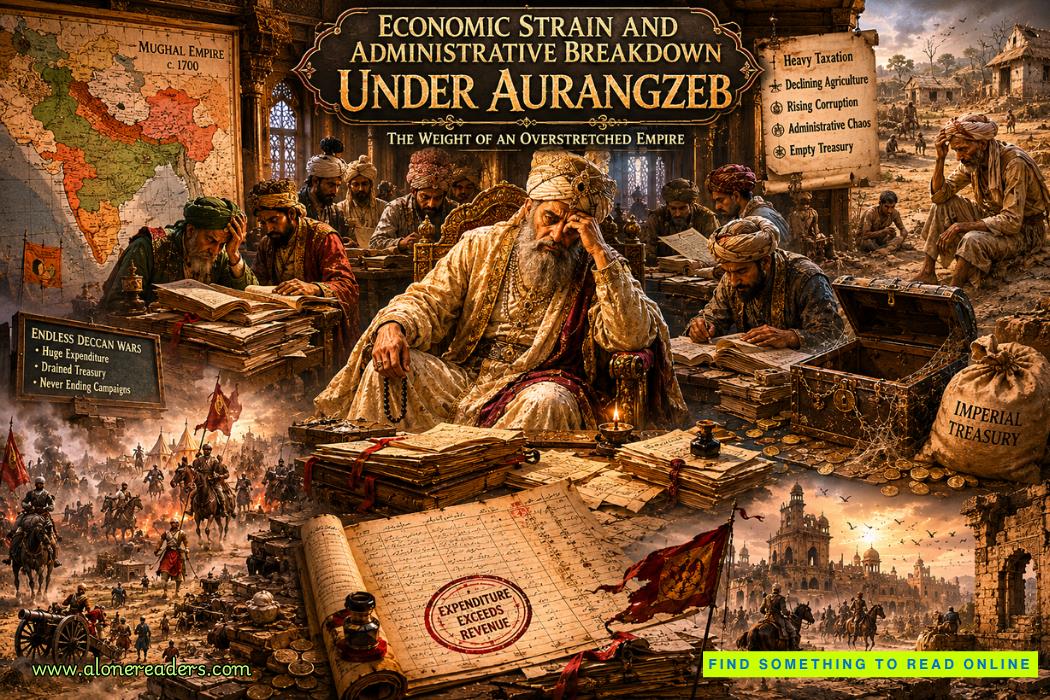
Aurangzeb’s long and exhausting military campaigns in the Deccan further strained the empire. His attempts to subdue the Marathas and other southern kingdoms resulted in prolonged warfare that drained the treasury and stretched the military thin. The empire, which had once expanded rapidly with efficient resource management, now faced economic exhaustion and logistical overreach. The cost of maintaining large armies in distant territories became unsustainable, and the central authority began to weaken as provincial governors gained more autonomy.
Another early sign of decline was the deterioration of administrative efficiency. The Mughal administrative system, which had once been a model of organization, began to suffer from corruption, inefficiency, and lack of discipline. Officials increasingly prioritized personal gain over public service, and the jagirdari system—where land revenues were assigned to officials—became deeply flawed. Many jagirdars exploited peasants to maximize their income, leading to widespread dissatisfaction and reduced agricultural productivity. This not only affected the economy but also eroded the legitimacy of the Mughal rule among the rural population.
The empire’s financial troubles were further compounded by a decline in revenue collection. Continuous wars, combined with administrative corruption, resulted in shrinking state income. Trade, which had once flourished under Mughal protection, began to suffer due to instability and competition from European trading companies. The arrival of the British, Dutch, and French introduced new economic dynamics that the Mughals struggled to control. These companies gradually shifted from trade to territorial ambitions, exploiting the empire’s weaknesses to establish their own footholds.
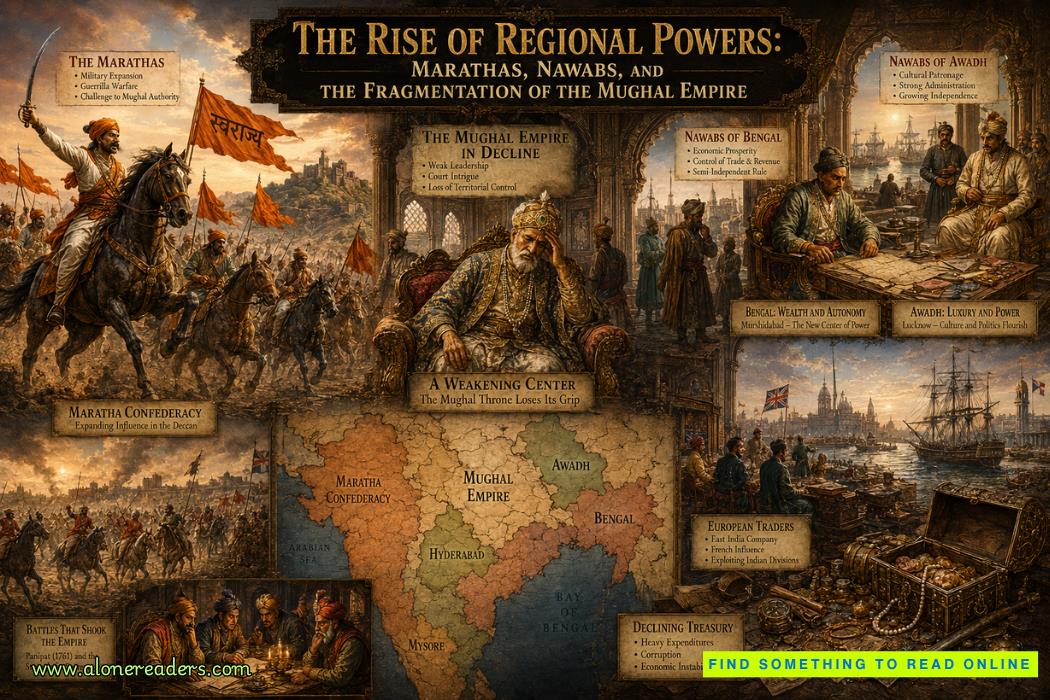
Succession struggles also played a crucial role in accelerating the decline. Unlike stable systems with clear rules of inheritance, the Mughal tradition encouraged violent contests for the throne. After Aurangzeb’s death, a series of weak rulers ascended the throne, often after bloody conflicts that drained resources and destabilized governance. These emperors lacked the authority and capability to manage the vast empire, leading to a fragmentation of power. Provincial leaders, sensing the weakening center, began asserting independence, further eroding imperial control.
The rise of regional powers was both a cause and a consequence of Mughal decline. The Marathas, Sikhs, Jats, and Rajputs began establishing their own domains, challenging Mughal authority. What was once a centralized empire started to resemble a loosely connected patchwork of semi-independent states. This decentralization made it increasingly difficult for the emperor to enforce policies or maintain order across the empire. The loss of key territories also meant a reduction in revenue and military strength, creating a vicious cycle of decline.
Another important factor was the decline in military effectiveness. The Mughal army, once feared for its strength and organization, failed to modernize in the face of changing warfare techniques. European powers introduced advanced weaponry and disciplined infantry tactics, while the Mughal forces remained largely traditional. Internal divisions and lack of motivation further weakened the army’s performance. As a result, the empire became vulnerable not only to internal rebellions but also to external invasions.
The invasion of Nadir Shah in 1739 stands as a dramatic illustration of the empire’s weakened state. His forces easily defeated the Mughal army and looted Delhi, taking immense wealth including the famous Peacock Throne. This event not only depleted the empire’s resources but also shattered its prestige. It sent a clear message to both internal and external forces that the Mughal Empire was no longer invincible.
Cultural and intellectual stagnation also contributed to the decline. While earlier rulers had patronized art, architecture, and intellectual pursuits, later periods saw a reduction in such support. The empire’s cultural vitality diminished, reflecting its broader political and economic struggles. The shift from a dynamic and inclusive society to a rigid and fragmented one weakened its ability to adapt to changing circumstances.
One cannot overlook the role of environmental and agrarian challenges. Periodic famines, combined with oppressive taxation, created severe hardships for the rural population. As peasants struggled to survive, agricultural output declined, further impacting state revenue. The lack of effective relief measures highlighted the weakening administrative structure and reduced the empire’s ability to respond to crises.
The early signs of decline were not isolated incidents but interconnected developments that gradually undermined the empire’s foundation. Loss of central authority, economic instability, social unrest, and military weakness all interacted to accelerate the process. What makes the Mughal decline particularly significant is how these issues were visible long before the empire’s eventual collapse, yet remained largely unaddressed.
In many ways, the story of the Mughal Empire’s decline serves as a powerful reminder of the importance of adaptability and inclusive governance. The same empire that once thrived on diversity and strong administration began to falter when it moved away from these principles. Its decline was not inevitable but rather the result of specific choices and circumstances that compounded over time.
The Mughal Empire did not disappear overnight; it faded gradually, leaving behind a legacy that continues to shape the cultural and historical landscape of South Asia. By examining the causes and early signs of its decline, we gain deeper insight into the complex dynamics of power, governance, and human ambition. This understanding not only enriches our knowledge of history but also offers valuable lessons for the present and future.



 The Hundred Days Offensive: How the Allies Defeated Germany in World War I
 The Second Battle of the Marne: The Turning Point of World War I in 1918
 The Spring Offensive of 1918: Germany's Final Gamble to Win World War I
 The Treaty of Brest-Litovsk: How Russia Left World War I
 The Russian Revolution and World War I: How War Brought Down the Tsar
 The Zimmermann Telegram Explained: Germany's Secret Offer to Mexico in World War I