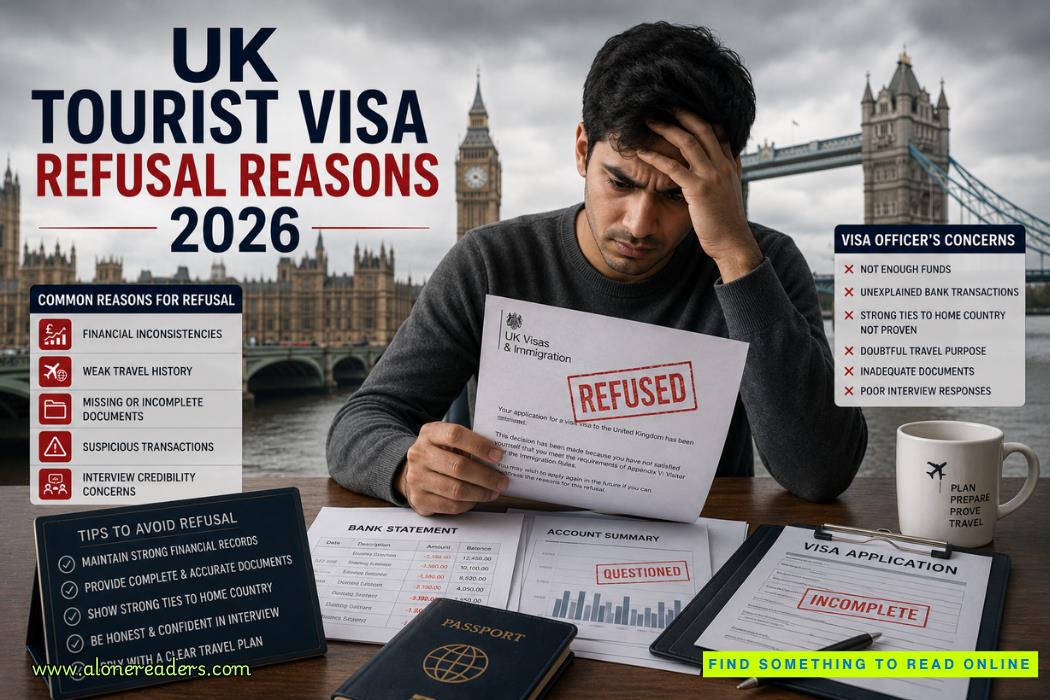
The United Kingdom remains one of the world’s most popular tourist destinations, attracting millions of visitors each year for tourism, family visits, business meetings, cultural experiences, and short-term travel. However, despite the popularity of the UK Standard Visitor Visa, refusal rates remain significant in many countries. In 2026, UK immigration authorities continue to apply strict scrutiny to visitor visa applications, particularly focusing on financial credibility, genuine visitor intent, immigration history, and supporting documentation.
One of the biggest misconceptions among applicants is believing that a UK tourist visa is “easy” to obtain. In reality, UK Visas and Immigration officers conduct detailed assessments of whether an applicant is genuinely visiting temporarily and whether they are likely to leave the United Kingdom at the end of their permitted stay. Even small inconsistencies in documents or financial records can trigger refusal.
Many applicants receive refusal notices without fully understanding why their case failed. Often, the refusal is not caused by a single issue but by multiple weak areas combined together. A low bank balance alone may not result in refusal, but unexplained deposits, weak employment evidence, contradictory statements, and poor travel history together can significantly damage credibility
The Genuine Visitor Requirement
The most important factor in a UK tourist visa application is proving that the applicant is a genuine visitor. Immigration officers assess whether the applicant truly intends to visit temporarily and return home afterward.
Visa officers analyze:
The officer must be satisfied that the applicant:
If the officer is unconvinced in any of these areas, refusal becomes highly likely.
Unexplained Large Deposits
One of the biggest refusal triggers in 2026 continues to be suspicious bank transactions. Many applicants suddenly deposit large sums of money shortly before applying for the visa. Immigration officers routinely examine bank statement patterns over several months.
For example:
These patterns create suspicion that the applicant is artificially strengthening financial evidence.
UK immigration officers are trained to identify “temporary funds parking,” where applicants borrow money briefly to show higher balances. If the source of funds cannot be properly explained through salary records, business income, property sales, or documented savings, refusal risk becomes very high.
Insufficient Financial Capacity
Many applicants underestimate the amount of financial evidence required. The issue is not only the total amount in the account but whether the overall financial situation realistically supports the trip.
Officers evaluate:
An applicant earning a relatively low salary while planning a luxury multi-week UK vacation may appear financially unrealistic unless there is strong supporting evidence.
Using Another Person’s Money Without Proper Explanation
Sponsor-based applications are common, especially when relatives fund the trip. However, problems occur when:
Immigration officers want to understand why someone is financially supporting the applicant and whether the arrangement is genuine.
Unverifiable Employment
Fake employment documents remain a major issue in UK visitor visa applications. Immigration officers often verify:
If the company cannot be verified or appears suspicious, refusal becomes almost certain.
Common warning signs include:
New Job Before Visa Application
Applicants who recently started a new job sometimes face additional scrutiny because immigration officers may question whether the person has strong enough ties to return home.
A stable employment history generally strengthens credibility. Sudden employment changes shortly before applying can create uncertainty unless properly explained.
Self-Employment Problems
Self-employed applicants often struggle because many fail to provide organized financial documentation.
Common mistakes include:
In 2026, UK immigration officers increasingly expect detailed evidence from self-employed applicants, especially where cash-based businesses are involved.
No International Travel Experience
A lack of travel history alone does not automatically lead to refusal, but it can increase scrutiny. Immigration officers often view previous lawful international travel as evidence of immigration compliance.
Applicants who have:
may face higher refusal risks.
Previous Immigration Violations
Past immigration problems in any country can seriously affect UK visa outcomes.
Examples include:
UK authorities increasingly share immigration data internationally, making it difficult to hide previous violations.
Contradictions Between Documents and Application Forms
Many refusals occur because information does not match across documents.
Examples:
Even small inconsistencies can damage credibility because immigration officers may suspect deception.
False Information or Exaggeration
Providing false information is one of the most dangerous mistakes an applicant can make.
Examples include:
A deception finding can result in long-term immigration consequences, including bans from entering the UK.
Unclear Travel Plans
Applicants must clearly explain:
Vague applications often fail because immigration officers cannot understand the genuine purpose of travel.
Weak examples:
Strong applications provide detailed and realistic itineraries.
Suspicion of Illegal Work Intentions
Certain factors may lead officers to suspect that the applicant intends to work illegally in the UK.
Risk indicators may include:
If officers believe the applicant may seek unauthorized work or overstay, refusal becomes likely.
Weak Home Country Ties
Immigration officers evaluate whether the applicant has strong reasons to return home after visiting the UK.
Strong ties may include:
Applicants lacking these ties may face higher scrutiny because officers may believe they intend to remain in the UK.
Close Relatives Living in the UK
Having relatives in the UK is not automatically negative. However, if the applicant has multiple family members settled permanently in Britain while having weak ties at home, immigration officers may question whether the applicant truly intends to return.
Missing Required Documents
Incomplete applications remain a major refusal reason.
Common missing documents include:
Many applicants assume optional documents are unnecessary, but failing to provide evidence can weaken credibility.
Poorly Prepared Translations
Documents not written in English must usually be translated properly. Low-quality translations, missing translator details, or unofficial translations can create problems during assessment.
Submitting Applications Too Quickly
Many applicants rush their visa applications without carefully reviewing:
A poorly prepared application can damage future visa attempts because refusal history remains visible
Immigration officers review thousands of applications. Generic cover letters copied from the internet are easily recognizable.
A strong cover letter should explain:
The explanation should align naturally with the submitted documents.
Some applicants blindly trust visa agents without reviewing submitted information. Unfortunately, some agents:
Ultimately, the applicant bears responsibility for all submitted information
Financial Pattern Analysis
Modern immigration systems analyze:
Artificial financial inflation is easier to identify than many applicants realize.
Document Verification
Immigration officers may:
Fraud detection processes have become more sophisticated in 2026.
Behavioral Assessment
Even the writing style of an application can affect outcomes. Officers often look for:
Applications that appear overly engineered or unnatural may trigger additional scrutiny.
Maintain Stable Financial Records
The strongest applications usually show:
Applicants should avoid sudden large deposits before applying.
Build a Strong Document Package
A strong application package includes:
Consistency across all documents is essential.
Be Honest About Your Situation
Applicants sometimes believe hiding weaknesses improves approval chances. In reality, honesty usually works better.
If there are weaknesses such as:
they should be explained properly rather than concealed.
Apply at the Right Time
Timing matters significantly. Applying:
can improve overall credibility.
A UK tourist visa refusal does not permanently prevent future applications. However, every future application must disclose previous refusals.
A second application should not simply repeat the previous submission. The applicant should:
Reapplying immediately without addressing the problems often leads to another refusal.
UK tourist visa refusals in 2026 are increasingly tied to credibility analysis rather than simple document submission. Immigration officers focus heavily on whether the overall story of the applicant makes logical, financial, and personal sense.
The strongest applications are not necessarily from wealthy individuals but from applicants whose documents consistently support a believable travel profile. Stable finances, genuine employment, realistic travel plans, transparent documentation, and strong home-country ties together create the foundation of a successful application.
Many refusals occur because applicants focus only on collecting documents instead of building a coherent and credible case. Every bank statement, salary record, travel plan, and explanation must align naturally. Once inconsistencies appear, even minor issues can escalate into serious credibility concerns.
Preparing carefully, avoiding shortcuts, maintaining honesty, and presenting a realistic application remain the most effective ways to reduce the risk of UK tourist visa refusal in 2026.



 Qatar Temporary Work Visa 180 Days 2026: Complete Eligibility, Application Process, Documents, Costs, Extension Rules, and Employment Guide
 Canada Intra-Company Transfer Work Permit 2026: Complete Guide to Eligibility, Requirements, Application Process, and Employer Responsibilities
 UK Study English Language Visa 2026: Complete Guide to Eligibility, Requirements, Costs, Application Process, and Student Life
 UK Expansion Worker Visa Intra-Company 2026: Complete Guide to Eligibility, Sponsorship, Costs, Business Expansion, and Application Process
 High-End Talent Category A Work Permit China 2026: Complete Eligibility, Benefits, Application Process, and Expert Guide
 Cultural Activities Visa Japan 2026 Guide: Complete Eligibility, Requirements, Application Process, and Expert Tips










