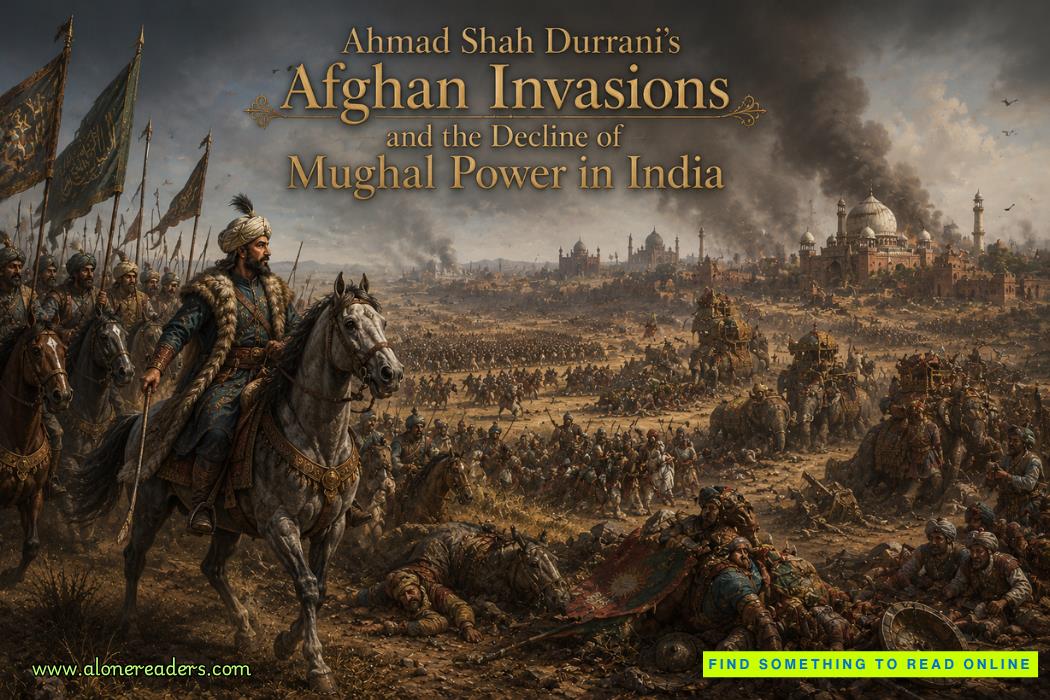
The mid-eighteenth century in the Indian subcontinent was marked by a profound transformation of political authority, and at the center of this upheaval stood Ahmad Shah Durrani, the founder of the Durrani Empire and one of the most formidable conquerors of his time. His repeated invasions of North India were not isolated acts of plunder; they were deeply tied to the structural weakness and fragmentation of the Mughal Empire. These invasions exposed the hollow core of Mughal authority, accelerated the disintegration of imperial power, and reshaped the political landscape of the region in ways that would influence the rise of new powers, including the Marathas, Sikhs, and eventually the British.
By the time Ahmad Shah Durrani emerged as a dominant force in the 1740s, the Mughal Empire had already entered a prolonged phase of decline. The death of Aurangzeb in 1707 had left behind an empire that was territorially vast but administratively fragile. The centralized authority that once sustained Mughal dominance had given way to regional autonomy, factional court politics, and fiscal breakdown. Successive emperors lacked both the military capability and political vision to maintain control over distant provinces. Governors and nobles increasingly acted as independent rulers, while the imperial court in Delhi became a theater of intrigue rather than governance.
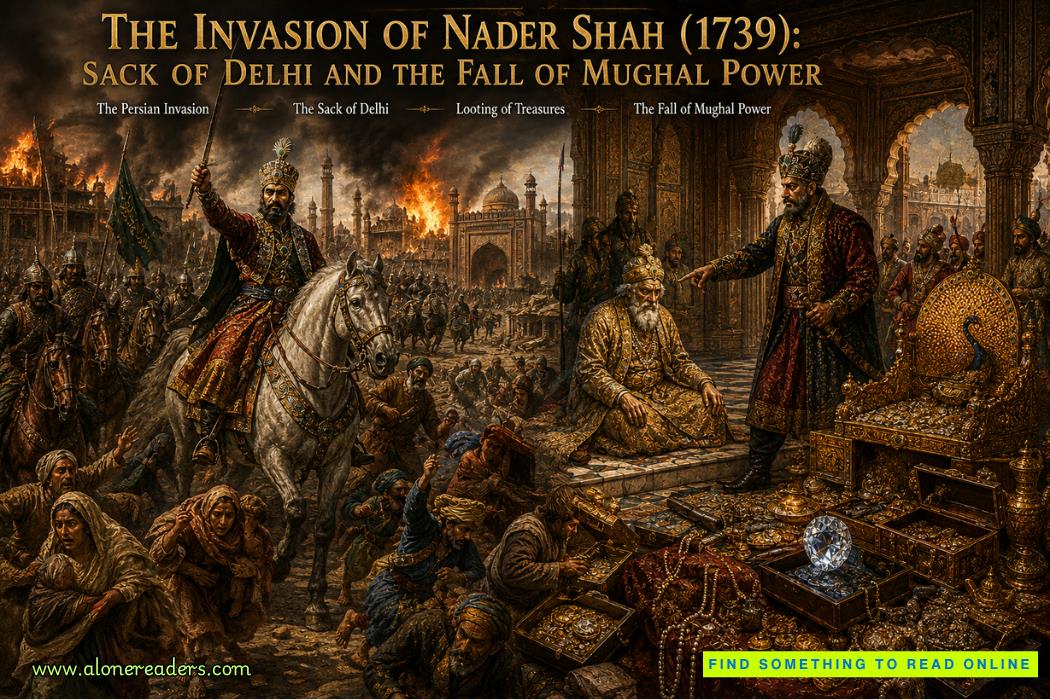
This internal decay created the conditions that made external invasions not only possible but almost inevitable. The earlier invasion of Nadir Shah of Persia in 1739, which culminated in the sack of Delhi, had already demonstrated the vulnerability of the Mughal capital. The empire never fully recovered from this shock. Its treasury was depleted, its prestige shattered, and its military credibility severely undermined. It was into this weakened environment that Ahmad Shah Durrani launched his campaigns.
Ahmad Shah Durrani, originally a general under Nadir Shah, established his own empire in 1747 after Nadir Shah’s assassination. From the outset, he recognized both the wealth and the vulnerability of northern India. His invasions were driven by a combination of strategic ambition, economic necessity, and political opportunity. Unlike earlier raiders, Durrani was not merely interested in plunder; he sought to exert influence over the region and secure long-term advantages.
His first invasion in 1748 met with resistance from Mughal forces, but even this initial encounter revealed the empire’s declining capacity. Although the Mughals managed to check his advance temporarily, their victory was neither decisive nor sustainable. Subsequent invasions between 1749 and 1767 encountered progressively weaker opposition. Each campaign further exposed the erosion of Mughal military organization and leadership.
One of the most telling aspects of Mughal weakness was the absence of a unified command structure. The imperial army, once renowned for its discipline and strength, had become fragmented. Nobles commanded their own contingents, often prioritizing personal interests over imperial strategy. Corruption and inefficiency plagued the administration, while outdated military tactics failed to match the mobility and effectiveness of Afghan cavalry. Durrani’s forces, composed of highly skilled horsemen, excelled in rapid maneuvers and coordinated assaults, giving them a decisive advantage over the cumbersome Mughal army.
The political situation in Delhi further compounded these military shortcomings. The Mughal emperor had become a symbolic figure, with real power residing in the hands of competing factions at court. This lack of centralized authority meant that responses to external threats were slow, inconsistent, and often ineffective. Provincial governors, who might have been expected to defend the empire’s frontiers, were more concerned with preserving their own autonomy.
Ahmad Shah Durrani exploited these divisions with remarkable skill. He formed alliances with local powers, including certain Mughal nobles and regional rulers, thereby turning internal rivalries into strategic advantages. His invasions were not simply external assaults; they were interventions in a fragmented political system where loyalty was fluid and opportunism was widespread.
The repeated incursions into Punjab illustrate this dynamic clearly. Punjab, which served as a gateway to North India, had effectively slipped from Mughal control. Local administrators were unable to resist Afghan advances, and the region became a contested zone between Durrani’s forces, emerging Sikh groups, and remnants of Mughal authority. Each invasion weakened Mughal influence further, while simultaneously empowering regional actors.
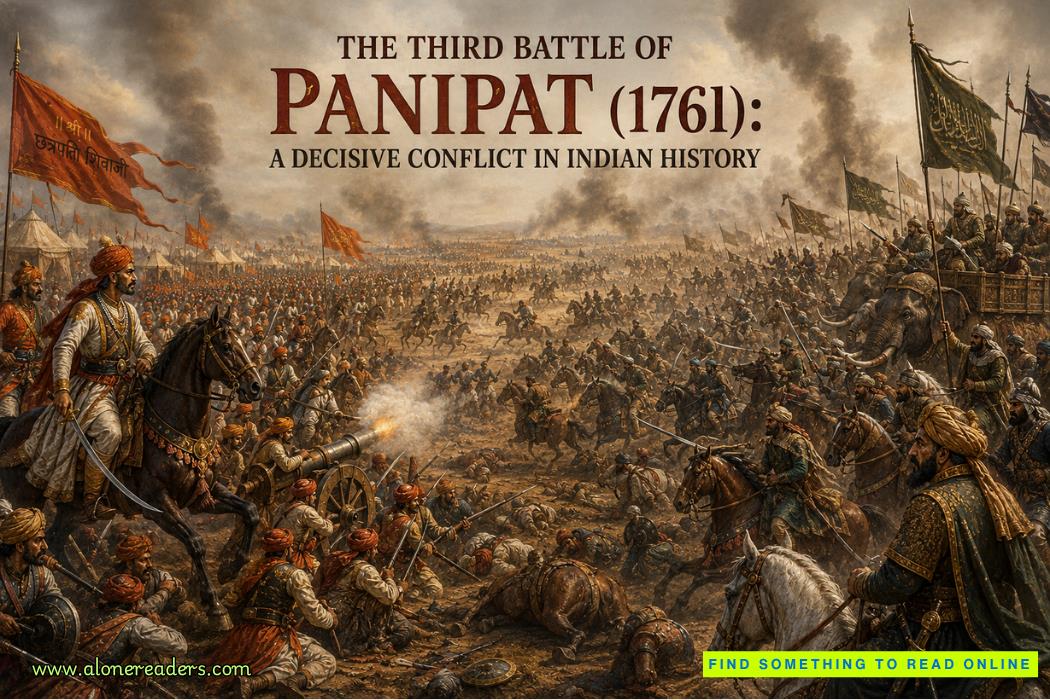
The most decisive moment in this series of conflicts came with the Third Battle of Panipat in 1761, one of the largest and bloodiest battles of the eighteenth century. Although the Mughal Empire itself played only a marginal role in this battle, its outcome was deeply connected to Mughal decline. The primary contest was between Ahmad Shah Durrani and the Maratha Confederacy, which had risen as a dominant power in the vacuum left by Mughal weakness.
The Marathas had expanded rapidly into North India, even occupying Delhi and positioning themselves as de facto rulers of the Mughal court. However, their expansion brought them into direct conflict with Durrani, who sought to prevent any single power from dominating the region. The battle that ensued was catastrophic in scale, resulting in massive casualties on both sides. Durrani emerged victorious, but the victory was costly and did not translate into long-term control.
For the Mughal Empire, the significance of Panipat lay not in participation but in irrelevance. The empire that had once commanded the loyalty and fear of the subcontinent was now reduced to a passive observer of events that determined its own fate. This stark reality underscored the depth of its decline.
The aftermath of Durrani’s invasions further illustrates their transformative impact. While he did not establish permanent rule over North India, his campaigns destabilized existing structures and created opportunities for new powers to rise. The Marathas, despite their defeat at Panipat, eventually recovered and resumed their expansion. The Sikhs consolidated their presence in Punjab, gradually emerging as a significant regional force. Meanwhile, the British East India Company began to expand its influence, taking advantage of the fragmented political landscape.
Economically, the invasions exacerbated the already fragile condition of the Mughal state. Repeated campaigns led to devastation of agricultural regions, disruption of trade networks, and loss of revenue. The imperial treasury, already weakened, could not sustain the costs of defense or administration. This economic decline further undermined the empire’s ability to maintain authority.
Socially, the invasions contributed to widespread instability and insecurity. Urban centers, including Delhi, experienced periods of violence and disorder. The population suffered from the consequences of warfare, including displacement, famine, and loss of livelihoods. These conditions eroded the social foundations that had once supported Mughal rule.
It is important to recognize that Ahmad Shah Durrani did not single-handedly cause the fall of the Mughal Empire. Rather, his invasions acted as a catalyst that accelerated an ongoing process of decline. The empire’s internal weaknesses—administrative inefficiency, fiscal crisis, military stagnation, and political fragmentation—were the underlying causes. Durrani’s campaigns exposed these weaknesses and exploited them, turning latent vulnerabilities into visible collapse.
In many ways, the Afghan invasions represent a turning point in the history of the Indian subcontinent. They mark the transition from a system dominated by a single imperial power to a multipolar landscape of competing states. This transition was not immediate or uniform, but it set the stage for the eventual rise of colonial dominance.
Ahmad Shah Durrani himself remains a complex figure in this narrative. He was both a conqueror and a strategist, driven by ambition but also shaped by the geopolitical realities of his time. His ability to navigate the fragmented political environment of North India demonstrates a keen understanding of power dynamics. At the same time, his inability to establish lasting control highlights the limitations of external conquest in a region undergoing profound internal change.
The story of Durrani’s invasions and Mughal weakness is ultimately a story of decline, adaptation, and transformation. It reveals how empires can unravel not only through external pressure but also through internal decay. It shows how power vacuums invite intervention, and how such interventions can reshape entire regions.
In examining this period, one is struck by the contrast between the grandeur of the Mughal past and the fragility of its later years. The empire that had once symbolized unity and stability became a shadow of itself, unable to defend its capital or command the loyalty of its subjects. Ahmad Shah Durrani’s invasions did not create this reality, but they made it impossible to ignore.
The legacy of these events continues to resonate in the historical memory of South Asia. They serve as a reminder of the interconnected nature of internal and external forces in shaping political outcomes. They also highlight the importance of strong institutions, effective leadership, and economic resilience in sustaining imperial power.
Ultimately, the Afghan invasions of Ahmad Shah Durrani stand as a defining chapter in the decline of the Mughal Empire—a chapter that not only marks the end of one era but also the beginning of another, characterized by new conflicts, new powers, and new possibilities.



 The Hundred Days Offensive: How the Allies Defeated Germany in World War I
 The Second Battle of the Marne: The Turning Point of World War I in 1918
 The Spring Offensive of 1918: Germany's Final Gamble to Win World War I
 The Treaty of Brest-Litovsk: How Russia Left World War I
 The Russian Revolution and World War I: How War Brought Down the Tsar
 The Zimmermann Telegram Explained: Germany's Secret Offer to Mexico in World War I