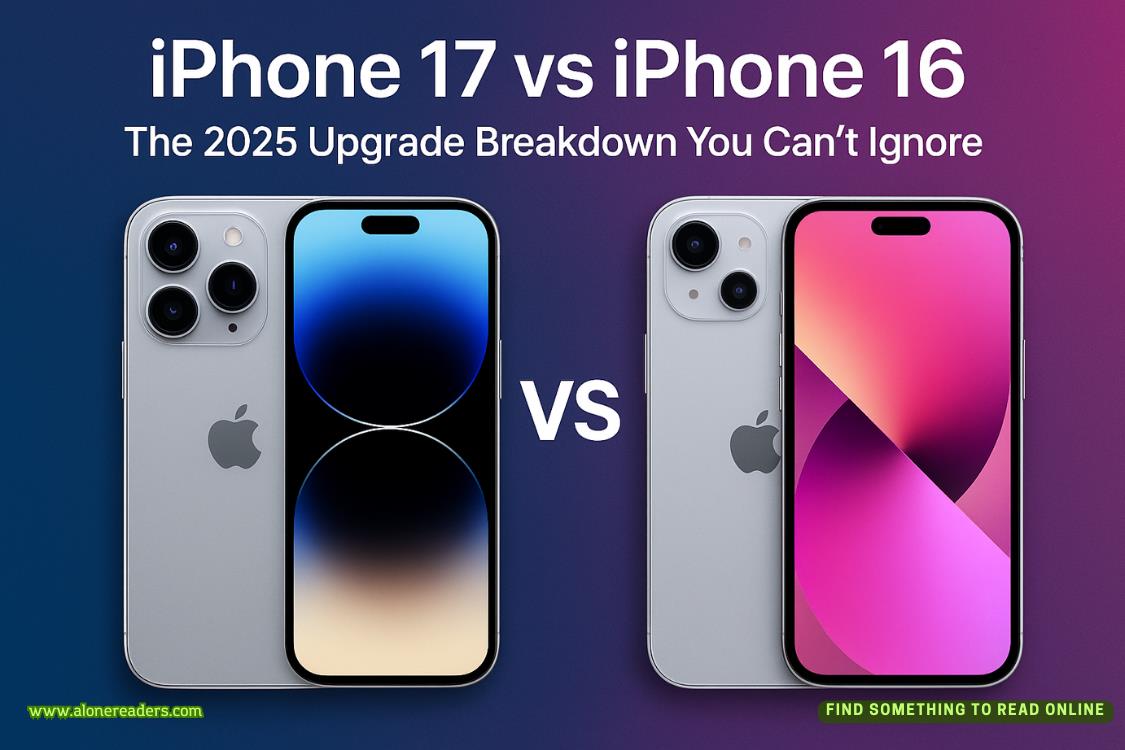
In 2025, Apple delivered a truly meaningful upgrade with the release of the iPhone 17 series. Beyond the usual spec bumps, this iteration introduces architectural and experience-level improvements that redefine the baseline iPhone. Here’s a deep, expert-level breakdown of how the iPhone 17 stacks up against the iPhone 16—specifically focusing on what’s new, what matters, and whether the upgrade lives up to the hype.
Every year Apple’s incremental improvements divide fans between excitement and skepticism. In 2025, the iPhone 17 marks one of the most significant non-Pro upgrades in years, elevating features once reserved for professionals to the mainstream. Let’s break down how it compares to last year’s iPhone 16 across every dimension that matters.
ProMotion 120 Hz Comes to the Standard Model
The most visible difference is the new 6.3-inch display on the iPhone 17 compared to the iPhone 16’s 6.1-inch panel. The real leap, however, is ProMotion. For the first time outside the Pro line, the standard iPhone now delivers a smooth 120 Hz refresh rate, along with Always-On functionality. The experience is sharper, smoother, and better for both gaming and day-to-day scrolling.
Brighter and Stronger with Ceramic Shield 2
Peak brightness rises to 3,000 nits, nearly double what the iPhone 16 could sustain in extreme outdoor conditions. Apple has also introduced Ceramic Shield 2, a glass composite that dramatically improves scratch resistance while retaining the same slim profile.
Sleeker Ergonomics
Bezels have shrunk further, giving the iPhone 17 a more immersive look without making the device uncomfortably large. At the same time, the chassis is refined to feel thinner in the hand, aligning the design closer to Apple’s premium Pro aesthetic.
A19 Bionic on 3 nm Architecture
Performance is a core upgrade. The iPhone 17 debuts the A19 chip, built on Apple’s enhanced 3 nm process. Compared to the A18 in the iPhone 16, the A19 delivers faster CPU and GPU performance with better thermal efficiency. Everyday tasks feel snappier, and demanding games or editing workloads run cooler and smoother.
Apple’s New N1 Networking Chip
Apple also introduced its first in-house networking silicon, the N1, replacing third-party solutions. This addition enables support for Wi-Fi 7, Bluetooth 6, and Thread for smart-home interoperability. The result is not just faster downloads but also stronger multi-device stability.
C1X 5G Modem
Accompanying the N1, the C1X modem doubles data throughput compared to the modem inside the iPhone 16. For regions with mature 5G infrastructure, this provides meaningful real-world improvements in streaming and cloud gaming.
Dual 48 MP Fusion Rear Cameras
Apple doubles down on its Fusion imaging pipeline. The iPhone 17 includes a 48 MP wide and 48 MP ultrawide sensor, both benefiting from advanced computational photography. This leads to more detail, truer colors, and dramatically better performance in low light compared to the iPhone 16’s rear setup.
18 MP Front Camera with Center Stage
Selfie and video call quality finally step up with an 18 MP front sensor. More than just pixels, Apple has added Center Stage to the iPhone 17, keeping you perfectly framed during video calls. This feature was previously an iPad exclusive. For content creators, the Pro and Pro Max models now add Dual Capture, recording with both front and rear cameras at once.
256 GB as the New Baseline
Apple has quietly retired the 128 GB entry-level model. The iPhone 17 now begins at 256 GB, doubling the base storage of the iPhone 16. For power users, options extend to 512 GB, but the removal of the smallest option reflects Apple’s confidence in higher-capacity needs.
The Ultra-Thin iPhone Air
Perhaps the boldest design statement of this generation is the new iPhone Air variant. Just 5.6 mm thin and constructed from titanium, it is lighter and more portable than any iPhone before it. The iPhone 16 lineup never featured such a device, making this a true differentiator in 2025.
iOS 26 with Apple Intelligence
Both devices can run iOS 26, but the iPhone 17 is built to leverage the full power of Apple Intelligence. Generative features like instant photo edits, real-time translations, and adaptive emoji creation run natively and faster on the A19’s neural engines. While the iPhone 16 can access parts of this ecosystem, heavy AI tasks tend to run slower or may be limited in scope.
Liquid Glass UI
Apple’s new design language in iOS 26 feels more fluid and animated. Coupled with ProMotion, the iPhone 17 offers the smoothest user experience yet, creating a sense of responsiveness that older devices simply cannot match.
Efficiency Through Hardware
Even with similar battery sizes, the iPhone 17 benefits from two efficiency factors: the ProMotion display that dynamically scales down to 1 Hz and the more power-conscious A19 chip. Together, these yield up to 15–20% longer usage compared to the iPhone 16 in mixed use.
Charging Improvements
Apple now supports faster charging standards on the iPhone 17. Wired charging may peak up to 50 W with certified adapters, while MagSafe wireless rises to 25 W. The iPhone 16, by contrast, capped at 25 W wired and 15 W wireless.
For iPhone 16 Owners
The decision hinges on your priorities. If you value ProMotion, Wi-Fi 7, and the upgraded front camera, the iPhone 17 represents a significant quality-of-life improvement. However, if your iPhone 16 already meets your needs, the jump may feel incremental.
For Older iPhone Owners
If you’re upgrading from an iPhone 15 or earlier, the iPhone 17 is a massive leap in almost every category—display smoothness, AI features, storage capacity, and camera capability. In this case, it’s the obvious choice.
The iPhone 17 is more than a typical annual refresh. It redefines what the base iPhone can be by introducing ProMotion, bigger storage, smarter AI features, and a stronger design. While the iPhone 16 remains an excellent device, the iPhone 17 sets a new standard for 2025. Whether you upgrade depends on whether you value smoother visuals, smarter software, and future-ready connectivity. For those who do, this year’s iPhone delivers one of the most compelling step-ups in years.



 AI Video Generators in 2026: How Creators Are Replacing Traditional Editing
 Anthropic vs OpenAI: Diverging Compute Economics, Cash Burn, and the Fight for AI Profitability
 Atlas Enters the Assembly Line: Boston Dynamics’ Humanoid Robot Begins Real-World Testing at Hyundai’s Georgia EV Plant
 China’s Rapid Data Center Boom: Is Beijing Outpacing the US in the Global AI Infrastructure Race?
 5G Revolutionizes Supply Chain Automation: Manufacturing Enters a New Era of Precision and Profitability
 GPT-4.1 vs Llama 4 Maverick vs Gemini 1.5 Pro: Who Really Leads in Reasoning, Multimodality, and Speed in 2025?










