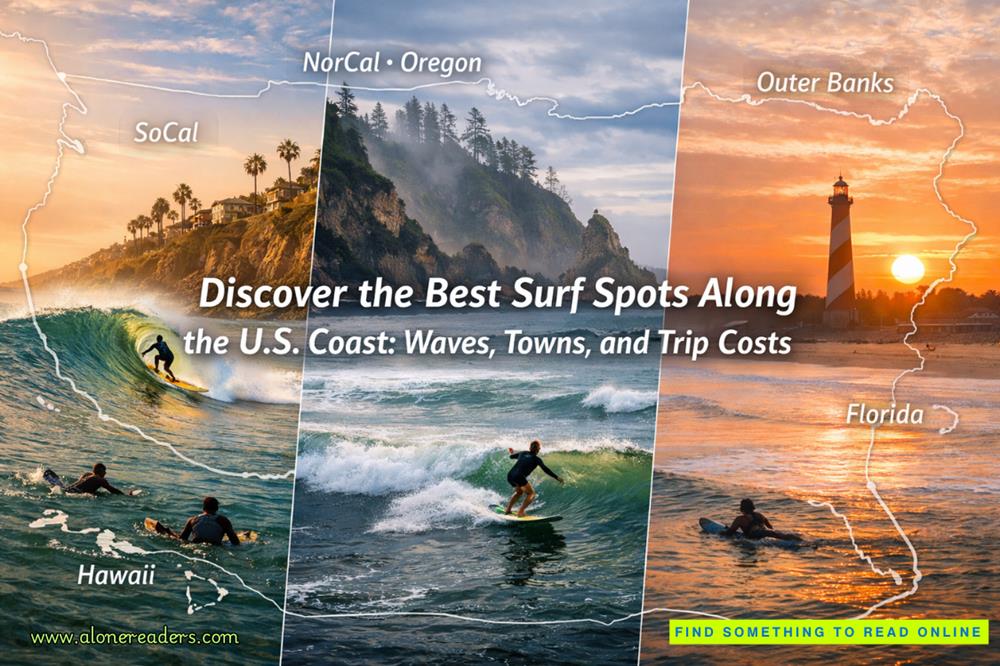
Surf travel in the United States is less about one “best” beach and more about choosing the right coastline for your goals: warm-water cruisy peelers, powerful reef and point breaks, storm-driven beach barrels, or cold-water wilderness waves. The U.S. has an unusual advantage for surfers: two major oceans, a year-round surf culture, and surf towns that range from iconic boardwalk cities to quiet fishing villages. It also means costs and conditions vary sharply—California’s convenience and crowds, the Pacific Northwest’s raw beauty and cold water, the Atlantic’s hurricane-season energy, and Hawaii’s world-class power.
This guide is written as a practical travel resource (not as a personal travel diary). It focuses on what matters for planning: what each area looks and feels like, the type of waves you can expect, how to get there, where to stay, what to eat, what it typically costs, and what to be careful about.
West Coast (California, Oregon, Washington): The most consistent swell window is generally late fall through early spring, when North Pacific storms send long-period waves. Summers can still be fun, especially in Southern California, but are often smaller. Water temperature drops as you go north; a thicker wetsuit becomes non-negotiable.
East Coast (Florida to New England): The biggest and cleanest surf often aligns with hurricane season (roughly late summer into fall), plus winter nor’easters for the Mid-Atlantic and New England. The surf can be excellent but more “event-driven”—great when it’s on, flatter when it’s not.
Wave types matter:
Crowds and local etiquette: The best-access waves can be crowded, especially in Southern California and Hawaii. Respect right-of-way, don’t snake, don’t drop in, and if you’re new to a spot, spend time watching before paddling out.
Why it’s special: Malibu blends classic coastal beauty—sunlit bluffs, sandy coves, and Pacific sunsets—with one of the most famous longboard-friendly point breaks in the country. Even non-surfers love the scenery.
Wave style: Often a point/reef setup with longer, smoother rides when it’s working. Best suited to longboards and clean lines.
How to get there: Fly into Los Angeles (LAX) or Burbank (BUR), then drive west toward Malibu along the Pacific Coast Highway.
Attractions beyond surfing: Scenic drives, beach walks, coastal restaurants, and day trips into Santa Monica or the Santa Monica Mountains.
Accommodations (typical ranges):
Food (typical ranges):
Local transport costs: Rental car usually makes life easier (expect US$60–120/day depending on season and insurance). Paid parking is common near popular beaches.
Cautions:
Why it’s special: This stretch in Orange County is known for performance waves and a high concentration of quality breaks. The coastline feels more open and natural than many city beaches, with a strong surf community atmosphere.
Wave style: High-quality peaks; often more performance-oriented surfing than Malibu. Some breaks suit intermediates, others lean advanced depending on swell and sandbars.
How to get there: Fly into San Diego (SAN), Orange County (SNA), or LAX; drive to San Clemente and access the coast via designated trails and paths.
Attractions: Beach trails, surf shops, laid-back coastal towns, and easy access to both San Diego and Los Angeles day trips.
Accommodations (typical ranges):
Food: Strong casual scene—fish tacos, poke, burritos, cafés. Budget US$35–70/day for simple meals; US$70–130/day if you add restaurants.
Cautions:
Why it’s special: Huntington is a surf city with infrastructure: long sandy shoreline, iconic pier, surf museums and events, and an easy “show up and surf” feel.
Wave style: Beach breaks with many peaks; conditions vary with swell and sandbars. There is usually something to surf, but it can be choppy with wind.
How to get there: Fly into John Wayne (SNA) or LAX; drive 20–60 minutes depending on traffic.
Attractions: Pier area, coastal bike paths, surf culture landmarks, shopping and dining along Pacific City and Main Street.
Typical local costs:
Accommodations (typical ranges):
Food: Very easy to eat well on a budget. Estimate US$40–90/day depending on choices.
Cautions:
Why it’s special: Santa Cruz is one of the most character-rich surf towns in the U.S. The coastline is scenic—cliffs, kelp beds, classic points—and the town has a deep surf history.
Wave style: A mix of points and reefs. On the right day, it’s excellent; on the wrong day, it can be challenging. Many nearby beaches offer friendlier peaks for intermediates.
How to get there: Fly into San Jose (SJC) or San Francisco (SFO), then drive 45–90 minutes.
Attractions: Boardwalk, coastal viewpoints, redwood day trips, surf museums, and a walkable downtown.
Accommodations (typical ranges):
Food: Strong café culture, seafood, taquerias. Estimate US$45–110/day.
Cautions:
Why it’s special: This is legendary big-wave territory with striking coastal scenery. Even if you never paddle out, watching the ocean here can be memorable on a large swell.
Wave style: Powerful, dangerous, and for experts only when it’s truly “on.”
How to get there: Fly into SFO; drive 30–45 minutes south.
Accommodations: Stay in Half Moon Bay or south of San Francisco. Typical ranges: US$180–450/night.
Cautions (non-negotiable):
Why it’s special: The Oregon coast is rugged and cinematic—sea stacks, evergreen headlands, foggy mornings, and long beaches. It feels like surf travel with a wilderness edge.
Wave style: Primarily beach breaks with occasional sheltered corners. Can be excellent in winter swells, with more variable wind.
How to get there: Fly into Portland (PDX), then drive 1.5–2 hours to the coast.
Accommodations (typical ranges):
Food: Coastal comfort food, breweries, chowder, fresh seafood. Estimate US$40–90/day.
Cautions:
Why it’s special: Westport is one of the most surf-accessible areas in Washington, with a straightforward surf-town setup and plenty of open beach.
Wave style: Beach breaks; winter can deliver strong swells, summer is smaller but still surfable.
How to get there: Fly into Seattle (SEA), then drive roughly 2.5–3 hours.
Accommodations: Often more affordable than major California hubs.
Food: Simple and hearty—diners, seafood shacks, coffee. Estimate US$35–80/day.
Cautions:
Why it’s special: Hawaii is foundational to surfing culture, and Oahu offers two completely different experiences: Waikiki’s approachable, rolling waves and the North Shore’s heavy, world-famous breaks.
Wave style:
How to get there: Fly into Honolulu (HNL). Waikiki is close to the airport; the North Shore is typically a 45–70 minute drive depending on traffic.
Accommodations (typical ranges):
Food: Ranges from budget plate lunches to premium dining.
Cautions:
Why it’s special: The Outer Banks are iconic: dunes, long barrier islands, lighthouses, and a distinct coastal-road-trip feel. When Atlantic swell lines up, it can deliver excellent surf.
Wave style: Mostly beach breaks with shifting sandbars; can produce strong, hollow waves, especially during storm swells.
How to get there: Fly into Norfolk (ORF) or Raleigh (RDU), then drive 2–4+ hours depending on where you base yourself.
Attractions: Cape Hatteras Lighthouse, wide beaches, nature refuges, fishing piers, and sunrise/sunset photography.
Accommodations (typical ranges):
Food: Seafood dominates; also casual BBQ and diners. Estimate US$40–110/day.
Cautions:
Why it’s special: Florida is convenient for quick surf trips: lots of beach access, warm water much of the year, and frequent surfable days when swell arrives.
Wave style: Mostly beach breaks; best around swell events. New Smyrna can be very consistent compared with many areas.
How to get there: Fly into Orlando (MCO) for Cocoa Beach (about an hour drive). Other airports work depending on the coast.
Attractions: Space Coast sights (Kennedy Space Center area), beach towns, and easy add-on theme-park trips for mixed-interest groups.
Accommodations (typical ranges):
Food: Easy budget options everywhere. Estimate US$35–90/day.
Cautions:
These are planning ranges, not fixed quotes. Costs swing with season, weekends, events, and how early you book.
Weekend trip (2 nights, domestic flight, shared room):
Typical total: US$670–1,800
Road trip style (no flights, 3 nights, 2–3 people sharing):
Typical total: US$575–1,610
Gear reality check (if you’re flying):
Rip currents and surf hazards: The most common serious risk for visitors is underestimating currents. Always check local beach forecasts, read posted warnings, and talk to lifeguards when available.
Cold water exposure: In Oregon/Washington and much of Northern California, cold water changes everything—stamina, decision-making, and risk of cramps. Dress appropriately and keep sessions conservative until you acclimate.
Reef and rock injuries: Hawaii and some California breaks have shallow reefs and rocky entries. Pack basic first-aid supplies and rinse cuts promptly.
Local rules and access: Some beaches have protected areas, restricted parking, and seasonal limitations. Assume rules will be enforced in high-traffic regions.
Travel disruption planning: On the East Coast, peak surf can coincide with storms. Build flexibility into your itinerary (cancellation policies, alternate routes, and backup activities).



 Unique Australian Wildlife and Where to Find Them: A Complete Travel Guide
 Island Hopping in the Philippines: Ultimate Travel Guide to Paradise Adventures
 Hong Kong Skyline: Best Spots for Stunning Panoramic Views
 The Enchanting Lijiang: A Complete Guide to Its Ancient Alleys, Culture, and Travel Costs
 San Diego: The Ultimate Family Vacation Destination (Beaches, Wildlife, and Budget-Smart Fun)
 Unveiling the Mysteries of the Kazan Kremlin: A Complete Travel Guide to Russia’s Historic Gem










