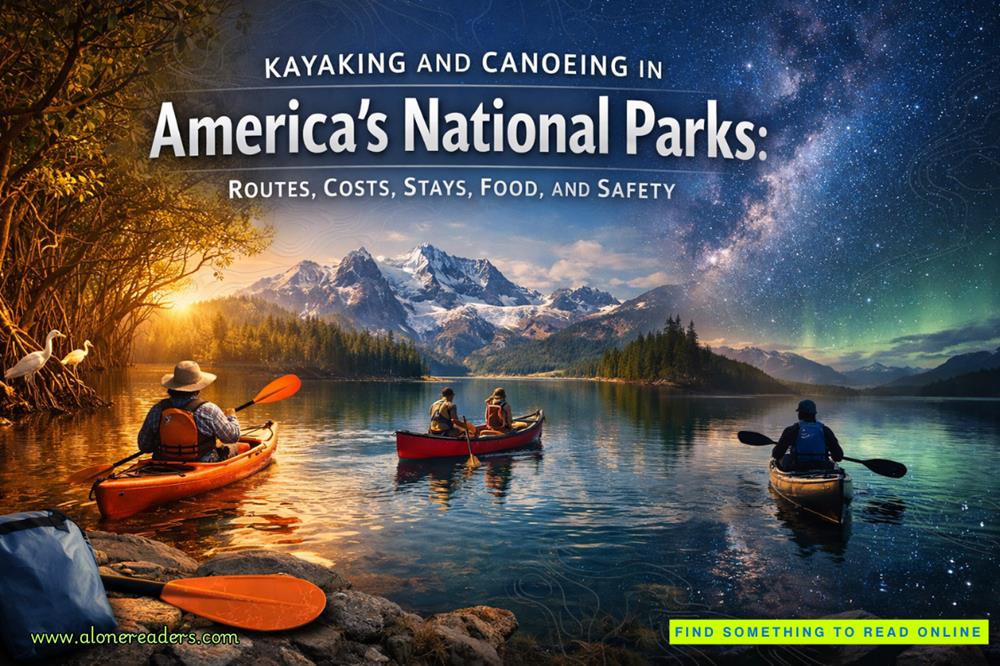
America’s national parks are often described through their trails and viewpoints, but a significant portion of their most memorable scenery is revealed from water level. Lakes, coastal inlets, mangrove backwaters, and wide northern waterways create “blue corridors” that feel quieter than road pullouts and more immersive than many day hikes. Kayaking and canoeing in these parks is not a single destination experience; it is a flexible way of traveling through multiple landscapes—subtropical wetlands, granite coastlines, glacial valleys, and boreal lake country—while carrying only what is essential.
This guide is written in a practical, visitor-focused style rather than a personal travelogue. It outlines standout national parks for paddling, how to reach them, where to stay, what food options typically look like nearby, realistic cost ranges, and the cautions that matter most on the water.
Choose the right “paddling style” for your trip.
Confirm fees and permits early.
Renting vs bringing your own kayak/canoe.
Safety baseline (non-negotiable).
Why it’s special
Everglades paddling is about intimate water routes: mangrove tunnels, sawgrass-lined bays, and wildlife encounters at close range. It is one of the most distinctive “quiet-water” ecosystems in North America.
Top on-water experiences
How to get there
Accommodations
Food and supplies
Estimated costs (typical ranges)
Key cautions
Why it’s special
Glacier delivers the alpine-lake experience: cold, clear water framed by steep peaks. Paddling here is often about short, high-impact outings with exceptional scenery rather than long-distance mileage.
Top on-water experiences
How to get there
Accommodations
Food
Estimated costs (typical ranges)
Key cautions
Why it’s special
Voyageurs is a water-based park: islands, long channels, and vast lakes. It is well-suited to canoe trips, island camping, and a “lake-country” style of exploration.
Top on-water experiences
How to get there
Accommodations
Food
Estimated costs (typical ranges)
Key cautions
Why it’s special
Acadia offers a compact coastal paddling environment: granite shorelines, sheltered bays, and the “working coast” character of Maine. It is a strong choice for visitors who want short drives between launches, viewpoints, and food stops.
Top on-water experiences
How to get there
Accommodations
Food
Estimated costs (typical ranges)
Key cautions
Why it’s special
Grand Teton combines mountain drama with accessible water: wide valley views, reflective lakes, and a sense of scale that looks designed for sunrise paddles.
Top on-water experiences
How to get there
Jackson Hole Airport (JAC) is the most direct option, with short driving distances to many park access areas.
Accommodations
Food
Estimated costs (typical ranges)
Key cautions
Costs vary significantly by season, park popularity, and whether you camp or stay in hotels. The ranges below are practical planning figures (USD).
Typical daily costs (per person)
Activity costs
Example: 3-day “comfortable” paddling trip (per person)
Estimated total: ~USD $575–$1,125 per person



 Unique Australian Wildlife and Where to Find Them: A Complete Travel Guide
 Island Hopping in the Philippines: Ultimate Travel Guide to Paradise Adventures
 Hong Kong Skyline: Best Spots for Stunning Panoramic Views
 The Enchanting Lijiang: A Complete Guide to Its Ancient Alleys, Culture, and Travel Costs
 San Diego: The Ultimate Family Vacation Destination (Beaches, Wildlife, and Budget-Smart Fun)
 Unveiling the Mysteries of the Kazan Kremlin: A Complete Travel Guide to Russia’s Historic Gem