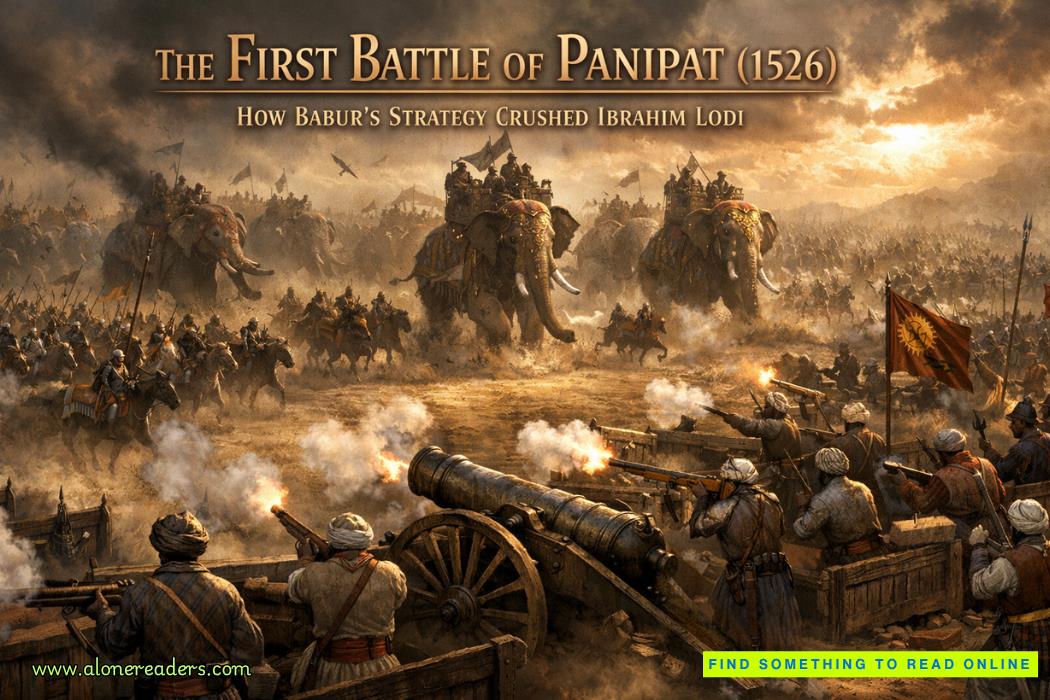
The First Battle of Panipat in 1526 stands as one of the most decisive military confrontations in South Asian history, marking not simply the fall of a ruling power but the beginning of a new imperial order that would dominate the region for centuries. When Babur faced Ibrahim Lodi on the plains of Panipat, the outcome would reshape the political and military structure of northern India in a profound and lasting way.
The background to this battle was shaped by deep internal weaknesses within the Delhi Sultanate. Ibrahim Lodi, although personally courageous, struggled to maintain the loyalty of his nobles. His attempts to strengthen central authority alienated many powerful regional leaders. As dissatisfaction grew, several of these figures sought outside support, creating an opportunity for Babur to intervene. This internal division meant that even before the battle began, the foundations of Lodi’s rule were already unstable.
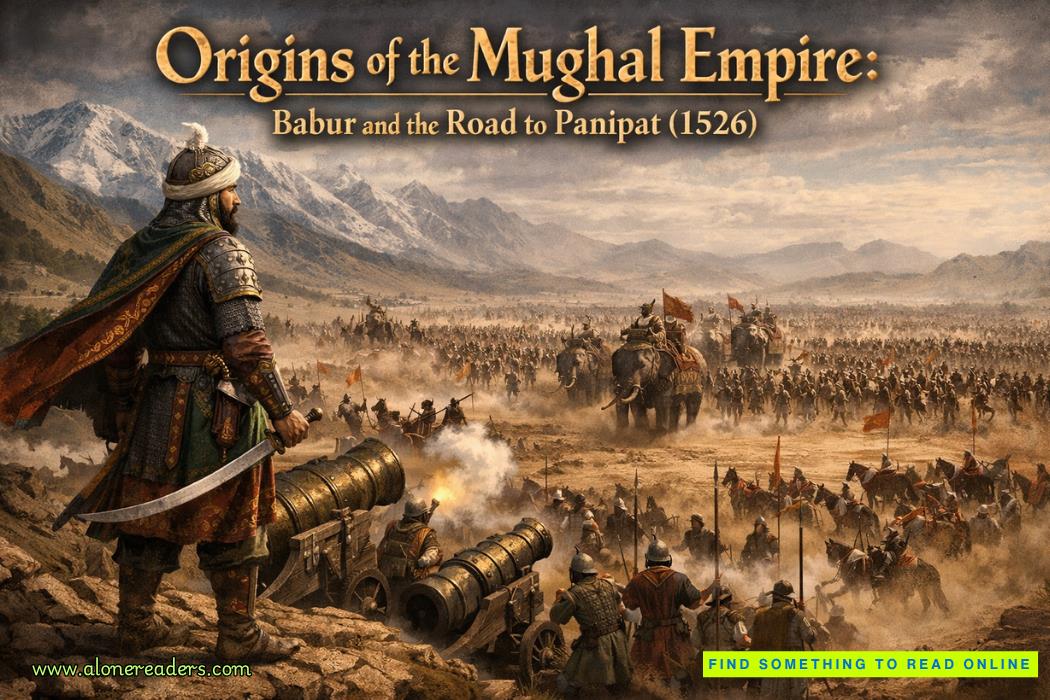
Babur, a Central Asian ruler with a strong military tradition, had long sought to establish a stable kingdom after facing repeated setbacks in his earlier campaigns. Unlike earlier invaders who focused on quick raids, Babur approached India with a clear strategic vision. His earlier expeditions into the Punjab region were carefully planned to test defenses and gather intelligence. When he received support from discontented nobles within the Sultanate, he recognized that the moment was right for a decisive campaign.
One of the most striking aspects of the battle was the difference in military organization between the two sides. Ibrahim Lodi commanded a very large army, often described as exceeding one hundred thousand soldiers, supported by a significant number of war elephants. These elephants had traditionally been used as powerful shock units capable of breaking enemy lines through sheer force. However, this reliance on traditional methods would become a major weakness.
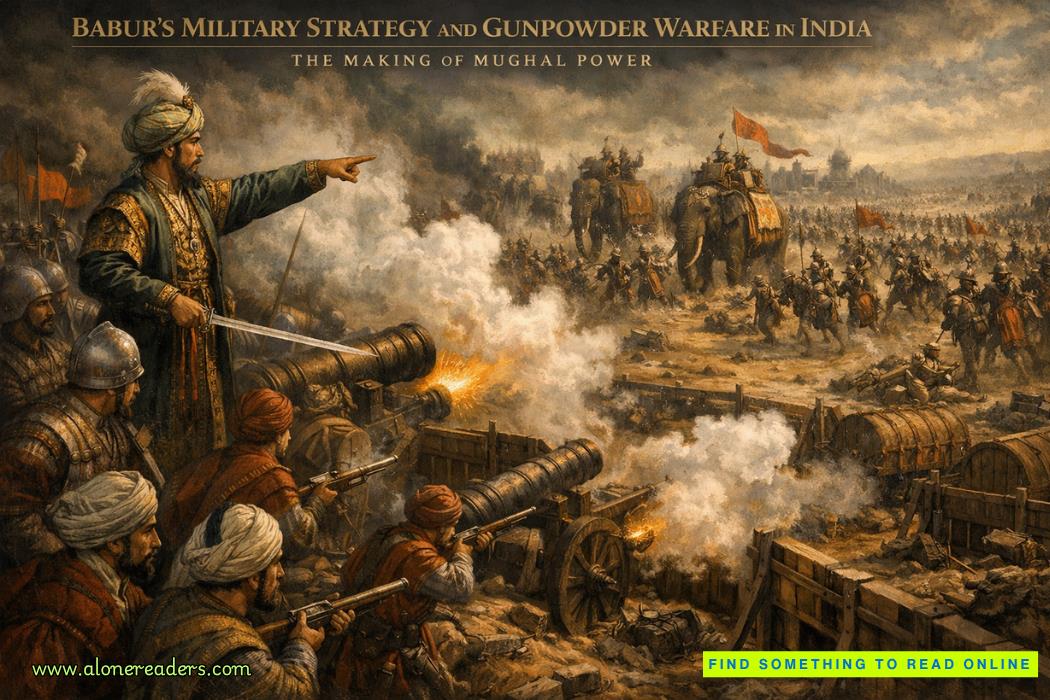
Babur’s army was much smaller but far more disciplined and strategically organized. His forces included highly mobile cavalry, skilled archers, and most importantly, units equipped with firearms and artillery. The use of gunpowder weapons was not entirely new in the region, but Babur’s systematic and effective deployment of these tools on the battlefield represented a major advancement. Under the guidance of experienced gunners, Babur integrated cannons and matchlock guns into his battle plan as a central element rather than a secondary support.
The way Babur used artillery at Panipat was especially important. He positioned his cannons behind a defensive line of carts that were tied together to form a barrier. This setup allowed his troops to fire safely while preventing a direct charge from enemy forces. The loud noise and smoke produced by the cannons had a powerful psychological effect, especially on the war elephants in Lodi’s army. Many of these animals panicked under the unfamiliar sound of gunfire, causing confusion and disorder among their own ranks.
Equally important was Babur’s use of advanced battlefield tactics. One of his key strategies involved dividing his cavalry into separate units that could move quickly around the enemy and attack from the sides and rear. While his central forces held their ground behind the defensive line, these mobile units created pressure from multiple directions. This approach transformed the battle into a coordinated and flexible engagement rather than a simple head on clash.
Leadership also played a crucial role in determining the outcome. Babur demonstrated a high level of control and awareness during the battle. He carefully managed troop movements, maintained communication, and adjusted his strategy as the situation evolved. His ability to combine careful planning with real time decision making gave his army a significant advantage. In contrast, Ibrahim Lodi relied heavily on the size of his army and traditional methods, leaving little room for adaptation once the battle began.
As the battle unfolded, the differences between the two forces became clear. Lodi’s army advanced in large numbers but struggled to maintain coordination under the impact of artillery fire and flanking attacks. The disruption caused by the cannons and the panic among the elephants quickly spread through his ranks. What began as a powerful advance soon turned into confusion. Within a relatively short period, the cohesion of Lodi’s forces collapsed.
Ibrahim Lodi himself remained on the battlefield and fought bravely, but he was ultimately killed during the fighting. His death marked the end of effective resistance and signaled the complete defeat of his army. The fall of the Sultan was not only a military loss but also a symbolic end to his rule.
The consequences of the battle were far reaching. Babur’s victory allowed him to take control of Delhi and establish the foundation of what would become the Mughal Empire. This new power would go on to shape the political, cultural, and architectural development of the region for generations. The events at Panipat therefore represent not just a single battle but the beginning of a major historical transformation.
From a military perspective, the battle highlights the growing importance of gunpowder weapons in warfare. The success of artillery and firearms demonstrated that traditional methods, such as reliance on large numbers and war elephants, were no longer sufficient on their own. This shift would influence future conflicts across the region, encouraging rulers to adopt new technologies and strategies.
The battle also underscores the importance of morale and unity within an army. Babur’s troops, though fewer in number, were disciplined and motivated, with a clear sense of purpose. In contrast, Lodi’s forces suffered from internal divisions and a lack of cohesion. This difference in morale amplified the effectiveness of Babur’s tactics and contributed to the rapid collapse of the opposing army.
Geography also played a role in shaping the outcome. The open plains of Panipat provided an ideal setting for Babur’s style of warfare. His artillery and cavalry could be deployed effectively without the constraints of difficult terrain. This allowed him to fully utilize his strategic advantages and maintain control over the flow of the battle.
Another important factor was Babur’s ability to adapt and innovate. He combined elements of Central Asian cavalry tactics with gunpowder technology to create a flexible and effective system of warfare. This combination allowed him to respond to different situations and maintain the initiative throughout the battle. His success demonstrates the value of integrating new ideas with existing strengths.
The defeat of Ibrahim Lodi also serves as a reminder of the risks associated with resistance to change. Despite commanding a large and experienced army, Lodi failed to recognize the importance of adapting to new military developments. His reliance on traditional methods left him vulnerable to a more innovative opponent. This lesson extends beyond the battlefield, highlighting the broader importance of flexibility and forward thinking in leadership.
In the wider context of history, the First Battle of Panipat marks the beginning of a new era in the Indian subcontinent. The empire established by Babur would be expanded and strengthened by his successors, eventually becoming one of the most powerful and influential states in the region. The foundations laid in 1526 would shape the course of history for centuries to come.
The lasting significance of the battle lies in its demonstration that success in warfare depends not only on numbers but on strategy, discipline, and the effective use of technology. Babur’s victory was the result of careful planning, strong leadership, and a willingness to embrace innovation. Ibrahim Lodi’s defeat, on the other hand, reflects the consequences of internal division and an inability to adapt.
In the final analysis, the First Battle of Panipat was a turning point that reshaped the political landscape of northern India. It showed that a smaller but well organized and forward thinking force could overcome a much larger opponent. The events of that day continue to be studied as a classic example of how strategy and innovation can determine the outcome of history.



 The Hundred Days Offensive: How the Allies Defeated Germany in World War I
 The Second Battle of the Marne: The Turning Point of World War I in 1918
 The Spring Offensive of 1918: Germany's Final Gamble to Win World War I
 The Treaty of Brest-Litovsk: How Russia Left World War I
 The Russian Revolution and World War I: How War Brought Down the Tsar
 The Zimmermann Telegram Explained: Germany's Secret Offer to Mexico in World War I










