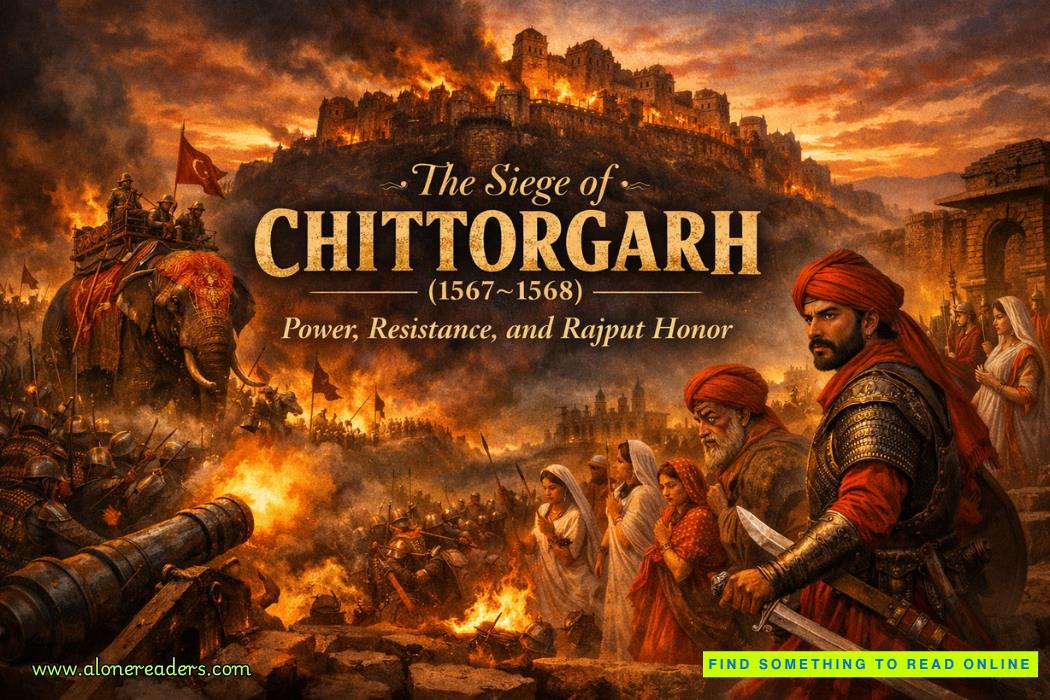
The Siege of Chittorgarh (1567–1568) stands as one of the most defining confrontations between the expanding Mughal Empire and the fiercely independent Rajput states. It was not merely a military campaign; it was a collision of ideologies, a test of endurance, and a moment that transformed Chittorgarh from a strategic fortress into a lasting symbol of honor, sacrifice, and resistance. Under the leadership of Emperor Akbar, the Mughal Empire sought consolidation and dominance across northern India, while the Rajputs of Mewar, led in spirit by Maharana Udai Singh II and in defense by his loyal commanders, chose defiance over submission.
At the heart of this siege was the imposing Chittorgarh Fort, one of the largest forts in India, rising dramatically over the plains of Rajasthan. Its towering walls, stretching over several kilometers, and its strategic hilltop location made it both a military stronghold and a cultural center of Rajput pride. For centuries, it had withstood invasions, and its legacy was already steeped in stories of bravery and sacrifice. By the time Akbar turned his attention to it in 1567, Chittorgarh had become more than a fort—it was a symbol of Rajput sovereignty.
Akbar’s decision to attack Chittorgarh was driven by both political necessity and imperial ambition. By the mid-16th century, he had already secured much of northern India, but Mewar remained unconquered. Unlike other Rajput rulers who had entered into alliances with the Mughals, the rulers of Mewar refused to submit. This resistance was not merely political; it was deeply tied to Rajput identity, autonomy, and honor. For Akbar, bringing Mewar under control was essential to securing trade routes, stabilizing the region, and reinforcing his authority as a universal emperor.
When the Mughal forces marched toward Chittorgarh in 1567, Maharana Udai Singh II made a controversial but strategic decision. Rather than risking capture or death, he retreated to the hills to preserve the royal lineage, leaving the defense of the fort to his trusted generals, Jaimal Rathore and Patta Sisodia. This decision has been debated by historians, but within the Rajput framework, it allowed the fight to continue symbolically and ensured that resistance would not die with the fall of a single fortress.
The siege itself was a demonstration of Mughal military sophistication and relentless determination. Akbar’s army employed advanced artillery, trench warfare, and strategic positioning to gradually weaken the fort’s defenses. Massive cannons bombarded the walls, while engineers constructed covered pathways to approach the fortifications. The Mughals also used mines to breach the walls, showcasing their technical superiority in siege warfare. Yet, despite these overwhelming advantages, the Rajput defenders fought with extraordinary courage, launching counterattacks and refusing to surrender.
One of the most remarkable aspects of the siege was the personal involvement of Akbar. Unlike many rulers who directed battles from a distance, Akbar actively participated in the campaign, supervising operations and even engaging in combat. According to historical accounts, he personally fired a shot that fatally wounded Jaimal Rathore, a moment that significantly impacted the morale of the defenders. This act was later immortalized in Mughal narratives as a testament to Akbar’s bravery and leadership.
Inside the fort, conditions grew increasingly desperate as the siege dragged on. Supplies dwindled, and the relentless bombardment took its toll on both infrastructure and morale. Yet, the defenders remained steadfast, driven by a code that valued honor above life itself. As defeat became inevitable, the Rajputs prepared for their final act of resistance—jauhar and saka. Jauhar involved the mass self-immolation of women to avoid capture and dishonor, while saka referred to the final, suicidal charge of the warriors, who donned saffron robes and marched into battle with no expectation of survival.
The jauhar at Chittorgarh during this siege was one of the most tragic and powerful episodes in Indian history. Flames rose within the fort as women chose death over subjugation, transforming the event into a symbol of both agency and tragedy. The men, having performed their last rites, charged out of the fort in a final act of defiance. This moment encapsulated the Rajput ethos—a refusal to yield, even in the face of certain annihilation.
When the Mughal forces finally breached the fort in February 1568, they encountered a city already marked by devastation and sacrifice. The fall of Chittorgarh was followed by a brutal massacre, with thousands of inhabitants killed. This act, ordered by Akbar, has been the subject of intense historical debate. While some view it as a harsh but typical measure of medieval warfare, others see it as a stark contradiction to Akbar’s later reputation as a tolerant and enlightened ruler. It highlights the complexities of his character and the evolving nature of his rule.
The aftermath of the siege had far-reaching consequences. Although Chittorgarh fell, the spirit of Mewar did not. Maharana Udai Singh II continued to resist from the hills, and his successor, Maharana Pratap, would later become one of the most iconic figures of Rajput resistance. The siege thus marked not an end, but a transformation—a shift from territorial defense to a more enduring struggle for identity and autonomy.
Symbolically, the Siege of Chittorgarh transcended its immediate context to become a powerful narrative within Indian history. For the Mughals, it represented the consolidation of imperial authority and the demonstration of military supremacy. For the Rajputs, it became a story of uncompromising valor and sacrifice, a touchstone of cultural memory that continues to inspire generations. The fort itself, scarred by battle, stands today as a silent witness to these events, its walls echoing with stories of courage and loss.
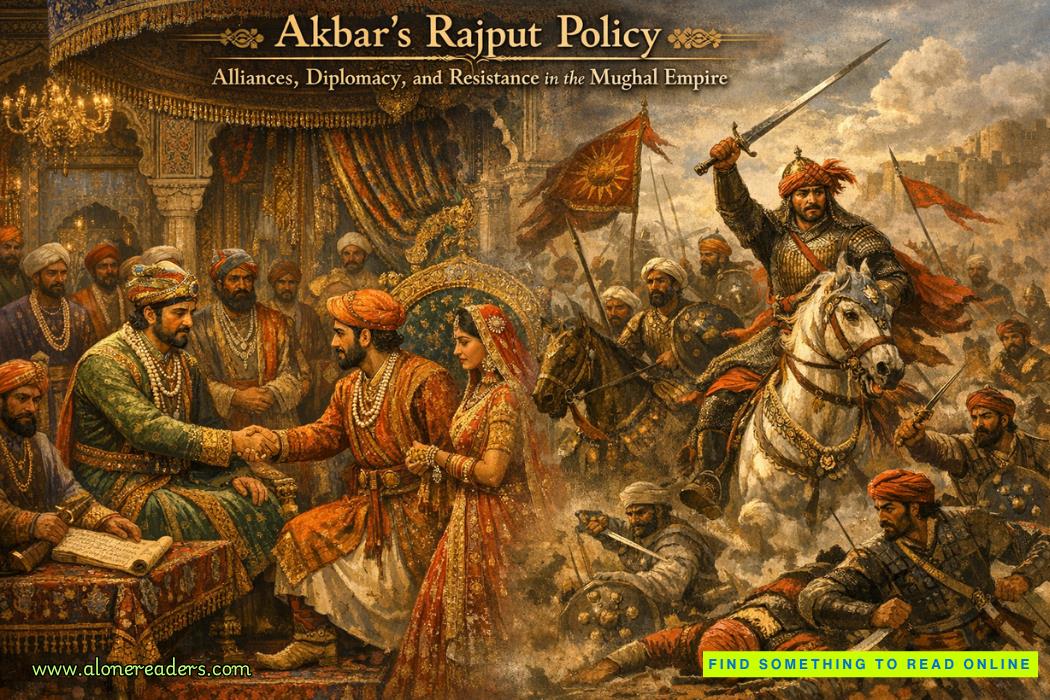
The siege also played a crucial role in shaping Akbar’s policies in the years that followed. Having witnessed the fierce resistance of the Rajputs, he began to adopt a more conciliatory approach, forging alliances through diplomacy and marriage rather than relying solely on force. This shift was instrumental in stabilizing his empire and integrating diverse communities into a cohesive political structure. In this sense, the tragedy of Chittorgarh contributed to a broader transformation in Mughal governance.
From a historiographical perspective, the Siege of Chittorgarh has been interpreted in multiple ways. Traditional narratives emphasize the heroism of the Rajputs and the brutality of the Mughals, while more recent analyses seek to understand the event within its broader political and cultural context. These differing perspectives highlight the complexity of history, where events are shaped by competing narratives and evolving interpretations.
What remains undeniable is the enduring significance of the siege. It is remembered not just for its outcome, but for the values it came to represent. The image of Rajput warriors riding out in their final charge, the flames of jauhar illuminating the night sky, and the relentless advance of Mughal forces—all these elements combine to create a story that is as much about human resilience and identity as it is about power and conquest.
In the modern imagination, Chittorgarh occupies a unique place as a symbol of resistance against overwhelming odds. It is invoked in literature, folklore, and popular culture as a testament to the strength of conviction and the price of freedom. At the same time, it serves as a reminder of the human cost of war and the complexities of historical legacy.
The Siege of Chittorgarh thus cannot be reduced to a simple narrative of victory and defeat. It was a moment where power confronted principle, where imperial ambition met unyielding resistance, and where the outcomes extended far beyond the battlefield. It reshaped the political landscape of the subcontinent, influenced the policies of one of its greatest rulers, and left behind a legacy that continues to resonate.
In examining this event, one is compelled to look beyond the surface and engage with the deeper themes it embodies. It challenges us to consider the nature of power, the meaning of resistance, and the ways in which history is remembered and retold. The siege was not just a chapter in the expansion of the Mughal Empire; it was a defining moment in the story of India, where the struggle between domination and dignity played out with profound intensity.
Ultimately, the Siege of Chittorgarh remains a powerful reminder that history is shaped not only by those who conquer, but also by those who refuse to yield. Its legacy endures in the collective memory as a story of courage, sacrifice, and the enduring quest for identity, making it one of the most compelling episodes of the Mughal era.



 The Hundred Days Offensive: How the Allies Defeated Germany in World War I
 The Second Battle of the Marne: The Turning Point of World War I in 1918
 The Spring Offensive of 1918: Germany's Final Gamble to Win World War I
 The Treaty of Brest-Litovsk: How Russia Left World War I
 The Russian Revolution and World War I: How War Brought Down the Tsar
 The Zimmermann Telegram Explained: Germany's Secret Offer to Mexico in World War I










