Jahangir’s reign stands as one of the most fascinating phases of the Mughal Empire, where refinement, administrative continuity, and political intrigue intertwined to shape the destiny of a vast and diverse empire. Ascending the throne in 1605 after the death of his father Akbar, Prince Salim adopted the title Nur-ud-din Muhammad Jahangir, meaning “Seizer of the World.” Unlike Akbar, who built the empire through expansion and innovation, Jahangir inherited a well-established imperial structure. His challenge was not conquest but preservation, not innovation but balance. In this delicate act, he revealed both his strengths and vulnerabilities as a ruler.
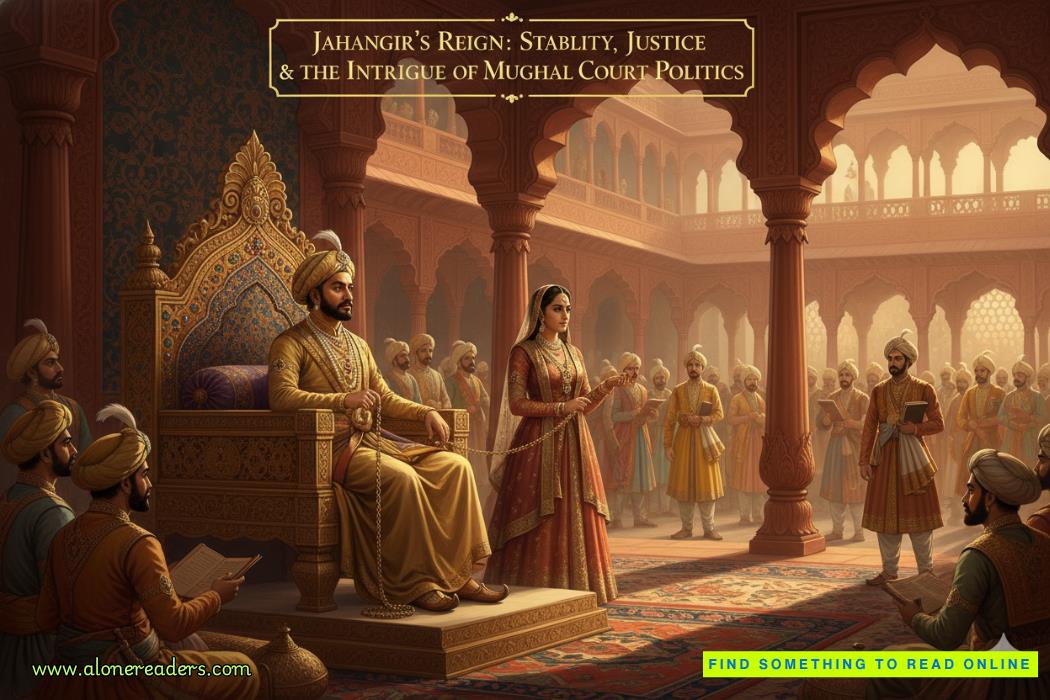
From the outset, Jahangir positioned himself as a guardian of justice. His reign is famously associated with the symbolic “Chain of Justice,” a golden chain hung outside his palace in Agra, allowing any subject to directly appeal to the emperor. This was more than theatrical governance; it represented Jahangir’s conscious effort to project himself as a just and accessible ruler. He often took personal interest in judicial matters, recording decisions in his memoir, the Tuzuk-i-Jahangiri. His reflections reveal a ruler deeply concerned with fairness, though not always free from bias or political pressure.
The concept of justice under Jahangir was rooted in a combination of Islamic principles, Persian traditions, and Mughal administrative practices. While he continued Akbar’s policy of relative religious tolerance, Jahangir showed moments of contradiction. He upheld the empire’s pluralistic structure but also ordered actions that reflected political expediency rather than ideological consistency. For example, his dealings with Sikh leader Guru Arjan were influenced as much by perceived political threat as by religious difference. This duality underscores a key theme of Jahangir’s rule: justice was often entangled with power.
Administratively, Jahangir maintained the robust system established by Akbar. The mansabdari system continued to function effectively, ensuring loyalty among nobles while maintaining a structured hierarchy. Revenue systems, provincial governance, and military organization remained largely stable, which contributed to the empire’s overall continuity and stability. Jahangir’s strength lay not in restructuring the empire but in preserving its equilibrium. He delegated authority efficiently, relying on experienced officials while intervening when necessary.
However, this stability masked a deeper undercurrent of court politics that defined Jahangir’s reign. The Mughal court was not merely a center of governance; it was a theater of ambition, alliances, and rivalries. Power was negotiated through personal relationships, family ties, and strategic marriages. Among the most influential figures was Empress Nur Jahan, whose role in governance marked a significant shift in the dynamics of imperial authority.
Nur Jahan was not just a consort; she emerged as a co-sovereign figure, wielding remarkable influence over state affairs. Her intelligence, political acumen, and charisma enabled her to form a powerful faction within the court. Coins were minted in her name, and royal decrees bore her seal, signaling an unprecedented level of authority for a Mughal empress. Through her family network, particularly her father Itimad-ud-Daulah and brother Asaf Khan, she consolidated power and shaped imperial decisions.
This concentration of influence, however, intensified factionalism within the court. Rival groups formed around key figures, including Prince Khurram (later Shah Jahan) and other nobles who viewed Nur Jahan’s dominance with suspicion. The court became a battleground of competing interests, where loyalty was fluid and alliances were constantly shifting. These tensions occasionally erupted into open conflict, such as Prince Khurram’s rebellion, which highlighted the fragile balance of power within the empire.
Jahangir’s personal characteristics further complicated the political landscape. Known for his appreciation of art, nature, and refinement, he was also criticized for his indulgence in alcohol and opium. These habits sometimes affected his ability to govern actively, creating opportunities for others, particularly Nur Jahan, to exert greater influence. Yet, it would be simplistic to portray Jahangir as a passive ruler. He remained engaged in key decisions and demonstrated a keen awareness of political realities, even if his execution was inconsistent.
Culturally, Jahangir’s reign was a period of remarkable artistic achievement. Mughal painting reached new heights, characterized by detailed naturalism and intricate portraiture. Jahangir himself was an avid patron of the arts, with a particular interest in flora and fauna. His court attracted skilled artists who produced works that combined Persian aesthetics with Indian themes, creating a distinctive Mughal style. This cultural flourishing contributed to the empire’s prestige and reinforced its image as a center of sophistication and refinement.
In foreign relations, Jahangir maintained diplomatic engagements that reflected both continuity and adaptation. His interactions with European powers, particularly the English East India Company, marked an important development. The arrival of Sir Thomas Roe at his court signaled the beginning of formal diplomatic relations with England. Jahangir’s approach to these interactions was pragmatic; he recognized the potential benefits of trade while ensuring that foreign presence did not threaten imperial authority. This balance between openness and control exemplified his broader governance style.
Despite these achievements, Jahangir’s reign was not without challenges. Regional rebellions, succession disputes, and court intrigues tested the empire’s stability. The rebellion of Prince Khusrau early in his reign was a significant crisis that required decisive action. Jahangir’s response demonstrated both firmness and political calculation, as he sought to deter dissent while maintaining legitimacy. These episodes reveal the constant tension between authority and vulnerability that defined his rule.
One of the most striking aspects of Jahangir’s governance was his emphasis on imperial image and symbolism. He understood the importance of projecting power through visual and ceremonial means. Court rituals, architectural projects, and artistic representations were carefully crafted to reinforce the emperor’s authority. Even the Chain of Justice can be seen as part of this broader strategy, blending genuine concern for justice with symbolic assertion of power.
The interplay between stability and intrigue during Jahangir’s reign offers valuable insight into the nature of Mughal governance. Stability was not simply the absence of conflict; it was the result of constant negotiation and adaptation. Court politics, while often disruptive, also served as a mechanism for balancing competing interests. The empire’s ability to absorb and manage these tensions was a testament to its institutional strength.
Jahangir’s legacy is often overshadowed by the towering figures of Akbar and Shah Jahan, yet his reign provides a crucial link between expansion and consolidation. He preserved the empire’s foundations while navigating a complex web of political dynamics. His commitment to justice, though imperfect, reflected an enduring ideal of kingship that resonated with his subjects. At the same time, the prominence of figures like Nur Jahan highlights the evolving nature of power within the Mughal court.
In examining Jahangir’s reign, it becomes clear that his rule cannot be reduced to a single narrative. It was a period of contradictions and complexities, where justice coexisted with political maneuvering, and stability was maintained through delicate balance rather than absolute control. His story is not just about an emperor but about an empire learning to sustain itself amid changing circumstances.
Ultimately, Jahangir’s reign illustrates that the strength of the Mughal Empire lay not only in its military might or administrative systems but in its ability to adapt, negotiate, and endure. Through his policies, his court, and his personal vision, Jahangir contributed to a legacy that would shape the empire for generations. His reign remains a compelling example of how power operates in subtle and often unpredictable ways, reminding us that history is as much about human dynamics as it is about grand events.



 The Hundred Days Offensive: How the Allies Defeated Germany in World War I
 The Second Battle of the Marne: The Turning Point of World War I in 1918
 The Spring Offensive of 1918: Germany's Final Gamble to Win World War I
 The Treaty of Brest-Litovsk: How Russia Left World War I
 The Russian Revolution and World War I: How War Brought Down the Tsar
 The Zimmermann Telegram Explained: Germany's Secret Offer to Mexico in World War I