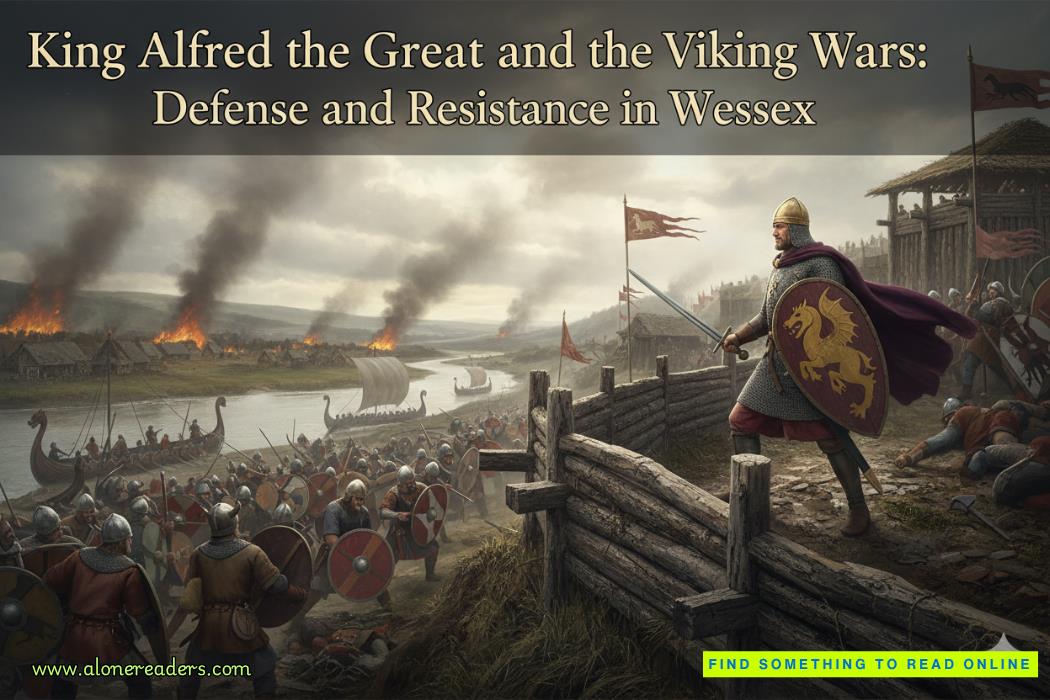
King Alfred the Great stands as one of the most pivotal figures in early medieval English history, not merely because he survived the Viking onslaught, but because he redefined the very idea of resistance. In an age when kingdoms fell swiftly before the relentless advance of Scandinavian warriors, Alfred transformed Wessex from a vulnerable realm into a resilient stronghold. His story is not simply one of warfare, but of adaptation, strategy, and cultural survival.
The Viking Age brought chaos to the British Isles, beginning in the late eighth century with sudden coastal raids that gradually evolved into organized campaigns of conquest. By the time Alfred ascended the throne of Wessex in 871, much of Anglo-Saxon England had already succumbed to Viking control. Northumbria and East Anglia had fallen, and Mercia was fractured. Wessex stood alone as the final bastion of Anglo-Saxon independence. The stakes were existential: either Wessex would resist, or the Anglo-Saxon identity itself might vanish.
Alfred’s early reign was marked by relentless conflict. The Viking armies, often referred to as the Great Heathen Army, were not mere raiders but disciplined forces with clear objectives. They sought land, tribute, and dominance. Alfred faced repeated campaigns led by formidable Viking leaders such as Guthrum. These encounters were not isolated skirmishes but part of a sustained effort to break Wessex’s resistance.
One of the defining characteristics of Alfred’s leadership was his refusal to rely on traditional methods alone. Earlier Anglo-Saxon kings often depended on the fyrd, a militia composed of local men who served temporarily. While effective in short bursts, this system proved inadequate against Viking forces capable of prolonged campaigns. Alfred recognized that defense required permanence, not improvisation.
His reforms began with the restructuring of military service. Alfred divided his forces so that half could remain on duty while the other half returned home, ensuring that Wessex always had a standing defensive capability. This innovation alone marked a turning point, as it allowed sustained resistance rather than reactive defense.
However, Alfred’s genius extended beyond troop organization. He initiated the construction of a network of fortified towns known as burhs. These were not random strongholds but strategically placed defensive hubs designed to protect key routes, settlements, and resources. Each burh was carefully planned, with walls, gates, and garrisons capable of withstanding Viking assaults. The system was interconnected, enabling rapid communication and mutual support.
The burh system fundamentally altered the nature of warfare in Wessex. Vikings, who thrived on mobility and surprise, found themselves confronted with fortified positions that could not be easily overrun. Raids became riskier, and the balance of power began to shift. Defense was no longer passive—it became an active strategy that constrained the enemy.
Alfred also understood the importance of naval power. While the Vikings were renowned seafarers, Alfred sought to challenge their dominance by building a fleet of ships designed specifically for warfare along England’s rivers and coasts. Though not always successful in early engagements, this initiative demonstrated his forward-thinking approach. He recognized that control of waterways was essential to counter Viking mobility.
The turning point in Alfred’s struggle came in 878, during one of the darkest moments of his reign. After a surprise Viking attack at Chippenham, Alfred was forced into hiding in the marshes of Athelney. This period has often been romanticized, but it reflects the precariousness of Wessex’s position. Alfred was not merely regrouping; he was reimagining his strategy for survival.
From Athelney, Alfred launched a calculated campaign to rally his forces. He called upon the loyalty of his people, drawing support from across Wessex. This moment revealed another crucial aspect of his leadership: his ability to inspire unity in the face of despair. The resistance he led was not solely military—it was communal.
The decisive confrontation came at the Battle of Edington later that year. Alfred’s forces met Guthrum’s army in a clash that would determine the fate of Wessex. The battle itself was fierce, but Alfred’s preparation and strategic positioning gave him the advantage. The Anglo-Saxon shield wall held firm, and the Vikings were ultimately defeated.
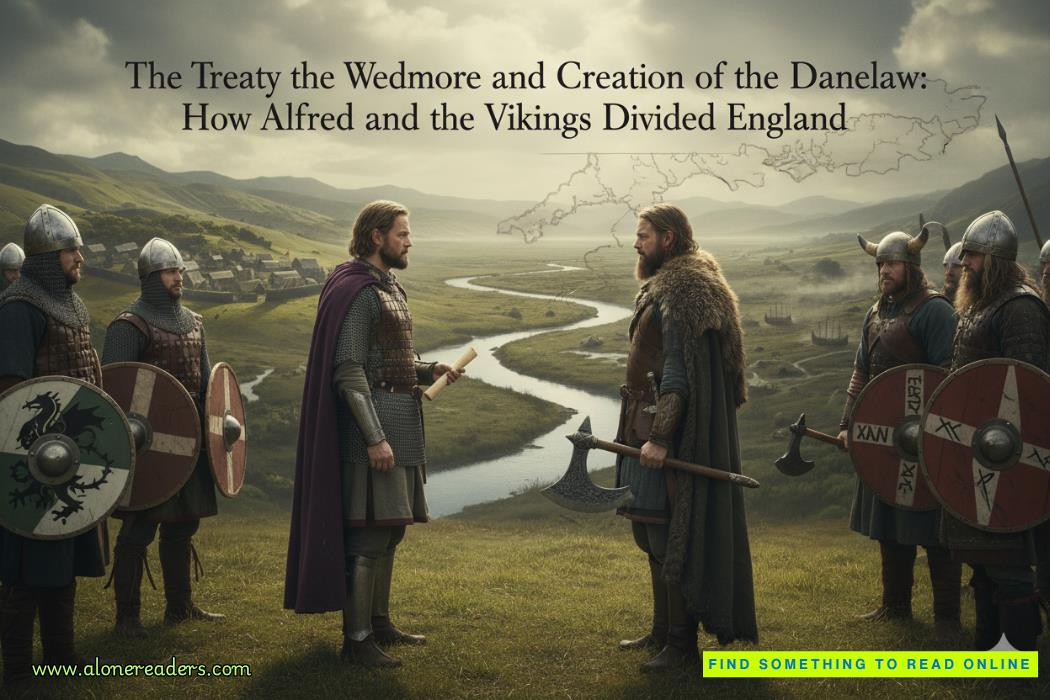
The aftermath of Edington was as significant as the battle itself. Alfred did not pursue total annihilation of his enemies. Instead, he negotiated the Treaty of Wedmore, which led to Guthrum’s conversion to Christianity and the establishment of boundaries between Anglo-Saxon and Viking territories. This agreement marked the beginning of what would later be known as the Danelaw.
Alfred’s approach to victory was pragmatic. He understood that lasting peace required more than military success. By integrating diplomacy with defense, he secured a period of stability that allowed Wessex to recover and strengthen.
Beyond warfare, Alfred’s resistance extended into cultural and intellectual realms. He believed that the survival of his kingdom depended on more than physical defense; it required the preservation of knowledge and identity. During his reign, he promoted education, encouraged the use of the English language in learning, and commissioned translations of important works.
This cultural revival was itself a form of resistance. While Viking influence spread across parts of England, Alfred ensured that Wessex retained its distinct character. He positioned himself not just as a king, but as a guardian of his people’s heritage. In defending Wessex, he was also defending a way of life.
Alfred’s legal reforms further reinforced this vision. He compiled a law code that combined traditional Anglo-Saxon customs with Christian principles, creating a framework for justice and governance. This code was not merely administrative; it was symbolic of order in a time of chaos. It demonstrated that Wessex was not only surviving but evolving.
The effectiveness of Alfred’s defense can be measured by what followed his reign. Unlike other kingdoms that fell permanently to Viking control, Wessex endured. Alfred’s successors, building on his foundations, would eventually reclaim lost territories and lay the groundwork for a unified England.
His legacy is therefore multifaceted. He was a warrior, a strategist, a reformer, and a scholar. Each of these roles contributed to a broader vision of resistance that went beyond the battlefield. He transformed vulnerability into strength through deliberate and sustained effort.
The Viking Wars were not won in a single moment or through a single battle. They were shaped by years of adaptation, resilience, and leadership. Alfred’s ability to learn from setbacks, innovate under pressure, and maintain the loyalty of his people set him apart from his contemporaries.
It is also important to recognize the nature of the Viking threat itself. These were not faceless invaders but complex societies with their own motivations and structures. Alfred’s dealings with them—whether through conflict or negotiation—reflect a nuanced understanding of his adversaries. He did not underestimate them, nor did he rely solely on brute force. Instead, he crafted a strategy that addressed both their strengths and weaknesses.
The concept of resistance in Alfred’s reign thus operates on multiple levels. Militarily, it involved fortifications, reorganized armies, and strategic battles. Politically, it included treaties and alliances. Culturally, it encompassed education, law, and identity. Each layer reinforced the others, creating a comprehensive system of survival.
What makes Alfred’s story particularly compelling is the contrast between his initial vulnerability and his eventual success. At several points, Wessex appeared on the brink of collapse. Yet each crisis prompted innovation rather than surrender. This ability to turn adversity into opportunity defines his greatness.
In the broader context of the Viking Age, Alfred’s achievements stand out because they altered the trajectory of history. Had Wessex fallen, the cultural and political landscape of England might have been entirely different. His resistance ensured continuity at a time when disruption seemed inevitable.
The enduring image of Alfred is not just that of a king in battle, but of a ruler who understood that survival required foresight. He built systems that outlasted him, creating a legacy that extended far beyond his lifetime. His fortified towns became centers of trade and administration, his laws influenced future governance, and his emphasis on learning shaped intellectual life in England.
Even today, Alfred’s reign offers insights into the nature of leadership during crisis. His example demonstrates that effective resistance is rarely about a single decisive act. It is about sustained effort, strategic thinking, and the willingness to adapt. He did not simply defend Wessex—he reinvented it.
The Viking Wars tested the limits of every kingdom they touched. Many failed to withstand the pressure, but Wessex, under Alfred, emerged not only intact but strengthened. This outcome was not inevitable; it was the result of deliberate choices and relentless determination.
In examining Alfred’s defense and resistance, one sees a model of resilience that transcends its historical context. It is a reminder that even in the face of overwhelming odds, survival is possible through innovation, unity, and resolve. His story continues to resonate because it captures a fundamental truth: resistance is not merely about opposing an enemy, but about preserving what matters most.



 The Hundred Days Offensive: How the Allies Defeated Germany in World War I
 The Second Battle of the Marne: The Turning Point of World War I in 1918
 The Spring Offensive of 1918: Germany's Final Gamble to Win World War I
 The Treaty of Brest-Litovsk: How Russia Left World War I
 The Russian Revolution and World War I: How War Brought Down the Tsar
 The Zimmermann Telegram Explained: Germany's Secret Offer to Mexico in World War I










