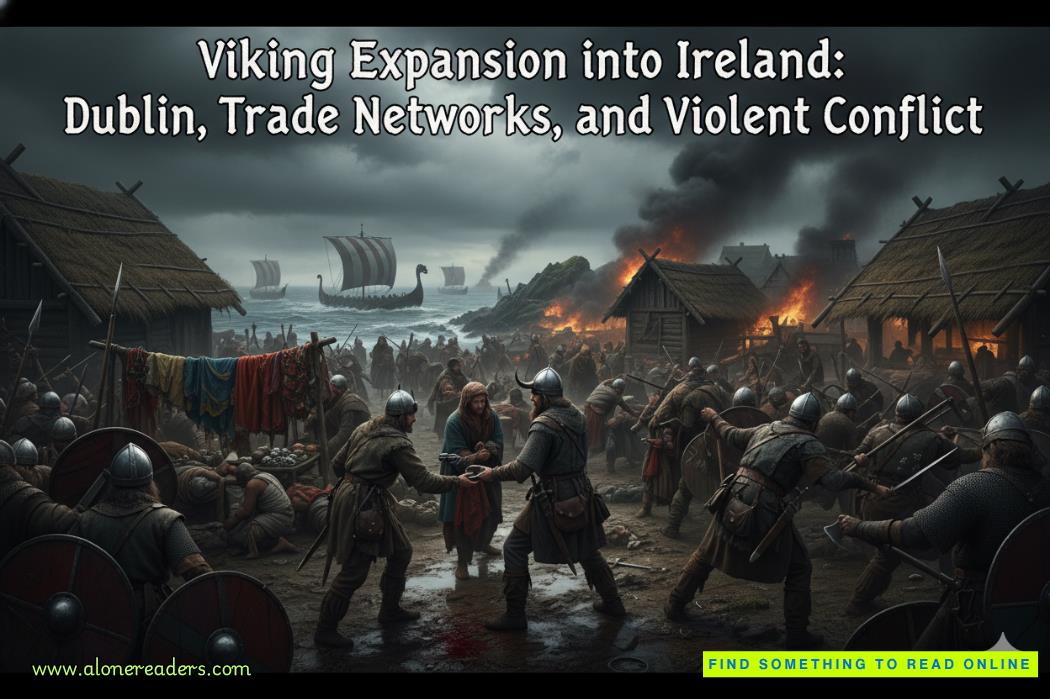
The Viking expansion into Ireland stands as one of the most transformative episodes in early medieval European history, marked by a complex interplay of violent incursions, strategic settlement, and dynamic trade development. Unlike the often simplified narrative of Vikings as mere raiders, their presence in Ireland evolved into something far more enduring and influential. At the center of this transformation was Dublin, a settlement that began as a seasonal encampment and grew into a thriving Norse-Gaelic urban hub. The story of Viking Ireland is therefore not just one of destruction, but also of adaptation, economic innovation, and cultural fusion, all unfolding amid persistent conflict.
When Vikings first arrived on Irish shores in the late 8th century, their activities were characterized primarily by swift, brutal raids on monastic sites. Ireland, dotted with wealthy monasteries such as those at Armagh, Clonmacnoise, and Glendalough, presented an attractive target. These institutions held not only religious significance but also vast stores of precious metals, illuminated manuscripts, and livestock. The Vikings, with their superior naval technology and surprise tactics, were able to strike quickly and retreat before local forces could mount an effective defense. These early raids were not random acts of violence but calculated operations designed to exploit Ireland’s fragmented political landscape, where numerous small kingdoms competed for dominance.
Over time, however, the nature of Viking activity began to shift. By the early 9th century, Vikings started establishing longphorts, fortified ship camps that served as bases for overwintering and extended campaigns. These longphorts represented a crucial transition from raiding to settlement. Among the most significant of these was the longphort at Dubh Linn, meaning “black pool,” which would later become Dublin. Its location was strategically ideal, situated at the mouth of the River Liffey, providing access to inland routes while remaining connected to the Irish Sea and beyond.
Dublin’s rise as a Viking stronghold was neither immediate nor uncontested. Irish kings quickly recognized the threat posed by these permanent encampments and launched efforts to dismantle them. In 902, a coalition of Irish forces successfully expelled the Vikings from Dublin, marking a temporary victory. However, this expulsion was short-lived. By 917, Viking forces had returned with renewed strength, re-establishing Dublin as a central hub of Norse power in Ireland. This cycle of expulsion and return highlights a recurring theme in Viking Ireland: conflict did not eliminate Viking influence but often reshaped it.
Once firmly established, Dublin evolved into far more than a military outpost. It became a bustling center of commerce and international trade, linking Ireland to a vast network that extended across the Viking world. Goods flowed through Dublin in remarkable quantities and diversity. From the north came furs and walrus ivory; from the east, silver and fine textiles; from the Irish hinterland, cattle, wool, and agricultural produce. Perhaps most controversially, Dublin also became a major hub for the slave trade, with captives taken from raids in Ireland and Britain being sold into markets across Europe and the Islamic world.
The economic vitality of Dublin transformed it into one of the most important urban centers in the region. Archaeological evidence reveals a city filled with workshops, warehouses, and densely packed wooden buildings. Craftsmen produced items such as jewelry, weapons, and tools, blending Norse and Irish artistic styles. This fusion gave rise to what historians often describe as Norse-Gaelic culture, a hybrid identity that reflected both Viking heritage and Irish influence. Language, dress, and social customs all began to intertwine, creating a society that was neither fully Norse nor fully Irish.
Despite this cultural blending, conflict remained a constant feature of life in Viking Ireland. The Irish political landscape, already fragmented into numerous kingdoms, became even more volatile with the addition of powerful Norse settlements. Irish kings alternately fought against and allied with Viking leaders, depending on shifting political needs. These alliances were often pragmatic rather than ideological, with both sides recognizing the benefits of cooperation in certain contexts. For example, some Irish rulers employed Viking warriors as mercenaries, leveraging their military prowess in local disputes.
The Vikings themselves were not a unified force. Different groups, often led by rival chieftains, competed for control over key settlements like Dublin, Waterford, and Limerick. This internal rivalry sometimes weakened Viking positions but also contributed to the dynamic and unpredictable nature of the period. The famous Battle of Clontarf in 1014 is often portrayed as a decisive moment in Irish history, where High King Brian Boru defeated a coalition of Viking and Irish forces. While the battle did not end Viking presence in Ireland, it significantly reduced their political power and marked a turning point in the balance between Irish and Norse influence.
Trade remained a central pillar of Viking Dublin’s success even amid ongoing conflict. The city’s location made it an ideal hub for maritime trade, connecting routes between Scandinavia, Britain, and continental Europe. Silver, often used as currency in the Viking world, flowed into Dublin in large quantities, facilitating economic growth. The city became known for its bustling markets, where merchants from diverse backgrounds interacted, exchanged goods, and shared ideas. This cosmopolitan environment set Dublin apart from many other settlements in Ireland at the time.
The integration of Vikings into Irish society was gradual but profound. Intermarriage between Norse settlers and Irish population became increasingly common, leading to the emergence of influential Norse-Gaelic dynasties. These families often played key roles in both trade and politics, acting as intermediaries between different cultural groups. Over time, many Vikings adopted elements of Irish culture, including the Christian religion, while still maintaining aspects of their own traditions. This blending of identities illustrates how cultural exchange can emerge even in contexts of conflict and conquest.
Religion also played a significant role in shaping Viking Ireland. Initially, the Vikings were pagans, worshipping gods such as Odin and Thor. Their raids on Christian monasteries were therefore not only economically motivated but also symbolically significant. However, as Vikings settled and integrated into Irish society, many converted to Christianity. This conversion facilitated closer ties with the Irish population and helped legitimize Viking rulers within the broader social and political framework. Churches and monasteries, once targets of Viking aggression, became part of the shared religious landscape.
The legacy of Viking expansion into Ireland is still visible today, particularly in urban development. Cities such as Dublin, Cork, Waterford, and Limerick owe their origins or early growth to Viking settlements. These cities became enduring centers of trade, governance, and culture, shaping Ireland’s trajectory for centuries to come. The Vikings introduced new technologies, including advanced shipbuilding techniques and urban planning concepts, which had lasting impacts on Irish society.
It is important to recognize that Viking expansion into Ireland was not a one-dimensional process. It involved destruction and creation, conflict and cooperation, separation and integration. The same forces that drove Vikings to raid also enabled them to build thriving communities and establish far-reaching trade networks. Dublin, in particular, stands as a testament to this duality. It was a place where violence and commerce coexisted, where warriors and merchants operated side by side, and where cultural boundaries were constantly negotiated and redefined.
Understanding this period requires moving beyond stereotypes and acknowledging the complexity of Viking interactions with Ireland. They were not merely invaders but also settlers, traders, and cultural intermediaries. Their impact was both disruptive and constructive, leaving a legacy that continues to shape Ireland’s identity.
In examining the Viking expansion into Ireland, one sees a vivid example of how human societies evolve through contact, even under conditions of tension and conflict. The story of Dublin, with its transformation from a fortified camp to a vibrant trade center, encapsulates this process. It reveals how strategic geography, economic opportunity, and cultural adaptability can converge to create something enduring out of initial chaos.
Ultimately, the Viking Age in Ireland was a period of profound change. It reshaped political structures, stimulated economic growth, and fostered cultural exchange on an unprecedented scale. The echoes of this era can still be felt in Ireland’s cities, its cultural traditions, and its historical memory. By examining the interplay of Dublin, trade, and conflict, we gain a deeper appreciation for how interconnected and dynamic the medieval world truly was.



 The Hundred Days Offensive: How the Allies Defeated Germany in World War I
 The Second Battle of the Marne: The Turning Point of World War I in 1918
 The Spring Offensive of 1918: Germany's Final Gamble to Win World War I
 The Treaty of Brest-Litovsk: How Russia Left World War I
 The Russian Revolution and World War I: How War Brought Down the Tsar
 The Zimmermann Telegram Explained: Germany's Secret Offer to Mexico in World War I










