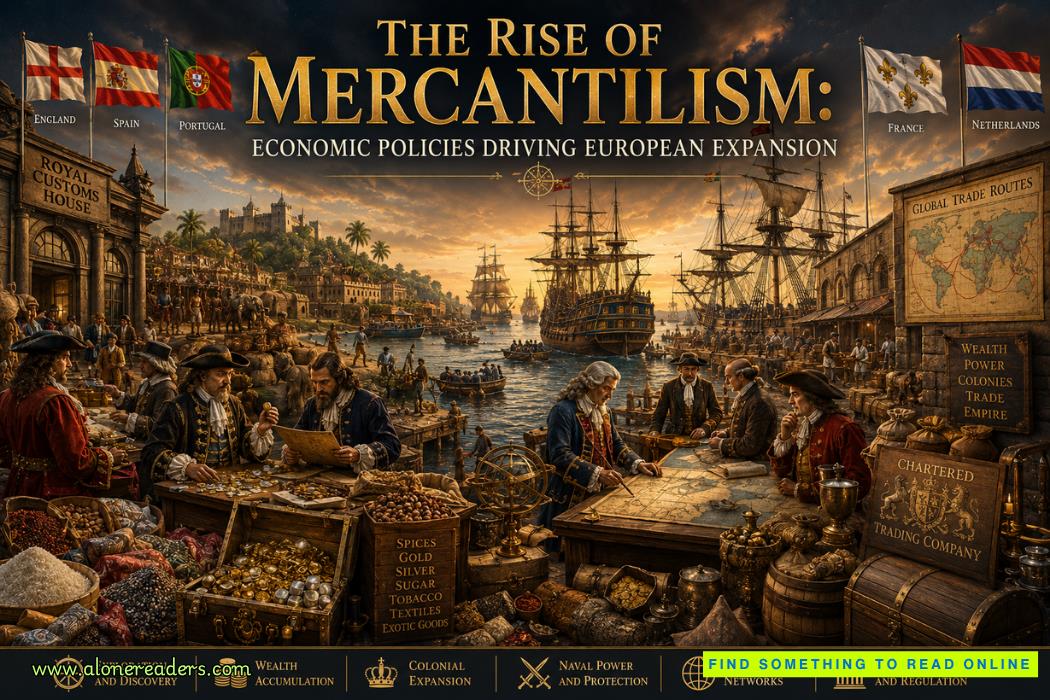
The Age of Discovery is often remembered for daring explorers, uncharted oceans, and the dramatic encounters that connected distant continents. Names such as Christopher Columbus, Vasco da Gama, Ferdinand Magellan, and countless other navigators dominate historical narratives about the period. Yet behind every voyage stood a powerful economic philosophy that transformed exploration from a risky adventure into a deliberate instrument of state policy. That philosophy was mercantilism, a system of economic thought that became one of the most influential forces in shaping European expansion between the fifteenth and eighteenth centuries.
Mercantilism was not merely an economic theory. It was a comprehensive strategy through which governments sought wealth, power, and national security. European rulers increasingly believed that economic strength formed the foundation of military and political dominance. As kingdoms competed for influence, resources, and prestige, mercantilist policies encouraged overseas exploration, colonial conquest, monopolistic trade practices, and fierce competition for global markets. In many ways, the Age of Discovery cannot be fully understood without understanding the rise of mercantilism.
At its core, mercantilism rested on a simple assumption: the world's wealth was finite. Wealth was commonly measured in precious metals, particularly gold and silver. Governments believed that the prosperity of one nation came at the expense of another. If a kingdom accumulated more bullion, it became stronger, while rival nations became weaker. This concept created a zero-sum view of economics, where international trade was seen not as mutual cooperation but as a contest in which one side's gain represented another's loss.
European rulers therefore sought to maximize exports while minimizing imports. A favorable balance of trade would bring foreign wealth into the kingdom. Domestic industries would produce goods for export, while imports would be restricted through tariffs and regulations. Governments actively intervened in economic activity to ensure that wealth remained within national borders. These policies reflected the belief that economic activity should serve the interests of the state.
The roots of mercantilism emerged during the late Middle Ages when European societies experienced significant economic and political transformation. Feudal systems gradually weakened, centralized monarchies expanded their authority, and commercial activity increased across the continent. Simultaneously, the decline of medieval trade networks and the disruption of traditional routes to Asia created strong incentives for finding alternative sources of wealth.
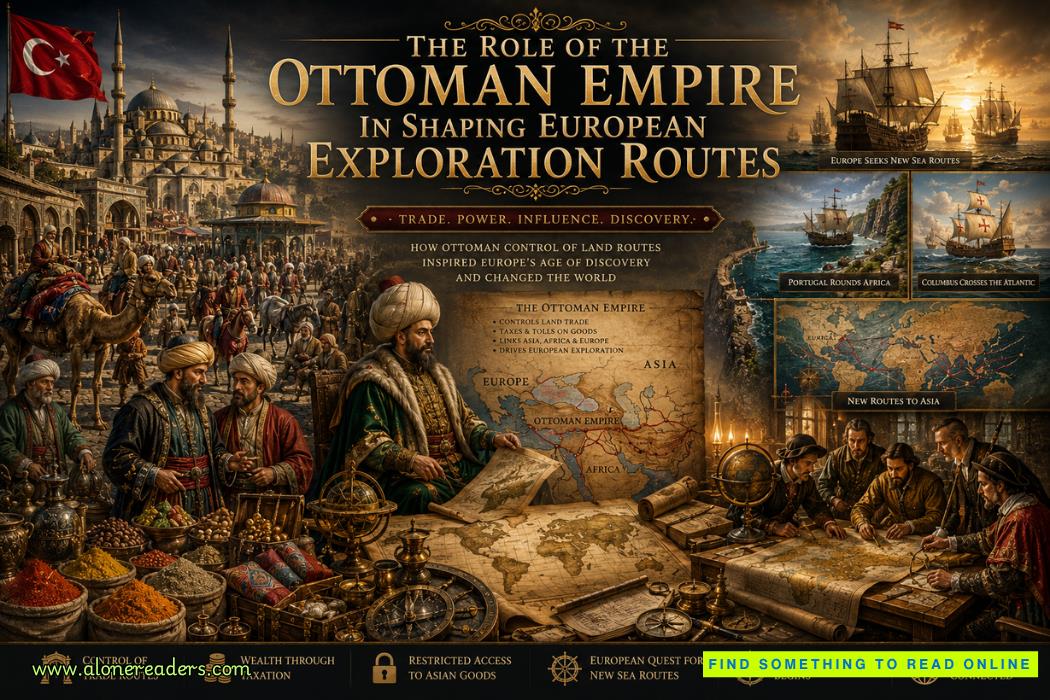
The fall of Constantinople in 1453 to the Ottoman Empire intensified European concerns regarding access to eastern markets. Spices, silk, precious stones, and luxury goods from Asia remained highly desirable, but traditional overland routes became more expensive and politically uncertain. European states increasingly sought direct maritime routes to bypass intermediaries and secure profitable trade opportunities.
Portugal emerged as one of the earliest pioneers in this effort. Supported by royal patronage, Portuguese navigators explored the African coastline, established trading posts, and eventually reached India by sea through the voyage of Vasco da Gama in 1498. These achievements reflected not only technological innovation but also mercantilist ambitions. Access to eastern trade promised enormous profits and reduced dependence on foreign middlemen.
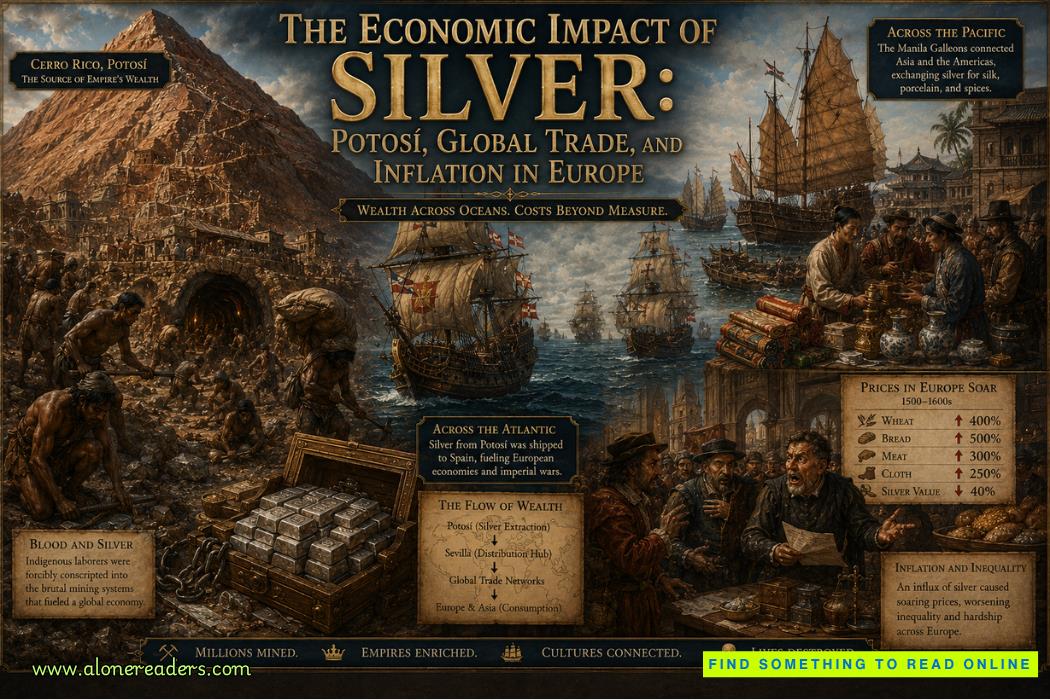
Spain soon followed a similar path. The voyages of Christopher Columbus, sponsored by the Spanish Crown, opened access to the Americas and eventually led to the acquisition of vast colonial territories. The discovery of immense silver deposits, particularly in regions such as Potosí, transformed Spain into one of the wealthiest powers in Europe. Massive quantities of precious metals flowed into Spanish coffers, reinforcing mercantilist beliefs that national prosperity depended upon the accumulation of bullion.
As colonial empires expanded, mercantilism evolved into a sophisticated framework for managing overseas possessions. Colonies were viewed primarily as economic assets designed to benefit the mother country. Their purpose was not self-development but rather the enhancement of national wealth and power.
Under mercantilist doctrine, colonies supplied raw materials unavailable or scarce in Europe. Sugar, tobacco, cotton, indigo, timber, fur, coffee, and precious metals became valuable commodities within expanding imperial economies. These resources were shipped to Europe, where they were processed, manufactured, and redistributed through controlled trading systems.
At the same time, colonies served as captive markets for European manufactured goods. Colonial populations often faced restrictions preventing them from developing competing industries. Instead, they were expected to purchase finished products from the mother country. This arrangement ensured that economic benefits remained concentrated within the imperial center.
The relationship between colonies and metropolitan economies represented one of the defining characteristics of mercantilist policy. Economic dependence became a deliberate objective rather than an unintended consequence of empire.
The rise of powerful chartered companies further illustrates the connection between mercantilism and European expansion. Governments frequently granted monopolistic privileges to private organizations in exchange for supporting national objectives overseas. These companies combined commercial enterprise with political authority, becoming essential instruments of imperial growth.
Among the most famous examples were the English East India Company, the Dutch East India Company, and the French East India Company. These organizations enjoyed exclusive rights to trade within designated regions. They established settlements, negotiated treaties, maintained military forces, and often exercised governmental powers far from Europe.
The Dutch East India Company became particularly influential. Established in 1602, it developed an extensive network of trading posts throughout Asia and dominated portions of the spice trade. Its success demonstrated how mercantilist principles could be applied on a global scale. By controlling access to valuable commodities and restricting competition, the company generated enormous profits while advancing Dutch national interests.
Mercantilism also encouraged the development of powerful navies. Governments recognized that overseas trade could only flourish if protected from piracy, rival states, and commercial competitors. Naval strength therefore became an essential component of economic policy.
England provides a notable example of this relationship. During the seventeenth century, the English government enacted a series of Navigation Acts designed to strengthen domestic shipping and reduce foreign competition. These laws required goods imported into England or its colonies to be transported primarily on English vessels. The objective was not merely commercial advantage but also the development of a large merchant marine capable of supporting naval power.
The connection between economic and military strength became increasingly apparent. Merchant fleets generated wealth, while naval forces protected trade routes and overseas possessions. Together they formed a mutually reinforcing system that contributed to the growth of European empires.
Competition among European powers intensified as mercantilist thinking spread across the continent. Nations increasingly viewed trade, colonies, and resources as strategic assets. Conflicts that might previously have been regional disputes became global struggles involving multiple continents.
England, France, Spain, Portugal, and the Netherlands competed fiercely for access to lucrative markets and colonial territories. Wars frequently involved economic objectives alongside political and religious considerations. Colonial possessions changed hands through military campaigns, diplomatic negotiations, and commercial rivalry.
The Anglo-Dutch Wars of the seventeenth century illustrate the economic motivations behind many conflicts. Both nations sought control of maritime trade and commercial networks. Similarly, numerous colonial wars between Britain and France reflected competition for economic dominance in North America, the Caribbean, Africa, and Asia.
Mercantilism transformed economic competition into geopolitical rivalry on an unprecedented scale.
The extraction of resources from colonial territories generated immense wealth but also produced profound social consequences. Plantation economies emerged across the Caribbean and the Americas, relying heavily on enslaved labor. The transatlantic slave trade became deeply integrated into mercantilist systems of production and exchange.
European merchants transported manufactured goods to Africa, exchanged them for enslaved individuals, shipped those individuals to plantations in the Americas, and returned to Europe with valuable colonial products. This triangular trading system generated substantial profits for merchants, investors, and governments while inflicting devastating human suffering upon millions of people.
The profitability of slavery within mercantilist economies contributed significantly to the expansion of colonial agriculture. Sugar plantations in particular became extraordinarily lucrative enterprises. As demand increased across European markets, plantation systems expanded further, reinforcing global economic connections established during the Age of Discovery.
Mercantilist policies also encouraged domestic industrial development. Governments sought to reduce reliance on foreign goods by promoting local manufacturing. Subsidies, protective tariffs, quality regulations, and production incentives became common tools of economic management.
France under the leadership of Jean-Baptiste Colbert offers a classic example. Serving as finance minister under King Louis XIV, Colbert implemented extensive reforms designed to strengthen French industry and commerce. He promoted manufacturing, improved infrastructure, expanded naval capabilities, and encouraged colonial development. His policies became so influential that the term Colbertism is sometimes used as a synonym for French mercantilism.
These efforts reflected a broader belief that economic prosperity required active government intervention. Markets were not expected to regulate themselves. Instead, rulers assumed responsibility for directing economic activity toward national objectives.
Despite its influence, mercantilism eventually faced growing criticism. By the eighteenth century, some thinkers questioned the assumption that wealth consisted primarily of gold and silver. They argued that productive labor, innovation, and efficient markets played a more important role in generating prosperity.
Economists associated with the Enlightenment challenged many mercantilist doctrines. They criticized monopolies, excessive regulation, and restrictions on trade. Among the most influential critics was the Scottish economist Adam Smith, whose work emphasized the benefits of free markets and international specialization.
Smith argued that trade was not necessarily a zero-sum competition. Nations could become wealthier through voluntary exchange and increased productivity. Rather than accumulating bullion, economic growth depended upon expanding production and improving efficiency. These ideas gradually undermined the intellectual foundations of mercantilism.
Nevertheless, mercantilism did not disappear overnight. Many governments continued to employ protective policies and colonial trade restrictions well into the nineteenth century. Elements of mercantilist thinking survived even as economic theory evolved.
The legacy of mercantilism remains deeply embedded in world history. It played a central role in shaping the Age of Discovery, directing exploration toward specific economic goals and transforming overseas expansion into a systematic pursuit of national wealth. The establishment of colonial empires, the growth of global trade networks, the rise of powerful trading companies, and the expansion of naval power all reflected mercantilist priorities.
Moreover, mercantilism helped create the first truly interconnected global economy. Goods, people, capital, and information moved across continents on an unprecedented scale. European states developed complex commercial systems linking the Americas, Africa, Asia, and Europe into a vast network of exchange. While these developments generated wealth and innovation, they also contributed to exploitation, slavery, imperial domination, and economic inequality.
Understanding mercantilism therefore provides essential insight into the forces that drove European expansion. The explorers who crossed oceans and the empires that emerged from their voyages did not operate in isolation. Behind them stood governments seeking bullion, merchants pursuing profit, and economic doctrines emphasizing national power through controlled trade. Mercantilism supplied the intellectual and political framework that connected exploration with empire, commerce with conquest, and economic ambition with global transformation.
By the end of the Age of Discovery, European powers had established extensive overseas empires and transformed the structure of the world economy. The foundations of modern globalization, international trade, and imperial competition had been laid. Although later economic theories would challenge its assumptions, mercantilism remains one of the most consequential economic systems in history, shaping centuries of expansion and leaving a lasting imprint on the development of the modern world.



 The Hundred Days Offensive: How the Allies Defeated Germany in World War I
 The Second Battle of the Marne: The Turning Point of World War I in 1918
 The Spring Offensive of 1918: Germany's Final Gamble to Win World War I
 The Treaty of Brest-Litovsk: How Russia Left World War I
 The Russian Revolution and World War I: How War Brought Down the Tsar
 The Zimmermann Telegram Explained: Germany's Secret Offer to Mexico in World War I










