When World War I began in 1914, millions of young men marched enthusiastically toward what many believed would be a short and glorious conflict. Few imagined that they would spend months or even years living inside narrow trenches carved into the earth, surrounded by mud, shellfire, disease, and death. After the First Battle of the Marne and the subsequent Race to the Sea, the Western Front became locked in a defensive stalemate stretching from the English Channel to the Swiss border. Along this front, soldiers from Britain, France, Germany, Belgium, Canada, Australia, New Zealand, India, and many other nations experienced a way of life unlike anything seen in previous wars. Life in the trenches became one of the defining experiences of World War I, combining relentless hardship, constant danger, remarkable endurance, and unexpected moments of humanity amid unimaginable destruction.
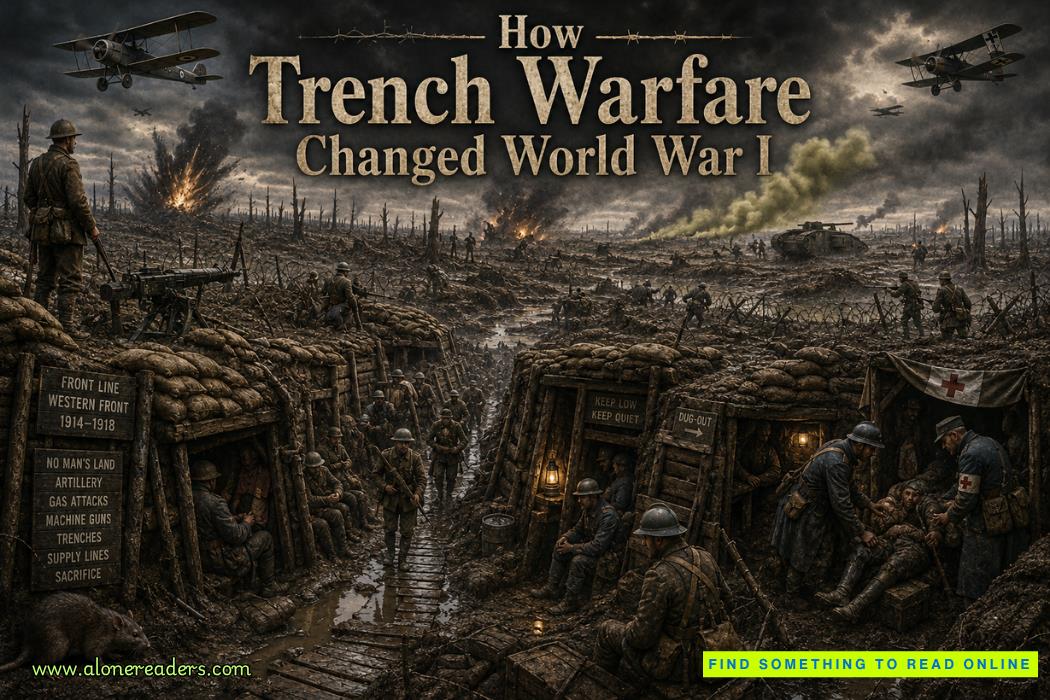
The trench system itself was an enormous engineering achievement. Contrary to popular belief, soldiers did not simply occupy a single ditch. Instead, each sector consisted of multiple defensive lines connected by communication trenches. The front-line trench faced the enemy and served as the primary defensive position. Behind it stood support trenches, reserve trenches, command posts, ammunition stores, dressing stations, and underground dugouts. Engineers reinforced trench walls with timber, corrugated iron, woven branches, and thousands of sandbags. Zigzag layouts prevented explosions or enemy attacks from sweeping through long sections of trench. These extensive networks became temporary underground cities where soldiers lived, fought, and tried to survive.
A soldier's day in the trenches usually followed a strict routine. The most dangerous periods occurred just before dawn and immediately after sunset, when surprise attacks were considered most likely. During these times, every soldier stood at his assigned position with rifle loaded, an alert known as "Stand-To." Officers feared that enemy troops might exploit darkness or poor visibility to launch raids across No Man's Land. Only after daylight confirmed no attack was underway could the men relax slightly and begin their daily duties.
Breakfast often consisted of tea or coffee accompanied by hard biscuits, bread, jam, canned meat, or porridge when supplies allowed. Meals rarely resembled those enjoyed at home. Fresh food reached front-line trenches only occasionally because transporting supplies through shellfire and muddy communication trenches proved extremely difficult. Many soldiers joked that bully beef, hard biscuits, and tea formed the foundation of the trench diet, though monotony often reduced morale almost as much as hunger.
After breakfast, soldiers spent much of the day maintaining the trench system. Sandbags damaged by rain or artillery had to be replaced, duckboards repaired, drainage improved, and barbed wire obstacles strengthened under cover of darkness. Rifles required constant cleaning because mud quickly interfered with their operation. Ammunition, water, engineering materials, and food had to be carried forward from supply dumps, often by hand. The trench itself demanded continuous maintenance because weather and artillery could destroy weeks of work within hours.
Mud became one of the greatest enemies on the Western Front. Heavy rainfall frequently transformed trenches into rivers of thick clay. Soldiers sometimes sank knee-deep or even waist-deep while moving through narrow passageways. Water collected faster than pumps could remove it, flooding dugouts and washing away trench walls. In particularly wet sectors such as Passchendaele, men occasionally drowned after falling into shell craters filled with mud and water. The battlefield itself became a relentless obstacle that exhausted soldiers long before they encountered the enemy.
Constant exposure to wet conditions caused one of the war's most common medical problems: trench foot. When feet remained cold and damp for extended periods, circulation deteriorated, causing swelling, numbness, infection, and tissue damage. Severe cases resulted in gangrene and amputation. Military doctors emphasized regular sock changes, foot inspections, and the application of whale oil to protect the skin. Officers routinely ordered soldiers to remove boots whenever possible, although this proved difficult during active operations.
Sanitation presented another enormous challenge. Human waste, discarded food, decomposing animals, stagnant water, and battlefield debris created ideal conditions for disease. Rats multiplied in extraordinary numbers, feeding upon food supplies and, in many areas, the bodies of fallen soldiers lying in No Man's Land. Some rats reportedly grew as large as domestic cats. Besides consuming rations, they frightened sleeping soldiers by running across their bodies during the night. Although traps and poison were used extensively, eliminating them proved impossible.
Equally troublesome were lice, tiny parasites that infested clothing seams and blankets. Nearly every soldier on the Western Front experienced lice infestations regardless of personal hygiene. Constant itching prevented restful sleep, while repeated scratching caused infected sores. More seriously, lice transmitted trench fever, a bacterial disease producing high fever, severe pain, exhaustion, and prolonged recovery periods. Soldiers frequently attempted to kill lice by holding uniforms over candles or boiling clothing whenever opportunities arose, but reinfestation occurred rapidly.
Despite these hardships, maintaining personal hygiene remained an important military priority whenever circumstances permitted. Soldiers shaved, washed faces, cleaned equipment, and changed clothing whenever supplies reached the front. Mobile bath units occasionally operated behind the lines, allowing troops rotating away from the trenches to bathe and receive clean uniforms. These simple comforts significantly improved morale after weeks spent in muddy front-line conditions.
One of the defining characteristics of trench life was the constant presence of artillery. Unlike previous wars, soldiers often spent far more time under bombardment than exchanging rifle fire with visible enemies. Heavy shells exploded without warning, collapsing trenches, destroying dugouts, severing communication lines, and burying men beneath tons of earth. Even when shells landed nearby without causing direct injuries, their deafening explosions and relentless concussion produced intense psychological stress. Many veterans later recalled artillery as the most terrifying aspect of trench warfare because there was often no effective defense except hoping the next shell landed elsewhere.
This unending strain contributed to the condition then known as shell shock. Soldiers suffering from shell shock experienced trembling, paralysis, nightmares, confusion, panic attacks, inability to speak, or complete emotional collapse. At first, many officers misunderstood these symptoms, believing affected soldiers lacked courage or discipline. As the war progressed, military doctors increasingly recognized shell shock as a genuine psychological injury caused by prolonged combat stress. Today, many of these cases would be diagnosed as post-traumatic stress disorder (PTSD).
Sleep proved another constant challenge. Although periods of relative quiet occurred, soldiers rarely enjoyed uninterrupted rest. Nighttime often brought working parties repairing barbed wire, carrying supplies, digging new trenches, or retrieving wounded comrades. Enemy patrols conducted raids after dark, requiring sentries to remain continuously alert. Sudden artillery bombardments, sniper fire, or gas alarms could awaken entire units within seconds. Many soldiers lived for months without experiencing a truly peaceful night's sleep.
The threat of snipers forced extraordinary caution. Enemy marksmen carefully observed trench lines, waiting for anyone exposing even a small portion of the head above the parapet. Soldiers therefore relied upon periscopes to observe enemy positions safely. Some trenches featured specially constructed sniper shields with narrow observation openings. Even collecting water or delivering messages between positions involved significant risk whenever movement exposed individuals to enemy fire.
Chemical warfare introduced another terrifying dimension to trench life. Following Germany's first large-scale chlorine gas attack in 1915, both sides developed increasingly deadly chemical weapons, including phosgene and mustard gas. Soldiers carried gas masks at all times and regularly practiced emergency drills. A simple shout of "Gas!" instantly transformed routine activities into desperate efforts to survive. Although improved protective equipment reduced casualties over time, fear of invisible poison remained constant throughout the war.
Medical care inside the trenches evolved considerably as the conflict progressed. Regimental aid posts treated minor wounds near the front, while seriously injured soldiers were evacuated through communication trenches to field dressing stations, casualty clearing stations, and eventually hospitals behind the lines. Doctors, nurses, stretcher-bearers, and volunteer medical personnel worked under extremely dangerous conditions, frequently risking their own lives to rescue the wounded during bombardments.
Despite overwhelming hardship, soldiers developed remarkable friendships. Living together under constant danger created strong bonds of trust and loyalty. Men shared food, wrote letters for wounded comrades, celebrated birthdays, exchanged photographs of families, and supported one another during moments of fear or grief. Humor became an important coping mechanism. Soldiers invented jokes, sang songs, staged small theatrical performances behind the lines, and gave nicknames to dangerous locations. These moments of laughter offered brief relief from the relentless pressures of war.
Communication with home remained emotionally important. Soldiers eagerly awaited mail deliveries, often considering letters from family among their greatest comforts. They wrote about daily experiences, though military censorship prevented discussion of sensitive operational details. Many intentionally minimized descriptions of danger to avoid worrying loved ones. Packages containing food, tobacco, socks, newspapers, and personal items greatly boosted morale during extended periods at the front.
Rotation between front-line trenches, support positions, and rear areas helped reduce exhaustion. Units typically spent only several days or weeks continuously in the front line before moving to quieter sectors for rest, training, or rebuilding. Even these rear areas, however, remained within range of long-distance artillery or enemy aircraft. True safety rarely existed anywhere near the Western Front.
One of the most remarkable episodes illustrating shared humanity occurred during the Christmas Truce of 1914. In several sectors, British and German soldiers voluntarily ceased fighting, exchanged greetings, sang Christmas carols, shared food and cigarettes, buried fallen comrades, and even played informal football matches. Although these unofficial truces were short-lived and never universal, they demonstrated that ordinary soldiers often viewed one another with greater sympathy than political leaders or military planners did.
The emotional burden of trench life extended beyond physical survival. Soldiers witnessed close friends killed or wounded, participated in repeated attacks with devastating casualties, and endured long periods separated from family. Many entered the war as optimistic volunteers but emerged profoundly changed by their experiences. Diaries and memoirs reveal that survival often depended as much upon mental resilience as physical endurance.
By 1918, improvements in combined-arms tactics, tanks, aircraft, artillery coordination, and logistics gradually reduced the dominance of static trench warfare. During the Hundred Days Offensive, Allied armies finally broke through German defensive positions, restoring mobility to the battlefield. Nevertheless, millions of soldiers had already spent years living in trenches that became symbols of industrialized warfare's terrible human cost.
The legacy of trench life remains one of the most enduring aspects of World War I. The mud-filled trenches of France and Belgium have become powerful symbols of courage, sacrifice, suffering, and endurance. Modern visitors walking preserved trench systems are often struck by their narrow dimensions, realizing how confined and dangerous daily existence truly was. Life in the trenches was not defined solely by combat but by countless ordinary struggles against weather, disease, exhaustion, fear, and uncertainty.
Ultimately, life in the trenches during World War I represented one of the harshest environments ever endured by modern soldiers. Every day demanded resilience in the face of mud, shellfire, hunger, disease, psychological strain, and the constant possibility of death. Yet amid these extraordinary hardships, soldiers displayed remarkable determination, discipline, compassion, and friendship. Their experiences forever changed military history and left a lasting reminder that behind every great battle are millions of ordinary individuals whose greatest victory was often simply surviving another day.




 The Hundred Days Offensive: How the Allies Defeated Germany in World War I
 The Second Battle of the Marne: The Turning Point of World War I in 1918
 The Spring Offensive of 1918: Germany's Final Gamble to Win World War I
 The Treaty of Brest-Litovsk: How Russia Left World War I
 The Russian Revolution and World War I: How War Brought Down the Tsar
 The Zimmermann Telegram Explained: Germany's Secret Offer to Mexico in World War I