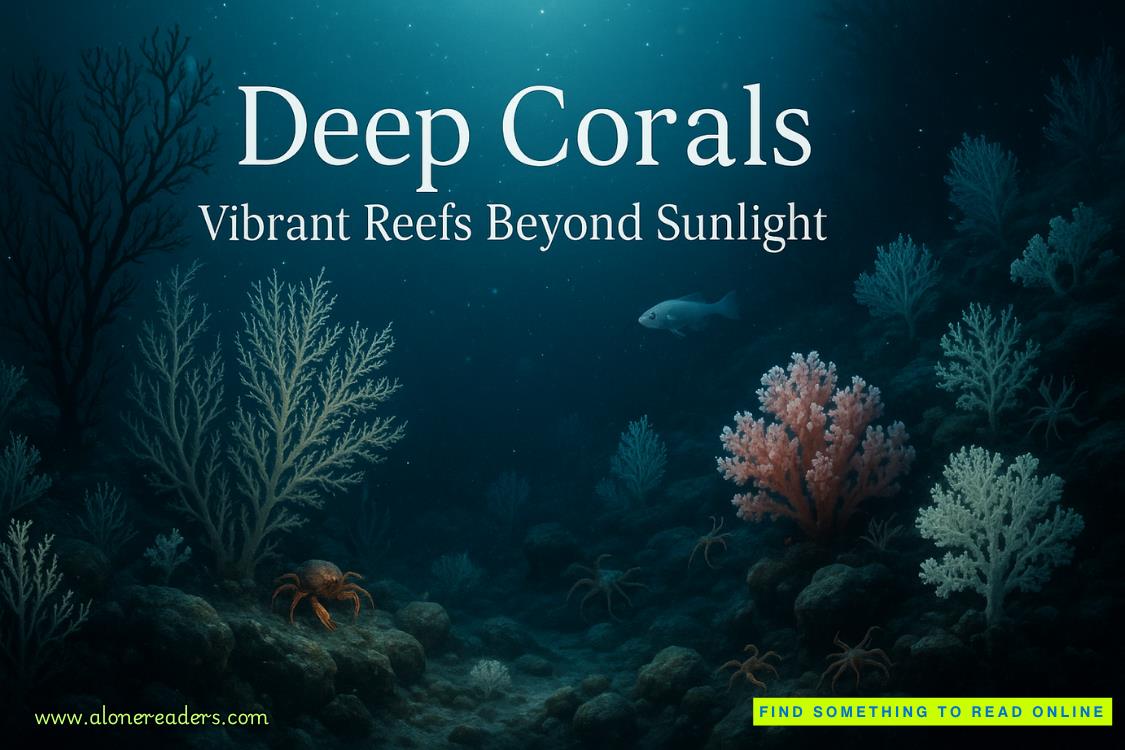
Deep beneath the sunlit surface of the world’s oceans lies a realm few people ever imagine—a world where corals thrive in complete darkness, where temperatures are close to freezing, and where pressures could crush steel. These deep corals, often called cold-water corals or deep-sea reefs, create vibrant ecosystems far beyond the reach of sunlight. They challenge our assumptions about what corals are, how they survive, and where life can flourish. While shallow-water coral reefs depend entirely on solar energy and symbiotic algae, deep corals have evolved a completely different strategy, thriving in places once believed too hostile to support such complex structures.
Unlike the tropical corals familiar from postcards and documentaries, deep corals live at extraordinary depths, often between 200 and 2,000 meters below the surface. Some have even been found as deep as 6,000 meters. In these zones, sunlight never penetrates, meaning photosynthesis—the engine that fuels most shallow coral ecosystems—is impossible. Instead, deep corals survive through active feeding, capturing tiny drifting particles of organic material known as marine snow, as well as small plankton carried by deep currents. This remarkable adaptation allows them to grow in nutrient-poor waters where sunlight-dependent species cannot survive, forming habitats as diverse and ecologically valuable as their tropical counterparts.
The architecture of deep coral reefs is extraordinary. Many deep corals do not form the familiar branching shapes seen in warm waters; instead, they grow into intricate, skeletal forests of calcium carbonate or flexible protein-based structures. Black corals extend like wire sculptures, their dark skeletons coated with pale polyps. Bamboo corals resemble segmented reeds, their mineral joints alternating with softer tissues. Bubblegum corals, with their soft pink tufts, look like delicate cotton candy frozen in the current. These forms create refuge for fish, crustaceans, and other deep-sea creatures, functioning as nurseries, hunting grounds, and protective shelters in otherwise barren environments.
One of the most striking features of deep corals is their age. Many structures found in the deep ocean are thousands of years old, preserved by cold temperatures and slow decay. Some black corals have been dated at over 4,000 years old, making them among the longest-living organisms on Earth. Because growth rates in the deep ocean are astonishingly slow, even small coral structures may represent centuries of development. This slow growth, while contributing to extraordinary longevity, also makes deep corals especially vulnerable to disturbance. Damage inflicted in minutes—such as from a fishing trawl or mining equipment—can erase ecosystems that took millennia to form.
Despite these challenges, deep corals manage to support vibrant and surprising networks of life. Many deep-sea fish species depend on coral frameworks for shelter, resting in their branches during vulnerable stages of life. Brittle stars and crinoids cling to coral arms, using the elevation to capture drifting food. Crustaceans hide in crevices, while soft-bodied creatures use coral structures as anchor points. These relationships are not incidental: without the three-dimensional scaffolding created by deep corals, many deep-sea ecosystems would collapse into flat, unstable sediments unable to support complex food webs. Even in the perpetual darkness, these reefs glow with biological activity, a world of motion sustained by the slow rain of organic particles from above.
Deep corals also reveal a remarkable sensitivity to the movement of water in the deep ocean. Unlike shallow reefs that enjoy constant sunlight and stable temperatures, deep coral ecosystems rely on the flow of nutrient-rich currents. Their polyps extend into these currents to capture food, and their growth patterns reflect the direction and strength of water movement. Many deep corals grow along continental slopes, submarine canyons, and seamounts where currents accelerate, bringing more nutrients within reach. These locations shape not only the structure of the reefs but also the species that inhabit them, creating unique ecological communities shaped by the geography of the ocean floor.
Research into deep corals has advanced dramatically over the past several decades, thanks to remotely operated vehicles and submersibles capable of descending to extreme depths. What scientists have discovered is astonishing: vast reefs stretching across underwater mountain ranges, coral forests rising like ghostly towers from the seafloor, and species previously unknown to science inhabiting their branches. Many deep coral ecosystems remain unexplored, but every expedition reveals new surprises, highlighting the importance of continued study. Their remote locations once shielded them from human disruption, but expanding industrial activities—including deep-sea fishing, oil exploration, and proposed mining operations—now threaten these habitats with unprecedented pressure.
One of the most significant threats comes from bottom trawling, a fishing technique in which heavy nets are dragged across the seafloor. This method, while effective for certain fisheries, is devastating for deep corals. Because deep corals grow slowly and recover extremely poorly from physical damage, a single trawl can destroy centuries of growth. The fragile branches, intricate skeletons, and complex networks of life that depend on them can be obliterated in moments. This is especially tragic because deep corals, unlike shallow reefs, lack the rapid regeneration potential provided by sunlight-driven energy and fast-growing algae. Once destroyed, these ecosystems may never fully recover.
Climate change also poses a significant threat. Deep waters are acidifying as they absorb increasing amounts of carbon dioxide, which reduces the availability of carbonate—the mineral building block corals use to construct their skeletons. Even slight acidification can weaken coral structures or slow growth rates further. Additionally, warming surface waters alter global ocean circulation, potentially disrupting the deep currents upon which corals rely for food delivery. These changes could reshape deep-sea ecosystems in unpredictable ways, reducing biodiversity and altering global carbon cycling.
Yet deep corals also demonstrate resilience that offers hope. Their ability to thrive in cold, dark, nutrient-poor environments suggests extraordinary adaptability. They have survived dramatic climatic shifts over thousands of years, including ice ages and natural changes in ocean chemistry. Understanding how they endure such harsh conditions could offer insights into how coral ecosystems might adapt to changing oceans worldwide. Deep corals represent not just an ancient heritage of the ocean but also a living laboratory for studying resilience, survival, and biological innovation.
Deep corals are more than biological curiosities; they are key players in the deep ocean’s ecological and geological dynamics. Their skeletons are historical records, preserving chemical signatures that reveal past ocean temperatures, currents, and environmental conditions. By analyzing these structures, scientists gain invaluable knowledge about Earth’s climatic history and the forces that have shaped marine ecosystems over millennia. Their reefs also influence sediment distribution, nutrient cycling, and the movement of deep-water species. In essence, deep corals help stabilize and structure regions of the ocean that would otherwise be sparse and unstable.
In recent years, conservation efforts have begun to highlight the importance of protecting deep coral ecosystems. Several countries have established protected marine zones that limit destructive fishing practices and industrial activity in areas known to contain significant deep reefs. International agreements are also evolving to address deep-sea mining threats as the global community begins to recognize the value of preserving these irreplaceable ecosystems. Awareness and scientific research remain essential, not only to protect existing deep coral habitats but also to discover those that remain hidden in unexplored regions of the ocean.
Ultimately, the story of deep corals is a story of mystery, endurance, and wonder. Far from the sunlit shallows, these corals create vibrant oases of life in the most unexpected places. Their existence defies our assumptions about where complex ecosystems can thrive, revealing that life often finds a way in the most improbable corners of the planet. As humanity continues to explore and understand the deep ocean, deep corals remind us that the world is far richer, older, and more beautiful than we often imagine. Protecting these reefs is not just an ecological responsibility; it is a commitment to preserving one of Earth’s most remarkable and least understood treasures.



 Château de Vincennes: France’s Forgotten Royal Fortress and Medieval Stronghold
 Château de Carcassonne: Europe’s Greatest Medieval Citadel and Fortress
 Château de Chenonceau: The Castle Built by Remarkable Women
 Château de Chambord: France’s Magnificent Renaissance Castle and Architectural Wonder
 Tehri Dam: India's Tallest Dam and the Debate Behind It
 Bhakra Nangal Dam: India's Temple of Modern Development










