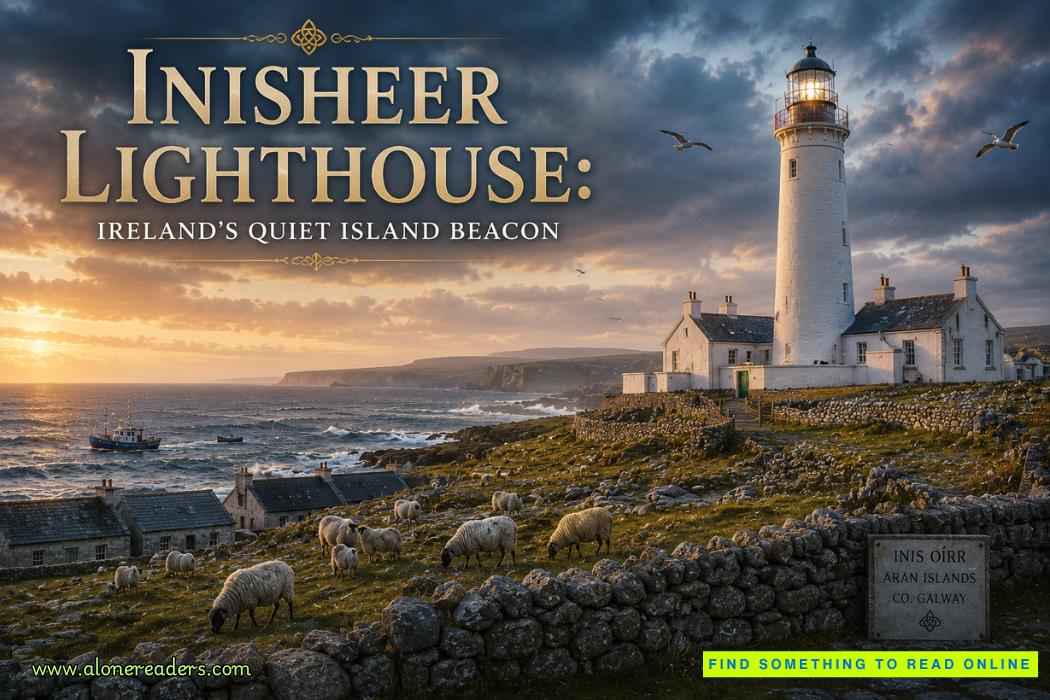
Standing quietly on the smallest of Ireland's famous Aran Islands, Inisheer Lighthouse represents a unique chapter in Irish maritime history. Unlike towering oceanic lighthouses dramatically perched on isolated sea stacks or storm-battered cliffs, this modest beacon reflects the character of the island itself—peaceful, resilient, and deeply connected to the Atlantic. For generations, it has silently guided vessels navigating one of Ireland's most challenging stretches of coastline, where strong tides, submerged reefs, dense Atlantic fog, and unpredictable weather have tested even the most experienced sailors.
Although it lacks the dramatic fame of some of Ireland's larger coastal lights, Inisheer Lighthouse has earned immense respect among mariners for its reliability and strategic location. Its importance lies not in monumental architecture but in its ability to provide safe passage through waters that have claimed countless ships throughout history. The lighthouse remains a lasting symbol of Ireland's commitment to maritime safety while preserving the quiet beauty and cultural identity of the Aran Islands.
The island of Inisheer, known in Irish as Inis Oírr, has been inhabited for thousands of years. Archaeological remains, medieval churches, stone forts, and centuries-old cottages reveal a community that has long relied upon the sea for survival. Fishing, trading, and communication with mainland County Galway depended upon navigating the dangerous approaches around the Aran Islands. These waters form the entrance to Galway Bay, where powerful Atlantic currents meet intricate underwater rock formations that are often hidden beneath the waves.
During the nineteenth century, maritime commerce along Ireland's western coast increased significantly. Steamships gradually replaced sailing vessels, fishing fleets expanded, and passenger traffic between western Irish ports continued to grow. At the same time, shipwrecks remained distressingly common. Dense fog, rapidly changing weather, and poorly visible reefs made the western approaches among the most hazardous in Europe.
Recognizing these dangers, maritime authorities expanded Ireland's coastal lighting system. The Commissioners of Irish Lights, responsible for safeguarding Irish navigation, identified the Aran Islands as a crucial location requiring improved navigational aids. While nearby beacons and lighthouses already served portions of the coast, additional guidance became necessary for vessels approaching Galway Bay and surrounding shipping routes.
The result was the construction of Inisheer Lighthouse, carefully positioned to maximize visibility while complementing other coastal navigational lights. Rather than serving as an isolated warning beacon, it became an essential component of a larger network that collectively protected Ireland's western maritime highways.
Architecturally, Inisheer Lighthouse reflects the philosophy of practical engineering that characterized many nineteenth-century Irish lighthouses. Its design prioritizes functionality, durability, and ease of maintenance rather than decorative grandeur. Constructed primarily from masonry and finished in white, the structure provides excellent visibility during daylight while resisting the harsh effects of Atlantic winds, salt spray, and persistent moisture.
The tower itself is relatively modest in height compared to famous oceanic giants. However, engineers carefully selected its location so that the surrounding terrain provided additional elevation above sea level. This intelligent placement allowed the lighthouse to project its light across considerable distances without requiring an exceptionally tall structure.
The white exterior serves multiple practical purposes. Beyond reflecting sunlight and improving daytime recognition for sailors, the bright finish helps reduce heat absorption while providing a strong visual contrast against the island's grey limestone landscape and changing Atlantic skies.
Originally, the lighthouse employed oil lamps equipped with carefully engineered optical systems designed to concentrate and project light across the sea. The introduction of Fresnel lens technology revolutionized lighthouse illumination, allowing relatively modest light sources to become visible many nautical miles offshore. Over time, technological improvements replaced oil with more efficient lighting systems, eventually leading to electric illumination and automated operation.
Modern navigation equipment has dramatically transformed lighthouse management. Today, automated monitoring systems, reliable electrical equipment, and advanced optics enable continuous operation without requiring resident lighthouse keepers. Despite these technological changes, the lighthouse continues fulfilling the same essential mission it began more than a century ago.
Perhaps the greatest importance of Inisheer Lighthouse lies in its geographical setting. The Aran Islands occupy a strategic position where the open Atlantic Ocean meets the sheltered waters leading toward Galway Bay. This transition zone presents numerous navigational challenges.
Powerful tidal streams flow between the islands and the mainland, creating constantly shifting water conditions. Strong winds frequently generate heavy seas, while Atlantic weather systems can rapidly reduce visibility through fog, rain, or sea mist. Hidden reefs, rocky outcrops, and shallow waters further complicate navigation.
For mariners, every reliable visual reference becomes invaluable under such conditions. Inisheer Lighthouse provides exactly that reassurance. Its characteristic light enables navigators to confirm their position, identify safe approaches, avoid hazardous rocks, and coordinate their routes with neighboring navigational aids along Ireland's western coastline.
Fishing vessels have traditionally benefited from the lighthouse's guidance, particularly during early morning departures or nighttime returns. Local fishermen often navigated using an intimate understanding of tides, currents, and coastal landmarks, yet even their extensive experience was reinforced by the dependable presence of the lighthouse's beam.
Commercial shipping has also relied upon the beacon when entering or departing Galway Bay. Before the widespread adoption of satellite navigation, accurate coastal lights formed the backbone of maritime navigation. Even today, modern electronic navigation systems continue to use traditional lighthouses as important visual verification points, especially during equipment failures or challenging weather conditions.
One of the most remarkable aspects of Inisheer Lighthouse is the environment surrounding it. The island itself possesses a distinctive limestone landscape shaped by ancient geological processes. Stone walls divide small agricultural fields into intricate patterns that have remained largely unchanged for centuries. Traditional cottages blend naturally into the rocky terrain, while wildflowers bloom among limestone pavements during the warmer months.
Visitors approaching the lighthouse quickly realize that it exists within a landscape where human activity remains closely connected to nature. Unlike heavily commercialized tourist destinations, Inisheer has retained much of its traditional Irish character. The lighthouse therefore becomes more than a navigational structure—it forms part of a living cultural landscape where history, community, and the Atlantic Ocean remain inseparable.
The island also holds additional historical interest through nearby medieval churches, ancient ring forts, and the famous wreck of the cargo ship MV Plassey, whose rusting remains have become one of the Aran Islands' most photographed landmarks. Together, these attractions illustrate the enduring relationship between the island and the sea.
Today, Inisheer Lighthouse continues operating under the management of Ireland's modern maritime authorities. While automation has eliminated the need for permanent keepers, careful maintenance ensures that the beacon remains fully operational throughout the year. Engineers regularly inspect lighting equipment, structural integrity, electrical systems, and communications technology to guarantee uninterrupted service.
Tourism has become an increasingly important part of Inisheer's economy, and the lighthouse contributes significantly to the island's appeal. Visitors arriving by ferry from County Clare or County Galway often explore the island by bicycle, on foot, or by traditional horse-drawn carriage. The relatively small size of the island allows travelers to experience the lighthouse alongside beaches, historic ruins, scenic viewpoints, and traditional Irish villages within a single day.
Photographers are especially drawn to the site because of its constantly changing atmosphere. Atlantic storms produce dramatic skies and crashing waves, while calm summer evenings bathe the lighthouse in warm golden light. During sunrise and sunset, the combination of limestone terrain, ocean horizons, and soft Irish light creates exceptionally beautiful landscapes.
Perhaps the greatest legacy of Inisheer Lighthouse is not its size but its quiet consistency. It has stood through generations of technological change, shifting patterns of maritime commerce, and evolving methods of navigation without losing its essential purpose. In an era dominated by satellites, radar, and sophisticated electronic navigation, the lighthouse continues reminding sailors that dependable physical landmarks still possess enduring value.
Its peaceful appearance reflects the spirit of the Aran Islands themselves—communities that have adapted to the Atlantic's immense power while preserving traditions stretching back centuries. Every evening, as its light shines across the waters surrounding Ireland's western coast, Inisheer Lighthouse continues a timeless duty: offering guidance, reassurance, and hope to those journeying across the sea. More than a navigational aid, it stands as a quiet guardian of Ireland's maritime heritage, proving that even the most unassuming beacon can leave a profound mark on the history of navigation and the lives of those who depend upon it.



 Château de Vincennes: France’s Forgotten Royal Fortress and Medieval Stronghold
 Château de Carcassonne: Europe’s Greatest Medieval Citadel and Fortress
 Château de Chenonceau: The Castle Built by Remarkable Women
 Château de Chambord: France’s Magnificent Renaissance Castle and Architectural Wonder
 Tehri Dam: India's Tallest Dam and the Debate Behind It
 Bhakra Nangal Dam: India's Temple of Modern Development