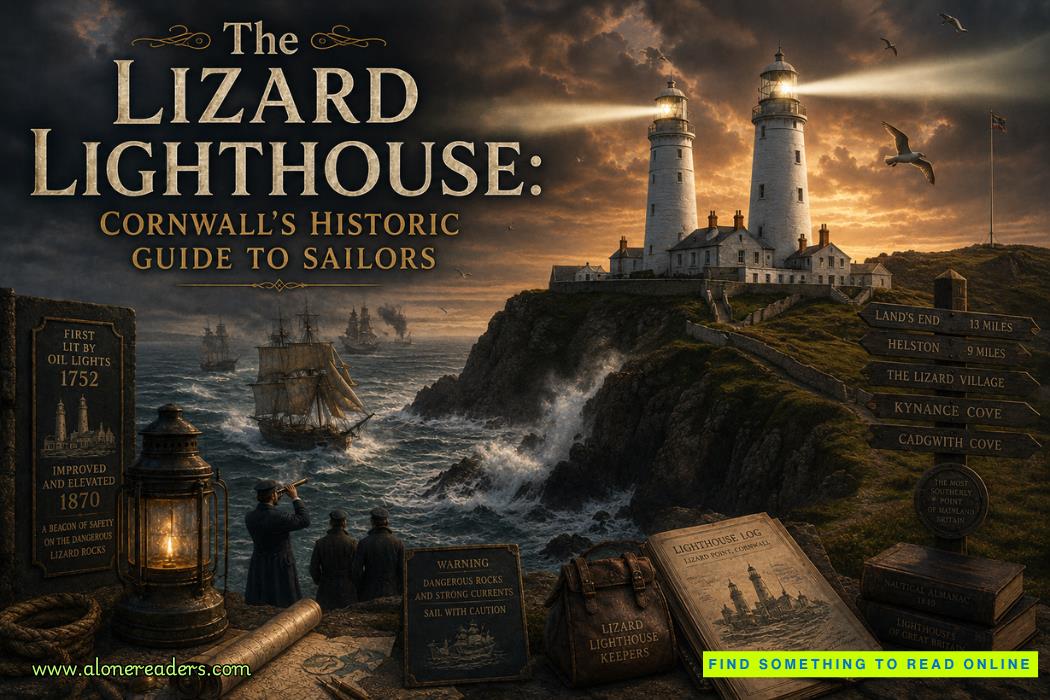
Standing proudly on the dramatic cliffs of Britain's southernmost mainland point, The Lizard Lighthouse has watched over one of Europe's most dangerous stretches of coastline for more than two centuries. Positioned at Lizard Point in Cornwall, England, the lighthouse has become far more than a navigational aid. It represents centuries of maritime history, technological progress, and countless stories of survival at sea. Throughout its long existence, it has guided merchant vessels, naval fleets, fishing boats, passenger ships, and modern cargo carriers safely through waters that have claimed hundreds of vessels.
The coastline surrounding Lizard Point is both breathtakingly beautiful and notoriously hazardous. Powerful Atlantic storms, unpredictable currents, submerged reefs, dense sea fog, and rapidly changing weather conditions have challenged sailors for centuries. Long before reliable navigation instruments existed, many experienced captains feared these waters. Numerous shipwrecks occurred within sight of the cliffs, often leaving little chance of survival for those caught in violent storms. The need for a permanent lighthouse became impossible to ignore as maritime trade expanded during the eighteenth century.
The story of The Lizard Lighthouse began in 1751 when the first lighthouse was constructed under the supervision of Thomas Fonnereau. Unlike many later British lighthouses, the original station featured two separate towers positioned a short distance apart. This unusual arrangement was designed to help sailors distinguish the lighthouse from other coastal lights by observing the alignment of the two beams. At a time when lighthouse identification relied entirely upon visual recognition, this twin-light system proved remarkably effective.
Originally, the towers were illuminated using coal-fired fires, the standard lighthouse technology of the era. However, maintaining open coal fires on exposed coastal cliffs presented enormous difficulties. They required constant attention, consumed vast quantities of fuel, and produced inconsistent illumination. Strong winds frequently affected the flames, while smoke reduced visibility. Nevertheless, these primitive lights represented a tremendous improvement over complete darkness and immediately reduced the number of maritime accidents in the surrounding waters.
As Britain's maritime commerce flourished during the Industrial Revolution, lighthouse technology advanced rapidly. During the nineteenth century, The Lizard Lighthouse underwent significant modernization. The open coal fires were replaced by sophisticated oil lamps equipped with highly polished reflectors that greatly increased the brightness and range of the light. Later improvements introduced Fresnel lens technology, one of the greatest innovations in lighthouse engineering. These precision-crafted lenses concentrated light into powerful beams capable of reaching ships many miles offshore while using significantly less fuel.
The lighthouse also experienced structural modifications throughout its history. One of the original twin towers was eventually decommissioned, leaving the remaining tower to serve as the principal lighthouse. Although the second tower no longer functioned as an active beacon, it remained an important reminder of the station's unique architectural heritage. Very few historic lighthouses in Britain began with such an unusual twin-tower configuration.
Engineering at The Lizard Lighthouse demonstrates the practical brilliance of nineteenth-century coastal construction. Built from durable local stone, the tower was specifically designed to withstand relentless Atlantic winds, salt spray, and powerful winter storms. Thick masonry walls provided exceptional structural strength, while carefully planned foundations anchored the building securely into the rugged cliff tops. The lighthouse keepers' cottages, engine houses, storage facilities, and surrounding buildings formed a self-contained working community capable of operating throughout even the harshest weather conditions.
The evolution of the lighthouse's illumination system mirrors the broader history of maritime technology. Oil lamps eventually gave way to gas illumination before electric lighting transformed lighthouse operations during the twentieth century. Modern electric lamps provided brighter, more reliable illumination while reducing maintenance requirements considerably. Automation later eliminated the need for resident lighthouse keepers, allowing the station to operate continuously using sophisticated monitoring systems while maintaining the same essential purpose that had existed for generations.
One particularly fascinating aspect of The Lizard Lighthouse is its historic fog signal station. Thick sea fog frequently blankets Cornwall's coastline, rendering even the brightest lighthouse beams ineffective. To overcome this challenge, engineers installed powerful foghorns capable of producing distinctive low-frequency sounds that travelled many miles across the ocean. Sailors navigating through dense fog learned to identify the unique sound patterns of individual fog signals, allowing them to determine their approximate location even when visibility was almost zero. These powerful acoustic warnings often proved just as valuable as the lighthouse itself.
The waters surrounding Lizard Point occupy a strategically significant position along major shipping routes connecting the Atlantic Ocean with the English Channel. For centuries, countless vessels travelling between northern Europe, the Mediterranean, and destinations throughout the British Empire passed close to this dangerous headland. Naval warships, merchant convoys, fishing fleets, emigrant vessels, and passenger liners all depended upon reliable coastal navigation. The lighthouse served as one of the first or last major British navigational landmarks encountered by many international voyages.
Throughout both World Wars, The Lizard Lighthouse played an important military role. Britain's coastline became vital for naval operations, convoy protection, and coastal defence. Lighthouse operations had to balance the need to guide friendly vessels while avoiding providing navigational assistance to enemy forces. During certain periods, lighting was restricted or carefully managed according to wartime security requirements. Despite these challenges, the station continued supporting maritime safety whenever circumstances permitted.
Life for the lighthouse keepers demanded extraordinary dedication. Before automation, teams of keepers maintained continuous twenty-four-hour operations under often harsh and isolated conditions. They cleaned lenses daily, maintained mechanical clockwork systems, monitored weather conditions, operated fog signals, recorded shipping movements, and ensured the light never failed. Storms frequently isolated the station for extended periods, while powerful winds and crashing waves tested both equipment and human endurance. The reliability of countless maritime journeys depended entirely upon the commitment and professionalism of these keepers.
The surrounding coastline has witnessed numerous dramatic rescue operations. Local lifeboat crews, often working alongside lighthouse personnel, repeatedly risked their own lives to rescue sailors from wrecked vessels. These acts of courage became an enduring part of Cornwall's maritime heritage, strengthening the lighthouse's reputation as a symbol not only of navigation but also of humanitarian service and community resilience.
Architecturally, The Lizard Lighthouse combines practical engineering with elegant simplicity. Its white cylindrical tower provides exceptional visibility against the dark cliffs and changing skies of Cornwall. The attached keeper cottages, auxiliary buildings, and surrounding pathways create a historic complex that reflects centuries of operational development. While functionality always remained the primary design consideration, the lighthouse possesses an unmistakable visual beauty that has inspired artists, photographers, and writers for generations.
Advances in satellite navigation, electronic chart systems, radar, and Global Positioning System technology have transformed modern maritime navigation. Nevertheless, physical lighthouses continue to serve as valuable backup systems while providing highly visible confirmation of a vessel's position. Mariners still appreciate the reassurance of seeing the familiar beam of The Lizard Lighthouse after navigating challenging seas. Even in the digital age, traditional visual navigation retains an important role in maritime safety.
Today, The Lizard Lighthouse remains one of Cornwall's most celebrated historic landmarks. Managed as both an operational navigational aid and a heritage attraction, it welcomes thousands of visitors annually. Guided tours allow guests to climb the tower, examine historic lighting equipment, learn about the lives of lighthouse keepers, and enjoy breathtaking panoramic views across the Atlantic Ocean. Educational exhibitions explain the science of lighthouse optics, maritime communication, coastal geology, and Britain's long maritime tradition.
The surrounding Lizard Peninsula further enhances the visitor experience. Spectacular walking trails, rare wildlife, dramatic cliff formations, secluded coves, and stunning ocean scenery attract nature enthusiasts and photographers throughout the year. Visitors often combine a lighthouse tour with exploration of the area's geological wonders and picturesque coastal villages, making the site one of Cornwall's most rewarding destinations.
Today, The Lizard Lighthouse stands not merely as an architectural monument but as a living symbol of Britain's enduring relationship with the sea. It embodies centuries of engineering innovation, maritime courage, scientific advancement, and unwavering dedication to protecting human life. From the era of coal-fired beacon fires to modern automated navigation systems, it has continuously adapted to changing technologies while preserving its original mission. As its brilliant beam continues sweeping across the Atlantic night, The Lizard Lighthouse reminds every visitor that even amid the ocean's greatest dangers, knowledge, determination, and careful engineering can illuminate the safest path home.



 Château de Vincennes: France’s Forgotten Royal Fortress and Medieval Stronghold
 Château de Carcassonne: Europe’s Greatest Medieval Citadel and Fortress
 Château de Chenonceau: The Castle Built by Remarkable Women
 Château de Chambord: France’s Magnificent Renaissance Castle and Architectural Wonder
 Tehri Dam: India's Tallest Dam and the Debate Behind It
 Bhakra Nangal Dam: India's Temple of Modern Development