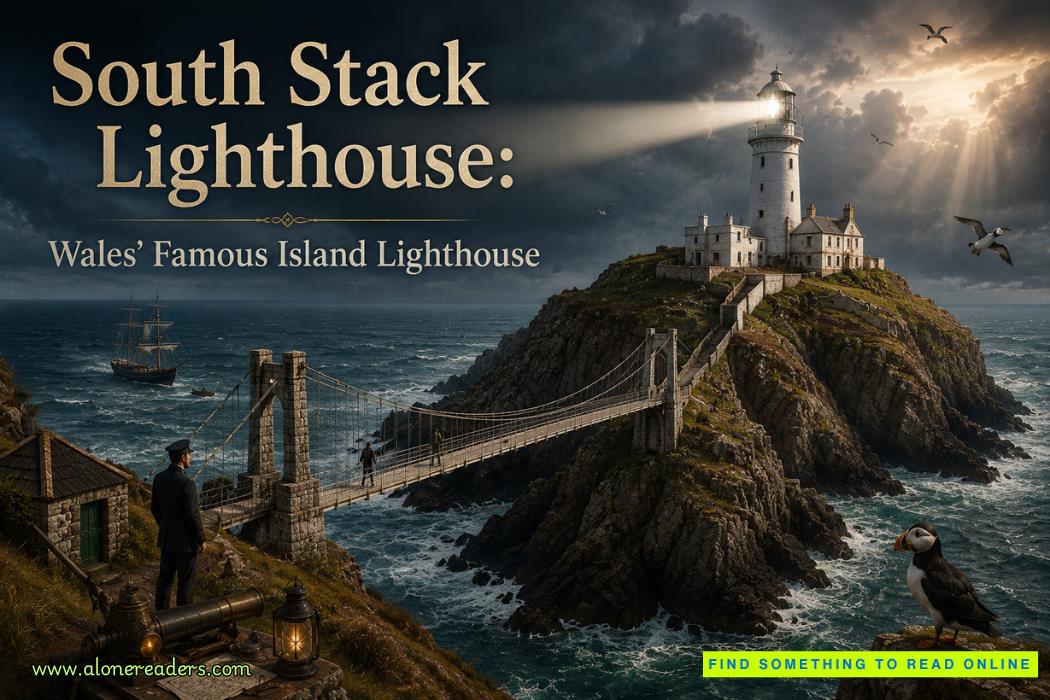
Few lighthouses in Europe combine spectacular natural scenery, remarkable engineering, and centuries of maritime importance as perfectly as South Stack Lighthouse. Perched dramatically on a small rocky island just off the coast of Holy Island near Anglesey in northwest Wales, the lighthouse has become one of Britain's most recognizable coastal landmarks. Rising above the restless waters of the Irish Sea, it represents far more than a navigational aid. It is a symbol of endurance, innovation, and humanity's determination to make dangerous seas safer for generations of sailors.
Visitors arriving at South Stack are immediately captivated by its breathtaking setting. The lighthouse appears almost suspended between towering cliffs and the open sea, connected to the mainland only by a narrow suspension bridge that crosses a deep rocky chasm. Below, powerful waves continuously crash against ancient cliffs sculpted over millions of years, while thousands of seabirds soar effortlessly above the water. This dramatic landscape has made South Stack not only one of Wales' greatest engineering achievements but also one of its most photographed natural attractions.
The story of South Stack Lighthouse began during a period when maritime trade around Britain was expanding rapidly. During the eighteenth and early nineteenth centuries, the waters surrounding Anglesey became one of the busiest shipping routes connecting Liverpool, Dublin, Glasgow, and other major ports of the British Isles. While economically vital, this stretch of coastline was also notoriously dangerous. Hidden reefs, unpredictable tides, dense fog, and violent Atlantic storms caused numerous shipwrecks, resulting in tragic losses of both cargo and human life.
Recognizing the urgent need for improved navigation, Trinity House, the historic authority responsible for English and Welsh lighthouses, commissioned the construction of a lighthouse on South Stack Island. Work began in the early nineteenth century under the direction of engineer Daniel Alexander. Construction proved exceptionally difficult because every stone, tool, and piece of equipment had to be transported onto a steep, isolated rock surrounded by rough seas. Workers battled strong winds, crashing waves, and limited access while building the structure almost entirely by hand.
The lighthouse officially entered service in 1809. Standing approximately 28 meters tall, its strategic position on the elevated island allowed its light to reach far beyond the surrounding coastline. Combined with the natural height of the cliffs, the beacon became visible from remarkable distances across the Irish Sea, significantly improving navigation for countless vessels approaching the Welsh coast.
Life for the early lighthouse keepers demanded extraordinary resilience. Unlike mainland lighthouses, South Stack required keepers to live in relative isolation for extended periods. Reaching the mainland often depended on weather conditions, and storms could cut off communication for days. Supplies had to be carefully managed, while every evening the keepers climbed the tower to light and maintain the lantern, ensuring that the beacon never failed during darkness or poor weather.
The daily responsibilities of a lighthouse keeper extended far beyond simply lighting a lamp. They polished the lantern glass, maintained mechanical clockwork systems, cleaned the lenses, monitored weather conditions, repaired equipment, recorded maritime observations, and ensured the lighthouse remained operational regardless of storms or freezing temperatures. Their dedication often meant the difference between safe passage and maritime disaster.
One of the lighthouse's most remarkable engineering features is its location itself. Rather than building on the mainland, engineers selected the isolated island because it offered the best position to warn ships of dangerous submerged rocks surrounding Holy Island. This decision dramatically increased construction challenges but ultimately produced a far more effective navigational aid.
The elegant white cylindrical tower reflects classic British lighthouse architecture. Its bright exterior contrasts vividly against the dark volcanic cliffs, allowing sailors to recognize it even during daylight hours. The lantern room sits atop the tower beneath a black dome, while robust stone construction enables the lighthouse to withstand decades of fierce Atlantic storms.
Over the years, South Stack Lighthouse underwent numerous technological improvements. The original oil lamps eventually gave way to increasingly sophisticated lighting systems. Advances included improved reflectors, highly efficient Fresnel lenses, brighter illumination, and later electric lighting that dramatically increased reliability and visibility. Each technological advancement reduced maintenance requirements while extending the lighthouse's effective range across the Irish Sea.
Automation transformed lighthouse operations during the late twentieth century. Like many historic British lighthouses, South Stack eventually no longer required resident keepers. Modern electronic monitoring and automated lighting systems replaced the constant human presence that had characterized the lighthouse for nearly two centuries. Although automation marked the end of an important chapter in lighthouse history, it also ensured the beacon could continue protecting ships with greater efficiency and consistency.
The lighthouse occupies a strategically significant location overlooking one of Britain's busiest maritime corridors. Every year, commercial cargo vessels, fishing boats, naval ships, passenger ferries, sailing yachts, and recreational craft navigate these waters. South Stack serves as an essential visual reference point, helping mariners identify their position while warning them of hazardous rocky outcrops hidden beneath the surface.
Its importance extends beyond routine navigation. During severe weather, when visibility decreases dramatically and waves become exceptionally dangerous, the lighthouse becomes even more critical. Its dependable beam provides reassurance to captains navigating difficult conditions, reducing the risk of vessels drifting toward the unforgiving cliffs of Holy Island.
South Stack also played an important role during periods of military activity. Throughout both World Wars, the waters surrounding Britain became strategically significant for naval operations and merchant shipping. While wartime security sometimes required temporary modifications to lighthouse operations, the lighthouse remained an essential component of Britain's coastal navigation infrastructure, supporting vessels operating in exceptionally challenging circumstances.
The surrounding environment contributes significantly to South Stack's worldwide reputation. The cliffs surrounding the lighthouse form part of one of Britain's most celebrated seabird colonies. Puffins, guillemots, razorbills, fulmars, kittiwakes, and numerous other species nest among the rugged cliffs during breeding season. This combination of spectacular wildlife and dramatic coastal scenery makes the lighthouse an extraordinary destination where maritime history and natural beauty coexist in remarkable harmony.
Today, visitors reach the lighthouse by descending hundreds of stone steps carved into the cliffs before crossing the famous suspension bridge that links the mainland to South Stack Island. The journey itself has become one of the site's greatest attractions, offering breathtaking panoramic views of the Irish Sea from nearly every angle. The dramatic descent reminds visitors of the immense challenges faced by nineteenth-century engineers and lighthouse keepers who traveled this route daily under far harsher conditions.
Inside the lighthouse, guided tours allow visitors to explore its fascinating history, learn about historic lighthouse technology, and appreciate the demanding lives of the keepers who once maintained the beacon. Climbing the tower rewards visitors with magnificent views extending across Anglesey, the Welsh coastline, and, on exceptionally clear days, toward Ireland across the sea.
Photography enthusiasts consider South Stack among Britain's finest coastal viewpoints. Sunrise and sunset transform the white lighthouse into a glowing landmark surrounded by changing skies and shimmering waters. Stormy weather creates equally dramatic scenes, with enormous waves crashing against the cliffs while seabirds effortlessly ride powerful coastal winds.
Conservation efforts continue to preserve both the lighthouse and its surrounding landscape. Maintaining historic stonework, protecting the suspension bridge, preserving visitor facilities, and safeguarding nearby wildlife habitats require ongoing collaboration between heritage organizations and environmental agencies. These initiatives ensure future generations can continue appreciating both the engineering achievement and the extraordinary natural setting that make South Stack unique.
Beyond its practical purpose, South Stack Lighthouse has become deeply embedded in Welsh cultural identity. It frequently appears in travel literature, paintings, photography exhibitions, documentaries, and promotional materials representing Wales' rugged coastal heritage. For many visitors, the lighthouse embodies the enduring relationship between people and the sea—a relationship shaped by courage, innovation, respect for nature, and the constant pursuit of safer navigation.
More than two centuries after its light first illuminated the Irish Sea, South Stack Lighthouse remains one of Britain's greatest maritime landmarks. It stands as a testament to visionary engineering, unwavering human dedication, and the enduring importance of maritime safety. Surrounded by dramatic cliffs, thriving seabird colonies, and the ever-changing waters of the Irish Sea, it continues to inspire visitors while faithfully performing the purpose for which it was built. Its story is not merely one of bricks, stone, and light, but of perseverance, exploration, and humanity's timeless determination to overcome the challenges posed by the sea.




 Château de Vincennes: France’s Forgotten Royal Fortress and Medieval Stronghold
 Château de Carcassonne: Europe’s Greatest Medieval Citadel and Fortress
 Château de Chenonceau: The Castle Built by Remarkable Women
 Château de Chambord: France’s Magnificent Renaissance Castle and Architectural Wonder
 Tehri Dam: India's Tallest Dam and the Debate Behind It
 Bhakra Nangal Dam: India's Temple of Modern Development










