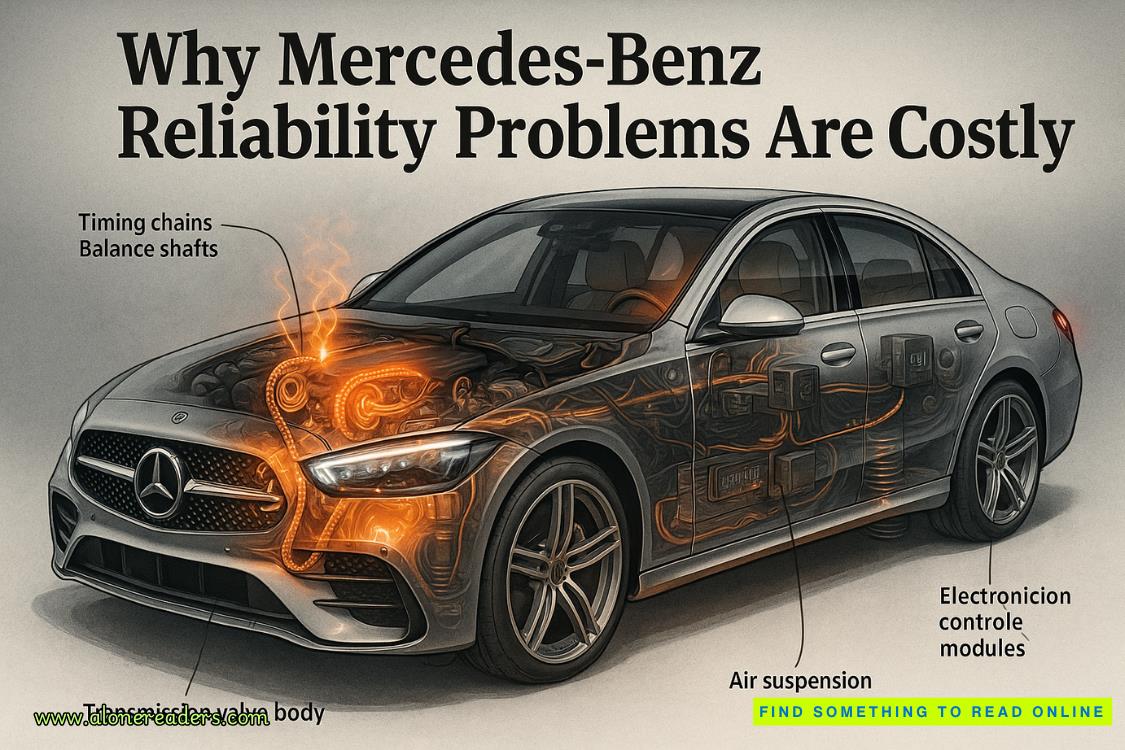
Mercedes-Benz has long positioned itself as a benchmark for engineering sophistication, refinement, and prestige. For decades, the brand’s reputation has been built on innovation—advanced powertrains, safety systems that later became industry standards, and interiors that prioritize comfort and technology. Yet behind this image lies a pattern of recurring reliability problems that has become increasingly difficult for owners, technicians, and independent specialists to ignore. These issues are not random defects or isolated quality lapses; rather, they cluster around specific systems and design philosophies that define modern Mercedes engineering.
At the core of many Mercedes-Benz reliability complaints is the engine timing system. Several petrol and diesel engines, particularly certain V6 and V8 families, exhibit a tendency toward timing chain stretch, tensioner wear, and guide degradation well before what many owners would consider end-of-life mileage. The engineering choice to use long, complex chain paths with relatively small links places enormous stress on the system, especially during cold starts when oil pressure has not yet fully stabilized. Extended factory oil service intervals compound the problem. Light, low-viscosity oils designed for fuel efficiency can shear and degrade under sustained heat, reducing their ability to protect chains and tensioners. The result is a familiar pattern: cold-start rattles, camshaft timing deviations, and in severe cases, catastrophic valve-to-piston contact that can destroy an otherwise healthy engine.
Closely related to these timing issues is the balance shaft system used in some V6 engines. Designed to smooth engine operation, the counter-rotating balance shafts rely on precision gears and bearings operating continuously at high rotational speeds. Over time, marginal lubrication, oil sludge, or even minor oil starvation events can cause gear wear that throws the balance system out of synchronization. When this happens, owners experience rough running, vibration, and persistent fault codes that are difficult to resolve without major engine disassembly. The irony is that a system intended to improve refinement becomes a major source of mechanical stress and expense.
Beyond the engine itself, Mercedes vehicles frequently suffer from deterioration of mounts and drivetrain hardware. Hydraulic engine mounts and separate transmission mounts are particularly vulnerable. These components use a combination of rubber and fluid-filled chambers to isolate vibration and noise, delivering the smooth driving experience buyers expect. However, repeated heat cycles, constant torque changes, and contamination from minor oil leaks accelerate rubber degradation. As the internal fluid leaks out and the rubber hardens or cracks, vibrations that were once imperceptible begin to intrude into the cabin. What starts as a subtle tremor at idle can evolve into a persistent harshness that undermines the car’s luxury character.
Oil leaks are another recurring theme across multiple Mercedes platforms. Valve cover gaskets, oil cooler seals, and differential or transmission seals are common failure points, especially as vehicles age. These leaks are rarely dramatic at first. Instead, they seep slowly, coating engine components and undertrays, and sometimes dripping onto exhaust parts where the smell becomes noticeable long before the leak is visually obvious. The root causes are usually a combination of aging rubber seals, thermal expansion of aluminum housings, and designs that are sensitive to even slight warping. In some cases, the placement of oil coolers deep within the engine valley turns what should be a routine seal replacement into a labor-intensive repair.
Electronics represent another major fault line in Mercedes-Benz reliability. Modern models rely on dense networks of control modules communicating over CAN-bus systems, allowing unprecedented integration of comfort, safety, and infotainment features. The downside is that a single failing module or wiring issue can cascade into a confusing array of symptoms. Owners may experience intermittent COMAND system failures, non-functional windows or seats, random warning lights, or sudden loss of convenience features. Moisture ingress is a frequent underlying cause. Blocked sunroof drains, poorly sealed body grommets, or water intrusion into trunk or footwell areas expose sensitive modules to corrosion. Over time, solder joints crack, connector pins oxidize, and communication errors multiply.
Certain electronic components have developed particularly strong reputations for failure. Electronic steering lock systems, used on several Mercedes platforms, can fail due to worn actuator motors, failing microswitches, or internal memory errors. When these systems malfunction, the vehicle may refuse to start, leaving owners stranded without warning. Central locking and key recognition problems often share similar root causes, tied to wear from repeated key cycles and aging internal electronics. These failures are especially frustrating because they are not gradual; a car that worked perfectly one day may become immobilized the next.
Mercedes automatic transmissions are often praised for their mechanical durability, but they are not immune to recurring weaknesses. The electro-hydraulic architecture used in many gearboxes places sensitive electronic components directly inside the transmission, immersed in fluid. Over time, electrical connectors—most notably the well-known 13-pin connector—can leak, allowing transmission fluid to wick into the wiring harness. Conductor plates and valve bodies can also fail, leading to harsh shifts, erratic behavior, or limp-home modes. Thermal cycling of plastic connector housings and contamination of solenoids from degraded fluid exacerbate these problems, particularly when transmission fluid is not changed as frequently as real-world conditions demand.
Torque converters and internal clutches add another layer of complexity. Vehicles subjected to heavy urban driving, frequent stop-start conditions, or towing can develop shuddering or slipping sensations under light throttle. These symptoms often stem from overheated or degraded automatic transmission fluid, combined with friction material wear that adaptive software can no longer mask. While the transmission may still function, drivability suffers, and repair costs can escalate quickly once internal components are affected.
Suspension and braking systems further illustrate the trade-offs inherent in Mercedes engineering. Air suspension systems, such as AIRMATIC, deliver exceptional ride quality and adaptability, but they are inherently vulnerable over time. Rubber air springs exposed to road debris, ozone, and temperature extremes eventually crack or leak. Compressors work harder to compensate, accelerating their own wear, while valve blocks can stick or fail due to moisture contamination. The result is sagging corners, uneven ride height, or complete suspension collapse—often accompanied by warning messages that signal expensive repairs ahead.
Brake-by-wire systems like Sensotronic Brake Control represent another ambitious but problematic innovation. These systems rely on high-pressure hydraulic units driven by electric pumps and monitored by multiple sensors. While they offer precise braking performance and advanced safety integration, they also have finite internal cycle limits. Once accumulators or pump motors reach those limits, the system can trigger warnings and reduce braking assistance, requiring replacement of the entire unit rather than incremental service. For owners, this means a major expense that feels disproportionate to normal brake wear.
Diesel Mercedes models introduce additional complexity through emissions control systems. AdBlue and DEF components operate in harsh chemical and thermal environments, managing corrosive urea solutions and extreme exhaust temperatures. Pumps, heaters, and NOx sensors can fail, often triggering limp-home modes and countdown warnings that prevent the car from restarting after a set number of miles. Short trips, fluid crystallization, and repeated thermal cycling all contribute to premature failures, turning emissions compliance into a recurring ownership challenge.
Material choices and interior durability round out the broader reliability picture. Wiring harness insulation can become brittle in hot engine bays, especially near turbochargers and exhaust components. As insulation cracks, exposed copper corrodes, leading to intermittent electrical faults that are notoriously difficult to diagnose. Inside the cabin, owners often report premature wear of trim pieces, broken plastic clips, and failures of seat or window mechanisms. These issues reflect the tension between weight reduction, cost optimization, and long-term durability. Complex multi-motor systems deliver impressive functionality but introduce many potential failure points.
Taken together, these patterns explain why Mercedes-Benz vehicles can feel paradoxical to own. When meticulously maintained, driven regularly, and serviced proactively, many models can deliver years of refined performance. However, their failure modes are more numerous, more interconnected, and more expensive than those of many mass-market brands. The same engineering ambition that produces innovation also creates vulnerability, especially as vehicles age and move beyond warranty coverage.
For buyers and owners, the lesson is not that Mercedes-Benz builds inherently “bad” cars, but that the brand’s complexity demands a different mindset. Preventive maintenance, shorter service intervals, and early intervention are not optional—they are essential. Without them, small design sensitivities can snowball into major mechanical and electronic failures, turning a symbol of luxury into a costly liability.



 Top 10 Affordable Electric Cars for 2026: Best Budget EVs Worldwide
 Tesla Model S Review: Speed, Range, and Features in 2026
 Honda Accord vs Toyota Camry: Which Mid-Size Sedan Is Better?
 Chevrolet Silverado vs GMC Sierra: Which Truck Wins?
 2026 Jeep Wrangler Review: Off-Road Capabilities Tested in Extreme Terrain
 2026 Nissan Altima Review: Tech, Comfort, and Safety – In-Depth Expert Analysis