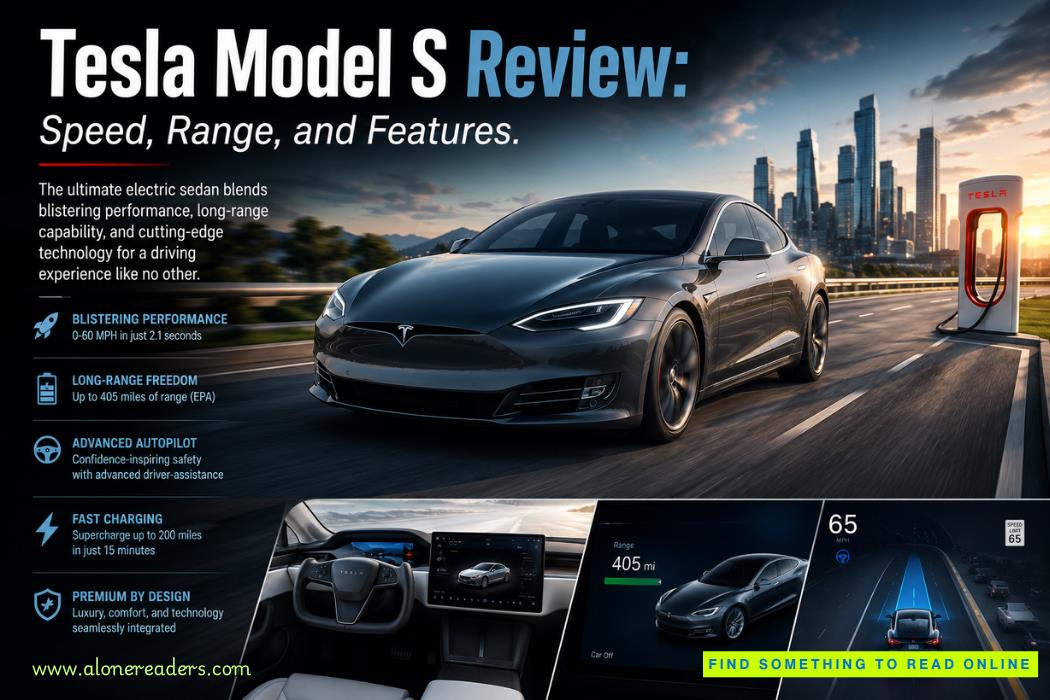
The Tesla Model S remains one of the most important electric sedans on the road because it still combines serious straight-line speed, long-distance range, and a high-tech cabin in a way few rivals can match. In 2026, it is no longer the only fast luxury EV, but it still feels like the benchmark for buyers who want an electric car that can do daily commuting, road trips, and headline-grabbing acceleration in one package.
Introduction
The Model S is best understood as a luxury performance sedan first and an EV showcase second. Tesla’s current lineup centers on two main versions: the dual-motor All-Wheel Drive model and the more extreme Plaid, with the AWD version rated at 410 miles of EPA-estimated range, 670 horsepower, and 0-60 mph in 3.1 seconds, while the Plaid is rated at 368 miles, 1,020 horsepower, and 0-60 mph in 2.0 seconds. Tesla also lists a 200 mph top speed for the Plaid and 130 mph for the AWD model.
Speed And Acceleration
Speed is where the Model S still announces itself as a Tesla flagship. The base AWD version is already quick enough to embarrass many sports sedans, but the Plaid is the version that turns the car into a genuine supercar shocker, with three motors and 1,020 horsepower delivering brutal off-the-line response. Tesla’s published figures put the Plaid at 2.0 seconds to 60 mph, and independent listings also show it running a quarter-mile in 9.23 seconds at 155 mph.
What makes the acceleration feel special is not just the number on paper, but the consistency of the electric power delivery. There is no shift shock, no lag, and no waiting for the engine to build revs, so the car surges forward the moment you ask for it. That immediacy matters in real driving because it makes highway merges, overtakes, and stoplight launches feel effortless rather than dramatic in the old gasoline sense.
For most buyers, the AWD Model S is the more rational performance choice. It is still fast enough to feel genuinely premium and exciting, and its lower output helps preserve more range than the Plaid. The Plaid, by contrast, is for drivers who want the fastest version and are willing to accept the extra cost and the stronger emphasis on outright performance over efficiency.
Range And Charging
Range is one of the strongest reasons the Model S remains relevant. The AWD version is rated at 410 miles of EPA-estimated range, while the Plaid is rated at 368 miles, and Tesla notes that wheel choice affects those numbers, with 21-inch wheels reducing range further. That matters because it means the Model S is not just quick; it is also built for long-distance usability rather than short-range bragging rights.
In real-world terms, that range gives the Model S a major advantage over many performance EVs that sacrifice distance for speed. A 400-mile class sedan changes how you plan a trip because it reduces charging stops and makes the car feel less compromised on road trips. Tesla’s aerodynamic focus also helps, with a drag coefficient of 0.23 Cd listed for the Model S, which supports the car’s efficiency story.
Charging remains one of Tesla’s strongest ecosystem advantages. The 2026 Model S has access to the Supercharger network and a maximum charge rate listed at 250 kW, which is a useful combination for fast top-ups on longer drives. Tesla and other recent reviews also note that the current Model S package includes the brand’s charging ecosystem and software-based trip planning that make long-distance travel easier than in many competing EVs.
There is also an important ownership detail here: the Model S is not merely a fast commuter, it is built to reduce daily friction. Range, charging infrastructure, and navigation integration are what make a premium EV feel easy to live with, and Tesla has always focused heavily on that trio. In the Model S, those strengths matter as much as the acceleration numbers because they define whether the car feels like a true luxury GT or just a powerful gadget.
Ride And Handling
The Model S has long been praised for combining quick reflexes with stable highway behavior, and the current car continues that formula with a more refined setup than early Teslas. Recent coverage describes the latest Model S as having improved ride and handling characteristics, along with a quieter cabin and updated suspension tuning. That matters because the car’s appeal depends on being comfortable enough for long drives while still feeling athletic when the road opens up.
The Plaid version is the sharper, more aggressive car, but its performance mission can make it feel less relaxed than the AWD model in everyday use. The standard AWD car is likely the better all-rounder because it balances speed, range, and composure more evenly. For buyers who care about both comfort and pace, that balance is often more valuable than chasing the last tenth of a second.
Weight is the unavoidable trade-off in any large EV, and the Model S is no exception. Even so, Tesla has managed to keep the car feeling controlled rather than cumbersome, especially at speed. The low center of gravity from the floor-mounted battery pack helps the sedan stay planted, and that contributes to the car’s confident road manners.
Cabin And Tech
Inside, the Model S is defined by screens, minimalism, and a software-first philosophy. Current listings show a 12.3-inch instrument cluster and a 17-inch touchscreen, and Tesla continues to lean heavily on the central interface for everything from navigation to climate control to media. That layout will appeal to drivers who like clean design and digital control, though it can feel less traditional than the cabins in German luxury sedans.
Tesla’s current package also includes premium connectivity, and recent 2026 coverage says the car comes with Full Self-Driving software as standard in the Luxe package. The standard driver-assistance suite includes automatic emergency braking, lane-keep assist, and adaptive cruise control, while Tesla positions its FSD system as a hands-free-capable driving aid on public roads. That combination makes the car feel unusually advanced, though buyers should understand that driver-assistance systems are not the same as fully autonomous driving.
The cabin is also more practical than many people expect. The car offers up to 61.4 cubic feet of cargo space with the rear seats folded, plus 25 cubic feet with them raised, which is excellent for a performance sedan. That utility helps the Model S serve as a family car, a commuter, and a road-trip vehicle without forcing the owner to choose just one role.
Features And Value
Tesla’s feature strategy for the Model S is a little different from traditional luxury brands because much of the experience is software-led. In 2026, Tesla bundles a wide set of equipment into the purchase, including the safety and driver-assistance tech, premium connectivity, and in some current listings the Full Self-Driving feature under the Luxe package. Pricing in current listings starts at $86,630 in some spec sheets and is shown at $94,990 for the AWD model and $109,990 for the Plaid in more recent retailer and review listings, reflecting how packages and market timing can affect the final number.
Value is where the Model S becomes more complicated. It is expensive, and its cabin still divides opinion because some shoppers expect richer materials and more visual warmth for the money. Still, the combination of performance, range, charging access, and integrated technology gives it a strong technical case, especially for buyers who care more about capability than ornamentation.
Tesla also adds practical ownership perks in current packaging, including four years of complimentary maintenance, tire and windshield protection plans, and complimentary Supercharging for original owners in qualifying use cases. Those extras reduce some of the long-term friction of EV ownership, especially for buyers planning to cover significant mileage.
Who It Suits
The Model S suits a buyer who wants one car to cover many jobs without feeling ordinary. If you want a luxury EV that can cross a state in comfort, accelerate like a supercar, and still handle school runs or business travel, the Model S makes a very strong case. It is especially compelling for drivers who place a premium on software, charging convenience, and straight-line performance.
It is less compelling if your priorities are traditional luxury ambiance, tactile controls, or a cabin that feels ornate and deeply customized. Tesla still wins on efficiency, speed, and ecosystem convenience, but some rivals are now better at plush interiors and classic luxury presentation. That means the Model S is no longer the only answer in the segment, even if it remains one of the most complete.
Final Verdict
The Tesla Model S is still a landmark electric sedan because it manages to combine very high performance, impressive range, and useful technology in one package. The AWD version is the smarter choice for most buyers, while the Plaid is the emotional choice for anyone who wants the most extreme version of the idea. Either way, the Model S remains one of the clearest examples of how far electric luxury cars have come.



 Top 10 Affordable Electric Cars for 2026: Best Budget EVs Worldwide
 Honda Accord vs Toyota Camry: Which Mid-Size Sedan Is Better?
 Chevrolet Silverado vs GMC Sierra: Which Truck Wins?
 2026 Jeep Wrangler Review: Off-Road Capabilities Tested in Extreme Terrain
 2026 Nissan Altima Review: Tech, Comfort, and Safety – In-Depth Expert Analysis
 Hyundai Tucson vs Kia Sportage: 2026 Compact SUV Comparison Guide










