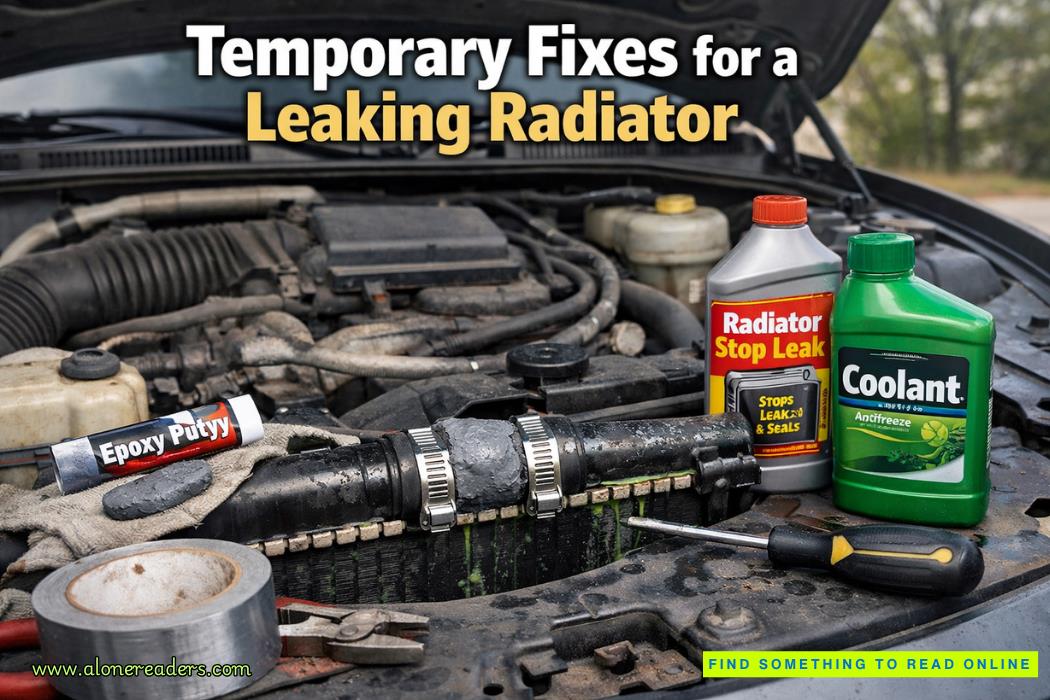
A leaking radiator is one of the most dangerous mechanical problems a vehicle owner can face, not because the repair itself is complex, but because continued driving with coolant loss can destroy an engine within minutes. Overheating causes warped cylinder heads, blown head gaskets, cracked engine blocks, and irreversible internal damage. In many real-world situations, however, immediate professional repair is not possible. You may be stranded on the roadside, far from a workshop, or dealing with a leak discovered late at night.
Temporary radiator fixes are not designed to replace proper mechanical repair. Their sole purpose is to stabilize the cooling system long enough to reach a safe location or repair facility. When applied correctly, these methods can prevent rapid coolant loss, control overheating, and buy critical time.
This article explains practical, mechanically accurate temporary solutions, why they work, when they fail, and how to apply them correctly without worsening the damage.
Common leak points in a radiator system
Radiator leaks are rarely random. They usually appear in predictable locations based on pressure, vibration, and material fatigue.
Aluminum core corrosion
Most modern radiators use aluminum cores. Over time, electrolysis and coolant breakdown eat away thin aluminum tubes, creating pinhole leaks that worsen under pressure.
Plastic end tank cracks
Many radiators combine aluminum cores with plastic side tanks. Heat cycling causes plastic to harden and crack, especially near hose connections.
Upper and lower hose connections
Rubber hoses expand and contract constantly. Aging hoses develop hairline cracks or loosen at clamps.
Radiator seams and crimps
Where aluminum meets plastic, crimped seals eventually weaken and seep coolant.
Identifying the exact leak location determines which temporary fix will actually work.
Never open the radiator cap while hot
A pressurized cooling system can exceed boiling temperatures. Opening the cap can cause coolant to erupt violently, resulting in severe burns.
Allow the engine to cool fully
Wait at least 30–45 minutes. The radiator must be cool to the touch before any work begins.
Turn off the engine immediately if overheating occurs
Driving “just a little further” while overheating is how engines fail catastrophically.
Carry spare coolant or clean water
In emergencies, clean water is acceptable temporarily. Never add cold liquid to an extremely hot engine.
How stop-leak works
Radiator stop-leak additives contain suspended fibers, metallic particles, or ceramic compounds. When coolant escapes through a leak, these particles accumulate and harden at the opening.
Best situations for stop-leak use
• Small pinhole leaks
• Minor seepage from aluminum cores
• Micro-cracks not visible to the eye
Proper application method
• Let engine cool completely
• Shake the bottle thoroughly
• Pour into radiator or overflow tank as directed
• Run engine until operating temperature is reached
• Monitor temperature gauge continuously
Limitations and risks
Stop-leak can clog heater cores, thermostat passages, and narrow coolant channels. It should never be considered permanent.
Professional perspective
Mechanics often recognize stop-leak residue immediately. While useful in emergencies, prolonged use can complicate future repairs.
Why epoxy putty works
High-temperature epoxy creates a chemical bond over cracks, forming a hardened external seal that resists pressure.
Best suited for
• Visible cracks on plastic tanks
• Aluminum surface leaks
• External seepage areas
Surface preparation is critical
Epoxy will fail if applied to wet or contaminated surfaces.
Correct procedure
• Drain coolant below leak level
• Dry the area completely
• Clean using brake cleaner or alcohol
• Roughen surface with sandpaper
• Mix epoxy thoroughly
• Press firmly over crack
• Allow full curing time before refilling
Important limitations
Epoxy cannot repair internal tube leaks or large structural failures. Vibration and heat cycling will eventually cause breakdown.
Self-fusing silicone tape characteristics
This tape bonds to itself, not to surfaces. When stretched tightly, it creates a watertight seal capable of resisting high pressure.
Ideal for
• Radiator hose leaks
• Small splits in rubber hoses
• Emergency roadside repair
Application technique
• Dry hose completely
• Stretch tape aggressively
• Wrap with overlapping layers
• Extend several centimeters beyond the leak
Why ordinary duct tape fails
Standard tape melts, slips, and loses adhesion under engine heat and coolant exposure.
Temporary lifespan
Silicone tape may last days or weeks but should never replace hose replacement.
When clamps help
If leakage originates near hose connections, tightening or doubling clamps can significantly reduce coolant loss.
Correct method
• Loosen hose slightly
• Re-seat fully onto fitting
• Install a second clamp behind the first
• Tighten evenly without cutting the hose
Common mistake
Overtightening can slice aged rubber, worsening the leak.
What cold weld is
Cold weld epoxy is a metal-filled adhesive designed to simulate welding strength without heat.
Best used for
• Aluminum radiator cracks
• Metal fittings
• Small fractures near mounting points
Application steps
• Drain coolant
• Clean and roughen surface
• Apply compound firmly
• Allow full curing time (often several hours)
Why it sometimes fails
Radiators expand and contract rapidly. Rigid compounds eventually separate under thermal stress.
When heater core leaks occur
Coolant smell inside cabin
Foggy windshield
Wet carpet near dashboard
Temporary solution
Bypass the heater core to stop internal leakage.
Procedure overview
• Locate two heater hoses at firewall
• Disconnect both
• Join together using connector or spare pipe
• Secure with hose clamps
Result
Heat will not function, but coolant loss stops completely.
This method is extremely effective in emergencies and allows continued driving safely.
When coolant is unavailable
Clean water is better than no coolant.
Important precautions
• Use only in emergencies
• Avoid freezing temperatures
• Replace with proper coolant as soon as possible
Water lacks corrosion protection and lubrication additives but will temporarily manage heat.
Constant observation is mandatory
A temporary fix does not restore system integrity.
Best practices
• Watch temperature gauge continuously
• Stop immediately if needle rises rapidly
• Avoid high RPM and steep climbs
• Drive gently and slowly
Never assume the leak is solved
Most temporary fixes fail gradually, not instantly.
Do not attempt temporary repair if
• Radiator is split open
• Coolant loss is rapid and uncontrollable
• Engine overheats within minutes
• Steam pours continuously from engine bay
In these cases, towing is the only safe option.
Temporary radiator repairs are survival measures, not solutions.
Permanent repairs usually involve
• Radiator replacement
• Hose replacement
• Thermostat inspection
• Coolant system pressure testing
Ignoring proper repair leads to recurring overheating, internal corrosion, and expensive engine damage.
A radiator is not merely a cooling accessory. It is the primary thermal defense system of your engine.
Temporary fixes for a leaking radiator exist because real life is unpredictable. Breakdowns happen at the worst moments, far from workshops and assistance. When applied correctly, these methods can prevent catastrophic engine failure and allow safe transit to proper repair facilities.
However, every temporary solution operates under borrowed time. Heat, pressure, vibration, and chemical exposure will eventually defeat any emergency repair. The objective is never to “make it last,” but simply to make it safe enough to stop driving permanently until repaired properly.
Understanding which method applies to which type of leak is the difference between saving an engine and destroying one. With the correct approach, calm execution, and realistic expectations, temporary radiator fixes can serve exactly the purpose they were meant for: buying time, not replacing responsibility.



 Top 10 Affordable Electric Cars for 2026: Best Budget EVs Worldwide
 Tesla Model S Review: Speed, Range, and Features in 2026
 Honda Accord vs Toyota Camry: Which Mid-Size Sedan Is Better?
 Chevrolet Silverado vs GMC Sierra: Which Truck Wins?
 2026 Jeep Wrangler Review: Off-Road Capabilities Tested in Extreme Terrain
 2026 Nissan Altima Review: Tech, Comfort, and Safety – In-Depth Expert Analysis










