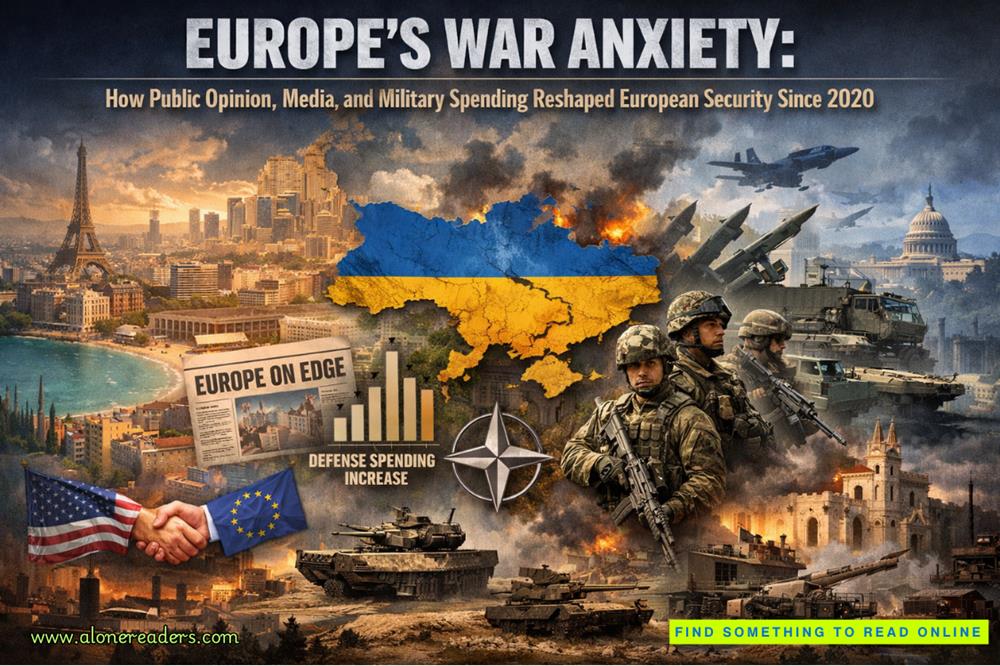
Between 2020 and 2025, European public sentiment on war and security experienced one of the most profound transformations since the end of the Cold War. What had long been treated as a distant, almost theoretical risk returned forcefully into everyday political consciousness. This shift did not occur suddenly or uniformly, but through a sequence of shocks, adaptations, and recalibrations that reshaped how Europeans perceive threats, allocate resources, and define their place within the global security order. Examining polling data, media narratives, and defense spending patterns together reveals a continent that has decisively moved away from the “peace dividend” mindset toward preparation for prolonged geopolitical competition.
For much informing the decade leading up to 2022, Europe operated under assumptions rooted in post-Cold War stability. From 2014 to 2021, even after Russia’s annexation of Crimea, most European publics continued to treat interstate war as an anomaly rather than a plausible future. Threat perception was uneven and geographically constrained. Eastern flank states, particularly those with historical experience of Russian domination, registered concern, but this anxiety did not translate into a pan-European sense of urgency. In Western Europe, polling consistently showed that issues such as climate change, economic inequality, and later the COVID-19 pandemic dominated public priorities. Russia, though acknowledged as problematic, was rarely viewed as an imminent or existential danger.
This complacency was mirrored in defense budgets. Across the European Union, military spending steadily declined throughout the late 2000s and 2010s. The assumption that large-scale war in Europe had become structurally impossible justified sustained underinvestment. By 2020, European defense spending averaged around 1.5 percent of GDP, a level that reflected confidence in diplomacy, economic interdependence, and American security guarantees. Media coverage reinforced this outlook. Russian actions in Crimea and Syria were framed more as violations of norms than as signals of a collapsing security order. Coverage emphasized energy dependencies, diplomatic tensions, and historical echoes, but rarely suggested that Europeans themselves might face direct military risk.
The invasion of Ukraine in February 2022 abruptly shattered these assumptions. For European publics, the war functioned as a cognitive shock. Polling data from spring 2022 shows a dramatic spike in threat perception and solidarity with Ukraine. Support for welcoming refugees, imposing sanctions, and strengthening European defense policies reached historic highs. Importantly, this support extended beyond symbolic gestures. Majorities accepted policies that imposed real economic costs, including higher energy prices and inflationary pressures. The war reintroduced the reality of territorial conquest, mass displacement, and conventional warfare into European consciousness, overturning decades of belief in a post-conflict continent.
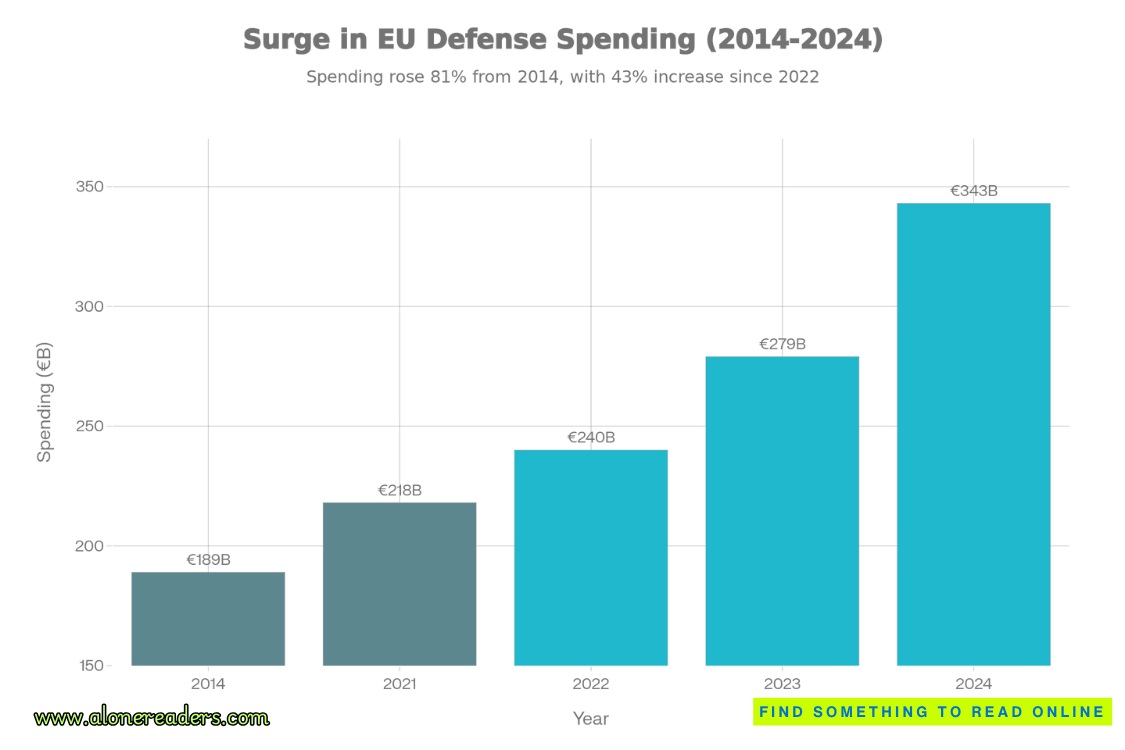
Institutional responses followed swiftly. Defense spending across the EU surged at a pace unseen since the Cold War. Between 2021 and 2024, military budgets increased by more than 30 percent in real terms, reflecting not gradual adjustment but strategic reorientation. Germany’s announcement of a €100 billion defense fund marked a historic break from postwar restraint. Poland, already alarmed by its proximity to Russia, accelerated spending to levels exceeding 4 percent of GDP, positioning itself as NATO’s most aggressive investor in defense. These decisions were politically viable precisely because public opinion had shifted so decisively.
Media narratives evolved in parallel. Coverage of Russia transitioned from cautious geopolitical analysis to urgent security framing. The war was no longer treated as a regional conflict but as a test of Europe’s postwar order and NATO’s credibility. Discussions of deterrence, rearmament, and industrial capacity moved from specialist circles into mainstream debate. The tone of reporting increasingly emphasized vulnerability and resilience, reinforcing public acceptance of higher defense spending and long-term military commitments.
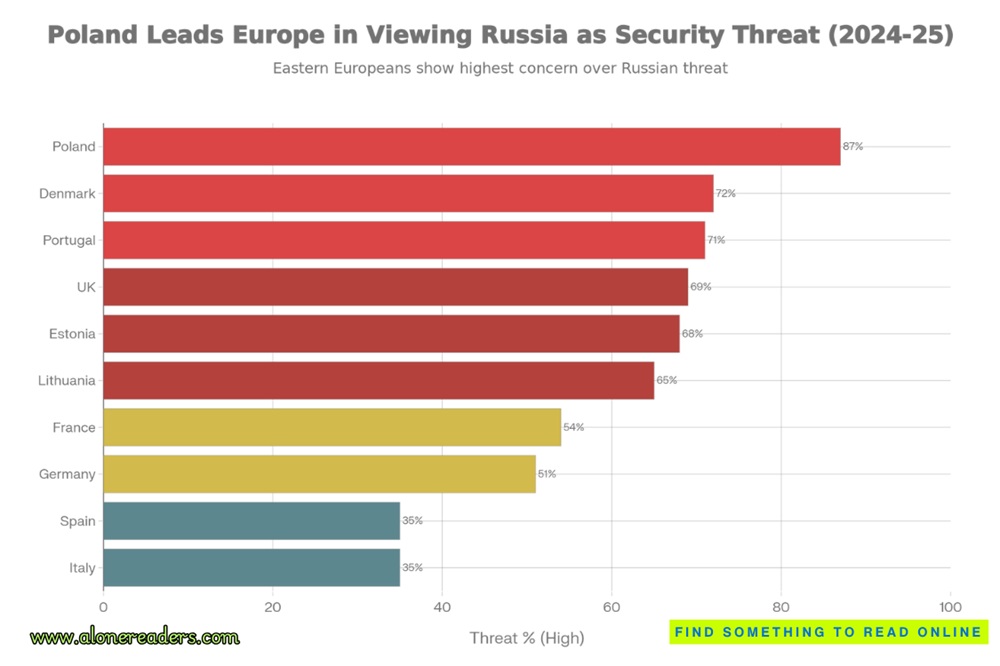
Yet this reorientation was not uniform. Geography played a decisive role in shaping perception. In Eastern Europe, threat awareness hardened quickly and remained high. Poland and the Baltic states registered overwhelming majorities viewing Russia as a direct danger, sustaining support for military aid to Ukraine and domestic rearmament. Nordic countries, long cautious but pragmatic, responded with historic policy shifts, including rapid NATO accession by Finland and Sweden. For these societies, the invasion confirmed long-held strategic instincts.
Southern Europe presented a contrasting picture. Countries such as Italy and Spain, geographically distant from the conflict and facing significant domestic economic pressures, showed greater skepticism toward defense spending increases. Polling revealed persistent public resistance, with majorities opposing higher military budgets even as European institutions pushed for rearmament. Media narratives in these countries devoted comparatively more attention to inflation, debt, and social welfare, reflecting different threat hierarchies. This divergence exposed structural fissures within Europe’s security consensus.
By 2023 and 2024, a new dynamic emerged: war fatigue. While support for Ukraine remained substantial, it began to erode, particularly in regions less directly exposed to Russian power. Acceptance of refugees declined modestly but noticeably, and enthusiasm for open-ended military aid softened. Crucially, changes in media consumption patterns played a role. Individuals increasingly reliant on social media for news were more likely to withdraw support for military assistance, making public opinion more vulnerable to disinformation. Russian hybrid operations intensified during this period, exploiting economic anxieties and amplifying narratives that framed continued support for Ukraine as unsustainable.
The most profound shift, however, came in 2025 with renewed uncertainty about American strategic reliability. The return of Donald Trump to the U.S. presidency triggered a reassessment unprecedented in postwar Europe. For the first time, large segments of the European public began to view the United States not solely as a security guarantor but as a potential source of instability. Polling showed that while Russia remained the primary perceived threat, concerns about American disengagement surpassed fears of terrorism and China. This inversion of the traditional transatlantic narrative marked a watershed moment.
European responses to this uncertainty were swift and far-reaching. Support for increased defense spending intensified, not merely as a reaction to Russia but as insurance against U.S. unpredictability. Public backing for maintaining military support to Ukraine even in the absence of American leadership reached majority levels. More strikingly, discussions once confined to strategic elites entered mainstream debate: European nuclear deterrence, autonomous defense industries, and long-term rearmament targets extending into the 2030s.
Institutionally, this translated into ambitious initiatives. The European Union launched large-scale defense financing plans, signaling acceptance of a sustained war economy logic. NATO members committed to dramatically higher spending targets, dwarfing earlier benchmarks. These commitments, while aspirational, reflected a profound change in political imagination. Defense was no longer framed as a residual function but as central to European sovereignty.
Domestic politics adjusted accordingly. Parties across the spectrum recalibrated their positions. Mainstream groups emphasized strategic autonomy, while some populist movements reoriented their rhetoric toward admiration of American assertiveness rather than opposition to NATO. Perhaps most revealing was the resurgence of debate around conscription. Majorities in several countries endorsed mandatory military service, a notion that would have been politically untenable only years earlier. Resistance remained strongest among younger Europeans, underscoring generational tensions within the new security consensus.
Media coverage in 2025 reflected this new reality. Reporting increasingly focused on industrial capacity, production timelines, and deterrence readiness. Statements warning of potential Russian aggression within the next decade received extensive attention, reinforcing a sense of urgency. The narrative shifted decisively from conflict resolution to preparedness, normalizing the idea of long-term militarization.
Despite this transformation, vulnerabilities persist. Southern European resistance highlights the limits of consensus in a continent marked by divergent economic conditions and threat perceptions. War fatigue continues to influence public opinion, with growing openness to negotiated settlements that would have been rejected earlier in the conflict. Disinformation remains a potent destabilizing force, capable of undermining solidarity even as formal deterrence strengthens.
Taken together, the evidence from 2020 to 2025 points to a historic redefinition of European security culture. Public opinion has moved from assuming peace to accepting preparation for conflict. Media narratives have shifted from complacency to strategic urgency. Defense spending has transitioned from retrenchment to rearmament on a scale unseen in generations. Perhaps most significantly, Europeans increasingly recognize that their security cannot rely indefinitely on external guarantees.
This emerging consensus around strategic autonomy does not eliminate internal divisions or external risks. It does, however, mark a decisive break with the assumptions that defined Europe’s post-Cold War era. Whether European societies can sustain the political will, economic commitment, and social cohesion required for this transformation remains uncertain. What is clear is that the idea of Europe as a permanently post-war space has been replaced by a far more sober understanding of power, vulnerability, and responsibility.



 Top 10 Highest-Paid Professions in the United States (2025): Salaries, Roles, and Career Paths
 Top 10 Largest U.S. Companies by Revenue in 2025 (Fortune 500 Analysis)
 Top 10 Highest-Earning Global Tech Companies in 2025: Revenue, Strategy, and Market Power
 Top 10 Highest-Earning Mobile Apps in 2025: Revenue, Monetization, and Market Dominance
 ZombieAgent: Inside the Zero-Click AI Attack That Turns ChatGPT Agents into Persistent Data-Leaking Zombies
 China’s Urban Air Is a Hidden Plastic Reservoir: Inside the Microplastic Clouds Over Megacities