Europe’s decision to sever its dependence on Russian energy between 2021 and 2025 was not merely a response to geopolitical rupture. It was a forced redesign of the continent’s entire energy security model. For three decades, European energy policy had optimized for efficiency, price stability, and climate sequencing. Russian pipeline gas, cheap, predictable, and contractually entrenched, sat at the center of that system. When that foundation collapsed, Europe did not replace it with a single alternative. Instead, it constructed a fragmented, more expensive, but strategically flexible web of suppliers, infrastructure, and contracts.
The consequences rippled far beyond power markets. Industrial cost structures shifted, internal EU fault lines widened, and Europe’s geopolitical leverage was rebalanced in unexpected ways. By 2025, Europe was more resilient against coercion from any single supplier, yet simultaneously more exposed to global market volatility and multiple external actors.
From pipeline certainty to floating terminals
The immediate answer to the loss of Russian gas was liquefied natural gas. Europe’s LNG imports surged at historic speed, driven less by strategic design than by survival. Floating storage and regasification units were deployed in months, not years. Ports that had never handled LNG were converted into energy gateways. The market’s logic was simple: molecules mattered more than price.
This emergency pivot fundamentally altered Europe’s procurement behavior. Spot market purchases dominated early, exposing utilities and governments to extreme price volatility. As prices spiked, political pressure mounted to restore predictability. The result was a quiet return to long-term contracting, a practice European policymakers had previously criticized as incompatible with climate goals.
Locking in supply, not ideology
By 2024 and 2025, European buyers had signed multi-decade LNG contracts with suppliers in North America, the Middle East, and Africa. These contracts did not signal a retreat from decarbonization ambitions so much as a reprioritization. Energy security had overtaken climate sequencing. Governments accepted that managing the transition required reliable baseload supply, even if that meant fossil commitments extending into the 2040s.
This shift marked a philosophical reversal. Where Europe once sought flexibility to phase out gas quickly, it now sought certainty to avoid blackouts, industrial shutdowns, and political backlash.
The cost shock to Europe’s industrial core
The new energy model came at a price. LNG is structurally more expensive than pipeline gas, even under stable conditions. For energy-intensive industries—chemicals, steel, aluminum, fertilizers—that cost differential translated into existential pressure. Firms that had built global competitiveness on low and stable energy prices faced margins that no longer worked.
Some facilities curtailed production. Others closed permanently or shifted investment abroad. While outright deindustrialization remained uneven, the threat became real enough to alter corporate strategy. Energy resilience, not efficiency, became the dominant planning variable.
Subsidies as shock absorbers
Governments intervened aggressively to prevent industrial collapse. Energy price caps, state aid, and targeted support programs proliferated. These measures preserved capacity but at significant fiscal cost. They also distorted internal competition, favoring states with deeper balance sheets and faster policy execution.
The result was a paradox. Europe became more resilient at the system level, but less competitive at the firm level, especially relative to regions with cheaper energy and looser state aid constraints.
Physical limits to strategic ambition
Europe’s rapid energy pivot exposed infrastructure bottlenecks that years of incremental policymaking had left unresolved. LNG terminals could be installed quickly, but connecting them efficiently to inland demand proved harder. Port congestion, limited regasification capacity, and insufficient pipeline links constrained flows.
Grid limitations compounded the problem. As gas-fired power plants replaced lost supply and renewables scaled unevenly, transmission networks strained under new load patterns. Cross-border interconnectors, long discussed, became urgently political.
Uneven geography, uneven outcomes
Infrastructure constraints created clear winners and losers. Coastal states with existing LNG capacity adapted faster and cheaper. Landlocked countries depended on neighbors’ goodwill and capacity. Internal EU solidarity was tested as energy became a zero-sum logistical problem rather than a shared market abstraction.
These constraints also shaped long-term investment. Capital flowed toward ports, storage, and interconnectors, often at the expense of more climate-optimized sequencing. The priority was not elegance but redundancy.
Replacing one anchor with many threads
Europe’s break from Russia did not result in energy independence. It produced diversification. Gas supplies were redistributed across the United States, Qatar, Norway, North Africa, and West Africa. Oil flows shifted similarly, with new trade routes and pricing benchmarks.
This diversification reduced the risk of coercion by any single supplier. It also increased exposure to global geopolitical dynamics far beyond Europe’s immediate neighborhood. Shipping lanes, foreign domestic politics, and distant security risks became European energy concerns.
The United States as pivotal supplier and beneficiary
The United States emerged as Europe’s most important marginal supplier of gas. This relationship strengthened transatlantic ties but introduced new dependencies. US LNG exports are market-driven, sensitive to domestic politics, infrastructure limits, and global prices. Europe gained security from volume but lost control over cost.
Middle Eastern and African suppliers gained leverage as well, particularly in long-term contract negotiations. Europe became a premium buyer competing with Asia, rather than a price-setting consumer anchored to pipelines.
The collapse of linear transition logic
Before 2022, Europe’s energy transition was framed as a smooth substitution: coal to gas, gas to renewables, renewables to storage. The Russian shock shattered that linearity. Security failures carry immediate political consequences; climate failures do not, at least in electoral cycles.
Governments recalibrated. The priority became keeping lights on, factories running, and households heated. Climate targets remained on paper, but sequencing shifted. Gas was no longer a short bridge but a structural stabilizer.
Pragmatism over purity
This did not mean abandoning decarbonization. It meant subordinating it to system stability. Investments in renewables accelerated in parallel, but without assuming they could replace gas on the same timeline once envisioned. Europe accepted a messier, longer transition in exchange for political and economic continuity.
Geography as destiny
Energy restructuring rewarded geography. Spain and Portugal, long isolated in energy terms, benefited from LNG capacity and insulation from continental pipeline constraints. Northern states with diversified supply adapted faster. Central and Eastern states faced higher costs and greater vulnerability.
Fiscal capacity amplified these differences. Wealthier states shielded consumers and industry more effectively. Poorer states absorbed higher social and political strain. The energy union, in practice, fractured along infrastructure and balance sheet lines.
Industrial specialization matters
Countries with large energy-intensive sectors suffered disproportionate pressure. Those with service-heavy economies or advanced manufacturing absorbed shocks more easily. Energy policy, once technocratic, became a determinant of national economic trajectories.
Permanent repricing, not a spike
By 2025, energy prices had stabilized below crisis peaks but above pre-2021 norms. This repricing reset industrial competitiveness. European producers faced structurally higher input costs than competitors in North America and parts of Asia.
Investment decisions reflected this reality. Capital shifted toward regions with cheaper and more predictable energy. Europe retained high-value production but lost some volume-driven, energy-intensive capacity.
Innovation under pressure
Higher energy costs did spur efficiency, electrification, and process innovation. Yet these gains were uneven and capital-intensive. Small and mid-sized firms struggled to adapt, accelerating consolidation and market exit.
Cost over comfort
Europe accepted higher energy costs as the price of strategic autonomy. Household bills, public finances, and industrial margins absorbed the burden. The political bet was that voters would tolerate higher costs better than vulnerability to external coercion.
Flexibility over optimization
The new system favors redundancy, diversity, and optionality over lowest-cost optimization. This is less efficient but more robust. It reflects a broader shift in European economic thinking toward resilience as a primary value.
Externalization of risk
By globalizing its energy supply, Europe externalized some risks while internalizing volatility. Shocks now come from weather in the Gulf of Mexico, politics in North Africa, or shipping disruptions in distant seas.
Europe did not escape dependence by breaking with Russian energy. It transformed it. A single, predictable anchor was replaced by a diversified but complex network of suppliers, contracts, and infrastructure. This new model reduced the risk of political blackmail from one source, but increased exposure to market volatility and global instability.
Between 2021 and 2025, Europe chose resilience over efficiency, security over sequencing, and diversification over simplicity. The continent emerged more geopolitically flexible but economically strained. Whether this represents strategic maturity or a costly necessity depends on how well Europe manages the trade-offs it has accepted—and whether it can turn diversity of dependence into genuine leverage rather than permanent vulnerability.



 Top 10 Highest-Paid Professions in the United States (2025): Salaries, Roles, and Career Paths
 Top 10 Largest U.S. Companies by Revenue in 2025 (Fortune 500 Analysis)
 Top 10 Highest-Earning Global Tech Companies in 2025: Revenue, Strategy, and Market Power
 Top 10 Highest-Earning Mobile Apps in 2025: Revenue, Monetization, and Market Dominance
 ZombieAgent: Inside the Zero-Click AI Attack That Turns ChatGPT Agents into Persistent Data-Leaking Zombies
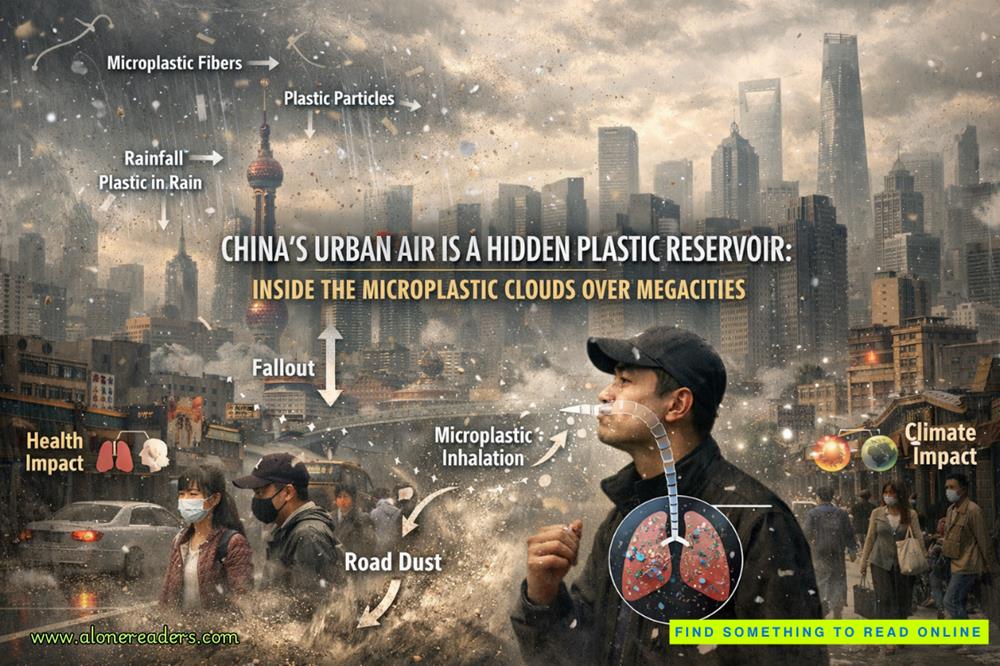 China’s Urban Air Is a Hidden Plastic Reservoir: Inside the Microplastic Clouds Over Megacities