Understanding positive thinking beyond clichés
Positive thinking is often misunderstood as forced happiness or blind denial of reality. In truth, it is a disciplined cognitive approach that focuses on interpreting experiences constructively while remaining grounded in facts. A positive thinker does not ignore problems; instead, they evaluate challenges with clarity and respond with intention rather than emotional reflex. This distinction is crucial because superficial positivity collapses under pressure, whereas trained optimism becomes stronger during adversity.
At its core, positive thinking is about how meaning is assigned to events. Two people can experience the same setback, yet one interprets it as a personal failure while the other views it as feedback. The difference lies not in circumstances but in mental framing, a skill that can be learned and refined.
How thought patterns reshape the brain
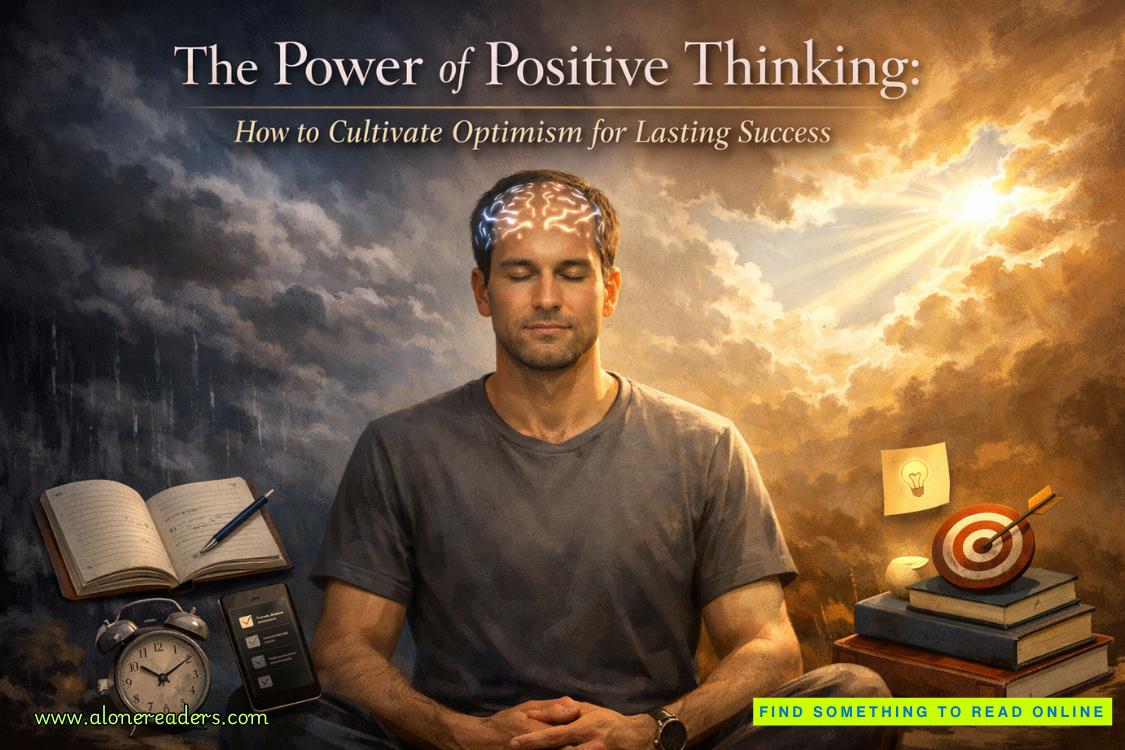
The human brain is highly adaptive. Repeated thoughts strengthen specific neural pathways, making certain mental responses faster and more automatic over time. When negative interpretations dominate, the brain becomes efficient at anticipating threats, criticism, and loss. Conversely, consistent constructive thinking trains the brain to seek solutions, opportunities, and emotional balance.
Optimism is not an inborn personality trait reserved for a few. It is the outcome of repeated cognitive choices. Over time, optimistic thinkers develop stronger connections between rational processing areas and emotional regulation centers, allowing them to respond calmly even under stress. This is why optimism often correlates with improved decision-making, emotional control, and long-term well-being.
Stress response and emotional regulation
Positive thinking directly influences how the body responds to stress. When situations are interpreted as manageable rather than catastrophic, the nervous system remains more balanced. This reduces prolonged tension, improves sleep quality, and preserves mental energy. Optimistic individuals are not stress-free; they simply recover faster because their internal dialogue does not escalate problems unnecessarily.
Why optimism improves performance, not just mood
Optimism has a measurable impact on productivity, leadership, and problem-solving. Individuals who expect progress are more likely to persist after failure, test alternative strategies, and seek feedback. This creates a self-reinforcing loop: persistence leads to skill development, which increases confidence, further strengthening optimism.
In professional environments, optimism enhances collaboration. Constructive thinkers communicate challenges without blame and focus on outcomes rather than personal validation. Over time, this builds trust and positions optimistic individuals as stabilizing forces during uncertainty.
The link between optimism and resilience
Resilience is the ability to absorb impact without breaking identity or motivation. Optimism fuels resilience by preserving hope during difficulty. When setbacks occur, optimistic thinkers ask better questions: What can be learned? What remains within my control? What is the next useful step? These questions keep the mind active and forward-focused rather than frozen.
Myth: Positive thinking means ignoring negative emotions
Suppressing emotions does not create optimism; it creates internal conflict. True positive thinking allows emotions to surface, acknowledges them honestly, and then guides attention toward constructive action. Sadness, anger, and disappointment are signals, not enemies. Optimism lies in responding to them intelligently rather than being ruled by them.
Myth: Optimism requires constant motivation
Motivation fluctuates naturally. Optimism is not about feeling inspired every day; it is about maintaining a constructive perspective even when motivation is low. Discipline, not enthusiasm, sustains positive thinking during difficult periods.
Awareness of internal dialogue
Every person runs a continuous internal narrative, often unnoticed. The first step toward optimism is recognizing recurring thought patterns. Phrases like “This always happens to me” or “I’m not good at this” signal fixed interpretations that limit growth. Awareness alone weakens their influence by creating psychological distance.
Once identified, these thoughts can be challenged with evidence and reframed into more accurate interpretations. For example, “This is difficult, but I’ve handled similar situations before.” The goal is realism infused with possibility, not artificial positivity.
Intentional reframing of setbacks
Reframing does not change events; it changes meaning. After a failure, optimistic reframing asks: What variables contributed? What was within my control? What skill needs strengthening? This transforms failure into structured information rather than a personal verdict.
Over time, this habit conditions the brain to seek lessons automatically, reducing emotional reactivity and accelerating improvement.
Training attention toward progress
The human mind naturally notices threats more than progress. Optimism requires deliberate attention to small wins, incremental improvements, and effort invested. This is not self-congratulation but cognitive balance. By regularly acknowledging progress, the brain builds a more accurate picture of reality and avoids chronic dissatisfaction.
A simple practice involves reflecting daily on actions taken rather than outcomes achieved. This reinforces agency and reinforces the belief that effort matters.
Words as cognitive anchors
Language influences perception. The words used internally and externally frame experiences. Optimistic thinkers use precise, flexible language rather than absolute terms. Replacing “never” with “not yet” or “always” with “often” creates psychological space for change.
This shift may appear subtle, but over time it significantly alters emotional tone and expectation management.
Constructive self-talk under pressure
During high-pressure situations, self-talk becomes either a stabilizer or a saboteur. Optimistic self-talk focuses on process and control: “Focus on the next step,” “Breathe and execute,” “Adjust and continue.” These statements ground attention and prevent mental spirals.
Maintaining positivity without denial
Optimism does not require ideal conditions. In fact, it becomes most valuable in difficult environments. The key is separating acceptance from resignation. Accepting reality allows strategic planning; resignation removes agency. Optimistic thinkers accept constraints while actively searching for leverage points.
Protecting mental boundaries
Constant exposure to negativity, whether through media, workplace culture, or social environments, erodes optimism over time. Cultivating optimism involves setting boundaries around information intake and emotional labor. This does not mean disengagement but selective focus on inputs that inform rather than overwhelm.
Why optimism compounds over time
Like physical training, mental conditioning yields exponential returns when practiced consistently. Small daily shifts in perspective accumulate, reshaping identity and confidence. Over months and years, optimistic thinkers experience fewer emotional crashes, quicker recovery, and a stronger sense of direction.
This compounding effect explains why optimism often correlates with long-term success rather than immediate gratification. The benefits may not be dramatic at first, but they are enduring.
Integrating optimism into identity
Eventually, optimism stops feeling like a technique and becomes part of self-concept. Challenges are no longer threats to self-worth but opportunities for engagement. This identity shift changes how goals are set, risks are taken, and failures are interpreted.
Optimism, when cultivated intentionally, becomes a stable psychological asset rather than a temporary mood.
Positive thinking is not about pretending everything will work out. It is about believing that effort, learning, and adaptability matter. Optimism is disciplined hope, grounded in action and sustained by perspective. By training thought patterns, refining internal language, and consistently reframing experience, optimism becomes a powerful tool for resilience, performance, and personal growth.
When cultivated with intention, positive thinking does not merely improve how life feels; it fundamentally improves how life is navigated.



 Mindfulness Practices to Enhance Mental Health: Science-Backed Techniques for Emotional Resilience
 Pavlova Christmas Tree – A Light, Festive & Stunning Holiday Dessert
 Sticky Glazed Christmas Chicken – A Sweet and Savory Delight for the Holiday Table
 Gingerbread Biscuits and Cakes – A Complete Festive Recipe Guide
 Beef Wellington – A Masterpiece Main Dish for Special Occasions
 The Role of Preventive Care in Maintaining Physical Health: A Deep Expert Analysis