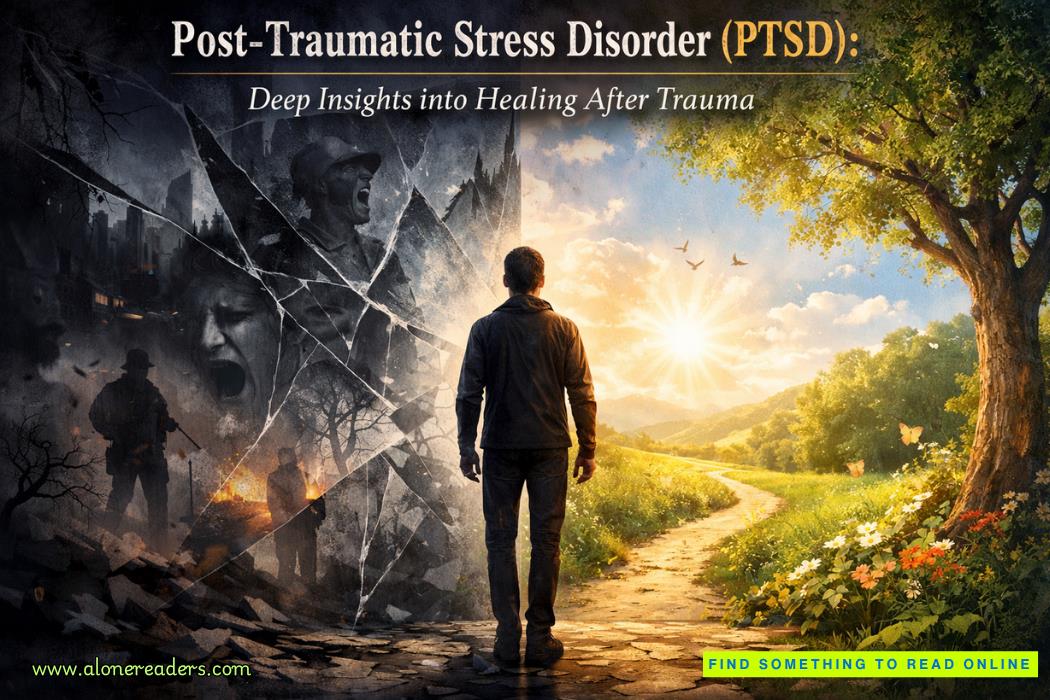
Trauma is not defined solely by the event, but by the nervous system’s response to it. Post-traumatic stress disorder, clinically known as Post-Traumatic Stress Disorder, emerges when the brain fails to adequately process and integrate a distressing experience. Unlike normal stress responses that gradually subside, PTSD embeds itself deeply into memory, perception, and physiological regulation.
Traumatic experiences may include combat exposure, physical or sexual assault, severe accidents, natural disasters, or prolonged emotional abuse. However, what distinguishes PTSD is not the severity of the event alone, but the persistence of the body's threat-response system long after the danger has passed. The brain continues to behave as though the trauma is ongoing.
At a neurological level, trauma disrupts the balance between three critical systems: the amygdala (fear detection), the hippocampus (memory organization), and the prefrontal cortex (rational regulation). In PTSD, the amygdala becomes hyperactive, the hippocampus struggles to contextualize memories, and the prefrontal cortex loses its ability to modulate fear effectively.
PTSD manifests through four primary symptom clusters, each reflecting a different dimension of psychological disruption.
Intrusive Re-experiencing
Individuals frequently relive the trauma through flashbacks, nightmares, or involuntary distressing memories. These are not simple recollections; they are vivid, sensory-rich experiences where the individual feels as though the event is happening again in real time.
Avoidance Behaviors
To cope with overwhelming distress, individuals may actively avoid reminders of the trauma. This includes places, people, conversations, or even internal thoughts associated with the event. While avoidance provides short-term relief, it reinforces the disorder by preventing emotional processing.
Negative Alterations in Cognition and Mood
PTSD often reshapes how individuals perceive themselves and the world. Persistent guilt, shame, emotional numbness, and distorted beliefs—such as “I am unsafe” or “I am broken”—become deeply ingrained. This cognitive shift is one of the most debilitating aspects of the condition.
Hyperarousal and Reactivity
The body remains in a chronic state of alertness. Symptoms include irritability, sleep disturbances, exaggerated startle response, and difficulty concentrating. The nervous system is effectively “locked” in survival mode.
Understanding PTSD requires examining how trauma is encoded biologically.
Trauma disrupts normal memory consolidation. Instead of being stored as a coherent narrative, traumatic memories are fragmented into sensory and emotional components. This explains why triggers—such as a smell, sound, or visual cue—can abruptly activate intense emotional responses without conscious awareness.
The hypothalamic-pituitary-adrenal (HPA) axis, responsible for stress hormone regulation, becomes dysregulated. Cortisol levels may fluctuate abnormally, impairing the body’s ability to return to baseline after stress. Simultaneously, heightened sympathetic nervous system activity leads to chronic physiological tension.
Neuroimaging studies have shown reduced hippocampal volume in individuals with chronic PTSD, suggesting long-term structural changes. These findings reinforce the understanding that PTSD is not merely psychological—it is a biopsychological condition with measurable neurological alterations.
Not everyone exposed to trauma develops PTSD, indicating the role of vulnerability factors.
Pre-existing Conditions
Individuals with prior anxiety, depression, or unresolved trauma are more susceptible. The brain’s resilience threshold is already compromised.
Genetic and Epigenetic Influences
Research suggests that genetic predisposition plays a role in stress reactivity. Trauma can also induce epigenetic changes, altering gene expression related to stress regulation.
Social Support and Environment
Lack of emotional support significantly increases the likelihood of PTSD. Conversely, strong social connections act as protective buffers.
Nature and Duration of Trauma
Repeated or prolonged trauma—such as in cases of childhood abuse or combat—has a higher probability of leading to complex PTSD, a more severe and persistent form.
PTSD diagnosis requires a structured clinical evaluation based on established psychiatric criteria.
Clinicians assess symptom duration (typically more than one month), functional impairment, and the presence of trauma exposure. Standardized tools such as structured interviews and self-report scales are used to evaluate severity.
Importantly, PTSD can often be misdiagnosed as depression, generalized anxiety disorder, or even personality disorders. Accurate diagnosis requires a nuanced understanding of trauma-specific symptom patterns.
Trauma-focused therapies are the most effective interventions for PTSD.
Cognitive Behavioral Therapy (CBT)
CBT helps individuals identify and restructure maladaptive thought patterns associated with trauma. It gradually reduces avoidance behaviors and fosters emotional processing.
Prolonged Exposure Therapy (PE)
This approach systematically exposes individuals to trauma-related memories and cues in a controlled environment, enabling desensitization and integration.
Eye Movement Desensitization and Reprocessing (EMDR)
EMDR utilizes bilateral stimulation (such as eye movements) to facilitate the brain’s natural healing processes. It allows traumatic memories to be reprocessed without overwhelming emotional distress.
Medication plays a supportive role, particularly in severe cases.
Selective serotonin reuptake inhibitors (SSRIs) are commonly prescribed to manage anxiety and depressive symptoms. In some cases, medications targeting sleep disturbances or hyperarousal are also used.
However, medication alone is rarely sufficient. It is most effective when combined with psychotherapy.
Healing trauma is not solely a cognitive process—it requires addressing the body.
Somatic Experiencing
This approach focuses on releasing stored physiological tension by increasing awareness of bodily sensations.
Mindfulness and Meditation
Practices that cultivate present-moment awareness help regulate the nervous system and reduce reactivity.
Yoga and Breathwork
These interventions restore autonomic balance, promoting parasympathetic activation (the “rest and digest” state).
Emerging research suggests that trauma is stored not just in memory but in procedural and somatic patterns, making body-based therapies essential for comprehensive healing.
A critical mechanism in PTSD recovery is memory reconsolidation—the process of updating stored memories.
When traumatic memories are safely revisited in therapy, they become temporarily malleable. During this window, new emotional experiences can modify the original memory trace. Over time, the memory loses its emotional intensity while retaining factual accuracy.
This process is central to why exposure-based therapies are effective. It is not about erasing memory, but transforming its emotional charge.
PTSD often fractures an individual’s sense of self. Healing involves rebuilding identity.
Individuals must redefine themselves beyond the trauma. This includes reclaiming agency, rebuilding trust, and developing a coherent life narrative.
Isolation is a common consequence of PTSD. Gradual re-engagement with social environments is crucial. Support groups, community involvement, and meaningful relationships play a transformative role.
Skills such as grounding techniques, emotional labeling, and distress tolerance enable individuals to manage triggers effectively.
Healing from PTSD is nonlinear and often marked by setbacks.
Triggers can resurface unexpectedly, even after significant progress. Additionally, stigma surrounding mental health may prevent individuals from seeking help.
Another challenge is the illusion of avoidance as safety. While avoidance reduces immediate distress, it perpetuates long-term dysfunction. Breaking this cycle requires courage and structured therapeutic support.
Innovative approaches are expanding the boundaries of trauma treatment.
Neurofeedback
This technique trains individuals to regulate brain activity through real-time feedback.
Psychedelic-Assisted Therapy (experimental)
Substances like MDMA are being studied for their potential to enhance emotional processing in controlled therapeutic settings.
Virtual Reality Exposure Therapy (VRET)
VR technology allows immersive, controlled exposure to trauma-related scenarios, particularly effective in treating combat-related PTSD.
These approaches reflect a growing recognition that PTSD requires multidimensional treatment strategies integrating psychology, neuroscience, and technology.
Post-traumatic stress disorder is not a sign of weakness—it is a deeply human response to overwhelming experiences. It represents the brain’s attempt to protect itself, albeit in a maladaptive way. Understanding PTSD through a scientific and compassionate lens reveals that healing is not only possible but measurable.
Recovery involves more than symptom reduction; it is a process of reclaiming one’s life, identity, and sense of safety. Through evidence-based therapies, somatic interventions, and emerging innovations, individuals can gradually transform trauma from a source of suffering into a foundation for resilience.
The path to healing is complex, often demanding persistence and support. Yet, at its core, PTSD recovery is a testament to the brain’s remarkable capacity for adaptation and renewal.



 Mindfulness Practices to Enhance Mental Health: Science-Backed Techniques for Emotional Resilience
 Pavlova Christmas Tree – A Light, Festive & Stunning Holiday Dessert
 Sticky Glazed Christmas Chicken – A Sweet and Savory Delight for the Holiday Table
 Gingerbread Biscuits and Cakes – A Complete Festive Recipe Guide
 Beef Wellington – A Masterpiece Main Dish for Special Occasions
 The Role of Preventive Care in Maintaining Physical Health: A Deep Expert Analysis