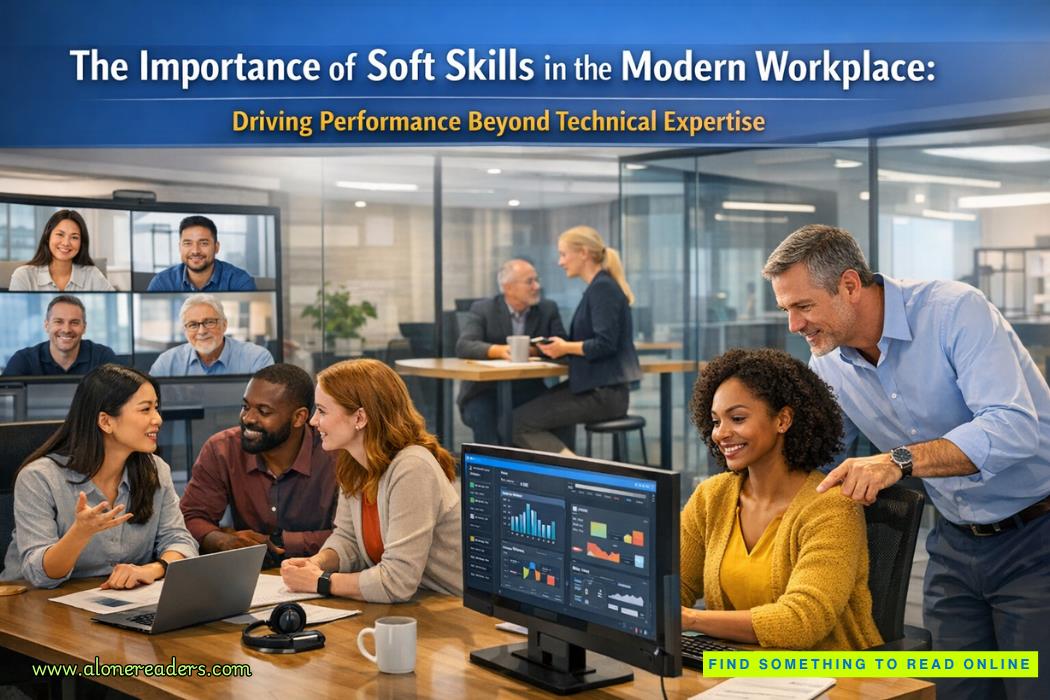
The contemporary workplace has undergone a structural transformation driven by digitalization, globalization, and the rise of hybrid work models. While technical competencies remain essential, they are no longer sufficient as standalone indicators of professional effectiveness. Increasingly, organizations are prioritizing soft skills—a cluster of interpersonal, cognitive, and emotional capabilities that determine how individuals interact, adapt, and lead within complex environments.
Soft skills are not abstract or secondary attributes; they are operational competencies that directly influence productivity, collaboration efficiency, conflict resolution, and organizational culture. In knowledge-driven economies, where cross-functional teams and rapid decision-making dominate, the ability to communicate clearly, think critically, and manage emotions has become a decisive factor in career progression and organizational success.
Soft skills encompass a wide spectrum of human-centric capabilities that enable effective interaction and performance in professional environments. These include communication, emotional intelligence, adaptability, teamwork, leadership, problem-solving, and time management.
Unlike technical skills, which are often task-specific and measurable, soft skills are transferable and context-sensitive. They apply across industries, roles, and hierarchical levels. For example, a software engineer may possess exceptional coding abilities, but without the ability to articulate ideas, collaborate with stakeholders, or adapt to changing project requirements, their effectiveness is significantly diminished.
At the center of all soft skills lies communication—the ability to convey information clearly, listen actively, and align understanding among diverse stakeholders. In modern workplaces, communication extends beyond verbal exchanges to include written clarity, digital communication etiquette, and cross-cultural sensitivity.
Verbal and written clarity
Clear communication reduces ambiguity, minimizes errors, and accelerates decision-making. Poorly articulated requirements or vague feedback loops can lead to costly misunderstandings, particularly in distributed teams.
Active listening and feedback loops
Effective communication is bidirectional. Active listening ensures that information is accurately received and interpreted. Structured feedback mechanisms, when executed properly, foster continuous improvement and trust.
Digital communication proficiency
With the proliferation of tools such as Slack, Teams, and asynchronous collaboration platforms, employees must adapt their communication styles to maintain clarity without the benefit of face-to-face cues.
Emotional intelligence (EI) is the ability to recognize, understand, and manage one’s own emotions while also perceiving and influencing the emotions of others. It is a critical determinant of leadership effectiveness and team cohesion.
Self-awareness and self-regulation
Professionals with high EI can identify their emotional triggers and regulate responses, preventing impulsive reactions that may disrupt team dynamics.
Empathy and interpersonal sensitivity
Understanding the perspectives and emotions of colleagues enhances collaboration and reduces conflict. Empathy is particularly crucial in multicultural and remote teams where misinterpretation risks are higher.
Social skills and influence
EI enables individuals to navigate complex interpersonal scenarios, build rapport, and influence outcomes without relying solely on authority.
The pace of change in modern organizations—driven by technological disruption, market volatility, and evolving business models—demands a high degree of adaptability.
Learning agility
Employees must continuously acquire new skills and update existing knowledge. Adaptability is not merely about reacting to change but proactively anticipating and preparing for it.
Resilience under uncertainty
The ability to maintain performance under pressure, manage ambiguity, and recover from setbacks is increasingly valued.
Flexibility in roles and responsibilities
Rigid role definitions are being replaced by fluid responsibilities. Professionals who can operate across domains and adjust priorities dynamically are more valuable to organizations.
Modern workplaces are characterized by cross-functional and often geographically distributed teams. Collaboration is no longer confined to physical proximity.
Cross-functional alignment
Projects frequently involve stakeholders from engineering, marketing, finance, and operations. Effective collaboration requires understanding different perspectives and aligning objectives.
Conflict resolution mechanisms
Disagreements are inevitable in collaborative environments. The ability to resolve conflicts constructively, without escalation, is a key soft skill.
Trust and accountability
Trust is the foundation of high-performing teams. Soft skills such as transparency, reliability, and mutual respect contribute to building and sustaining trust.
Leadership in the modern workplace is increasingly defined by influence rather than formal authority. Soft skills are central to this paradigm shift.
Vision articulation and motivation
Leaders must communicate a clear vision and inspire teams to align with organizational goals. This requires both clarity of thought and emotional engagement.
Coaching and mentorship
Effective leaders invest in the development of their teams. Coaching requires patience, empathy, and the ability to provide constructive feedback.
Decision-making under complexity
Leadership involves making decisions with incomplete information. Soft skills such as critical thinking, emotional regulation, and stakeholder management are essential in these scenarios.
While technical skills enable problem identification and solution implementation, soft skills enhance the quality of problem-solving.
Analytical reasoning and structured thinking
Breaking down complex problems into manageable components requires disciplined thinking and clarity.
Creativity and innovation
Soft skills such as curiosity and open-mindedness drive innovative solutions. In competitive markets, incremental improvements are often insufficient; creative thinking becomes a strategic advantage.
Collaborative problem-solving
Many modern challenges require collective intelligence. The ability to integrate diverse viewpoints into cohesive solutions is a critical competency.
In high-demand environments, managing time effectively is not just a personal benefit but an organizational necessity.
Prioritization and focus
Professionals must distinguish between high-impact tasks and low-value activities. This requires strategic thinking and discipline.
Accountability and reliability
Meeting deadlines and delivering consistent output builds credibility and trust within teams.
Work-life balance and sustainability
Sustained performance depends on maintaining physical and mental well-being. Soft skills such as self-awareness and boundary-setting contribute to long-term productivity.
Technical skills may secure entry into a profession, but soft skills determine upward mobility. As individuals progress in their careers, the nature of their responsibilities shifts from execution to coordination, leadership, and strategic decision-making.
Organizations often evaluate employees for promotion based on their ability to manage teams, communicate effectively with stakeholders, and contribute to organizational culture. These competencies are inherently soft-skill-driven.
The increasing adoption of automation and artificial intelligence is reshaping job roles across industries. Tasks that are repetitive, predictable, and rule-based are being automated, while roles that require human judgment, creativity, and emotional intelligence are becoming more valuable.
Soft skills represent a non-automatable advantage. Machines can process data and execute tasks efficiently, but they cannot replicate human empathy, nuanced communication, or ethical reasoning. As a result, professionals who combine technical expertise with strong soft skills are better positioned to remain relevant in an evolving job market.
Unlike technical skills, which can often be acquired through structured training, soft skills require continuous practice and self-reflection.
Deliberate practice and feedback
Engaging in real-world scenarios, seeking feedback, and iterating on behavior is essential for improvement.
Mentorship and coaching
Learning from experienced professionals accelerates the development of soft skills.
Self-assessment and reflection
Regularly evaluating one’s strengths and weaknesses enables targeted improvement.
Exposure to diverse environments
Working in different teams, cultures, and contexts broadens perspective and enhances adaptability.
Organizations that prioritize soft skills tend to foster more inclusive, innovative, and resilient cultures.
Hiring and recruitment strategies
Many organizations are incorporating behavioral interviews and situational assessments to evaluate soft skills during hiring.
Training and development programs
Structured programs focusing on leadership, communication, and emotional intelligence are becoming standard.
Performance evaluation metrics
Soft skills are increasingly integrated into performance reviews, reflecting their impact on organizational outcomes.
The modern workplace demands a balanced integration of technical expertise and soft skills. While hard skills provide the tools for task execution, soft skills determine how effectively those tools are used within dynamic, collaborative, and often unpredictable environments.
Professionals who invest in developing communication, emotional intelligence, adaptability, and leadership capabilities position themselves not only as competent contributors but as indispensable assets to their organizations. At an organizational level, cultivating a workforce with strong soft skills leads to improved collaboration, innovation, and long-term sustainability.
In a landscape where change is constant and complexity is the norm, soft skills are no longer optional—they are a strategic imperative.



 Work-Life Balance and Physical Health: How Daily Choices Shape the Body
 Overcoming Procrastination: Practical and Proven Strategies to Boost Productivity
 The Power of Positive Thinking: Transform Your Mindset, Transform Your Life
 Setting and Achieving Personal Goals: A Step-by-Step Specialist Guide
 Time Management Hacks: Proven Strategies for a Highly Productive Day
 Guru Purnima Quotes: Deep, Inspiring Messages to Honor Teachers and Spiritual Guides










