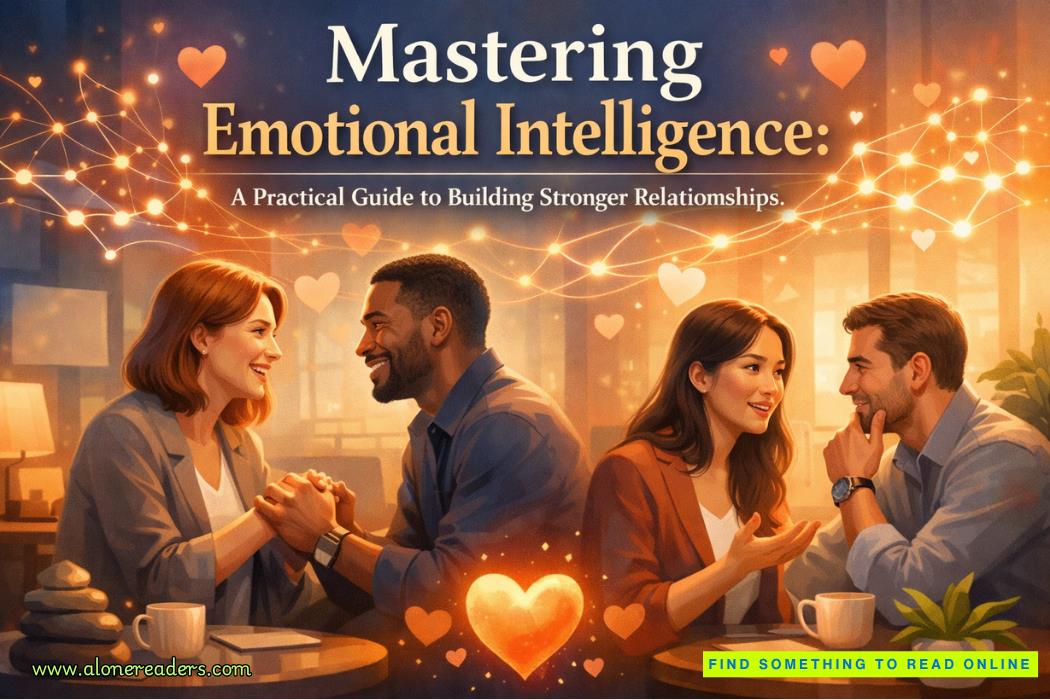
Emotional intelligence is not a vague psychological buzzword—it is a measurable, trainable set of competencies that directly influence how individuals perceive, interpret, and respond to emotional stimuli in themselves and others. In the context of relationships, whether personal or professional, emotional intelligence functions as the operating system behind communication, conflict resolution, trust-building, and long-term relational stability. Individuals with high emotional intelligence consistently demonstrate superior relational outcomes—not because they avoid conflict, but because they manage emotional dynamics with precision and awareness.
At its core, emotional intelligence comprises four primary domains: self-awareness, self-regulation, social awareness (empathy), and relationship management. Each of these domains interacts dynamically, forming a feedback loop that determines how effectively one navigates interpersonal environments.
Understanding internal emotional signals
Self-awareness is the ability to accurately identify and label one’s emotions in real time. Most relational breakdowns begin not with external conflict but with misinterpreted internal states. For example, frustration may mask underlying fear or insecurity, yet if it is expressed as anger, it distorts communication and escalates tension.
Highly self-aware individuals can distinguish between primary and secondary emotions. They recognize subtle emotional gradients—irritation versus disappointment, anxiety versus anticipation—and this granularity allows for more precise responses.
Recognizing emotional triggers
Every individual carries a set of emotional triggers shaped by past experiences, beliefs, and unmet needs. These triggers often operate subconsciously, leading to disproportionate reactions in relationships. Developing emotional intelligence requires mapping these triggers explicitly.
A practical method involves post-event reflection:
Over time, patterns emerge, enabling proactive regulation rather than reactive behavior.
From impulse to intentional response
Self-regulation is the capacity to pause between stimulus and response. In relationships, this pause is critical. Without it, communication becomes reactive, often driven by ego defense mechanisms rather than constructive intent.
Neuroscientifically, this involves shifting activity from the amygdala (emotional reactivity) to the prefrontal cortex (executive control). Practically, it means developing micro-skills such as:
Emotional accountability
A key aspect of self-regulation is owning one’s emotional state without externalizing blame. Statements like “You made me angry” reflect low emotional intelligence. In contrast, “I felt frustrated when this happened” demonstrates accountability and reduces defensiveness in the other party.
This subtle linguistic shift has a profound impact on relational dynamics, as it transforms conflict from accusation to collaboration.
Cognitive vs emotional empathy
Empathy is often misunderstood as simply “feeling what others feel.” In reality, it consists of two distinct components:
High emotional intelligence requires both. Cognitive empathy enables accurate interpretation, while emotional empathy fosters connection and trust.
Reading non-verbal cues
A significant portion of human communication is non-verbal—tone, facial expression, posture, and micro-expressions. Individuals with strong social awareness can decode these signals with high accuracy.
For example, a partner may verbally agree but display subtle signs of discomfort. Recognizing this discrepancy allows for deeper inquiry, preventing latent issues from escalating.
Contextual sensitivity
Empathy is not static; it must adapt to context. The same response that is supportive in one situation may be intrusive in another. Emotional intelligence involves calibrating responses based on situational variables—timing, emotional intensity, and relational history.
Constructive communication
Effective communication is not merely about clarity—it is about emotional alignment. High emotional intelligence ensures that both message and tone are congruent, minimizing misinterpretation.
Key techniques include:
These techniques transform conversations from transactional exchanges into relational dialogues.
Conflict resolution as a skill
Conflict is inevitable in any meaningful relationship. The differentiator is not the presence of conflict but the quality of its resolution. Emotionally intelligent individuals approach conflict with a problem-solving mindset rather than a win-lose framework.
Effective conflict resolution involves:
This approach not only resolves immediate issues but also strengthens relational resilience.
Building trust through consistency
Trust is not built through grand gestures but through consistent emotional reliability. This includes:
Emotional intelligence ensures that behavior aligns with stated intentions, creating a stable relational environment.
Romantic relationships
In romantic contexts, emotional intelligence directly influences intimacy, satisfaction, and longevity. Partners with high emotional intelligence are better equipped to navigate vulnerability, manage expectations, and sustain emotional connection over time.
For instance, recognizing a partner’s emotional needs—validation, reassurance, or space—requires both empathy and situational awareness.
Professional relationships
In the workplace, emotional intelligence impacts leadership, teamwork, and conflict management. Leaders with high emotional intelligence can motivate teams, manage stress, and foster a positive organizational culture.
They understand that productivity is not solely driven by technical competence but by emotional climate.
Friendships and social networks
In friendships, emotional intelligence facilitates authenticity and mutual support. It allows individuals to balance self-expression with sensitivity to others, maintaining harmony without suppressing individuality.
Emotional journaling
Recording daily emotional experiences enhances self-awareness. Over time, this practice reveals patterns, triggers, and recurring relational dynamics.
Feedback loops
Seeking feedback from trusted individuals provides external perspectives on emotional behavior. This is particularly valuable for identifying blind spots.
Mindfulness practices
Mindfulness strengthens the ability to observe emotions without immediate reaction. This creates the mental space necessary for self-regulation.
Deliberate practice in communication
Improving emotional intelligence requires intentional practice. This includes:
Consistency in these practices leads to measurable improvement.
Emotional avoidance
Some individuals suppress emotions rather than engaging with them. While this may reduce short-term discomfort, it leads to long-term relational issues due to unresolved emotional states.
Cognitive distortions
Misinterpretations such as mind-reading (“They must be upset with me”) or catastrophizing can distort emotional responses. Recognizing and correcting these distortions is essential.
Ego defensiveness
Defensiveness prevents honest self-assessment. Emotional intelligence requires a willingness to acknowledge mistakes and learn from them.
Over time, emotional intelligence compounds in its effects. Relationships become more stable, communication more efficient, and conflicts less destructive. Individuals develop a reputation for reliability and emotional maturity, which enhances both personal and professional networks.
More importantly, emotional intelligence fosters psychological safety—a state where individuals feel secure expressing themselves without fear of judgment or rejection. This environment is the foundation of deep, meaningful relationships.
Developing emotional intelligence is not an abstract self-improvement goal; it is a strategic investment in relational effectiveness. By systematically enhancing self-awareness, self-regulation, empathy, and relationship management skills, individuals can transform the quality of their interactions.
The process requires deliberate effort, consistent practice, and a willingness to confront internal patterns. However, the return on this investment is substantial: stronger relationships, reduced conflict, and a more coherent emotional life.
In an increasingly complex and interconnected world, emotional intelligence is no longer optional—it is a critical competency for anyone seeking to build and sustain meaningful relationships.



 Work-Life Balance and Physical Health: How Daily Choices Shape the Body
 Overcoming Procrastination: Practical and Proven Strategies to Boost Productivity
 The Power of Positive Thinking: Transform Your Mindset, Transform Your Life
 Setting and Achieving Personal Goals: A Step-by-Step Specialist Guide
 Time Management Hacks: Proven Strategies for a Highly Productive Day
 Guru Purnima Quotes: Deep, Inspiring Messages to Honor Teachers and Spiritual Guides