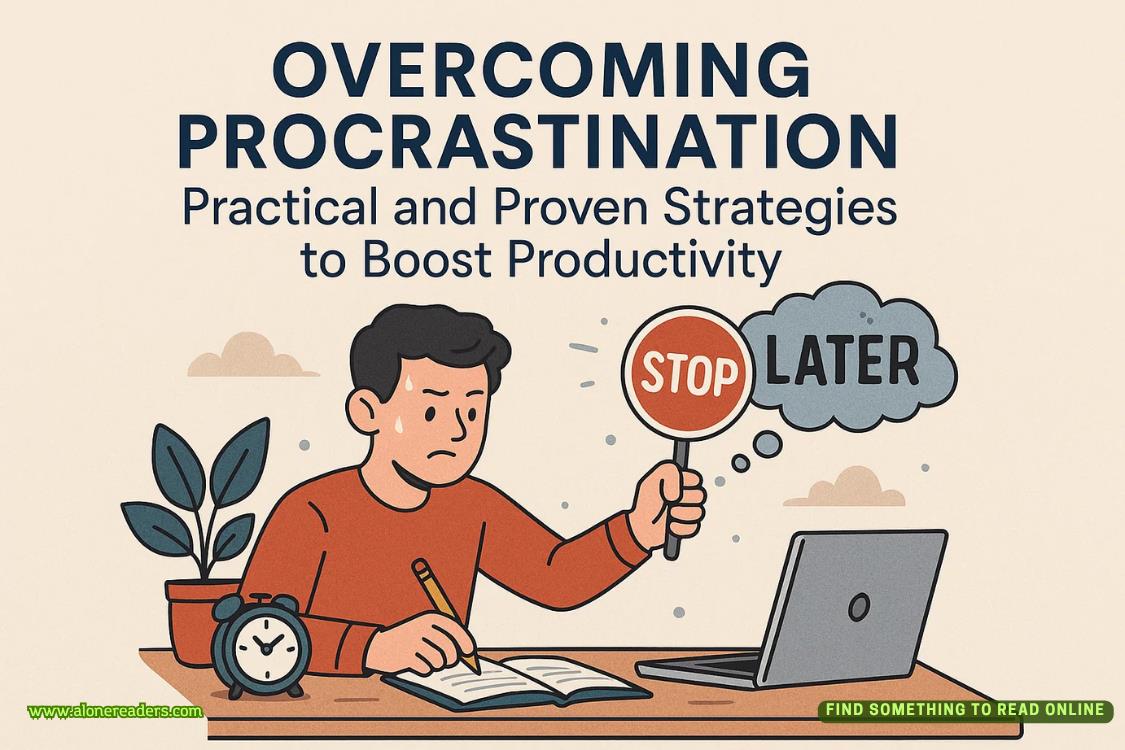
Procrastination is one of the most persistent enemies of productivity. It’s not simply about being lazy or disorganized—it’s a complex psychological pattern that blends fear, perfectionism, lack of motivation, and poor time perception. To overcome procrastination effectively, you must treat it as a behavioral issue that can be systematically retrained, not a moral failure. The goal is not to become a machine of endless work, but to establish sustainable momentum toward completing meaningful tasks.
The emotional avoidance loop
At its core, procrastination is emotional regulation gone wrong. When faced with a difficult or uncertain task, the brain perceives discomfort—anxiety, fear of failure, or boredom. To escape this feeling, you delay the task, opting instead for instant gratification—like checking social media or watching videos. The short-term relief reinforces the avoidance habit, making future tasks even harder to start.
The perfectionism trap
Many procrastinators are not careless but rather perfectionists. The fear of not doing something perfectly creates paralysis. You might think, “If I can’t do it right now in the best way, I’ll wait until I feel ready.” But readiness rarely arrives. Understanding that perfectionism is an emotional defense mechanism—not a standard of quality—helps you break free from this self-imposed barrier.
The time inconsistency bias
Humans are wired to value immediate rewards over future ones, a concept known as temporal discounting. You might choose the comfort of scrolling online now over the abstract future benefit of finishing a report. Recognizing this bias allows you to design systems that make future rewards feel immediate and emotionally satisfying.
Define your “why”
The first step to overcoming procrastination is clarity. Ask yourself why a task matters. Is it tied to a larger purpose, personal growth, or a professional milestone? A strong “why” creates emotional engagement that can overpower avoidance tendencies.
Break large tasks into atomic actions
Big goals are overwhelming because they’re abstract. Instead of “write a book,” focus on “write 200 words.” Micro-tasks create immediate wins, releasing dopamine and reinforcing the sense of progress. The brain thrives on small, frequent victories.
Apply the Two-Minute Rule
If a task takes less than two minutes, do it immediately. This principle, introduced by productivity experts, leverages momentum psychology—starting small primes your brain to continue working beyond the initial micro-task.
Control your environment
Procrastination thrives in environments filled with distractions. Remove cues that tempt you into avoidance. Keep your workspace minimalist, block distracting websites, and separate work and leisure zones physically or digitally.
Use cue-based initiation
Behavioral science shows that linking actions to specific cues—like “after I make my morning coffee, I’ll write one paragraph”—trains the brain to associate certain contexts with work. Over time, the cue itself triggers the behavior automatically.
Optimize for friction and flow
Increase friction for distractions and decrease friction for your tasks. For example, log out of streaming apps during work hours or keep work documents easily accessible. The goal is to make procrastination harder and action easier.
Adopt time-blocking techniques
Instead of relying on endless to-do lists, schedule specific blocks of time for specific tasks. A time block transforms intent into a commitment. During that window, your only goal is to engage with the task—not necessarily to finish it.
Leverage the Pomodoro Technique
Work in focused 25-minute intervals followed by short breaks. This method counteracts attention fatigue and trains your mind to associate work with manageable bursts rather than long, draining sessions.
Align tasks with energy peaks
Procrastination often occurs when we attempt complex tasks at low-energy times. Observe your natural energy rhythms—are you more alert in the morning or afternoon? Schedule deep work during peak energy hours and reserve routine tasks for low-energy periods.
Accept imperfection as progress
Many people delay starting tasks because they want to feel ready or confident. But confidence comes from action, not the other way around. Embrace the idea of progress over perfection. Even a flawed attempt provides feedback that refines future effort.
Reinterpret discomfort
Discomfort is not a signal to stop—it’s a sign of growth. High performers learn to associate discomfort with forward movement. When you feel resistance, tell yourself, “This means I’m doing something meaningful.”
Build tolerance for unfinished work
Perfectionists often struggle to stop refining. Set boundaries—such as “I’ll edit this document for 30 minutes, then submit it.” Limiting revision time prevents endless polishing that disguises procrastination as productivity.
External accountability systems
When you share your goals with someone—a colleague, mentor, or accountability partner—you engage social pressure and commitment bias. Knowing someone else is expecting progress can significantly boost motivation.
Visual progress tracking
Charts, checklists, or habit-tracking apps make intangible progress visible. When you can see your consistency, your brain rewards you with satisfaction, reinforcing further action.
The weekly review ritual
Set aside 30 minutes each week to review your progress. Reflect on what caused delays, what worked, and what can be adjusted. This structured reflection converts mistakes into data and keeps you in control of your habits.
Use focus tools, not distractions
Apps like Forest or Focusmate use behavioral nudges to maintain focus. Forest rewards concentration by growing virtual trees; Focusmate pairs you with real accountability partners online. Technology should serve as a reinforcement system, not a source of delay.
Automate repetitive tasks
Procrastination often hides behind routine tasks that consume mental energy. Automate bill payments, email sorting, or report generation. Every automated task is one less decision to drain your willpower.
Mind your digital hygiene
Keep your workspace organized—clear desktop, minimal browser tabs, and defined work folders. Clutter, both digital and physical, amplifies decision fatigue and increases procrastination triggers.
The importance of self-integrity
Each time you say you’ll do something and follow through, you strengthen self-trust. Conversely, each broken promise erodes it. Start with small, achievable commitments to rebuild confidence in your word.
Celebrate completion, not perfection
Reward yourself for finishing, not for flawless results. This retrains your brain to associate completion with satisfaction, making it easier to initiate future tasks.
Use identity-based motivation
Shift from “I want to stop procrastinating” to “I am a person who takes action immediately.” Identity-based habits are far stronger than goal-based habits because they align behavior with self-image.
Recognize the relapse pattern
Even after weeks of progress, procrastination can resurface during stress, fatigue, or change. Awareness is key. Recognize early warning signs like excessive planning, over-researching, or constant “I’ll do it tomorrow” thoughts.
Create a restart ritual
When you fall off track, don’t spiral into guilt. Have a predefined ritual—like cleaning your desk, making a to-do list, or setting a timer for five minutes—to re-enter work mode. The ability to restart quickly is more valuable than never failing.
Integrate rest and renewal
Chronic overwork leads to burnout, which fuels procrastination. Balance intense productivity with deliberate rest—walks, hobbies, and sleep. Rest isn’t laziness; it’s strategic recovery.
Overcoming procrastination is not about superhuman willpower—it’s about designing systems that align with how the human brain works. By breaking tasks into manageable steps, optimizing your environment, using behavioral cues, and reframing your emotional response to discomfort, you transform procrastination from an obstacle into a signal for change. Every small action—writing the first line, setting the first timer, or cleaning the workspace—creates momentum. Over time, these micro-movements reshape not only how you work but who you believe yourself to be: someone who acts, creates, and gets things done.



 The Importance of Soft Skills in the Modern Workplace: Driving Performance Beyond Technical Expertise
 Work-Life Balance and Physical Health: How Daily Choices Shape the Body
 The Power of Positive Thinking: Transform Your Mindset, Transform Your Life
 Setting and Achieving Personal Goals: A Step-by-Step Specialist Guide
 Time Management Hacks: Proven Strategies for a Highly Productive Day
 Guru Purnima Quotes: Deep, Inspiring Messages to Honor Teachers and Spiritual Guides