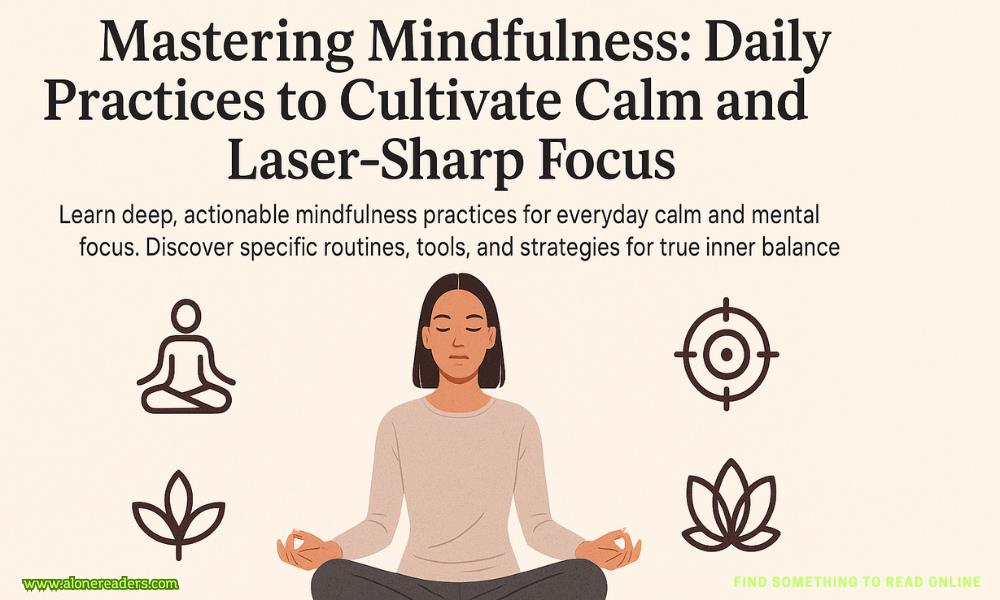
In a world dominated by digital distractions, rising anxiety, and mental clutter, mindfulness has emerged not as a trendy fix—but as a deeply rooted solution. However, many people still engage with it on a surface level, reciting mantras or meditating once a week without real transformation. True mindfulness goes far beyond breathing exercises. It is a rigorous daily practice that conditions your mind like a muscle—building calmness under pressure and sustained attention in the middle of chaos.
This article explores deep, specific mindfulness practices that can be applied every day—not as isolated techniques, but as integrated rituals that align with real life. From waking up to winding down, every action becomes an opportunity for mental clarity and inner peace.
Anchor Your Senses Before Opening Your Eyes
Before you reach for your phone, bring awareness to your breath, body, and hearing. Consciously notice your inhalation and exhalation. Feel the texture of your bedsheet, the temperature of the air, and any ambient sounds. This 60-second scan gently pulls your attention into the present and primes your nervous system for stability.
Mindful Hydration with Purpose
Instead of gulping your first glass of water while multitasking, hold the glass, feel its weight, and take three slow sips—observing taste and temperature. This micro-practice trains the brain to linger in the now, rather than rushing toward what's next.
Set a Daily Attention Anchor
Choose a single quality to cultivate for the day—e.g., patience, clarity, stillness. Write it down and place it somewhere visible. This acts as a mental GPS, bringing you back to intentional behavior during moments of stress or distraction.
Use the “Two-Minute Focus Reset” Every Hour
Every 60–90 minutes, step away from your screen and do the following:
This resets your cognitive load and reduces cortisol spikes caused by continuous task-switching.
Single-Task with a Countdown
Before starting any important task, count backward slowly from 10 to 1 while looking at your screen or task. During the countdown, release peripheral distractions. When you hit 1, begin. This creates a psychological gateway, allowing the brain to enter a focused state quickly, similar to how athletes “zone in” before a performance.
Mindful Transitions Between Tasks
Train yourself to pause before starting a new activity. Whether it’s moving from emails to meetings, or from coding to writing, stop for 20–30 seconds. Acknowledge what you just finished, take one long breath, and set your attention for the next activity. These short breaks drastically reduce cognitive friction.
The Five-Sense Grounding Walk
Go outside (or near a window) and consciously focus on:
This full-body sensory reset takes 5 minutes and is ideal during lunch breaks. It refocuses the prefrontal cortex and stabilizes mood.
Intentional Eating without Distraction
Even if you can’t afford a long lunch, eat one item—an apple, a sandwich bite—with full attention. Chew slowly, notice the flavor layers, and place your utensils down between bites. This isn’t about being slow—it’s about engaging fully with one thing, training your brain out of autopilot.
The Four-Square Breath Technique
Ideal during anxiety spikes or before a presentation:
Repeat this cycle for 1–2 minutes. The rhythmic pattern directly affects the vagus nerve, helping regulate stress hormones.
Hand-to-Heart Recalibration
When emotionally overwhelmed, place your right hand over your heart and your left hand over your belly. Close your eyes and whisper to yourself:
“I’m present. I’m safe. I’m here.”
The touch activates oxytocin release and body-mind cohesion. This is especially powerful in emotionally charged conversations or difficult work moments.
Curate a “Digital Mindfulness” App Folder
Instead of letting your phone derail focus, group apps like Insight Timer, Oak, Breathwrk, or Focus Keeper into one folder. Use one app every 4 hours as a conscious tech ritual.
Use Notification Pauses
Don’t disable all notifications—train yourself to pause before checking them. When your phone pings, take one breath before reacting. This builds response flexibility, an essential executive function skill.
Mindful Typing & Scrolling
Train your attention while doing routine actions like typing or scrolling by noticing your hand movements, micro-expressions, or eye fatigue. Bring in periodic check-ins: Am I reacting? Or responding? This meta-cognition gradually rewires impulsive behavior.
The “Last 30 Minutes” Rule
Reserve the final 30 minutes of your day for:
Your brain maps routine to safety. By repeating the same calm ritual nightly, you reduce sleep latency and prepare the body for restorative rest.
Journaling with a Focus on ‘Letting Go’
Each night, ask yourself:
This journaling is not about productivity—it’s about emotional decluttering. Done consistently, it promotes mental resilience and builds a stronger sense of control.
Body Scan with Sleep Anchoring
Lie down and slowly bring attention to each part of your body—from toes to forehead. As you breathe, say mentally:
“Relax... Release... Let go...”
Use this scan not as meditation, but as nervous system reprogramming, signaling safety and closure.
Real mindfulness is not about escaping discomfort—it’s about turning toward reality with skillful presence. It's not something you do just when you're stressed or only on a meditation cushion. Instead, it’s something you build moment by moment: in how you check your phone, eat your lunch, speak with a colleague, or close your eyes at night.
By treating mindfulness as a deliberate mental craft, you condition your mind to act with clarity instead of reacting out of habit. With each practice described above, you rewire your neural pathways for greater calm, focus, and emotional stability.
Mindfulness doesn’t require hours—it demands sincerity, repetition, and a willingness to meet life with full awareness. When done deeply and consistently, it becomes not a habit, but your default operating system.



 The Importance of Soft Skills in the Modern Workplace: Driving Performance Beyond Technical Expertise
 Work-Life Balance and Physical Health: How Daily Choices Shape the Body
 Overcoming Procrastination: Practical and Proven Strategies to Boost Productivity
 The Power of Positive Thinking: Transform Your Mindset, Transform Your Life
 Setting and Achieving Personal Goals: A Step-by-Step Specialist Guide
 Time Management Hacks: Proven Strategies for a Highly Productive Day