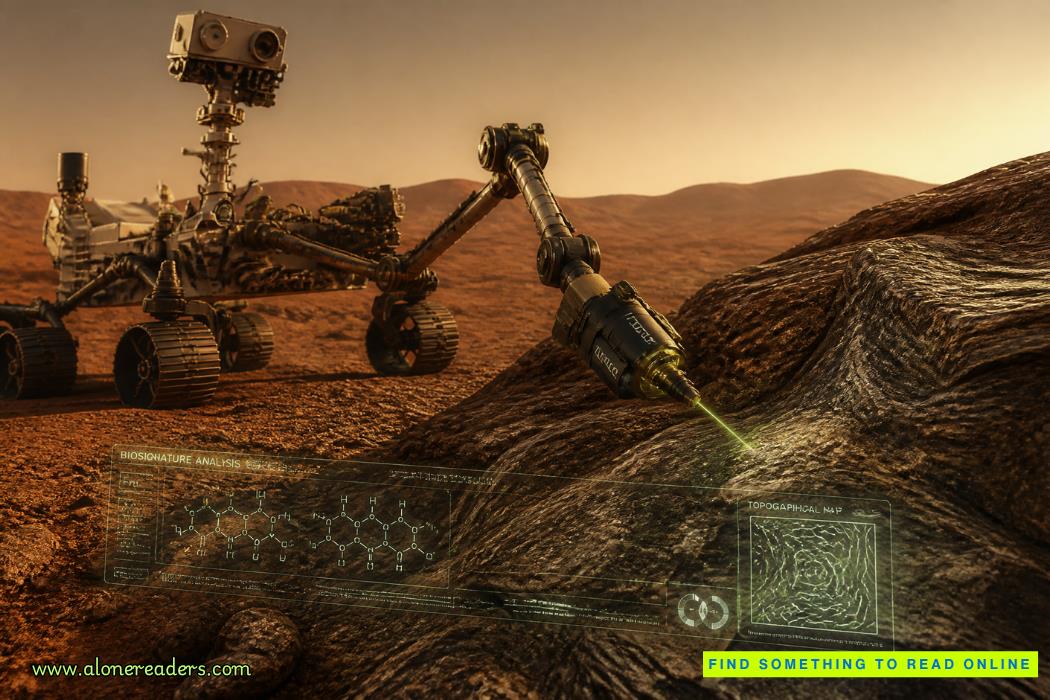
Have we found life on Mars—or are we just seeing what we want to see?
That question has resurfaced with urgency as NASA’s Perseverance rover continues to explore Jezero Crater, collecting some of the most intriguing samples ever gathered from another planet. At the center of this excitement are Mars biosignatures—features in rocks that might hint at ancient life. But here’s the tension: the same features can often be produced by completely non-biological processes.
What looks like a fossil might be nothing more than a chemical illusion.
Key Takeaways
Defining the concept
Mars biosignatures are physical, chemical, or isotopic features that could indicate past or present life. These include:
On Earth, biosignatures are how we reconstruct ancient ecosystems. Fossilized bacteria in Australian stromatolites, for example, provide evidence of life over 3.5 billion years ago. Scientists are now applying similar logic to Mars.
Why Mars is a strong candidate
Ancient Mars was not the frozen desert we see today. Geological evidence shows:
Jezero Crater, where Perseverance operates, was once a lake basin with a river delta—precisely the kind of environment where microbial life could thrive and leave traces behind.
That makes every rock there a potential archive of ancient Mars life.
What the rover has found so far
Perseverance has identified several compelling features in Martian rocks:
These findings fall under what scientists call “Perseverance life signs”—not evidence of life itself, but signals that raise the possibility.
A real-world comparison
Imagine finding charcoal in a forest. It might suggest a past fire—but it could also come from lightning strikes or volcanic activity. Similarly, organic molecules on Mars could come from life… or from non-biological chemistry driven by radiation and heat.
This ambiguity is the core challenge.
Geology can mimic biology
One of the biggest obstacles in interpreting Mars biosignatures is that geology is surprisingly creative. Non-living processes can produce features that look strikingly biological.
Examples include:
Even on Earth, scientists have debated whether certain ancient rock formations are truly biological or purely geological.
The role of water and chemistry
Jezero Crater rocks formed in a dynamic environment where water, minerals, and volcanic activity interacted. These conditions can produce:
In other words, Mars doesn’t need life to create convincing “life-like” signals.
Why bringing samples to Earth matters
Despite its sophistication, Perseverance is still limited. Its instruments are designed for detection, not definitive confirmation.
To truly understand Mars biosignatures, scientists need:
These tools exist only on Earth.
The Mars sample return mission aims to transport carefully selected rock cores back to Earth for detailed study. This effort represents one of the most complex scientific missions ever attempted.
What makes this so difficult
Returning samples from Mars involves:
Until those samples arrive, we remain in a state of scientific suspense—armed with clues, but no final answers.
“We already found life on Mars”
No confirmed evidence of life exists yet. What we have are promising biosignatures that require further validation.
“Organic molecules mean life”
Not necessarily. Organic molecules can form through non-biological processes, especially in environments exposed to radiation and chemical reactions.
“Rovers can confirm everything”
Rovers are limited by size, power, and instrumentation. They are scouts, not full laboratories.
The gold standard of proof
To confirm ancient Mars life, scientists need multiple independent lines of evidence that all point to biology—and cannot be explained by geology.
This includes:
No single clue is enough. The strength comes from convergence.
A hypothetical scenario
Imagine a Mars rock that contains:
If all these align—and no geological process can explain them—that would be a breakthrough.
The search for Mars biosignatures is not just about Mars. It reshapes how we think about life in the universe.
If life emerged independently on Mars, even in microbial form, it suggests that life might be common wherever conditions allow. If it didn’t, despite similar early conditions to Earth, that raises deeper questions about how rare life truly is.
Right now, we are in the most intriguing phase of the journey: the evidence is suggestive but incomplete.
Mars biosignatures sit at the edge of discovery and doubt. The rocks in Jezero Crater whisper possibilities—of ancient lakes, chemical complexity, and maybe even life—but they don’t yet speak clearly.
The real answer likely lies locked inside those samples Perseverance has carefully sealed and stored.
Until they reach Earth, the question remains open: are we looking at the fingerprints of ancient Martian life, or just the remarkable artistry of geology?
Either way, the mystery is far from over—and that’s exactly what makes it so compelling.
What are Mars biosignatures?
Mars biosignatures are chemical, mineral, or structural features in Martian rocks that could indicate past life, such as organic molecules or microbe-like textures.
Has Perseverance found life on Mars?
No confirmed life has been found yet. Perseverance has identified promising biosignature candidates that require further testing on Earth.
Why is Jezero Crater important?
Jezero Crater was once a lake, making it a prime location where ancient microbial life could have existed and left traces.
Why can’t Mars rovers confirm life directly?
Rovers lack the advanced instruments needed to distinguish biological signals from non-biological processes with absolute certainty.
What would prove ancient life on Mars?
Definitive proof would include complex organic molecules, isotopic patterns, and microscopic structures that cannot be explained by geology alone.



 Château de Vincennes: France’s Forgotten Royal Fortress and Medieval Stronghold
 Château de Carcassonne: Europe’s Greatest Medieval Citadel and Fortress
 Château de Chenonceau: The Castle Built by Remarkable Women
 Château de Chambord: France’s Magnificent Renaissance Castle and Architectural Wonder
 Tehri Dam: India's Tallest Dam and the Debate Behind It
 Bhakra Nangal Dam: India's Temple of Modern Development










