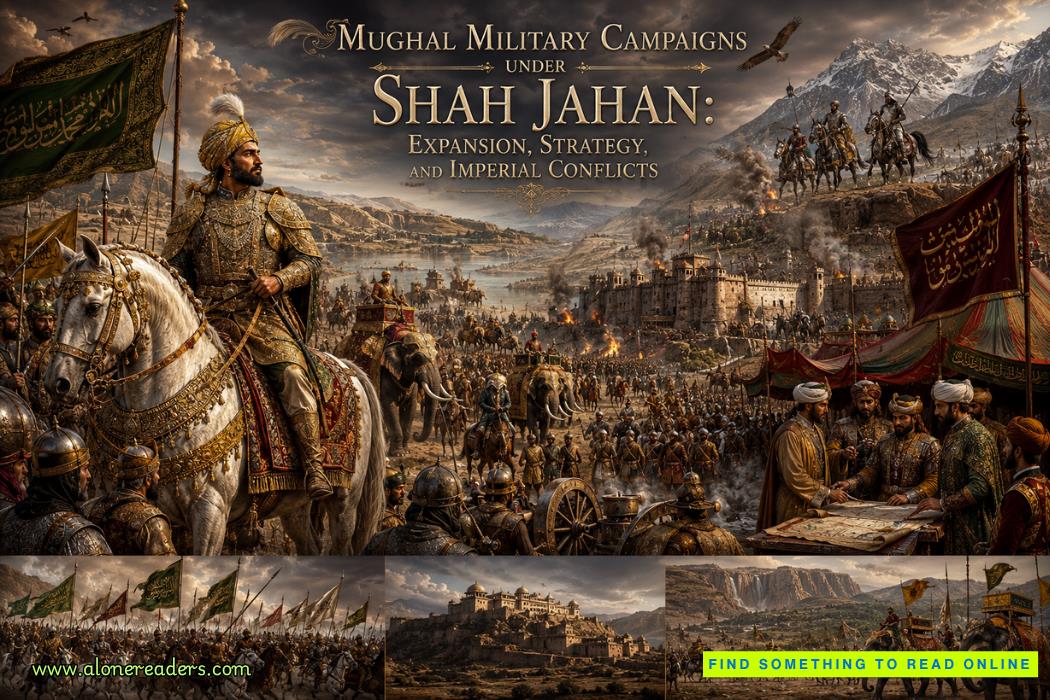
The reign of Shah Jahan, often remembered for architectural brilliance and imperial luxury, was equally marked by intense and calculated military activity. Beneath the polished surface of marble palaces and refined court culture lay a ruler deeply invested in territorial expansion, political control, and military prestige. Shah Jahan's military campaigns were not random acts of aggression but carefully structured efforts to consolidate Mughal authority and extend imperial influence across South Asia and beyond. His reign reveals a ruler balancing ambition with strategic necessity, often navigating complex geopolitical landscapes.
From the moment he ascended the throne in 1628, Shah Jahan inherited both opportunities and challenges. The Mughal Empire was vast but not entirely secure. Several regions, especially in the Deccan and Central Asia, required constant attention. The emperor viewed military campaigns as essential tools not only for expansion but also for maintaining internal stability and projecting imperial strength. His campaigns reflected a combination of inherited imperial policy and his own vision of restoring Mughal dominance in contested regions.
One of the most significant theaters of Shah Jahan's military operations was the Deccan. The Deccan sultanates, particularly Ahmadnagar, Bijapur, and Golconda, had long been sources of tension for the Mughal state. Shah Jahan adopted a more aggressive stance compared to his predecessors, aiming to bring these semi-independent kingdoms firmly under Mughal control. The campaign against Ahmadnagar became a defining moment in his early reign. By 1633, Mughal forces had effectively dismantled the Nizam Shahi dynasty, integrating its territories into the empire.
However, the conquest of Ahmadnagar did not immediately stabilize the region. The Deccan remained a complex political environment, with local powers, shifting alliances, and emerging resistance movements. Shah Jahan responded with a mixture of military pressure and diplomatic negotiation. His policy toward Bijapur and Golconda demonstrated calculated restraint combined with strategic dominance. Rather than outright annexation, he imposed treaties that ensured tribute payments and political submission while allowing these states limited autonomy.
The Mughal-Deccan campaigns were marked by logistical sophistication and military innovation. The use of heavy artillery, disciplined infantry, and elite cavalry units gave the Mughal army a distinct advantage. War elephants, mobile cannons, and fortified encampments became symbols of Mughal military might. Yet, despite these strengths, the Deccan campaigns were costly and often prolonged, revealing the limits of imperial expansion.
Another crucial aspect of Shah Jahan's military ambition was his focus on Central Asia. The Mughal dynasty traced its origins to Timur and maintained a symbolic connection to the region. Shah Jahan sought to reclaim ancestral territories such as Balkh and Badakhshan, viewing them as both strategically and emotionally significant. The Central Asian campaigns represented a blend of nostalgia and geopolitical strategy.
In 1646, Mughal forces successfully occupied Balkh, marking a rare moment of triumph in Central Asia. However, holding these territories proved far more challenging than conquering them. The harsh climate, unfamiliar terrain, and constant threats from Uzbek forces created immense difficulties. Supply lines were stretched thin, and maintaining control required continuous military presence. The Balkh campaign ultimately exposed the limitations of Mughal power beyond the Indian subcontinent.
The subsequent retreat from Balkh and Badakhshan highlighted the challenges of sustaining distant conquests. Despite initial victories, Shah Jahan's Central Asian ambitions did not yield lasting results. However, these campaigns were not failures in a broader sense. They demonstrated the emperor's willingness to assert Mughal presence beyond traditional boundaries and reinforced the empire's image as a formidable military power.
Closer to home, Shah Jahan also dealt with internal conflicts and rebellions. The Mughal Empire, despite its grandeur, was not immune to dissent. Regional governors, local chieftains, and rival factions occasionally challenged imperial authority. The emperor's response to rebellion was swift and decisive, emphasizing discipline and central control. His military campaigns within the empire ensured that no significant threat could destabilize his rule.
One notable internal challenge was the rebellion of Khan Jahan Lodi, a former Mughal noble who defected and sought support in the Deccan. Shah Jahan pursued him relentlessly, demonstrating both personal determination and strategic precision. The eventual defeat of Lodi reinforced the message that loyalty to the emperor was non-negotiable. Such campaigns strengthened the administrative and military cohesion of the empire.
The Mughal military under Shah Jahan was not merely a fighting force but a highly organized institution. Commanders were selected based on loyalty, competence, and experience. The mansabdari system continued to play a crucial role in structuring the army, ensuring a steady supply of troops and resources. This system allowed Shah Jahan to mobilize large armies quickly while maintaining centralized control.
Technology and engineering also played a vital role in his campaigns. Siege warfare became increasingly sophisticated, with the use of advanced artillery and strategic fortifications. Mughal engineers constructed elaborate trenches, tunnels, and siege platforms to overcome fortified cities. The emphasis on engineering excellence gave the Mughal army a decisive edge in prolonged conflicts.
Naval power, though less prominent, was not entirely absent from Shah Jahan's military strategy. Coastal regions and trade routes required protection, and the empire maintained a limited naval presence to safeguard its interests. Control of maritime trade indirectly supported military campaigns by ensuring economic stability and resource availability.
The financial aspect of Shah Jahan's campaigns cannot be overlooked. Warfare required immense resources, and the emperor relied on a robust revenue system to sustain his military ambitions. Land revenue, trade taxes, and tribute from subordinate states funded the army and its operations. The economic strength of the Mughal Empire under Shah Jahan enabled prolonged campaigns without immediate collapse.
However, this heavy reliance on revenue also placed pressure on the population. Increased taxation and resource extraction sometimes led to local discontent. While Shah Jahan managed to maintain overall stability during his reign, these underlying tensions would later contribute to challenges faced by his successors. Military expansion came at a cost that extended beyond the battlefield.
Another defining feature of Shah Jahan's military policy was his emphasis on imperial prestige. Campaigns were not only about territorial gain but also about projecting power and legitimacy. Victories were celebrated through court ceremonies, official chronicles, and monumental architecture. The image of an invincible emperor was carefully cultivated through both military success and cultural expression.
The integration of newly conquered territories required careful administration. Shah Jahan ensured that military victories were followed by effective governance. Provincial governors were appointed, revenue systems were established, and local elites were incorporated into the imperial framework. This combination of military conquest and administrative integration was key to sustaining Mughal dominance.
Despite his successes, Shah Jahan's military campaigns also revealed certain limitations. The inability to permanently secure Central Asian territories and the ongoing challenges in the Deccan indicated that expansion had its boundaries. The Mughal Empire, while powerful, was not invincible. These limitations would become more pronounced in the later years of his reign and during the rule of his successors.
The legacy of Shah Jahan's military campaigns is complex and multifaceted. On one hand, he strengthened the empire, expanded its territories, and reinforced its authority. On the other hand, the costs of continuous warfare and the strain on resources created vulnerabilities. His reign represents both the height of Mughal power and the beginning of subtle structural challenges.
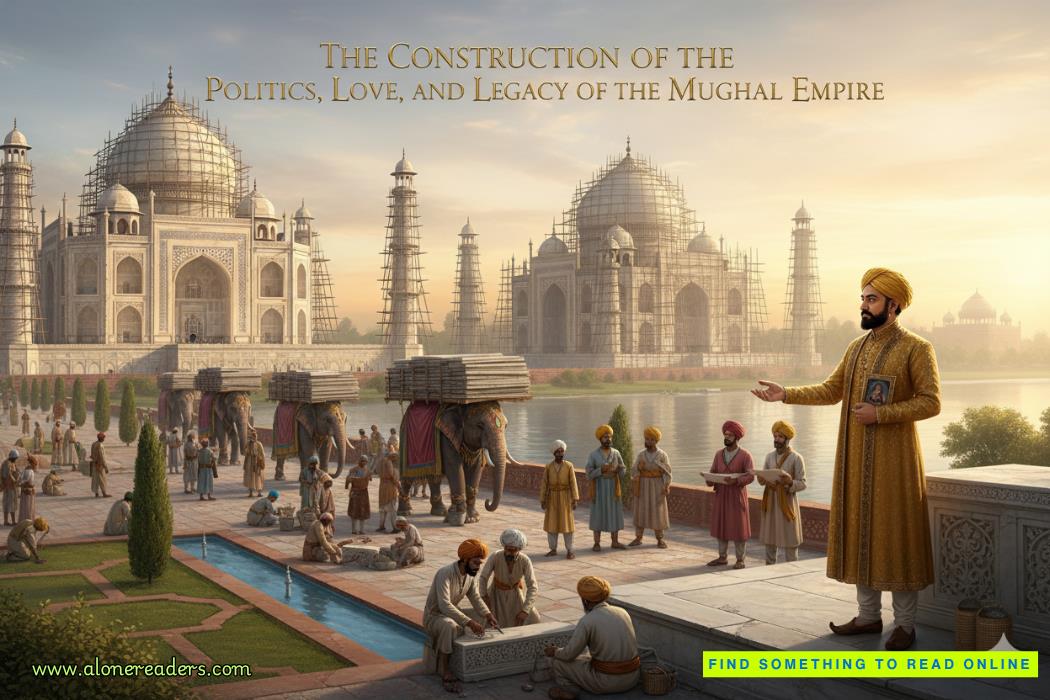
In examining Shah Jahan's military campaigns, it becomes clear that his rule cannot be defined solely by architectural achievements. The same emperor who commissioned the Taj Mahal also commanded vast armies, planned intricate campaigns, and navigated complex political landscapes. His military legacy is an essential part of understanding the Mughal Empire at its peak.
Ultimately, Shah Jahan's approach to warfare combined ambition, strategy, and pragmatism. He sought to expand the empire while maintaining control, to assert dominance while managing alliances, and to project strength while sustaining stability. This delicate balance defined his reign and shaped the trajectory of the Mughal Empire for years to come.



 The Hundred Days Offensive: How the Allies Defeated Germany in World War I
 The Second Battle of the Marne: The Turning Point of World War I in 1918
 The Spring Offensive of 1918: Germany's Final Gamble to Win World War I
 The Treaty of Brest-Litovsk: How Russia Left World War I
 The Russian Revolution and World War I: How War Brought Down the Tsar
 The Zimmermann Telegram Explained: Germany's Secret Offer to Mexico in World War I










