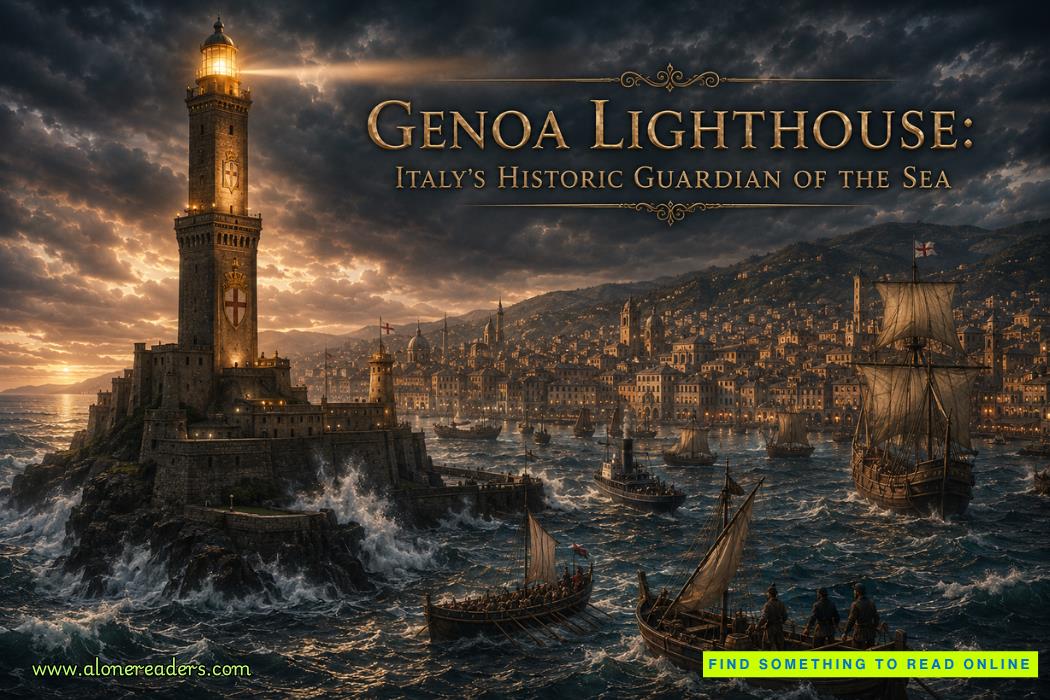
The history of maritime civilization is inseparable from the history of lighthouses. Long before satellite navigation, radar systems, and electronic communication transformed seafaring, sailors depended upon towering coastal beacons to survive the dangers of open water. Across the Mediterranean world, few structures symbolize this relationship between humanity and the sea more powerfully than the Genoa Lighthouse, widely known as the Lanterna di Genova. Rising above the harbor of Genoa in northern Italy, this extraordinary structure has watched over sailors, merchants, explorers, and empires for centuries. More than simply a navigational tower, it became a symbol of commerce, military power, urban identity, and Mediterranean endurance.
The Genoa Lighthouse stands among the oldest continuously operating lighthouses in the world. Its survival through wars, political upheavals, storms, invasions, and technological revolutions makes it one of the most remarkable maritime structures ever built. For centuries, its light represented safety to sailors approaching one of Europe’s most important ports. It guarded commercial wealth, protected naval movements, and symbolized the maritime ambitions of Genoa during periods when the city-state rivaled Venice and other Mediterranean powers.
The city of Genoa itself occupies a naturally strategic position along the Ligurian coast. Surrounded by steep hills and facing the Mediterranean Sea, the harbor became a center of maritime trade during the medieval period. Ships from North Africa, the Byzantine Empire, Spain, France, and the Near East regularly entered Genoese waters carrying silk, spices, metals, grain, and luxury goods. As maritime commerce expanded, so too did the need for reliable navigation systems. The coastline around Genoa could be dangerous, particularly during storms or periods of dense fog. Rocky shores and unpredictable weather conditions posed serious threats to incoming vessels. In such an environment, the establishment of a permanent lighthouse became not merely useful but essential.
The origins of the Genoa Lighthouse stretch back to the medieval era. Historical evidence suggests that an early beacon tower existed near the harbor by the twelfth century, though the current structure largely dates from later reconstructions. Initially, the lighthouse functioned using open fires fueled by wood and other combustible materials. These primitive illumination systems required constant maintenance and were vulnerable to weather conditions. Nevertheless, even a modest light source could mean the difference between survival and disaster for sailors attempting nighttime approaches to the harbor.
As Genoa expanded into a dominant maritime republic during the Middle Ages, the lighthouse gained increasing strategic importance. The Republic of Genoa controlled major trade networks across the Mediterranean and Black Sea. Its merchants accumulated immense wealth, while its fleets projected military and commercial influence far beyond Italy. The harbor became crowded with trading vessels, warships, and foreign merchants. The lighthouse evolved alongside this economic expansion, becoming a critical part of the city’s infrastructure.
The current tower was substantially rebuilt in the sixteenth century after suffering damage during conflicts and military operations. Standing approximately seventy-seven meters tall when measured from its base rock foundation, the lighthouse became one of the tallest traditional lighthouses of its time. Its massive stone construction reflected both engineering sophistication and the political confidence of Genoa during the Renaissance period. Unlike many smaller coastal beacons, the Lanterna was designed not only for visibility but also for durability and symbolic dominance over the harbor skyline.
Architecturally, the Genoa Lighthouse is remarkable for its distinctive two-square-tower design. The structure consists of stacked sections narrowing upward, creating an imposing vertical silhouette visible from great distances at sea. Thick masonry walls allowed the tower to withstand severe weather and military threats. The design reflects medieval defensive architecture as much as navigational engineering. This combination was intentional. In earlier centuries, lighthouses often served dual purposes as observation posts and defensive structures, particularly in politically unstable maritime regions.
The placement of the lighthouse was equally significant. Constructed upon a rocky promontory overlooking the harbor entrance, the tower achieved maximum visibility across surrounding waters. Sailors approaching Genoa from the Mediterranean could identify the beacon long before reaching the harbor itself. For generations of seafarers, the sight of the Lanterna represented relief, survival, commerce, and the promise of safe anchorage.
The illumination methods used by the lighthouse evolved dramatically over the centuries. Early fires gradually gave way to more advanced oil lamps and reflective systems. By the modern era, Fresnel lens technology and electric lighting vastly increased the range and reliability of the beacon. Each technological improvement reflected broader developments in maritime engineering and navigation science. Yet despite these changes, the essential mission of the lighthouse remained constant: guiding vessels safely through dangerous waters.
One of the most fascinating aspects of the Genoa Lighthouse is its close relationship with the identity of Genoa itself. The structure became deeply embedded within the cultural imagination of the city. It appeared in paintings, maritime charts, civic emblems, and literary references. Residents regarded it not merely as infrastructure but as a guardian watching over the harbor and the people whose lives depended upon maritime trade.
This emotional significance intensified because the economy of Genoa was fundamentally tied to the sea. Shipbuilding, naval warfare, merchant banking, fishing, and overseas commerce formed the foundation of the city’s prosperity. Thousands of families depended directly or indirectly upon maritime activity. Every departing ship carried economic hopes, while every returning vessel brought wealth, news, and connection to distant worlds. The lighthouse became a silent witness to these rhythms of departure and return.
The Lanterna also played an important military role during periods of conflict. Genoa experienced numerous wars involving rival Italian powers, foreign kingdoms, and naval empires. Because the lighthouse overlooked strategic harbor approaches, controlling it often carried tactical significance. During sieges and bombardments, the tower sometimes suffered damage, yet it was repeatedly restored due to its immense practical value. Its survival through repeated crises demonstrates the determination of Genoa’s rulers and citizens to preserve this essential maritime asset.
The lighthouse’s role in navigation extended far beyond local fishing activity. Genoa occupied a central position within Mediterranean trade routes connecting western Europe to eastern markets. Ships carrying valuable cargo depended upon accurate coastal navigation to avoid shipwrecks. Before modern navigation instruments, sailors relied heavily on recognizable landmarks, stars, coastal maps, and lighthouse signals. The Lanterna became one of the most trusted navigational markers in the region.
Weather conditions in the Ligurian Sea could be particularly treacherous. Sudden storms, rough currents, and limited nighttime visibility posed continuous threats to maritime traffic. In such circumstances, the powerful light of the Genoa Lighthouse often saved lives. Captains approaching the harbor during storms would look desperately for the beacon’s glow cutting through darkness and fog. For countless sailors across centuries, the Lanterna represented the thin line between catastrophe and safety.
The engineering resilience of the structure is especially impressive considering its age. Maintaining a massive stone tower exposed constantly to saltwater air, strong winds, and seismic activity required continuous repairs and modernization. Over centuries, engineers reinforced masonry, upgraded lighting systems, improved internal stairways, and adapted the structure to changing maritime technologies. The lighthouse therefore reflects not a frozen relic of the past but a continuously evolving piece of functional engineering history.
The internal structure of the lighthouse is equally fascinating. Spiral staircases climb through the tower, connecting observation levels and service areas. Historically, lighthouse keepers maintained the illumination systems manually, often under extremely difficult conditions. Their responsibilities included fueling lamps, cleaning lenses, monitoring weather conditions, and ensuring uninterrupted operation during storms. Lighthouse service demanded discipline, endurance, and technical knowledge. In many ways, the keepers became guardians not only of the tower itself but also of the sailors depending upon its light.
As navigation technology advanced during the nineteenth and twentieth centuries, the role of traditional lighthouses began to change. Steamships, improved nautical charts, radio communication, radar, and eventually GPS systems reduced dependence upon visual coastal navigation. Nevertheless, historic lighthouses retained operational and symbolic importance. The Genoa Lighthouse adapted to these changes while preserving its historical identity.
Today, the Lanterna remains one of Genoa’s most recognizable landmarks. Although modern ships possess sophisticated navigation systems, the lighthouse still functions as an active maritime beacon. This continuity creates a powerful connection between past and present. Few structures in Europe have served essentially the same purpose for so many centuries while remaining continuously associated with their original maritime mission.
The lighthouse has also become a major cultural and tourism destination. Visitors from around the world travel to Genoa to experience its maritime heritage, and the Lanterna stands at the center of that historical narrative. Museums and exhibitions associated with the site explore the history of navigation, the development of lighthouse technology, and the maritime expansion of Genoa itself.
Tourists climbing the tower encounter breathtaking panoramic views of the harbor, the Mediterranean coastline, and the urban landscape of Genoa. These views help visitors understand why the location held such strategic importance throughout history. From the upper sections of the lighthouse, one can observe commercial shipping activity, historic harbor districts, modern port infrastructure, and the vast sea routes that shaped Genoa’s identity for centuries.
The surrounding region also contributes to the lighthouse’s appeal. Genoa’s old city contains narrow medieval streets, historic churches, Renaissance palaces, and maritime museums that together create one of Italy’s richest historical environments. The lighthouse functions as both a physical monument and a symbolic gateway into this broader historical landscape.
Preservation efforts surrounding the Lanterna have become increasingly important in recent decades. Historic maritime structures face numerous threats including environmental deterioration, urban expansion, pollution, and changing economic priorities. Conservation specialists work continuously to maintain the tower’s structural integrity while respecting its historical authenticity. Restoration projects carefully balance modern safety requirements with preservation of original architectural features.
The lighthouse also serves educational purposes by helping modern audiences understand premodern navigation. In an era dominated by digital systems, it can be difficult to appreciate the immense challenges faced by earlier sailors. Structures like the Genoa Lighthouse provide tangible reminders of the human ingenuity required to sustain maritime civilization before electronic technology existed. They reveal how engineering, geography, commerce, and survival became deeply interconnected.
The symbolic power of the Genoa Lighthouse extends beyond Italy. Throughout maritime history, lighthouses have represented hope, guidance, resilience, and endurance. The Lanterna embodies all of these themes in particularly dramatic form because of its extraordinary longevity. It survived medieval warfare, Renaissance rivalries, industrial transformation, and global modernization while continuing to fulfill its essential role.
There is also a profound psychological dimension to historic lighthouses. Standing isolated against storms and darkness, they symbolize stability amid uncertainty. For sailors spending weeks or months at sea, the appearance of a familiar beacon often carried enormous emotional significance. It marked the transition from danger toward safety, from isolation toward civilization. The Genoa Lighthouse became one of the Mediterranean’s greatest symbols of that emotional reassurance.
The connection between the lighthouse and the broader history of exploration is equally significant. Genoa itself was associated with major maritime figures including Christopher Columbus, who was born in the city. During the great age of exploration, Genoese merchants and navigators participated actively in expanding European maritime networks. Ships departing from or returning to Genoa passed beneath the watchful presence of the Lanterna, linking the lighthouse indirectly to global historical transformations.
Modern photography and cinematic representations have further elevated the lighthouse’s cultural status. Its dramatic silhouette rising above the sea makes it one of the most visually striking maritime structures in Europe. At sunset or during storms, the tower creates an atmosphere of timeless maritime grandeur. Artists and historians alike continue to view it as a masterpiece of coastal architecture and symbolic design.
Despite centuries of change, the essential experience of approaching Genoa by sea remains deeply connected to the lighthouse. Ships entering the harbor today still encounter the towering presence that generations before them recognized from afar. This continuity across time gives the Lanterna extraordinary historical depth. It is not merely a monument commemorating the past; it remains an active participant in the living maritime identity of Genoa.
The Genoa Lighthouse ultimately represents far more than a navigational structure. It embodies the relationship between humanity and the sea, between engineering and survival, between commerce and civilization. Through centuries of storms, wars, and transformation, it continued to shine across Mediterranean waters, guiding sailors toward safety and prosperity.
As one of the world’s great historic lighthouses, the Lanterna di Genova stands not only as Italy’s guardian of the sea but also as a timeless symbol of endurance, maritime ambition, and human ingenuity.



 Château de Vincennes: France’s Forgotten Royal Fortress and Medieval Stronghold
 Château de Carcassonne: Europe’s Greatest Medieval Citadel and Fortress
 Château de Chenonceau: The Castle Built by Remarkable Women
 Château de Chambord: France’s Magnificent Renaissance Castle and Architectural Wonder
 Tehri Dam: India's Tallest Dam and the Debate Behind It
 Bhakra Nangal Dam: India's Temple of Modern Development