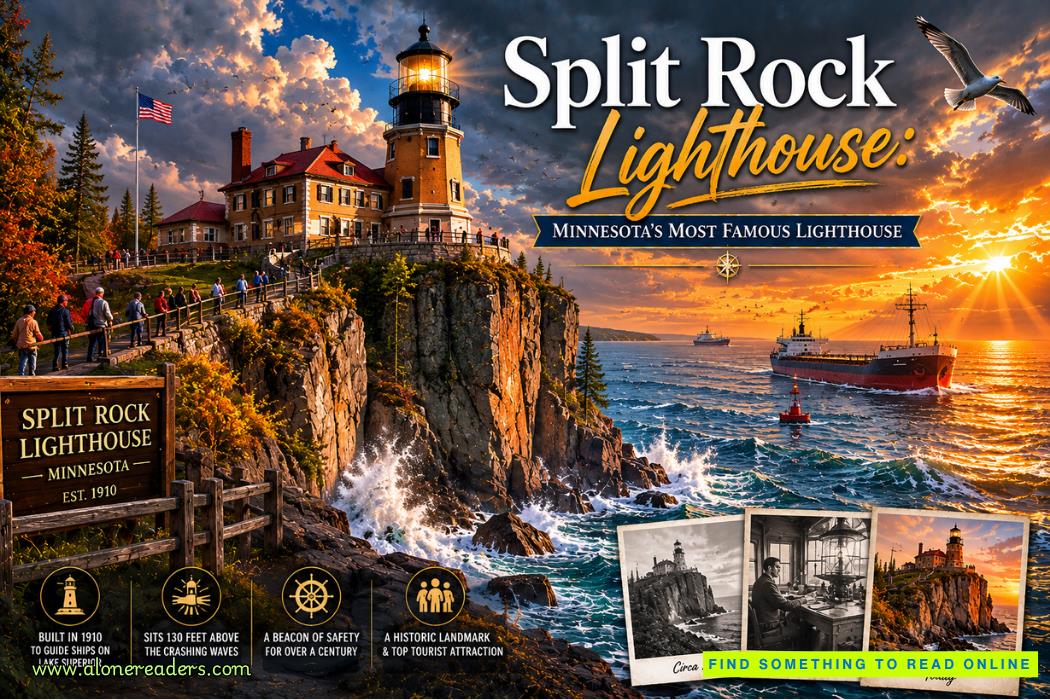
Split Rock Lighthouse stands among the most recognizable and celebrated lighthouses in North America. Perched dramatically atop a rugged cliff overlooking the vast waters of Lake Superior, it has become an enduring symbol of maritime history, engineering achievement, and the enduring relationship between humans and one of the world's largest freshwater lakes. Its striking location, historic significance, and remarkable preservation have transformed it from a practical navigational aid into one of Minnesota’s most treasured landmarks.
The story of Split Rock Lighthouse begins with the immense challenges presented by Lake Superior itself. Although often called a lake, Superior possesses many characteristics more commonly associated with an inland sea. Its enormous size allows powerful storms to develop rapidly, producing waves that can reach heights comparable to those found in ocean environments. During the nineteenth and early twentieth centuries, increasing commercial shipping traffic carried iron ore, grain, timber, and manufactured goods across the Great Lakes. These cargoes were essential to the industrial development of the United States, making safe navigation on Lake Superior a matter of economic importance.
The stretch of shoreline near Split Rock was particularly dangerous. The rocky coast featured hidden reefs, steep cliffs, and unpredictable weather conditions. Dense fog, snowstorms, and sudden gales frequently reduced visibility, creating hazardous circumstances for mariners. Despite advances in navigation during the late nineteenth century, many ships still relied heavily upon visual landmarks and lighthouses to determine their position.
The event that ultimately led to the construction of Split Rock Lighthouse occurred in November 1905. A devastating storm swept across Lake Superior with tremendous force. Several vessels were wrecked or severely damaged along the North Shore. The losses shocked both shipping companies and government authorities. The disaster highlighted the urgent need for a powerful navigational beacon in the region.
Following extensive evaluation, engineers selected a dramatic cliff-top location approximately 130 feet above the lake. While the site offered exceptional visibility for the lighthouse beacon, it also presented significant construction challenges. Building materials, equipment, and workers had to be transported to an isolated and rugged section of shoreline where infrastructure was minimal.
Construction began in 1909 under the supervision of the United States Lighthouse Service. Workers faced difficult terrain, harsh weather conditions, and logistical complications. Materials often arrived by boat and were lifted from the shoreline to the cliff above using specially designed hoisting systems. Every component of the lighthouse complex required careful planning and execution.
When completed in 1910, Split Rock Lighthouse represented one of the most sophisticated lighthouse installations in the Great Lakes region. The project included not only the lighthouse tower itself but also a complete operational station consisting of residences for lighthouse keepers, storage facilities, oil houses, and support structures. The station was designed to function independently in a remote environment where outside assistance might be unavailable during severe weather.
One of the reasons Split Rock Lighthouse became so important was its strategic position along major shipping routes. During the early twentieth century, Lake Superior served as a crucial transportation corridor linking mining districts, industrial centers, and international trade networks. Thousands of vessels traversed these waters annually.
The lighthouse's powerful beacon provided reassurance to ship captains navigating dangerous coastal waters. In periods of darkness, fog, and storms, the light served as a critical point of reference. Mariners could determine their position and make course corrections before approaching hazardous reefs or shorelines. The beacon significantly reduced navigational risks in one of the lake's most treacherous areas.
Beyond its practical role, Split Rock Lighthouse quickly gained a reputation among sailors as a symbol of safety and survival. For crews battling heavy seas and poor visibility, seeing the lighthouse beam often meant they had successfully reached a safer section of their journey. This emotional connection between mariners and the lighthouse contributed significantly to its enduring legacy.
Architecturally, Split Rock Lighthouse represents an outstanding example of early twentieth-century lighthouse design. The tower rises approximately fifty-four feet above its foundation and was constructed using reinforced concrete. This material offered durability and resistance against the severe weather conditions characteristic of the Lake Superior region.
The lighthouse's pale exterior creates a striking contrast against the dark cliffs and deep blue waters surrounding it. Its design emphasizes functionality while maintaining a sense of elegance and permanence. The tower's proportions are carefully balanced, allowing it to remain visually dominant despite the dramatic natural landscape.
The surrounding keeper's houses were designed with practicality in mind. Lighthouse keepers and their families often lived in isolation for extended periods. As a result, the residential structures needed to provide comfort, durability, and efficient use of space. These buildings formed a small community where lighthouse personnel could live and work year-round.
Perhaps the most remarkable engineering feature of Split Rock Lighthouse was its original optical system. The lighthouse employed a third-order Fresnel lens, one of the most advanced lighthouse technologies of its era. Developed by French physicist Augustin-Jean Fresnel during the nineteenth century, Fresnel lenses revolutionized maritime navigation.
Unlike conventional lenses, a Fresnel lens uses multiple concentric prisms to focus and project light over extraordinary distances. This design dramatically reduced weight while maximizing efficiency. The Split Rock lens could project a powerful beam visible for many miles across Lake Superior.
The Fresnel lens was not merely a light source—it was a masterpiece of optical engineering that transformed a relatively small flame into a beacon capable of guiding ships across vast expanses of water.
Initially, the lighthouse used kerosene-powered illumination. Later technological improvements introduced electric systems, increasing reliability and reducing maintenance requirements. The transition reflected broader changes occurring throughout lighthouse operations worldwide during the twentieth century.
Operating the lighthouse required considerable dedication. Lighthouse keepers maintained the light, monitored weather conditions, maintained equipment, and ensured the station remained operational throughout the year. Their responsibilities extended beyond simple observation.
Winter conditions around Lake Superior could be especially demanding. Snow accumulation, ice storms, freezing temperatures, and isolation created significant hardships. Keepers often worked long hours under difficult circumstances to ensure the beacon remained visible whenever ships required guidance.
The lighthouse also incorporated innovative support systems for its remote location. Water collection, fuel storage, communication infrastructure, and supply management all required careful planning. The station functioned as a self-contained operational facility capable of supporting personnel through extended periods of isolation.
As maritime technology evolved, the role of traditional lighthouses gradually changed. Radio navigation, radar systems, electronic charts, and satellite-based positioning reduced dependence on visual beacons. By the mid-twentieth century, many lighthouse stations across North America faced declining operational importance.
Split Rock Lighthouse was no exception. In 1969, the lighthouse beacon was officially deactivated as a navigational aid. Advances in modern navigation systems had largely replaced the need for its original function. For many historic structures, deactivation often marked the beginning of deterioration or abandonment.
Fortunately, public appreciation for Split Rock Lighthouse had already begun to grow. Historians, preservationists, and local communities recognized its cultural and historical significance. Rather than allowing the station to fall into disrepair, efforts were undertaken to preserve the site for future generations.
The preservation movement proved highly successful. Extensive restoration projects sought to return the lighthouse and surrounding buildings to their historic appearance. Original architectural details were carefully maintained whenever possible. Historical records guided reconstruction efforts, ensuring authenticity throughout the preservation process.
Today, Split Rock Lighthouse is operated as a historic site and museum. Visitors can explore the grounds, learn about lighthouse operations, and experience one of the most iconic landscapes in the Great Lakes region. Educational exhibits provide insight into maritime history, engineering innovations, and the lives of lighthouse keepers.
One of the most fascinating aspects of the visitor experience is the opportunity to view the restored Fresnel lens. Many visitors are surprised by its size, complexity, and beauty. The intricate arrangement of glass prisms demonstrates the extraordinary craftsmanship involved in nineteenth- and early twentieth-century optical engineering.
The surrounding natural environment further enhances the site's appeal. The lighthouse sits within an area renowned for dramatic scenery, including rocky cliffs, dense forests, waterfalls, and panoramic views of Lake Superior. Seasonal changes transform the landscape throughout the year.
Summer brings vibrant greenery and ideal sightseeing conditions. Autumn attracts visitors eager to witness spectacular fall colors along Minnesota's North Shore. Winter creates a completely different atmosphere, with snow-covered cliffs and ice formations producing breathtaking scenes. Spring introduces powerful waterfalls and renewed wildlife activity.
Few historic landmarks combine engineering heritage and natural beauty as effectively as Split Rock Lighthouse.
The lighthouse has also become deeply embedded within Minnesota's cultural identity. Its image appears in tourism campaigns, educational materials, artwork, photography collections, and regional branding. For many people, it serves as an instantly recognizable symbol of the state's connection to Lake Superior.
Photographers from around the world visit the site to capture its unique setting. The combination of towering cliffs, expansive water views, changing weather conditions, and historic architecture creates endless visual opportunities. Sunrise and sunset are especially popular times for photography, when dramatic lighting enhances the lighthouse's silhouette.
The site hosts numerous educational programs and special events throughout the year. Historical demonstrations, guided tours, maritime lectures, and commemorative lighting ceremonies help visitors understand the lighthouse's significance. These activities connect modern audiences with the experiences of those who once depended upon the beacon for safe navigation.
The annual lighting of the beacon remains particularly meaningful. Although the lighthouse no longer serves its original navigational purpose, ceremonial lighting events commemorate important historical anniversaries and maritime traditions. These occasions attract visitors who wish to experience the lighthouse much as sailors once saw it.
The broader significance of Split Rock Lighthouse extends beyond local history. It represents a period when human ingenuity confronted the challenges of geography, weather, and transportation. The structure embodies the technological advancements that supported economic development throughout the Great Lakes region.
Its preservation demonstrates the value of protecting historic infrastructure. While modern navigation systems have surpassed traditional lighthouse technology, the physical structures remain important reminders of earlier generations' achievements. They tell stories of engineering innovation, public service, maritime commerce, and everyday perseverance.
Split Rock Lighthouse endures because it represents far more than a building. It symbolizes safety, resilience, craftsmanship, and humanity's determination to navigate even the most challenging environments.
More than a century after its completion, the lighthouse continues to inspire visitors from around the world. Standing atop its cliff overlooking the immense waters of Lake Superior, it remains a powerful reminder of an era when a single beam of light could mean the difference between disaster and safe passage. Through its remarkable history, sophisticated engineering, crucial navigational role, and enduring tourism appeal, Split Rock Lighthouse has earned its place as Minnesota's most famous lighthouse and one of the greatest lighthouse landmarks in North American history.



 Château de Vincennes: France’s Forgotten Royal Fortress and Medieval Stronghold
 Château de Carcassonne: Europe’s Greatest Medieval Citadel and Fortress
 Château de Chenonceau: The Castle Built by Remarkable Women
 Château de Chambord: France’s Magnificent Renaissance Castle and Architectural Wonder
 Tehri Dam: India's Tallest Dam and the Debate Behind It
 Bhakra Nangal Dam: India's Temple of Modern Development