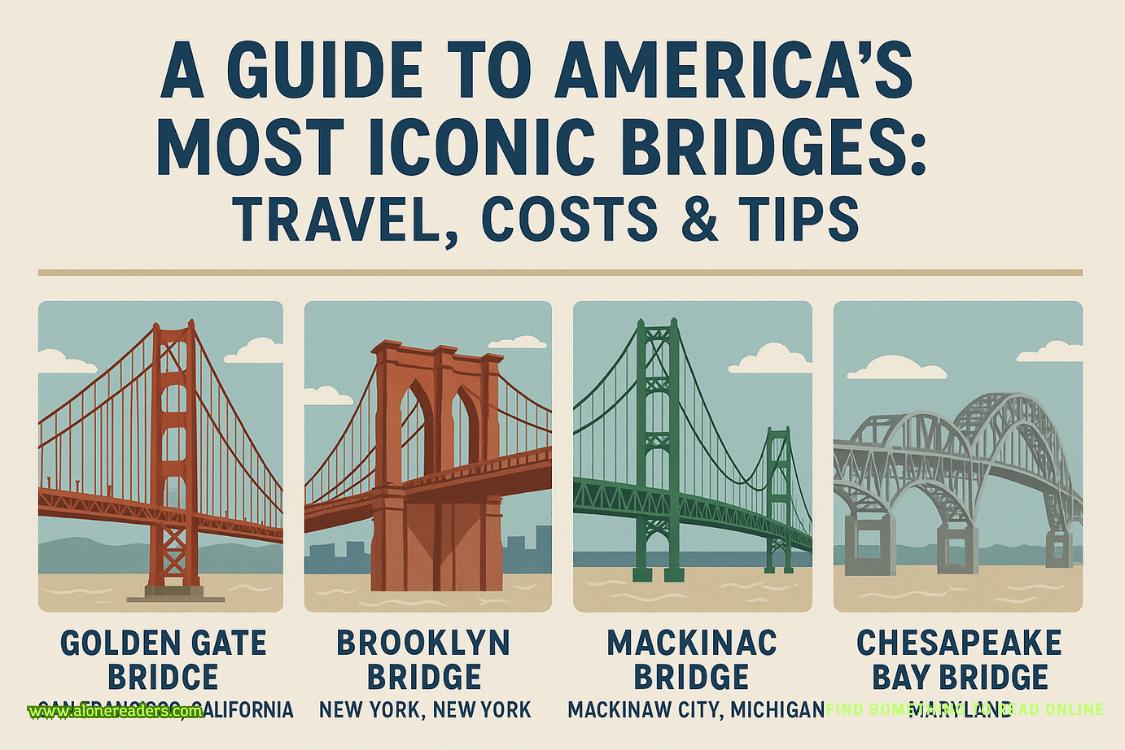
Bridges are not just feats of engineering—they are symbols of connection, history, and artistry. In the United States, several bridges have become world-famous, drawing travelers for their architectural beauty, historical significance, and stunning views. From the golden-red towers of the Golden Gate to the historic stone arches of the Brooklyn Bridge, each landmark offers a unique travel experience. This guide takes you through America’s most iconic bridges, covering what makes them special, how to get there, where to stay, what to eat, approximate travel costs, and important travel tips.
Why Visit:
Arguably the most recognized bridge in the world, the Golden Gate Bridge spans the San Francisco Bay in a brilliant International Orange color. Its 1.7-mile length offers breathtaking views of the Pacific Ocean, Alcatraz Island, and the city skyline.
How to Get There:
Nearby Attractions:
Accommodations & Food:
Estimated Cost (2-day trip):
Total: $640–$1,150
Travel Caution:
Expect heavy fog in the morning; bring layers. Avoid crossing the bridge during peak traffic hours if driving.
Why Visit:
Opened in 1883, this hybrid cable-stayed/suspension bridge connects Manhattan and Brooklyn. Walking across offers panoramic views of the Manhattan skyline and the Statue of Liberty.
How to Get There:
Nearby Attractions:
Accommodations & Food:
Estimated Cost (2-day trip):
Total: $560–$1,280
Travel Caution:
Weekends can be extremely crowded. Watch for cyclists on the pedestrian path.
Why Visit:
The longest continuous bridge over water in the world (24 miles) connects Metairie to Mandeville, offering a unique driving experience with endless water views.
How to Get There:
Nearby Attractions:
Accommodations & Food:
Estimated Cost (2-day trip):
Total: $550–$1,020
Travel Caution:
Check weather conditions—visibility can be poor in heavy fog.
Why Visit:
Known as "The Mighty Mac," this suspension bridge links Michigan’s Upper and Lower Peninsulas across the Straits of Mackinac. It’s 5 miles long with views of Lake Michigan and Lake Huron.
How to Get There:
Nearby Attractions:
Accommodations & Food:
Estimated Cost (2-day trip):
Total: $540–$940
Travel Caution:
Strong winds may cause lane closures; check bridge status before traveling.
Why Visit:
This 4.3-mile bridge connects Maryland’s Eastern and Western Shores, offering stunning Chesapeake Bay views.
How to Get There:
Nearby Attractions:
Accommodations & Food:
Estimated Cost (2-day trip):
Total: $530–$990
Travel Caution:
Traffic can be slow during summer weekends—plan travel times accordingly.
America’s iconic bridges are more than just transport links—they are destinations in themselves. From the foggy romance of San Francisco’s Golden Gate to the historical charm of the Brooklyn Bridge, each offers its own cultural experience. Whether you’re walking, cycling, or driving, these bridges provide unique perspectives of their surrounding landscapes and cities. With careful planning, you can make your visit affordable, comfortable, and safe while creating unforgettable memories.



 Unique Australian Wildlife and Where to Find Them: A Complete Travel Guide
 Island Hopping in the Philippines: Ultimate Travel Guide to Paradise Adventures
 Hong Kong Skyline: Best Spots for Stunning Panoramic Views
 The Enchanting Lijiang: A Complete Guide to Its Ancient Alleys, Culture, and Travel Costs
 San Diego: The Ultimate Family Vacation Destination (Beaches, Wildlife, and Budget-Smart Fun)
 Unveiling the Mysteries of the Kazan Kremlin: A Complete Travel Guide to Russia’s Historic Gem