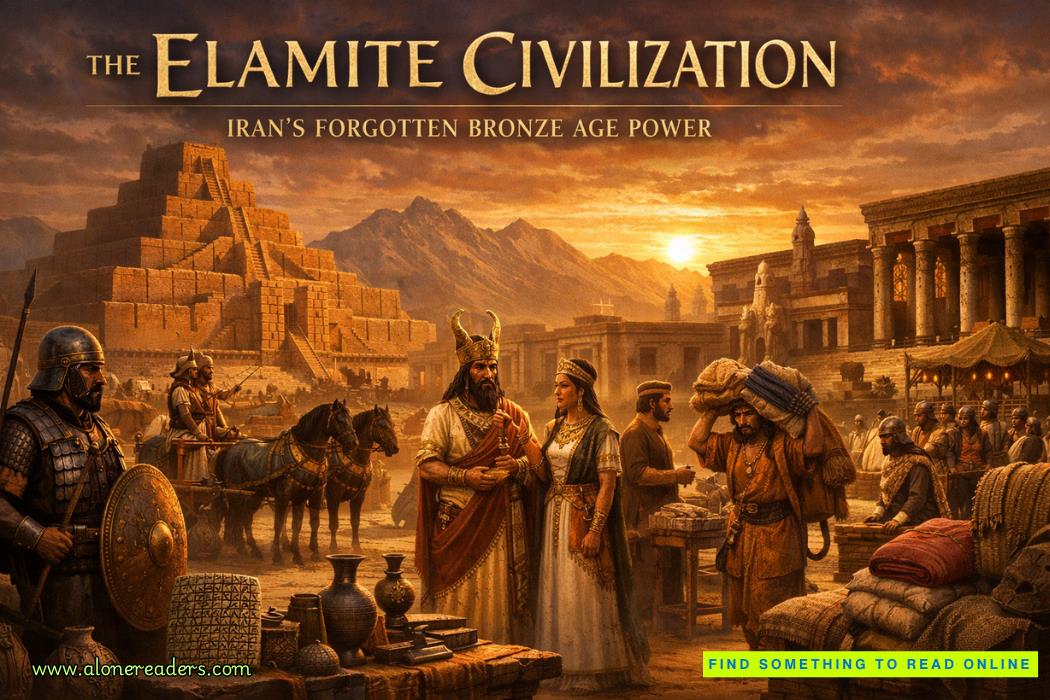
The story of the ancient Near East is often dominated by the towering civilizations of Mesopotamia and Egypt, yet beyond their borders flourished a powerful and enduring culture that shaped regional history for over two millennia. The Elamite civilization, centered in what is now southwestern Iran, stands as one of the most significant yet overlooked Bronze Age powers. Its political resilience, cultural originality, and strategic position between Mesopotamia and the Iranian plateau allowed it to influence trade, warfare, and diplomacy in ways that remain underappreciated even today. To understand Elam is to uncover a civilization that was not merely a peripheral actor but a central force in the ancient world.
Emerging around the late fourth millennium BCE, Elam developed in the fertile lowlands of Khuzestan and the rugged highlands of the Zagros Mountains. Its geography played a crucial role in shaping its identity. Unlike the centralized riverine civilizations of Mesopotamia, Elam was a composite state, consisting of multiple regions such as Susiana, Anshan, and Awan. These regions often maintained a degree of autonomy, yet they were unified under shifting political structures that evolved over centuries. This flexible system allowed Elam to endure repeated invasions and internal transformations while maintaining a distinct cultural identity.
At the heart of Elamite civilization stood the city of Susa, one of the oldest continuously inhabited urban centers in the world. Susa was not only a political capital but also a vibrant hub of trade, administration, and religious activity. Archaeological evidence reveals a city filled with monumental architecture, administrative tablets, and artistic production that rivaled contemporary Mesopotamian centers. Susa functioned as a bridge between worlds, connecting the cultures of Mesopotamia with those of the Iranian plateau and beyond, facilitating the exchange of goods, ideas, and technologies.
The political history of Elam is marked by cycles of expansion, conflict, and revival. During the Early Dynastic and Akkadian periods, Elamite rulers frequently clashed with Mesopotamian powers such as Akkad and later Ur. One of the most notable moments came when the Elamites played a decisive role in the collapse of the Third Dynasty of Ur around 2004 BCE. This event demonstrated not only their military capability but also their strategic understanding of regional power dynamics. Elam was not merely reacting to Mesopotamian expansion—it was actively shaping the balance of power.
The subsequent Middle Elamite period (c. 1500–1100 BCE) represents the zenith of Elamite power and cultural achievement. During this time, rulers such as Untash-Napirisha undertook ambitious construction projects, including the famous religious complex at Chogha Zanbil. This site, with its massive ziggurat and intricate urban planning, stands as one of the best-preserved examples of Elamite architecture. It reflects a sophisticated understanding of engineering, religious symbolism, and statecraft. The construction of such monumental structures was not merely an act of devotion but a statement of political authority and cultural confidence.
Religion in Elam was deeply intertwined with both governance and daily life. The Elamites worshipped a pantheon of deities, with Inshushinak, the patron god of Susa, occupying a central position. Religious practices included temple rituals, offerings, and possibly elaborate funerary traditions. Unlike Mesopotamian religion, which is relatively well-documented, Elamite beliefs remain partially enigmatic due to limited textual evidence. However, surviving inscriptions and artifacts suggest a unique spiritual worldview that emphasized divine kingship and regional sacred traditions. Religion served as a unifying force in a politically diverse landscape, reinforcing the legitimacy of rulers and the cohesion of the state.
Language and writing further distinguish the Elamites from their neighbors. The Elamite language is a linguistic isolate, meaning it is not clearly related to any known language family. This uniqueness underscores the cultural independence of Elam despite its close interactions with Mesopotamia. The use of cuneiform script, adapted for the Elamite language, demonstrates both technological adoption and cultural adaptation. Administrative texts, royal inscriptions, and economic records provide valuable insights into governance, trade, and social organization. The persistence of the Elamite language over centuries reflects a strong sense of identity in the face of external influences.
Economically, Elam benefited from its strategic location along major trade routes. It acted as an intermediary between Mesopotamia and regions rich in natural resources, such as the Iranian plateau and Central Asia. Metals, textiles, and agricultural products flowed through Elamite territories, contributing to its wealth and influence. The control of these trade networks allowed Elamite rulers to exert economic power that complemented their military strength. Trade was not merely a source of prosperity—it was a tool of diplomacy and dominance.
Art and material culture in Elam reveal a civilization that was both innovative and deeply symbolic. Elamite artisans produced intricate metalwork, ceramics, and sculptures that often featured religious motifs and royal iconography. The use of bronze and other materials highlights advanced metallurgical skills, while stylistic elements indicate both indigenous creativity and cross-cultural exchange. The famous statue of Queen Napir-Asu, cast in bronze and weighing over a ton, exemplifies the technical prowess and artistic ambition of Elamite craftsmen. Such works were not only aesthetic achievements but also expressions of political power and divine association.
Despite its strengths, Elam was not immune to decline. The late second and early first millennia BCE saw increasing pressure from emerging powers such as Assyria. Elamite cities were repeatedly targeted in campaigns aimed at controlling the region’s resources and strategic position. The eventual sack of Susa by the Assyrian king Ashurbanipal in the 7th century BCE marked a significant blow to Elamite power. The destruction was so thorough that it effectively ended Elam as a major political entity. Yet even in defeat, Elam’s legacy persisted.
One of the most significant aspects of Elam’s legacy lies in its influence on subsequent Persian civilizations. The Achaemenid Empire, which emerged in the same geographical region, inherited many elements of Elamite administration, culture, and infrastructure. Susa itself became one of the principal capitals of the Persian Empire, demonstrating the continuity of urban and political importance. Elamite administrative practices, including the use of local languages and bureaucratic systems, were integrated into the broader imperial framework. In this sense, Elam was not erased by history—it was transformed and absorbed into a new imperial identity.
The rediscovery of Elam in modern times has been driven largely by archaeological excavations and the decipherment of ancient texts. Sites such as Susa and Chogha Zanbil have provided invaluable evidence of a civilization that was once overshadowed by its more famous neighbors. These discoveries have challenged earlier historical narratives that marginalized Elam, revealing instead a complex and dynamic society with its own distinct trajectory. The study of Elam has reshaped our understanding of the ancient Near East, highlighting the interconnectedness of its cultures and the diversity of its civilizations.
Perhaps the most compelling aspect of Elamite history is its endurance. For over two thousand years, Elam maintained its identity despite constant interaction with powerful neighbors. This resilience was not the result of isolation but of adaptation. Elamite rulers adopted foreign technologies, engaged in diplomatic alliances, and restructured their political systems as needed. Survival in the ancient world required flexibility, and Elam mastered this art.
In reassessing the Elamite civilization, it becomes clear that its relative obscurity is not due to a lack of significance but rather to the limitations of historical focus. Traditional narratives have often prioritized civilizations with abundant textual records or monumental architecture, inadvertently sidelining cultures like Elam that do not fit neatly into these categories. Yet the evidence that does exist paints a picture of a civilization that was both influential and innovative.
The Elamites were pioneers in state formation, masters of strategic geography, and contributors to the cultural and political fabric of the ancient Near East. Their story challenges us to broaden our perspective and recognize that history is not solely shaped by the most visible empires but also by those that operate in the spaces between them. Elam was one such civilization—a bridge, a power, and a legacy that continues to inform our understanding of the ancient world.
In the end, the Elamite civilization stands as a testament to the complexity and diversity of human history. It reminds us that even the most powerful cultures can fade from collective memory, only to be rediscovered and reinterpreted by later generations. By bringing Elam back into the historical spotlight, we gain not only a deeper appreciation of the ancient Near East but also a more nuanced understanding of how civilizations rise, interact, and endure.




 The Hundred Days Offensive: How the Allies Defeated Germany in World War I
 The Second Battle of the Marne: The Turning Point of World War I in 1918
 The Spring Offensive of 1918: Germany's Final Gamble to Win World War I
 The Treaty of Brest-Litovsk: How Russia Left World War I
 The Russian Revolution and World War I: How War Brought Down the Tsar
 The Zimmermann Telegram Explained: Germany's Secret Offer to Mexico in World War I










