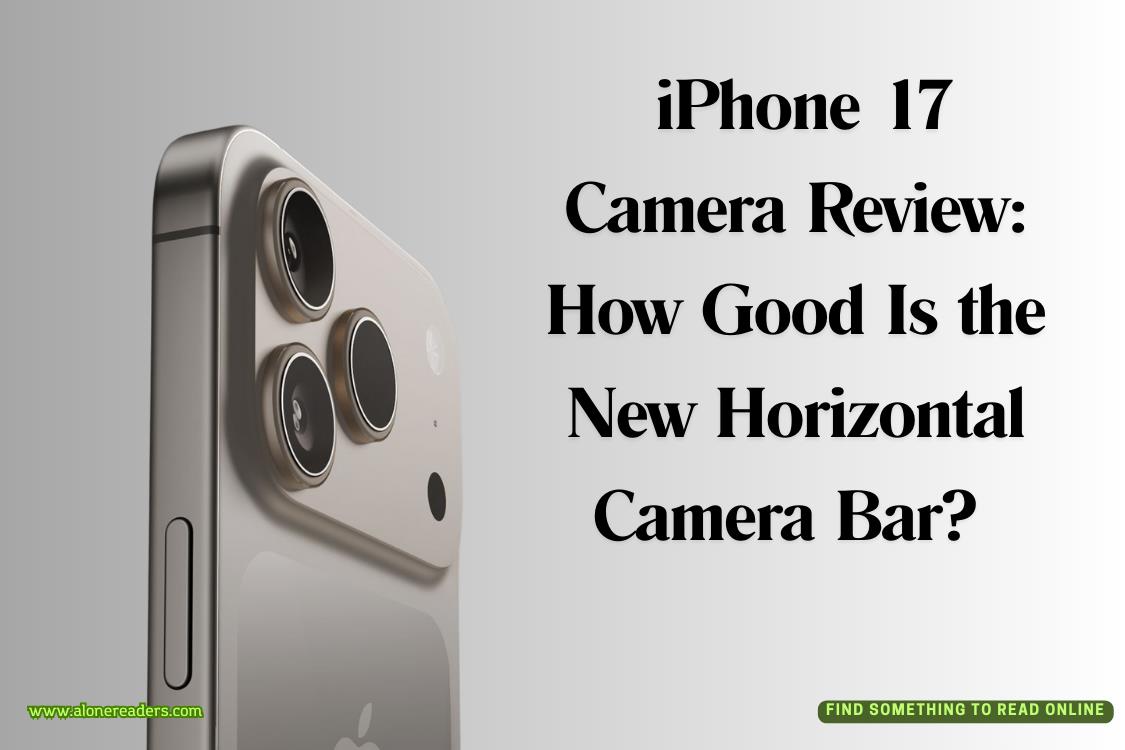
Apple has consistently positioned its iPhone Pro lineup as the gold standard for mobile photography. With the iPhone 17, Apple has introduced its boldest camera design change in years: a full-width horizontal camera bar replacing the traditional stacked vertical lens cluster. This isn’t merely an aesthetic redesign. Apple claims that the wider layout allows for larger sensors, better heat dissipation, and a more balanced shooting experience. But does this radical shift in design translate into meaningful improvements for photographers and videographers? Let’s examine the iPhone 17 camera system in detail.
Why Apple Moved Away from Vertical Clusters
The horizontal bar is designed to eliminate the uneven weight distribution caused by corner-mounted cameras. In previous iPhones, users often felt tilt when holding the phone flat on a table or stabilizer. The bar provides symmetry, allowing for more consistent handling.
Integration of Larger Sensors
A horizontal layout gives engineers more surface area. Apple has used this to fit larger 1-inch primary sensors across the Pro Max model. This sensor size was previously reserved for premium compact cameras, pushing the iPhone 17 into near-DSLR territory in terms of light intake.
Practical Handling Benefits
When shooting in landscape mode, the camera bar acts almost like a natural grip. It reduces finger intrusion and stabilizes hand placement, a subtle but welcome ergonomic improvement.
Primary Wide Sensor
The iPhone 17 Pro Max uses a 1-inch, 48-megapixel wide sensor with f/1.6 aperture. In practice, this delivers sharper images with minimal noise even in dimly lit environments. Shadow retention is dramatically improved compared to the iPhone 16 Pro. Night shots no longer rely heavily on aggressive computational brightening, meaning textures like fabric or skin appear more natural.
Ultra-Wide Enhancements
Apple has upgraded the ultra-wide sensor to 20 megapixels with improved edge correction. Distortion around corners is noticeably reduced, and the color consistency between wide and ultra-wide shots is much closer than before. This makes stitching panoramic images seamless.
Telephoto Advances
The Pro Max variant introduces a 6× periscope zoom, made possible by the horizontal layout. This allows Apple to use a folded lens system that runs across the width of the phone rather than stacking vertically. The result is crisper long-range shots, especially in bright daylight, with minimal chromatic aberration.
Smart HDR 6
Apple’s computational engine has been refined. Smart HDR 6 now evaluates over 30 layers of exposure within a frame, balancing highlights and shadows with remarkable accuracy. Faces remain well-lit without washing out skies or neon signs in night cityscapes.
Photonic Engine Evolution
The Photonic Engine, introduced earlier, benefits immensely from the larger sensors. With more native light, the software doesn’t need to push artificial enhancements as aggressively. The balance between natural and computational is finally more camera-like and less "phone-processed."
RAW and ProRes Integration
For professionals, the ability to capture 48MP ProRAW files and 8K ProRes video directly to external SSDs is a game-changer. Apple leverages the horizontal bar to keep thermal throttling low during long recordings—a subtle engineering victory that most users will never see but professionals will appreciate.
Real-World Low-Light Performance
Street photography in near-darkness highlights the iPhone 17’s advantage. Noise is subdued, edges remain well defined, and the dynamic range ensures neon lighting doesn’t overwhelm shadows. Apple’s night mode activates less often, a sign that hardware is doing more heavy lifting than before.
Astrophotography Potential
With longer exposure stability and improved optical stabilization, starry skies are far more detailed. While not rivaling dedicated astrophotography cameras, the iPhone 17 is capable of capturing constellations with surprising clarity for a handheld device.
8K at 60fps
For the first time, Apple introduces 8K resolution at 60fps with Dolby Vision HDR. The footage is sharp and flexible in post-production, suitable for professional editing. Thermal performance is notably better, thanks to the wider heat spread from the camera bar.
Stabilization and Action Mode
The iPhone 17 refines Action Mode, offering smoother footage at 4K. Whether running, cycling, or handheld vlogging, the stability feels close to gimbal-level. The horizontal bar also balances the phone on stabilizers more naturally, reducing setup frustration for content creators.
Log Encoding and Pro Controls
Apple has expanded Log capture options, allowing direct grading workflows. For filmmakers, this means the iPhone 17 can now slot into professional multi-camera setups with less compromise.
Improved Depth Mapping
The horizontal sensor alignment enhances stereo separation, enabling more accurate depth maps. This means portraits, even of multiple people, achieve cleaner subject-background distinction without halo artifacts.
Natural Bokeh Simulation
Unlike older models where blur looked overly uniform, the iPhone 17 simulates lens bokeh more organically. Points of light in backgrounds appear rounded and textured, closer to DSLR glass performance.
Why Heat Dissipation Matters
One of the subtle but important benefits of the bar is heat distribution. Long 8K recordings or RAW bursts often caused overheating warnings in previous iPhones. The horizontal spread allows better dissipation, meaning professionals can record longer takes without interruptions.
Impact on Battery Efficiency
Although high-resolution capture drains battery quickly, the efficiency improvements in sensor design and Apple’s A19 Pro chip mean recording times extend about 15–20% longer than the iPhone 16 Pro under identical loads.
Bulkier Camera Bump
The horizontal bar is wide, and while it stabilizes handling, it makes the phone thicker overall. Some users may find cases awkward as a result.
Periscope Telephoto Exclusive to Pro Max
Not all models benefit equally. The standard iPhone 17 and 17 Pro stick with shorter telephoto ranges. If you want the 6× zoom, you need the larger Pro Max.
Storage Demands
8K ProRes requires enormous space. Even the 1TB model feels limiting if you use the phone for serious filmmaking. External SSD recording mitigates this but adds to the cost of ownership.
The iPhone 17’s horizontal camera bar is more than a cosmetic redesign. It represents a fundamental shift in Apple’s mobile imaging philosophy. By prioritizing larger sensors, improved ergonomics, and professional-grade video performance, Apple has elevated the iPhone 17 beyond incremental updates.
For casual users, the differences may seem subtle—better night shots, cleaner zoom, and balanced handling. But for enthusiasts and professionals, the horizontal camera bar unlocks possibilities that blur the line between smartphone and dedicated camera. It’s not without its compromises—bulk, storage demands, and feature segmentation remain—but overall, the iPhone 17 camera system is Apple’s most ambitious and capable yet.
If you care deeply about photography, videography, or even just everyday shooting with less compromise, the iPhone 17 justifies its new design language. The horizontal camera bar is not just good—it’s transformative.



 AI Video Generators in 2026: How Creators Are Replacing Traditional Editing
 Anthropic vs OpenAI: Diverging Compute Economics, Cash Burn, and the Fight for AI Profitability
 Atlas Enters the Assembly Line: Boston Dynamics’ Humanoid Robot Begins Real-World Testing at Hyundai’s Georgia EV Plant
 China’s Rapid Data Center Boom: Is Beijing Outpacing the US in the Global AI Infrastructure Race?
 5G Revolutionizes Supply Chain Automation: Manufacturing Enters a New Era of Precision and Profitability
 GPT-4.1 vs Llama 4 Maverick vs Gemini 1.5 Pro: Who Really Leads in Reasoning, Multimodality, and Speed in 2025?