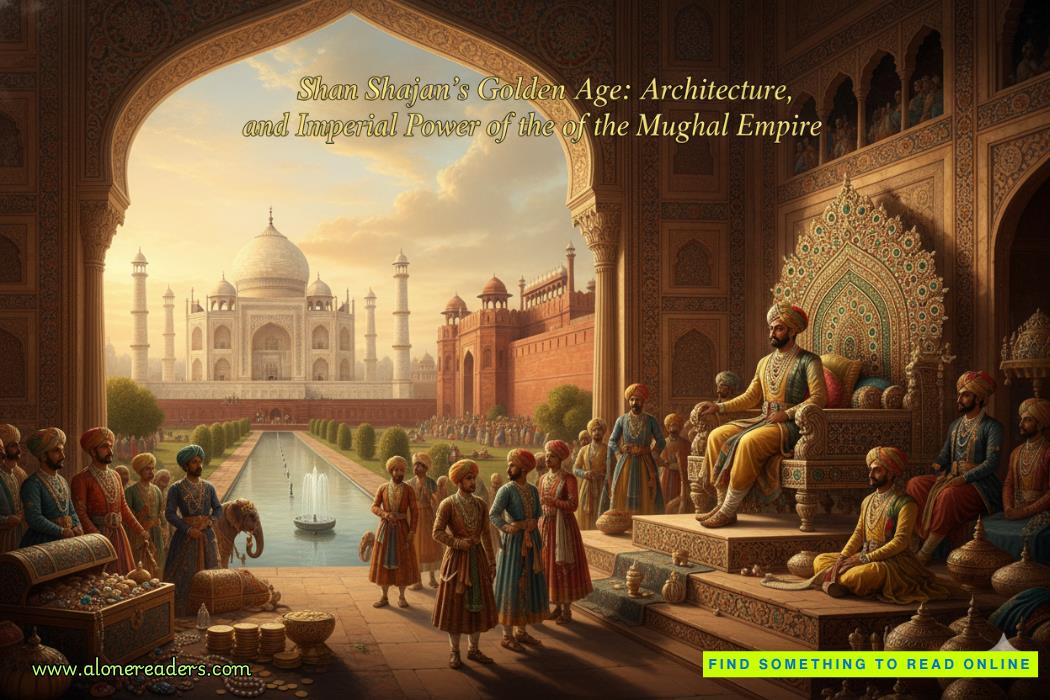
Shah Jahan’s reign, often described as the zenith of Mughal civilization, stands as one of the most visually and politically compelling eras in early modern South Asia. His rule from 1628 to 1658 was not merely a continuation of Mughal dominance but a deliberate crafting of imperial identity through architecture, wealth, and centralized authority. Under Shah Jahan, the Mughal Empire did not just expand in influence—it perfected its image, presenting itself as a realm of divine order, aesthetic perfection, and overwhelming power.
What makes this period extraordinary is not just the monuments that survive today, but the intentional fusion of art, economy, and politics into a single imperial vision. Shah Jahan understood that empire was not only to be governed—it was to be seen, admired, and feared. Every marble surface, every jeweled throne, and every carefully planned city became a statement of Mughal supremacy.
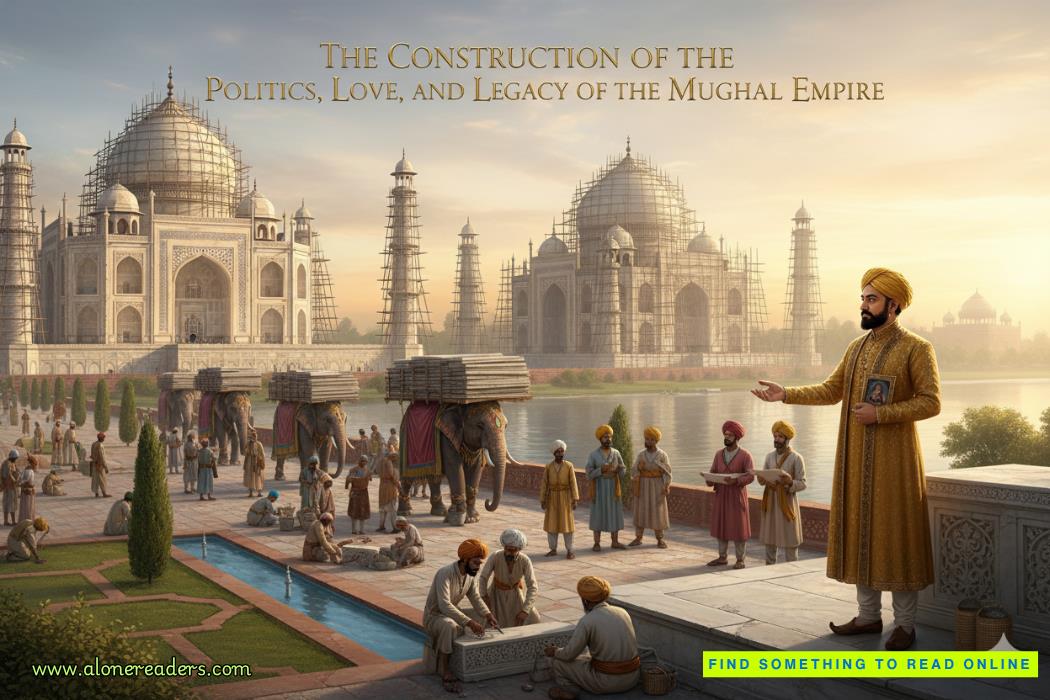
At the heart of this golden age lies architecture, which Shah Jahan elevated into a powerful language of authority. Unlike his predecessors, who experimented with diverse styles, Shah Jahan refined Mughal architecture into a distinct, harmonious, and highly polished aesthetic. The use of white marble became a defining feature, symbolizing purity, divinity, and imperial elegance. The Taj Mahal, perhaps the most iconic structure in the world, is not merely a tomb—it is a carefully orchestrated expression of love, power, and eternal legacy. Built in memory of Mumtaz Mahal, it represents a fusion of Persian, Islamic, and Indian artistic traditions, executed with unmatched precision.
The Taj Mahal’s symmetry is not accidental; it reflects a deeper Mughal ideology of cosmic order. Gardens laid out in the charbagh style represent paradise, while the central dome symbolizes the heavens. Even the calligraphy and inlay work are designed to create a sense of spiritual and imperial perfection. This was architecture as propaganda, subtly reinforcing the emperor’s role as a divinely guided ruler.
Beyond the Taj Mahal, Shah Jahan commissioned the Red Fort in Delhi, a massive complex that served as the political and ceremonial center of his empire. The Red Fort was not just a military structure—it was a stage for imperial performance. Within its walls, halls like the Diwan-i-Am and Diwan-i-Khas allowed the emperor to interact with subjects and nobles in carefully controlled settings. The famous inscription in the Diwan-i-Khas, often paraphrased as “If there is a paradise on earth, it is this,” captures the essence of Shah Jahan’s vision: the empire itself as a living paradise.
The Peacock Throne, housed within this complex, further symbolized the emperor’s immense wealth and authority. Encrusted with diamonds, rubies, emeralds, and pearls, it was not just a seat but a statement of cosmic kingship. The throne positioned Shah Jahan as the center of a universe defined by luxury and order, reinforcing the idea that Mughal rule was both earthly and divine.
This architectural brilliance was made possible by the empire’s extraordinary wealth. During Shah Jahan’s reign, the Mughal economy was one of the largest in the world, driven by agriculture, trade, and a highly organized system of taxation. The empire controlled vast fertile lands, producing crops such as wheat, rice, sugarcane, and cotton. These agricultural resources were efficiently managed through a revenue system that ensured a steady flow of income to the state.
Trade also played a crucial role in sustaining this golden age. Mughal India was deeply connected to global trade networks, exporting textiles, spices, and luxury goods to markets in Europe, Central Asia, and the Middle East. The empire’s textiles, particularly fine muslin and silk, were highly sought after, contributing to a constant influx of wealth. Ports along the western coast facilitated maritime trade, while overland routes connected the empire to Central Asia and beyond.
This wealth was not merely accumulated—it was displayed and redistributed in ways that reinforced imperial authority. Lavish court ceremonies, generous patronage of artists and scholars, and monumental construction projects all served to project the image of an empire that was both rich and benevolent. The Mughal court became a center of culture, attracting poets, painters, architects, and intellectuals who contributed to a vibrant cultural landscape.
However, this display of wealth also had deeper political implications. By concentrating resources in the hands of the emperor and the elite, Shah Jahan ensured a tight control over the nobility. The mansabdari system, which organized officials based on rank and military responsibility, allowed the emperor to maintain a balance of power. Nobles were granted land revenues but remained dependent on imperial favor, preventing them from becoming too powerful.
Imperial power during Shah Jahan’s reign was also expressed through military strength and territorial control. While his rule is often remembered for its cultural achievements, it was underpinned by a formidable military apparatus. The Mughal army, composed of cavalry, infantry, and artillery, remained one of the most powerful forces in the region. Campaigns in the Deccan and Central Asia aimed to expand and secure the empire’s borders, though not all were successful.
Yet, Shah Jahan’s approach to power was not solely based on conquest. He understood the importance of symbolic authority. The emperor’s presence, whether in court ceremonies or public appearances, was carefully choreographed to inspire awe. The use of elaborate dress, jeweled ornaments, and grand processions transformed the emperor into a living embodiment of imperial glory.
Religion also played a subtle but significant role in shaping this golden age. While Shah Jahan is often seen as more orthodox compared to Akbar, his reign still maintained a degree of cultural inclusivity. Islamic principles influenced court culture and architecture, but the empire continued to accommodate diverse traditions. This balance helped maintain stability in a vast and diverse empire.
Despite its brilliance, Shah Jahan’s golden age was not without its tensions. The immense expenditure on architecture and courtly life placed a heavy burden on the empire’s resources. While the economy remained strong during his reign, these financial pressures would become more evident in the years that followed. Additionally, the concentration of power and wealth created underlying rivalries among the nobility and within the royal family.
These tensions eventually culminated in the war of succession among Shah Jahan’s sons, a conflict that would bring an end to this golden era. The rise of Aurangzeb marked a shift in priorities, moving away from the aesthetic and cultural focus of Shah Jahan’s reign toward a more austere and militarized approach.
What makes Shah Jahan’s period enduringly fascinating is its perfect balance of beauty and power. It was an era where architecture was not just about buildings, but about ideology and identity. Wealth was not just about riches, but about control and influence. And power was not just about force, but about perception and legitimacy.
The legacy of this golden age continues to shape how the Mughal Empire is remembered today. The Taj Mahal stands as a universal symbol of love, but it is also a reminder of an empire that mastered the art of self-representation. The Red Fort remains a symbol of political authority, while countless other structures reflect a commitment to artistic excellence.
In many ways, Shah Jahan’s reign represents the culmination of Mughal ambition. It was the moment when the empire achieved its most refined expression, combining material wealth with cultural sophistication and political strength. Yet, it also serves as a reminder that such perfection is often fragile, sustained by a delicate balance that can easily be disrupted.
Understanding this golden age requires looking beyond its surface beauty to see the complex systems that supported it. It was not just a time of great monuments, but a period of carefully engineered dominance, where every element of society contributed to the image of an all-powerful empire.
Shah Jahan did not merely inherit a great empire—he transformed it into a masterpiece.



 The Hundred Days Offensive: How the Allies Defeated Germany in World War I
 The Second Battle of the Marne: The Turning Point of World War I in 1918
 The Spring Offensive of 1918: Germany's Final Gamble to Win World War I
 The Treaty of Brest-Litovsk: How Russia Left World War I
 The Russian Revolution and World War I: How War Brought Down the Tsar
 The Zimmermann Telegram Explained: Germany's Secret Offer to Mexico in World War I










