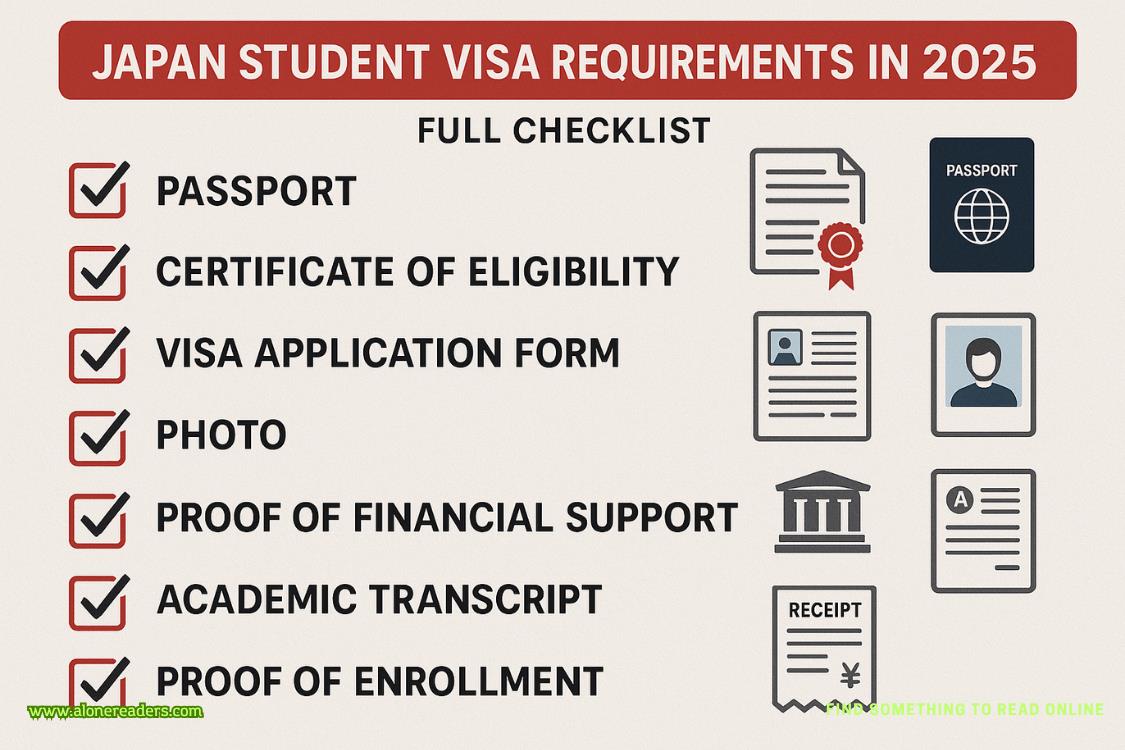
If you’re planning to study in Japan in 2025, getting your student visa right is as important as securing your admission. The process is clear if you know the sequence—secure admission, obtain your Certificate of Eligibility (COE), apply for the visa at your local Japanese mission, and complete your post-arrival registrations.
Here’s a professional, in-depth guide covering every requirement, document, and step you need to handle—from your initial school application to working part-time and extending your stay.
What the student status covers
Japan’s “Student” residence status is granted to those enrolled at universities, junior colleges, professional training colleges (senmon gakkō), or approved language schools. The permitted stay can be up to 4 years and 3 months at a time, depending on your course length and your school’s sponsorship.
Typical application timeline
Important note on eVISA
Japan’s eVISA platform is for certain short-term visas only. Student visas require the standard application through a Japanese mission abroad.
Who applies for it
Your school in Japan will file the COE on your behalf after you accept their offer. This document confirms you meet Japan’s entry requirements and significantly speeds up visa issuance—but it’s not a visa by itself.
Documents your school will ask for
Electronic COEs
Japan now accepts electronic COEs. You can present these digitally or as a printout when applying for your visa.
What to prepare for your visa application
Processing time and fees
Visa processing typically takes 5–10 working days. Fees in 2025 are around ¥3,000 for a single-entry visa and ¥6,000 for a multiple-entry visa, paid in local currency. Some nationalities are exempt from fees.
How much is enough?
While there’s no official minimum, you should demonstrate you can cover tuition plus living expenses for at least one year. Many schools recommend proof of ¥1.5–¥2.5 million in addition to tuition (more if you’re studying in Tokyo).
Acceptable evidence
Presentation tips
Translate non-English/Japanese documents as required. Keep your documents consistent, well-organized, and labeled.
Photo specifications
Form completion tips
Receiving your Residence Card
Most students receive their Residence Card upon entry at major airports. Keep it with your passport—it’s your official ID in Japan.
Work permission on arrival
If you plan to work part-time, apply for “Permission to Engage in Activity Other Than That Permitted” at the airport. This saves you a trip to the immigration office later.
Address registration
Visit your local city or ward office within 14 days of moving in to register your address. Your Residence Card will be updated with your new address.
National Health Insurance (NHI)
Enroll in NHI at the municipal office unless you’re already covered under an employer’s plan. This is mandatory for all mid- to long-term residents.
Work limits
With a valid work permit, you can work up to 28 hours per week during term time. During official school holidays, you can work up to 8 hours per day (40 hours per week). Jobs in adult entertainment industries are strictly prohibited.
Best practices
Keep a simple log of your hours. If your course or school changes, check if your work permission needs to be re-applied for.
Special Re-entry Permit
If you plan to leave and return within one year (or before your residence status expires), you can use the Special Re-entry Permit by ticking the box on your departure card. For longer absences, apply for a regular re-entry permit before leaving.
Extension of stay
Apply at your Regional Immigration Services Bureau up to three months before your current stay expires. You’ll need updated enrollment certificates, attendance records, and proof of finances.
Post-graduation status changes
Graduates may change status to job-seeking activities or a working visa category. Maintain a strong academic and attendance record to support your application.
Before departure
Visa application
Upon arrival
Within 14 days
While studying
For travel
Use Special Re-entry Permit for short trips; regular permit for longer absences.



 Qatar Temporary Work Visa 180 Days 2026: Complete Eligibility, Application Process, Documents, Costs, Extension Rules, and Employment Guide
 Canada Intra-Company Transfer Work Permit 2026: Complete Guide to Eligibility, Requirements, Application Process, and Employer Responsibilities
 UK Study English Language Visa 2026: Complete Guide to Eligibility, Requirements, Costs, Application Process, and Student Life
 UK Expansion Worker Visa Intra-Company 2026: Complete Guide to Eligibility, Sponsorship, Costs, Business Expansion, and Application Process
 High-End Talent Category A Work Permit China 2026: Complete Eligibility, Benefits, Application Process, and Expert Guide
 Cultural Activities Visa Japan 2026 Guide: Complete Eligibility, Requirements, Application Process, and Expert Tips