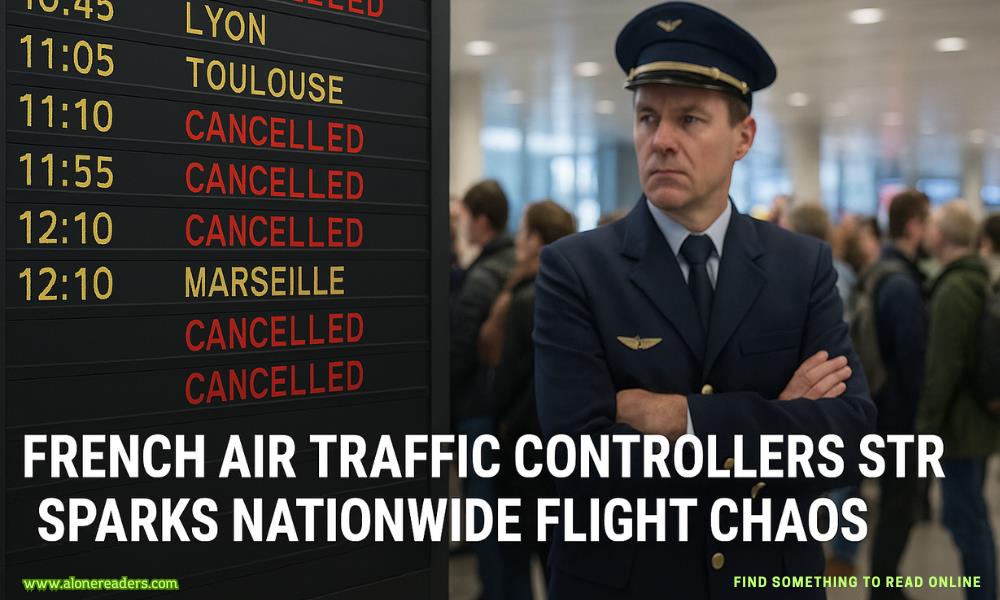
Air travel across France faced significant turmoil this week as a nationwide strike by air traffic controllers (ATCs) brought airports to a near standstill. The industrial action, which began early Tuesday morning, has resulted in the cancellation of hundreds of domestic and international flights, throwing travel plans into disarray and highlighting longstanding tensions between aviation workers and government authorities.
The strike, organized by the SNCTA (Syndicat National des Contrôleurs du Trafic Aérien), the largest union representing air traffic controllers in France, is rooted in multiple grievances. Chief among them are demands for better pay, improved working conditions, and a clear roadmap for staffing amid a looming wave of retirements. The union has argued that despite rising passenger numbers post-COVID, the French Directorate General for Civil Aviation (DGAC) has failed to recruit and train enough new controllers to meet current and future demands, placing an unsustainable burden on the existing workforce.
According to data released by the DGAC, nearly 60% of scheduled flights from major French airports such as Paris Charles de Gaulle, Orly, Lyon, and Marseille were either delayed or cancelled. Regional hubs like Toulouse and Bordeaux also experienced significant disruptions, with ripple effects extending to European airspace due to France’s central position in the continent's flight routes. The impact was especially severe on short-haul routes within the EU, as airspace restrictions forced rerouting and delays far beyond French borders.
Passengers were seen stranded at terminals, with many left scrambling for alternative arrangements. Airlines including Air France, easyJet, Ryanair, and Lufthansa issued advisories, encouraging travelers to check the status of their flights before heading to the airport. Some airlines offered refunds or rebooking without penalty, but that did little to mitigate the frustration of those whose plans were derailed. Hotels near major airports reported a surge in last-minute bookings, while car rental agencies struggled to accommodate stranded travelers seeking ground transport alternatives.
The French government responded swiftly, calling on the striking workers to return to negotiations. Transport Minister Patrice Vergriete acknowledged the strain on travelers but emphasized the importance of “dialogue and mutual understanding” in resolving the dispute. He also confirmed that emergency staffing plans were activated to maintain a minimal level of operations at major control centers, although these measures were limited in scope and failed to prevent widespread disruption.
For their part, union leaders accused the government of ignoring repeated warnings about staff shortages and failing to address inflation-linked pay erosion. They cited studies indicating that France is on track to lose up to 30% of its ATC workforce to retirement by 2030. Without immediate hiring and accelerated training programs, the system, they argue, will become unsustainable, jeopardizing both safety and service efficiency.
The strike also raised concerns from business groups and the tourism sector, which is in the midst of a critical summer season. The French Tourism Board warned that prolonged disruption could tarnish the country’s reputation as a travel hub, potentially deterring both leisure and business travelers. France, being one of the most visited countries in the world, relies heavily on a functioning aviation network to support its hospitality, retail, and cultural sectors.
Across social media platforms, affected travelers voiced anger, confusion, and disappointment. Many questioned why advance warning wasn’t given to allow for better planning. Others expressed solidarity with the strikers, acknowledging the importance of fair compensation and safe working conditions in such a high-stakes profession. The debate quickly became polarized, with some blaming unions for excessive disruption and others blaming government inaction.
This strike is not an isolated incident. France has a long history of labor unrest in the public sector, and air traffic control has often been a flashpoint. Over the past decade, numerous strikes have highlighted the fragility of the French aviation ecosystem. While legal provisions exist to ensure continuity of service during industrial actions, these are often insufficient when mass participation occurs, as was the case this week.
To complicate matters further, the strike comes at a time when European airspace is already strained by increased military activity due to the ongoing war in Ukraine, as well as environmental regulations that are pushing for shorter flights to be replaced by train travel. The current unrest only adds pressure to an industry struggling to adapt to changing geopolitical, economic, and environmental realities.
Some analysts believe the strike could serve as a catalyst for broader reforms within the French civil aviation sector. Calls have been renewed for modernizing ATC systems, investing in digital infrastructure, and introducing more flexible staffing models. However, any such reforms would require political will and cooperation between unions, regulatory agencies, and airlines — a tall order given the current climate of distrust.
At present, union officials have not ruled out extending the strike beyond the initial 48-hour period, depending on the government’s response. They argue that unless concrete proposals are put on the table, further action is inevitable. The DGAC, meanwhile, has warned that continued disruption could have “serious consequences” for France’s international obligations and aviation safety.
As the standoff continues, both sides are under pressure to find a solution. For travelers, the immediate hope is for resumption of normal service. For the aviation sector as a whole, however, the bigger challenge lies in preventing such breakdowns in the future. The current strike may be short-lived, but it has exposed deep systemic vulnerabilities that, if left unaddressed, will only resurface with greater force.
In the meantime, passengers are advised to monitor airline announcements closely, stay informed through official channels, and prepare for possible ongoing delays or cancellations. With tensions still running high and negotiations hanging in the balance, the skies over France remain clouded — both literally and figuratively.



 Meaning and Origins of Easter: A Deep Dive into Its History and Symbolism
 A Complete Guide to Healthy and Delicious Easter Brunch Recipes
 Creative DIY Easter Decorations to Brighten Your Home
 Easter Traditions Around the World: Egg Hunts, Bonfires & Festive Feasts in 2025
 Reforming Uber Driver Ratings: The Need to Count Unrated Rides for Fairer Evaluations
 Best Smartphones of 2025 (So Far): Top Picks, AI Features, and Market Trends